Kathriona Devereux: ‘I’d rather go and eat nice food with people than have it dropped from high’
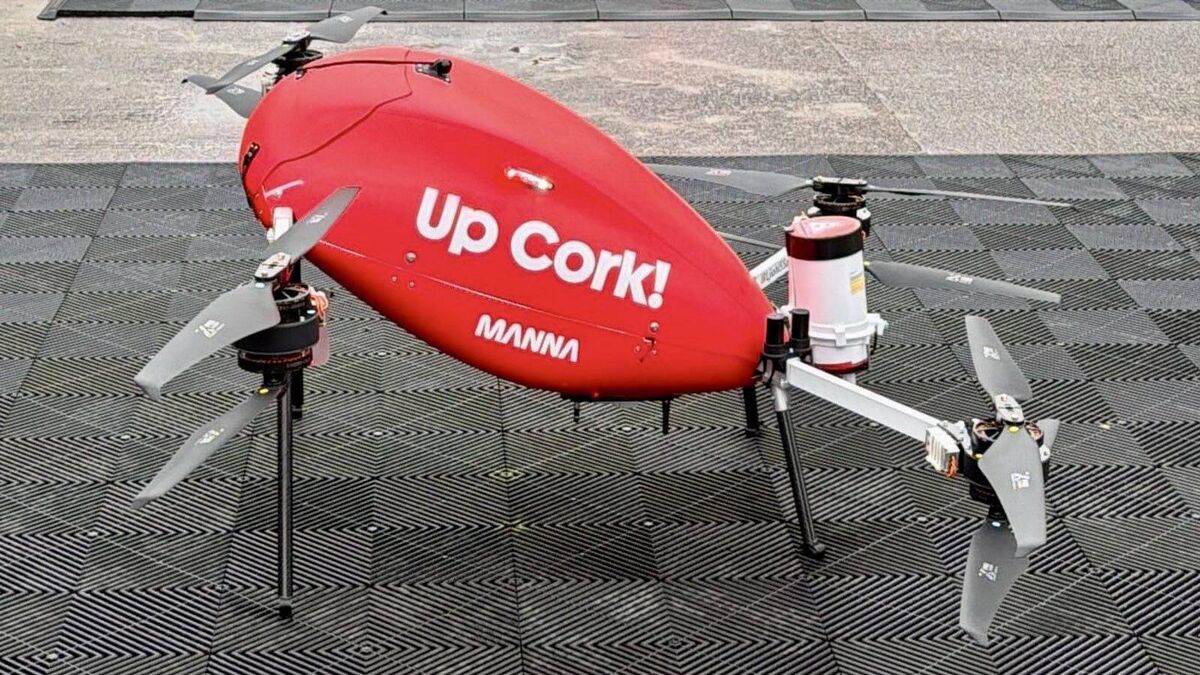
Curious to know what Manna was offering, Kathriona downloaded the app and pretended to live on the Blackrock Road. Picture: Larry Cummins
This was the question posed in the Dáil last week by Dublin TD Ruth Coppinger, querying why a private company is allowed to disrupt the peace with drone deliveries.
My answer is an emphatic “No!”.
But now, the residents of Blanchardstown in Dublin and Blackrock in Cork do have to tolerate this unnecessary intrusion if a next-door neighbour decides they want a flat white delivered by drone. But the backlash against Manna’s Air Delivery service operating from the Marina Market is mounting. Concerned residents in the Blackrock test zone have organised public meetings, Cork City Council have issued an enforcement notice against the operation in Cork. In Dublin, Manna has been refused retention of its base in Coolmine.
Curious to know what Manna was offering that was so desirable, I downloaded the app and pretended I lived in a fancy house on Blackrock Road - one of Cork’s more salubrious streets and part of Manna’s delivery test zone - to see, if I was so inclined, what could I get dropped to my back garden. Sausages, donuts, ice pops, steak and chips, Chinese food, pizza, burritos, a can of Coke or even, unexpectedly, a box of tampons. I stopped short of actually ordering — that would have required sharing my real location so Manna could determine a safe drop zone.
But truthfully, I would rather go to the Marina Market and eat nice food in the company of other people than have it dropped from on high into my garden.
Even the Taoiseach himself can’t comprehend the notion of drone delivery. Responding to Coppinger’s question, he said “I do not understand why people cannot just go to a café, socialise and so on or why people think a drone is necessary to deliver a cup of coffee or whatever. It is something I do not comprehend, and I do not think needs to happen.”
Noise is the big bugbear. In Manna’s FAQ section “Is the aircraft noisy?” the company says “flying at 50- 65m our drones blend into background noise. Even at delivery height 15m, street traffic makes more drama”. Manna states a Trinity College Dublin study showed Manna’s aircraft make less noise than typical street traffic “blending right into everyday life”.
Regarding privacy, the company says the drones have “one low-res downward camera with tunnel vision for your delivery spot. It only checks that we’re not dropping your sushi onto your rose bushes. No recordings, no saved images, no reels. Your secret garden gnome collection remains your business.” Ah funny. Corporate humour trying to gloss over the fact people will lose the enjoyment of their homes and gardens because the company wants to make money.
It’s not like we have a dearth of food delivery options - Uber Eats, Deliveroo, Just Eat have transformed the food delivery market for good and for bad. Tech companies are forever finding ways to smooth away the so-called inconveniences of living, Manna is just the latest iteration of a familiar tech industry instinct.
Don’t want to cook - Deliveroo. Don’t want to remember anything - Google/Siri/Alexa. Don’t want to get up and answer the door - video doorbells. Don’t want to count cash - tap. Don’t want to talk to your friends - messaging. Don’t like yourself in photos - filters.
Manna touts 3 minute delivery time, cleaner air, less traffic and delivering medical equipment, food and more. Food delivery drivers are nearly all on electric bikes these days, so the clean air and less traffic argument is weak. I didn’t see a defibrillator listed next to the donuts in the dropdown menu, but I guess in the future it could.
To be fair, this technology did appear genuinely useful during the pandemic when it was flying pharmacy orders from its test base in Moneygall but it’s hard to justify any real need for them in today’s world.
Coppinger’s final question to the Taoiseach was “Is it not time to outlaw the delivery of fast food by commercial drones in residential areas? The nuisance that they cause and the impact they have is way beyond the necessity for them.”
France offers an example of how to handle drones. The French have decided that the tranquillity and safety of their citizens take precedence over the convenience of operators and they operate strict no-fly zones in urban areas and populated areas. Commercial operators wishing to fly a drone in a restricted area must fulfil stringent requirements and give ten days’ notice to the local prefecture. I discovered this while organising a documentary shoot in Nantes recently and the paperwork timeline and restrictions threatened to derail our filming schedule.
Technology does not automatically earn the right to colonise public space just because it exists. Perhaps, when it comes to drone delivery, we could borrow a little of that Gallic disposition and feel perfectly comfortable saying: non.







 App?
App?


