Public invited to join free tour of Cork's cinema landmarks
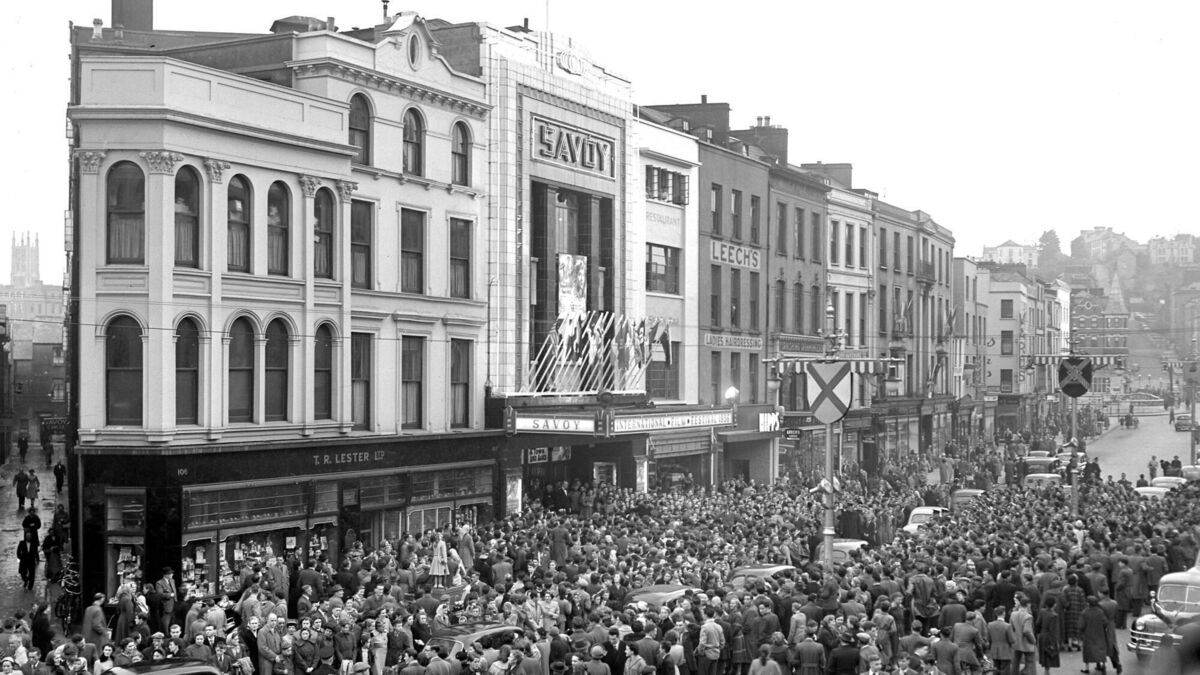
Crowds gather outside the Savoy Cinema Cork for the start of the Cork Film Festival in 1956.
Alongside the tour, CIFF is making a newly restored 1965 archive film about the festival available to watch online, offering a rare glimpse into Cork’s film history and celebrating a legacy that continues to shape the city’s cultural life.
O’Donovan is the director of the Butter Museum and says the idea to look at Cork’s streets through the lens of film came from previous work she did on MacCurtain Street.
“We did a Victorian Quarter (VQ) history trail, which you can see on the VQ website. That was more about the businesses that were on the street and how the street developed.”
O’Donovan says that experience led naturally to a different way of looking at the street.
“I was asked to do something similar but in relation to film. The interaction between film and MacCurtain Street is interesting because there was so much. At one end of the street, for example, there is footage from 1902 of a tram travelling down MacCurtain Street, rounding the corner onto Bridge Street and going down Patrick’s Bridge.”
O’Donovan says that early filmmakers filmed locals coming out of factories, people walking down the street, and even the local fire brigade practising.
O’Donovan is an architectural historian and says she loves exploring the history of places through a particular theme.
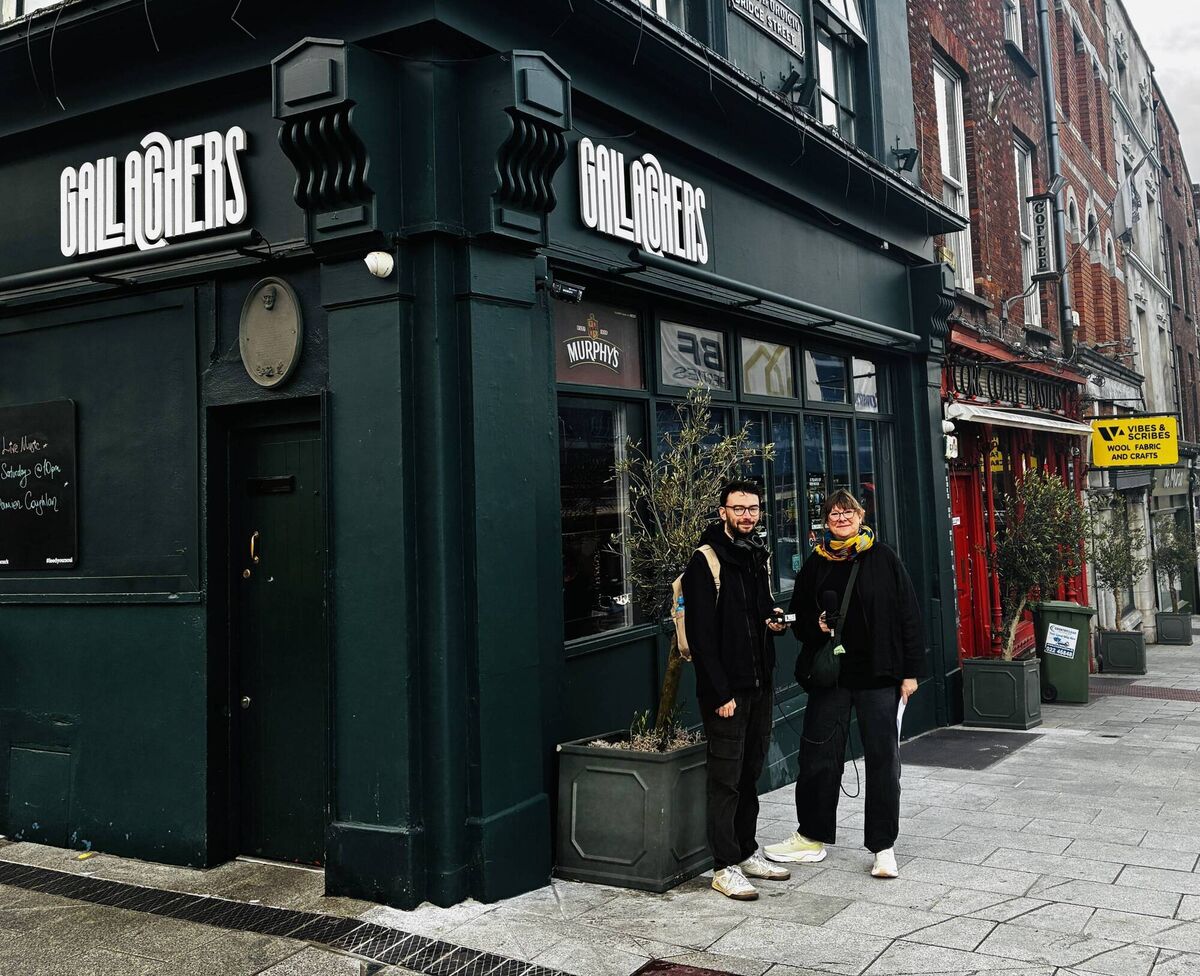
“Film is such an amazing lens through which to explore a place. How did people start going to the cinema in Cork? The Cork International Film Festival is 71 years old, so the city had a taste for film. Where does that come from?”
The historian says there is so much to see in a small geographical area, including the Colosseum Cinema, which she describes as “a beautiful early cinema.”
The first step on the walk is at the corner of St Patrick’s Quay and Bridge Street, which is where cinema began in Cork, as O’Donovan explains.
“One of the earliest cinemas in Cork was the Assembly Rooms on South Mall. The Tivoli Theatre on Merchant’s Quay and the Imperial Cinema on Oliver Plunkett Street opened a few short years later.”
O’Donovan says the walking tour offers a chance to imagine the city as it was, and to consider what remains of that cinematic past.
The tour is full of nuggets, including a mystery involving a Garda station.
“There is a hilarious picture from the festival archive of a party taking place at number 58 MacCurtain Street, which was a Garda station. Why several high-profile film stars were in a Garda station having a sing-song is a mystery, but it’s a fascinating one.”
The talk, which will be available as a podcast on CIFF’s website, will also include details of the contribution to film by Alexander Wilkie and his son Archibald, who ran Wilkie’s Photographic Studio in what is now the Spar on Patrick’s Street.
The walk will end at the Metropole, regarded by many as the home of the CIFF, as O’Donovan explains.
A fascinating piece of Cork’s film history, Féile Scannán Chorcaighe, Cork Film Festival offers a rare glimpse of the city and the festival six decades ago. Made in 1965 to mark the festival’s tenth anniversary, the documentary was directed by Cork librarian and historian Pádraig Ó Maidín and rediscovered in 2018 by CIFF Director and CEO Fiona Clark during an office move. She says discovering the film was a remarkable moment of serendipity.
“To uncover such a vivid record of Cork International Film Festival’s early years, restore it with the IFI Irish Film Archive, and then premiere it during our 70th anniversary celebrations last November was a special milestone for the festival,” she said.
But the film offers more than a glimpse into the festival’s past. As Clark explains, it also reveals the ambition behind its early years.
“The film offers a rare insight into the ambition, energy and international outlook that defined the festival from its earliest days. More than a fascinating piece of archival footage, it is an invaluable record of Cork’s cultural history, capturing not only a moment in time but the enduring vision of our founders.”
For Clark, that early vision remains evident in the festival today.
“Watching it today, you can see the foundations of the festival we continue to build on: bringing audiences together, welcoming filmmakers from around the world, and celebrating the power of cinema to connect people across generations.”
- See corkfilmfest.org
- Heritage Week runs from August 15 to 23.
- The tour takes place on August 21.