Some of Cork's most unique buildings to open their doors to public for one day only
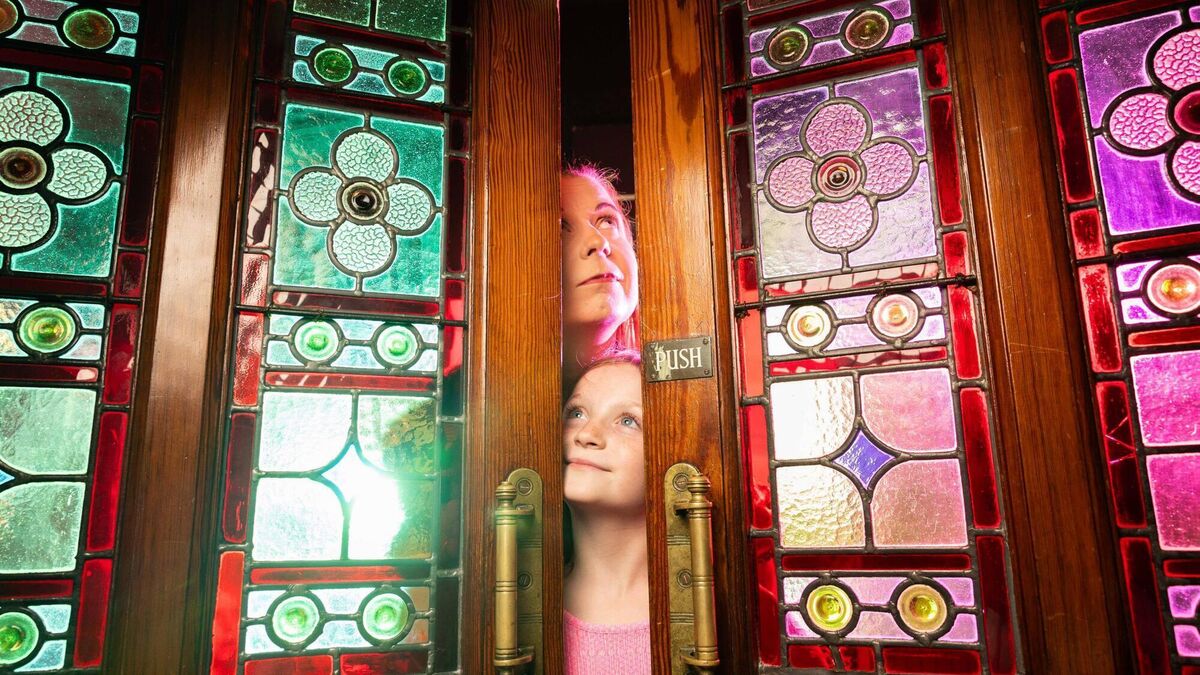
Clíona Harte and Val Kavanagh, Heritage Office in Cork City Council in Graffiti Theatre (former Assumption Convent) at the launch of Cork Heritage Open Day. Picture: Darragh Kane
This Saturday, for one day only, Cork’s most unique and historic buildings and spaces will once again open their doors and invite us in to hear the stories that shaped them and witness the beauty of their architecture. The day kicks off Heritage Week in Cork City.
Cork is a city built on layers. Beneath the busy streets and modern shopfronts lies a rich tapestry of history: Georgian townhouses, Victorian institutions, medieval remnants, and industrial landmarks that once drove the city’s growth. Many of us have busy lives, so it’s easy to rush around the city, never really stopping to appreciate the rich heritage our city has to offer. Cork Heritage Open Day offers us the opportunity to stop, explore, learn, and let our imaginations wander back hundreds of years.
Heritage could be perceived as something distant or academic, reserved for historians or specialists. Cork Heritage Open Day is for everyone, from curious children to lifelong residents or people new to the city, the day invites people of all ages and backgrounds to explore the city in a new way. This sense of shared ownership is vital. When people feel connected to their local heritage, they are more likely to value and protect it.
It is also an opportunity to hear stories not often told. Behind every building is a human narrative: families who lived there, workers who shaped industries, communities that grew and changed over generations. Guided tours and volunteer efforts bring these stories to life, transforming bricks and mortar into something far more meaningful. In doing so, they help us understand not just where we are, but how we got here.
We are delighted to welcome ten new buildings to the programme this year along with the LÉ Samuel Beckett Naval Ship. Though a state-of-the-art modern naval vessel, it is very much part of Cork’s living heritage. Cork Harbour has long been the operational heart of the Irish Naval Service, and ships like the Samuel Beckett, commissioned in 2014, continue that long tradition of seafaring service from these waters. What makes the vessel particularly fitting is its name, honouring one of Ireland’s greatest writers and linking Cork’s deep maritime past with the country’s cultural identity. Whether berthed in the harbour or visible during public events, the ship is a reminder that heritage isn’t just found in old buildings; it’s alive in the working harbour, in the crews who serve, and in the evolving story of Cork as a naval and cultural centre.
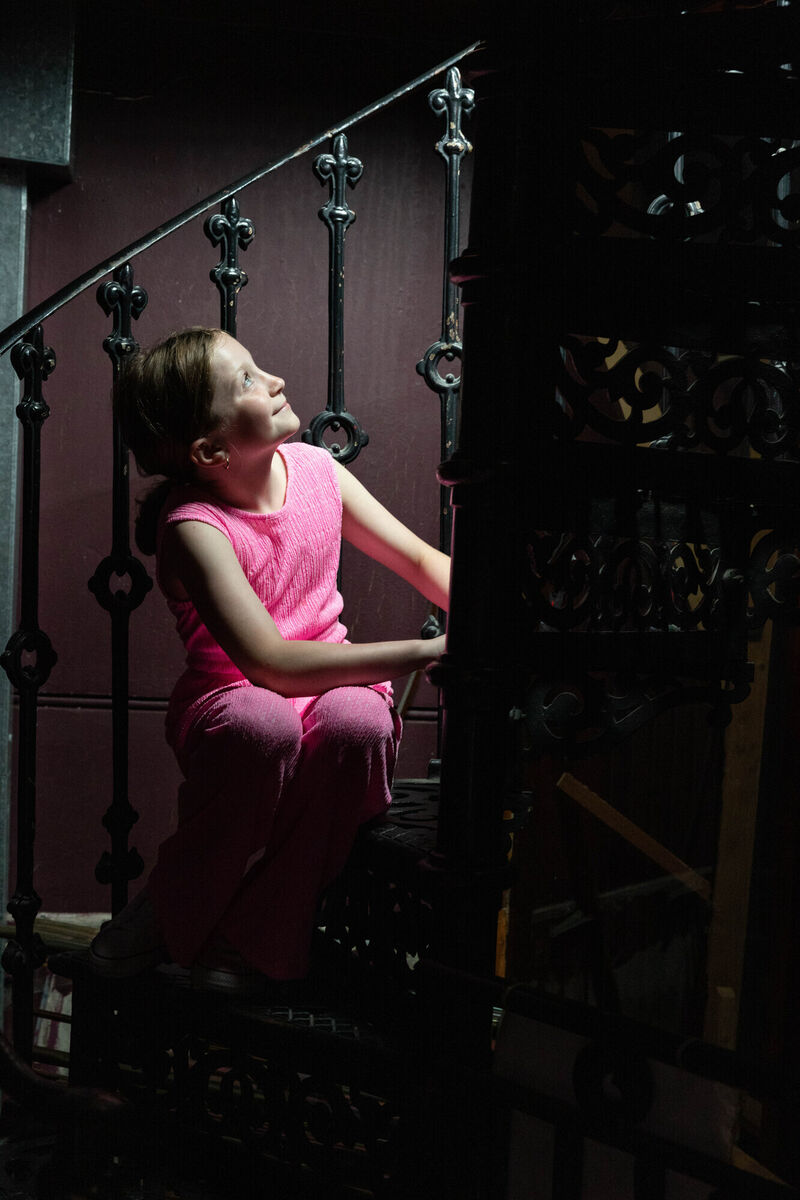
The home of the Graffiti Theatre Company in Blackpool is also joining us in opening their doors. The building, dating back to 1907, began as a religious and educational space, serving the Little Sisters of the Assumption. Though renovated in 2005, you can still see some of its historic features like the arched entrance, the high ceilings and its open long rectangular space, originally designed for congregations.
We are also joined by Blackrock Castle Observatory, one of Cork’s most iconic heritage sites, combining centuries of history with modern science. Blackrock Castle began life as a defensive fortification in 1582, built after the citizens of Cork appealed to Queen Elizabeth I for protection. At the time, Cork Harbour was vulnerable to pirates and foreign invaders. The site at Blackrock, where the river narrows, was strategically ideal. Around 1600, a round tower was added to strengthen defences, with thick stone walls designed to deter attackers. After fires, reconstructions and several repurposing uses, it now stands as one of Cork’s finest landmarks, housing a science centre focused on astronomy and space exploration along with interactive exhibits, research links, public events and a restaurant within the site.
The popular guided tours of perhaps Cork’s most iconic building, St. Fin Barre’s Cathedral, are returning on the day. The site of the cathedral is one of the oldest religious sites in Cork. Around 606 AD, St. Finbarr, the city’s patron saint, founded a monastery and school here. It became a major centre of learning, so important that Cork grew up around it and in many ways, this site marks the birthplace of Cork City itself. The Cathedral we see today was built by Architect William Burges from 1863 – 1879. It is considered one of the most complete examples of Gothic Revival architecture in Ireland.
This is just a sample of the 42 buildings and spaces that are open for tours and talks on the day; there truly is something for everyone. Watch out for the eleven buildings and landmarks lighting up in purple for the week, the symbolic colour of National Heritage Week. Some events will be through the Irish language and some with an Irish Sign Language Interpreter. So put August 15 in your calendar and make a date with Cork Heritage Open Day! Because if Cork Heritage Open Day teaches us anything, it is that the past is not behind us. It is all around us, waiting to be noticed, appreciated, and preserved.
Cork Heritage Open Day is organised by Cork City Council as part of Heritage Week in partnership with the Heritage Council and is proudly supported by media sponsors and C103.
Cork Heritage Open Day marks the start of Cork city events for National Heritage Week www.heritageweek.ie, running from August 15 to 23. For a full list of events, see www.corkheritageopenday.ie or pick up a brochure at Cork City Libraries or Cork City Tourist Information Office. Many of the events require pre-booking.





 App?
App?


