Kathriona Devereux: Would posting dog poop to owners solve our problem?
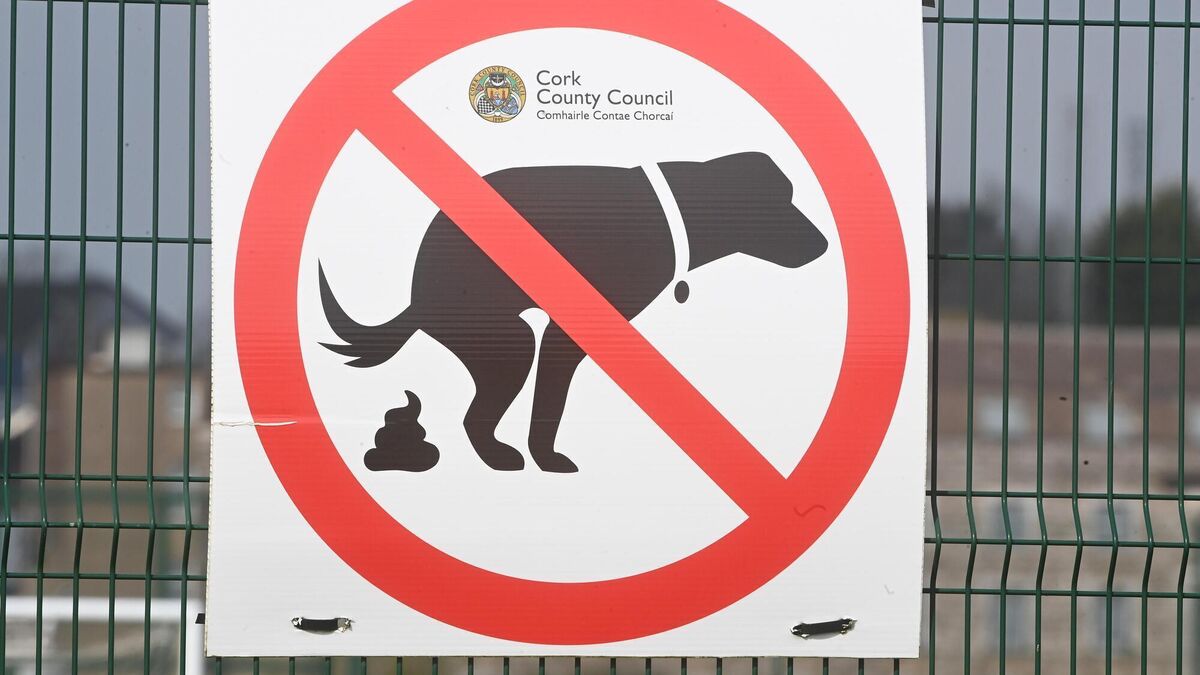
Cork’s city and county councils have tried many ways to tackle the issue of dog fouling - here are a few more ideas from Kathriona. Picture: Larry Cummins
Excuse me, how very dare you! I have my business together. I’m not the one uttering expletives in public places, raining curses on children and grannies as they go about their day.
There was a flurry of controversy back in April about Cork City Council’s new anti-dog fouling campaign urging dog owners to “Get Their Sh*t Together”, but I was so busy keeping my head under an umbrella, shielding myself from the driving wind and rain, that I didn’t notice the offending posters.
But now the days have brightened, and we are out and about enjoying the parks and amenities of our beautiful city, and I’m continually affronted by profane posters. I don’t even own a dog!
On a recent walk in Tory Top Park my nine-year-old’s jaw dropped when she read the eye-catching sign for the first time. She couldn’t believe there was an official poster using bad language.
I use the odd expletive here and there, but I really try not to, especially not in front of my children. I certainly wouldn’t swear at strangers in the park, which is essentially what Cork City Council’s new signage is doing.
Anyone who reads the notice is being told to get their sh*t together. For a city that prides itself on our literary heritage, it doesn’t demonstrate much literacy.
My daughter was staggered. I explained that Cork City Council created these posters to attract attention and generate outrage - mission accomplished. She replied: “But it’s Cork City Council!” Exactly, child, I couldn’t agree more.
Are we in such a sorry state of creative thinking at how to tackle the ongoing dog fouling problem that swearing at inconsiderate dog owners is our best tactic?
You can feel the frustration of council officials emanating from the new signs. ‘Sweet Mother of Divine Mercy, would you just pick up your crap so we can get on with the important work of running a city!!!’
They could have put that on a poster. It would have got the sentiment across with zero swearing. Invoking the Virgin Mary would have generated a different type of outrage.
Corkonians are not alone in their fight against abandoned turds.
All over the world, dog fouling is consistently cited as a public concern and efforts to tackle the issue vary from the extreme to the hilarious.
Spain is the undisputed world leader in creative poo enforcement. More than ten years ago, the city of Brunete worked with an ad agency to design an effective anti-fouling campaign. It started with motorised fake poos - think a joke shop turd mounted on top of a remote-control car - driving around the city centre, crashing into people’s feet, alerting them to the fact that they needed to pick up their dogs’ crap. It was amusing but had limited impact.
What did work was delivering the offending plops back to the owners in official ‘Lost and Found’ cardboard boxes from the local council.
Volunteers spied on negligent owners who let their dogs poop indiscriminately, the volunteers then struck up a conversation with the owner, found out the name and breed of the dog, and looked up the register of dog owners to find out their home addresses.
In a few days, the offending deposits were hand-delivered to the owners.
They called the campaign #CacaExpress! According to the city council, there was a 70% fall in dog fouling after the campaign. Getting a poo in the post is a proper deterrent.
Another town installed a giant inflatable turd three metres high in the town square, which represented the amount of poo excreted and left on the town’s streets every day. Vom’.
The campaign was such a success that even the inflatable turd disappeared. Well, someone stole it - the plastic turd was worth €3,000!
Many Spanish towns and cities have gone down the scientific route to trace and punish dog owners by deploying DNA testing to ensnare flagrant poopers.
Residents register their dog’s DNA through mandatory blood samples, which are kept on a council database and matched against abandoned faeces collected by street cleaners.
Owners face a €200 fine for not picking up, and a €300 fine simply for failing to register their dog.
The organisation Keep Britain Tidy has tried novel approaches too. There are approximately seven million dogs living in the UK, producing 1000 tonnes of faeces per day, so imagine how many people must contend with dog-do on their shoes.
The ‘We’re Watching You’ campaign used glow-in-the-dark signs with that message because, apparently, at night people feel less observed. These creepy signs led to a 46% reduction in dog fouling in trial areas.
Another campaign addressed the problem of owners who do bag the mess but then abandon the bag rather than binning it. Some 70% of local authorities in the UK report this as a problem.
A ‘There’s No Such Thing as a Dog Poo Fairy’ campaign used humour and a cartoon fairy character, and crucially reinforced the message that any rubbish bin will do for the bag of crap.
Cork is not alone in its battle against canine number twos.
However, Cork City Council issued zero fines for dog fouling in both 2023 and 2024. Zero.
Not only do we have to contend with the unpleasantness of the fouling itself, but we must also deal with language unbecoming of a public body.
Hopefully, in the next iteration of an anti-fouling campaign, we can drop the expletives and deploy Cork humour to shame owners to doo-doo the right thing.







 App?
App?


