Kathriona Devereux: 1926 census gave me glimpse into lives of my grandparents
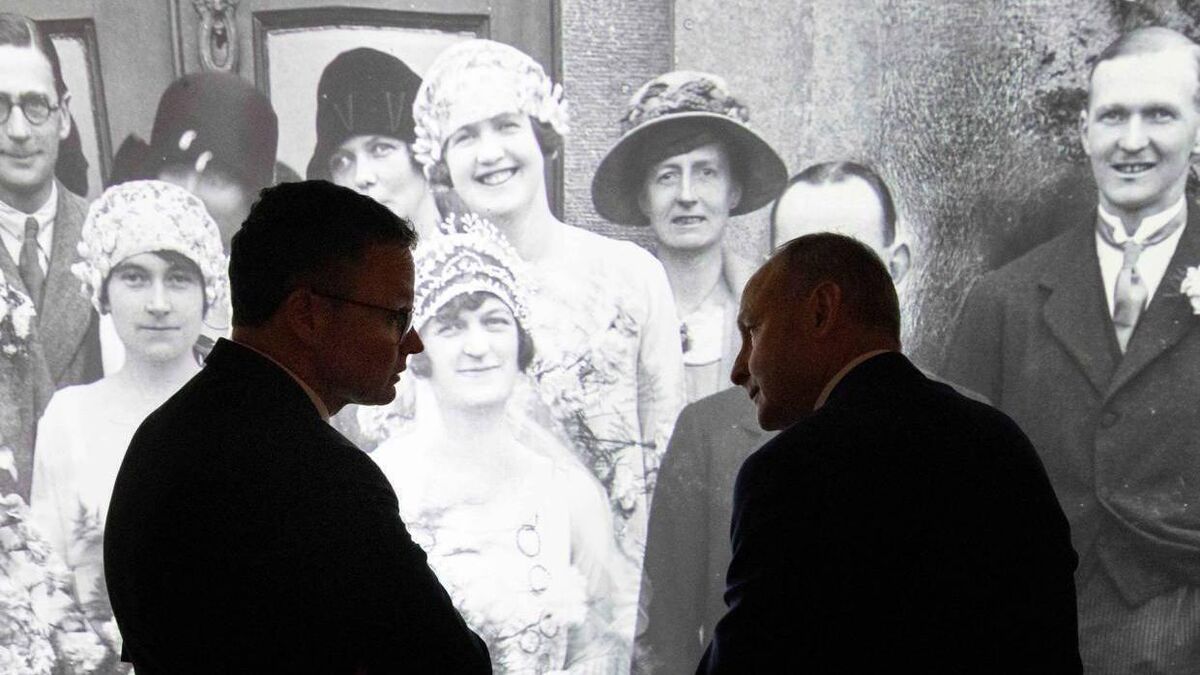
I make no apologies for my crazy weekend plans of happily rabbit-holing around the National Archives website in search of glimpses of my grandparents in the 1926 census; looking at the former inhabitants of old houses I lived in; or digging in the census records for well-known Irish people.
I know I’m not the only one who spent their weekend off their faces on the 1926 Census records.
I’ve produced a fair few history documentaries over the years and have spent hours snooping in the 1901 and 1911 censuses, but the 1926 census is extra special.
The first census of Saorstát Éireann and the first that held the promise of seeing the completed handwritten forms of my great-grandparents and mentions of my grandparents as young children.
I had the privilege of interviewing Orlaith McBride, director of the National Archives, on RTÉ’s show in advance of the census records release date on Saturday, and that conversation only heightened my anticipation.
Hearing about the immense work over three years and the expertise of an army of archivists to make the 700,000 records available online makes me very appreciative that we live in a country where such an undertaking is possible.
But I’m excited because so few records remain of my grandparents’ lives, I’m eager to see one formal piece of paper.
Sadly, they had passed when I realised the enormous number of unanswered questions I still had.
There is something special about looking at the elegant copperplate handwriting of my great-grandfather. I studied the way one writes a ‘H’ with flourish and swirls a ‘Y’ with panache. Another has tight, careful, joined-up writing not dissimilar to my son’s hand.
I’m projecting a genetic hand-writing connection through four generations!
One of my grandfathers was born in 1916 in Tipperary and had lived through ten eventful years - spanning a rebellion, a pandemic, the War of Independence and the Civil War.
On census night in 1926, he was at home with his dad (a “publican”), his mother (“household worker”), his older brother, his three younger sisters, and a servant called Minnie. They all spoke English and Irish and lived together on a quarter of a statute acre.
One of my grandmothers was at home with nine other people on the night of April 18, 1926 - not just her parents and five siblings but also her granny and aunt. A full farmhouse. Yet I don’t have a picture of the house or most of the people listed on that census return.
Beyond official records like this one, we have so few photographs or artefacts about the lives of our loved ones who were alive 100 years ago.
I, sadly, don’t have any video or recording of my grandfather who passed away in 1998 and would dearly love to see any video that would remind me of how he talked and carried himself. The census gives me a snapshot, but it can’t give me his voice.
Reading those handwritten returns made me think about what future generations will make of us.
I’m currently reading an Ian McEwan book, , set in 2119, in a post-apocalyptic, climate-changed world. One of the core characters is a historian researching the biography of an eminent poet from 100 years ago.
This fictional poet’s archive includes every email he ever sent, his extensive digital footprint, calendars, and social network and correspondence.
For our future descendants, what will they make of the oversaturation of records? What will be gleaned from the hundreds and thousands of photos taken of a family over a lifetime? Will any of it survive, or will our digital lives just pointlessly languish on an inaccessible hard drive or cloud forever?
Apart from family, I’m also fascinated to find who lived in a home of mine before me.
My current house was built in 1938, but the first house I bought was a tiny workman’s cottage off Blarney Street, built in the late 1800s.
I was fascinated to find that in the 1911 census it was home to a family of two adults and five children…. and a lodger!
He must have slept in the coal bunker because I have no idea how they squeezed into a very humble two-room home.
There was a whole new cast of characters living there in 1926, including a 105-year-old woman!
I’m staggered that someone would have exceeded the average life expectancy by that much 100 years ago.
But, sadly, the fountain of youth does not spring from Blarney Street. On closer inspection of the actual household return, the woman is 10-and-a-half years old. The digitisation process turned her into an unlikely centenarian!
Reading the returns of real people makes me grateful for the country they helped forge in the early years of the State.
Somehow, they survived hardship and oppression to build the country that we now call home.
If you haven’t yet had a chance to explore nationalarchives.ie, I urge you to start looking up your ancestors. Happy digging!




 App?
App?


