Mary MacSwiney: ‘A life motivated as much by love as her political ideals’
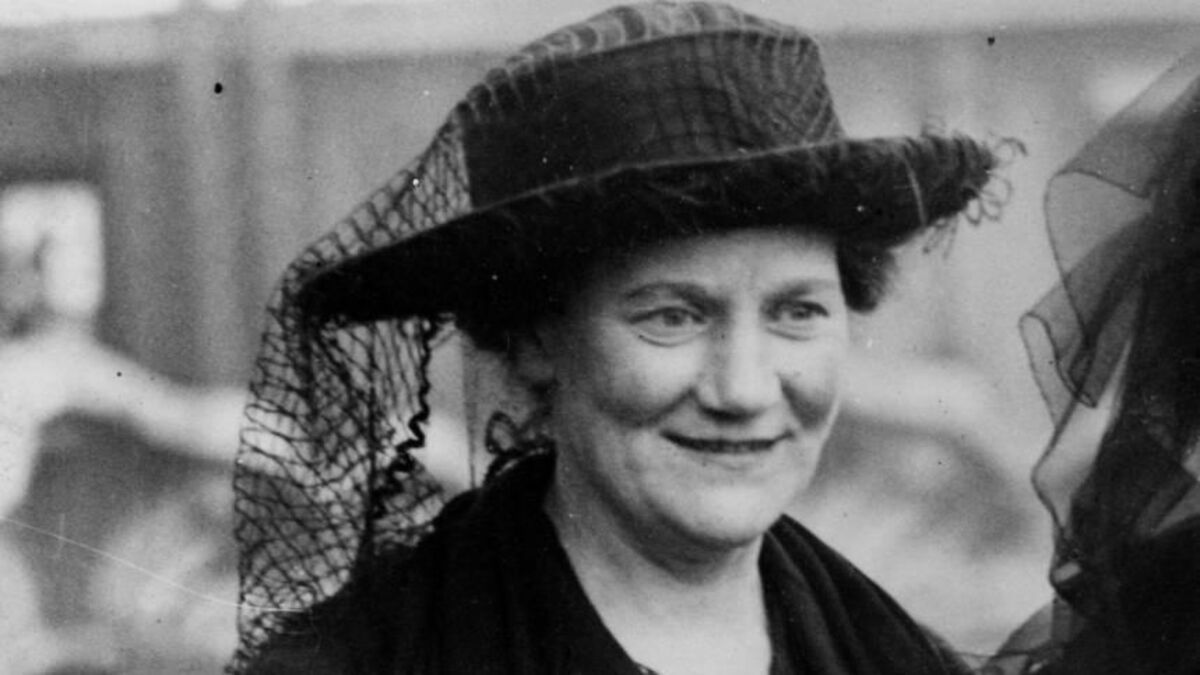
Mary MacSwiney, sister of Terence MacSwiney, at Mountjoy Prison in Dublin during his hunger strike. Her brother Terence died at Brixton Prison in London after a hunger-strike of 74 days Photo by Topical Press Agency/Getty Images
Leeann Lane, author of the recently published biography of Mary MacSwiney, gives an insight into the life of an iconic voice in Cork’s history.
When Terence MacSwiney, former Lord Mayor of Cork and political prisoner, died in Brixton Prison after a protracted hunger strike on October 25, 1920, it was his sister Mary who was at his side. His death, in such tragic circumstances, had a profound and lasting impact on her.
Her brother had died fighting for Ireland’s full freedom from British rule. Mary pledged to perpetuate those ideals for the rest of her life.
Opinionated, outspoken, a passionate activist, educator, politician, and staunch republican, she garnered a life-long reputation as someone who didn’t suffer fools gladly.
“Rather than just dismiss her as one-dimensional in her opposition of the Treaty and in her continued political intractability,” this biography seeks “to place Mary’s political life within the centre of the turn of the twentieth century republican narrative and understand why she was increasingly viewed as a virago.”
As she sifted through the layers of her life, Leeann concludes that, for Mary, family and politics were inextricably linked.
Born in the UK, the eldest of eight children, when she was six-years-old, Mary and her family moved to Cork where her father John, opened a snuff and tobacco factory business.
Theirs was a home of intelligent debate around the dinner table, with a shared passionate love of the culture, language and politics of Ireland. Third-level education was actively encouraged for both the girls and the boys in the family.
“A staunchly republican family,” says Leeann, they were united in their belief that “an injury to one was considered an injury to all.”
When John’s business failed, he emigrated to Australia with the intention of setting up a business, but he got ill and died. He had left his young wife Mary (née Wilkinson) back in Cork, literally ‘holding the baby’, as she was pregnant with their youngest and eighth child, Seán, at the time.
With no income coming in, she raised her eight children with the help of her eldest child, Mary who automatically assumed a proxy parental role for her younger siblings.
By the time her mother had passed away in 1904, Mary was already a qualified teacher in a school on the Isle of Wight, and she began organising the education trajectory of her siblings from afar.
She returned to Cork to take up a post in St Angela’s as a history teacher. At this stage, she had become very interested in the Suffrage movement, and the fight for a voice and a vote for women. She also became more actively involved in cultural revival politics, following in the path of her brother, Terence, who was, by then, a leading voice in the pursuit of Ireland’s independence.
Aside from politics, Cathal Brugha MacSwiney says that his grandfather “Terence was also passionately immersed in Irish language and culture, as well as drama with the Cork Dramatic Society, later made famous by Fr Flynn of the Loft.”
Immediately after the 1916 rising, Mary was sacked from her teaching post in St Angela’s due to the perceived optics of her family’s republican sympathies. Undeterred and undefeated, however, she and her younger sister Annie, also a teacher, established the first lay Catholic school for girls, St Ita’s at 4 Belgrave Place.
Despite Mary refusing funding from the Department of Education after 1922, St Ita’s quickly established itself as one of the best schools for educating young girls in Cork.
Mary was also a gifted and inspirational public speaker, and unafraid to speak her mind. This didn’t sit well with her male political-counterparts, whose collective opinion, it seemed, was that women ought to be married, mothers, and focused on the home.
A single, highly educated, outspoken, and unflinching female appeared to threaten their delicate sense of equilibrium.
When her brother Terence began his hunger strike in Brixton Prison in the spring of 1920, the family travelled over and back to the UK to be near him. “They didn’t think he would last so long”, clarifies Cathal. “Mary spent as much time as she could with him over the 74-day period.”
She had assumed a sort of maternal sibling role towards him, following their father’s departure, and his death, in such traumatic circumstances, affected her to the core.
It also fuelled her determination to never give up that fight for an independent republic. So that Terence would not have died in vain.
“There was a lot of emotion surrounding my grandfather’s funeral.” The ‘Right to Independence’ campaign, led by the Irish in London, had framed his death as “The revolutionist hero, based on Parnell, who sacrificed his life for Ireland.” The hunger strike, and its associated Right to Independence campaign, had attracted massive media interest worldwide.
“The whole campaign was somewhat theatrical,” insists Cathal, “designed to put maximum pressure on the British government.”
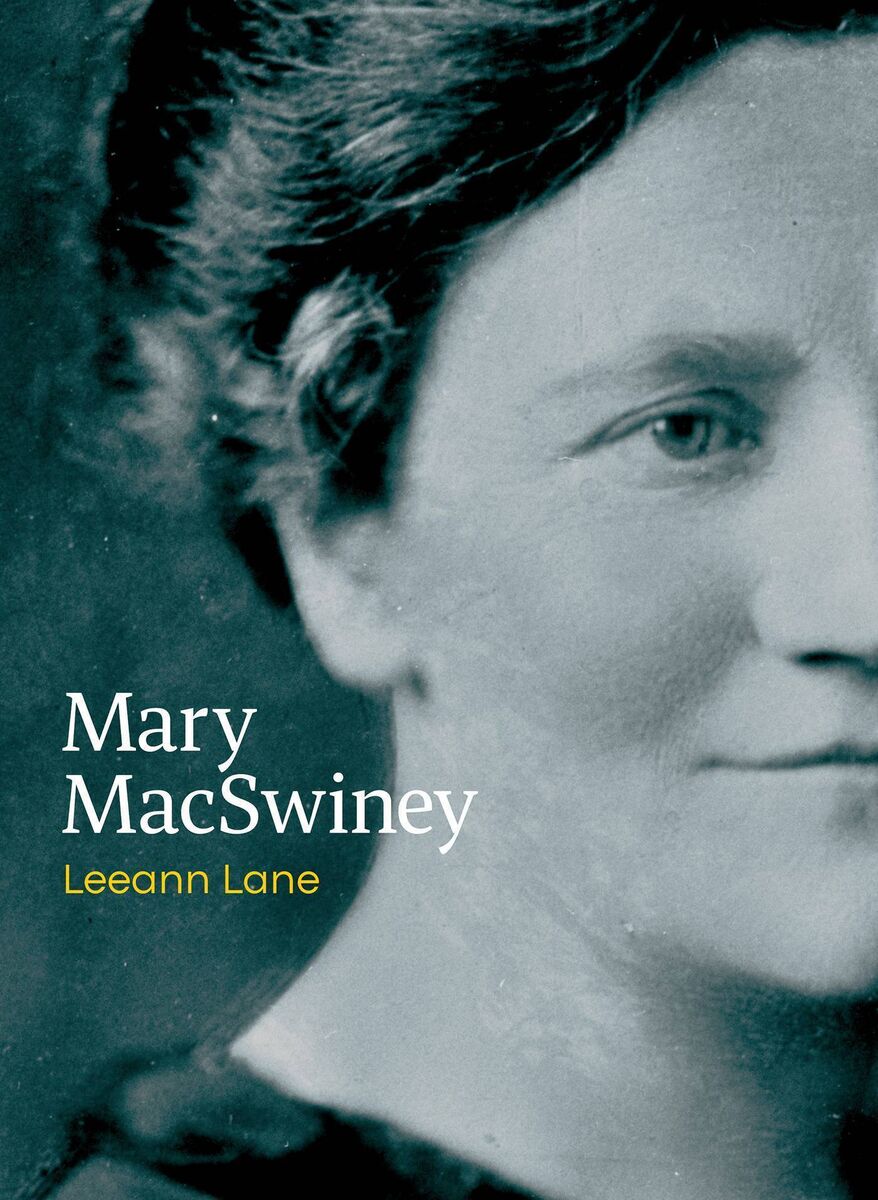
Following Terence’s death, it was decided to maintain that international intensity, so Mary and Terence’s widow, Muriel (née Murphy, of Murphy’s Distillery, later Midleton), travelled to the US to perpetuate the campaign for recognition of Ireland’s independence among the huge population of Irish Americans.
Overall, it was a very successful 6-month tour, largely because Mary was such a compelling public speaker, drawing huge crowds. “She gave such incredible, intellectual speeches, many of which lasted 3-4 hours,” says Cathal.
“In addition, Muriel became the first woman to ever be awarded the Freedom of the City in New York and Boston,” he adds.
While in the US, Mary was anxious that compromise would not prevail at home in Ireland, as the pro/anti Treaty debate was brewing.
She had worked very closely with de Valera in the lead up to it, and, according to Leeann, was steadfast in her belief that “full independence for Ireland was necessary; a domestic parliament with Ireland still part of the empire was wholly unacceptable.”
In her book, Leeann includes correspondence between Dev and Mary, which showed the depth of their friendship prior to the Treaty. “He bared his soul to her and shared his concerns at the direction of the civil war”, she insists. “And consequently, he got a lot of flak for that from the pro-Treaty side. They tried to emasculate him by claiming he was being ‘managed’ by Mary MacSwiney.”
On the 21 December 1921, following her return from the US, Mary made an historic speech in the Dáil debate against the Treaty. It lasted 2 hours and 35 minutes.
The jeering and laughing, and the wave of ridicule and dismissal that followed this, by the largely male media and her male political counterparts, was unrelenting.
“Gender ridicule definitely came into play”, attests Leeann.
For example, the prominent Irish politician, William T Cosgrave, leader of the pro-treaty side, described the anti-Treaty women as ‘The Furies’, ‘Bedlam Out of Bounds’. And felt that “violence had made them unhinged.” No such descriptions overshadowed the male politicians.
The Vote of the Treaty was taken in January 1922.
While she was in the US, she had been elected to the Dáil but remained firm in her rejection of the Treaty and in her refusal to swear an oath of allegiance to the British crown.
She never set foot in the Free State Dáil.
In 1922, she was incarcerated and immediately went on hunger strike.
The optics for the government were dire: the sister of Terence MacSwiney, the man once lauded as a martyr, was now being vilified for those same beliefs for which her brother had sacrificed his life.
They quietly released her.
She was later re-arrested and incarcerated in Kilmainham prison where she, again, went on hunger strike. She was ultimately re-released without fuss or fanfare.
When Sinn Féin split in 1926, de Valera established Fianna Fáil.
“Mary believed de Valera would never compromise,” says Leeann. “And she was utterly heartbroken when he did.”
“While Sinn Féin continued to exist as a party, it wasn’t attracting any new members, and the ones that stayed the course were strained and squabbling.
“Fianna Fáil, meanwhile, went from strength to strength, and Mary was reduced to sniping at the edges with no political clout.”
Before he died, Terence had made Mary joint guardian of his only daughter Máire Óg, alongside his wife Muriel.
Cathal explains that it was because his grandmother, Muriel, “had long-term emotional issues,” and Terence wanted to ensure his daughter was cared for.

On her return from the US tour, Muriel continued to feel overwhelmed. Her health was suffering, so she sought out the best medical help in Europe and travelled there with her young daughter.

Muriel spent many years in Switzerland and Germany and her daughter Máire Óg attended a number of boarding schools.
When Mary went over to visit them, the then teenage Máire Óg begged her to bring her back to Ireland. So, she did.
Muriel was not happy, and the ensuing High Court case, was not a pleasant affair.
As she had demonstrated her entire life, Mary was never one to back down in the face of adversity and would fight tooth and nail for her family.
In contrast to Muriel, Máire Óg felt that Mary had ‘rescued’ her.
“My mother always said that Mary was a surrogate mother to her,” says Cathal, “providing her with both a stable home and family life.”
The love between Mary and her niece was strong, which gave Mary great happiness in the last decade of her life.
“While politically, in her refusal to accept the majority acceptance of the Treaty, Mary had found herself isolated.
“On a personal level, however, her life was utterly transformed when her niece came to live with her in St Ita’s,” concludes Leeann.
“Throughout her life, she was motivated as much by her love of family as she was of republican ideals.”
Mary MacSwiney passed away at the age of 70.
She had gained a reputation as an unrelenting ‘virago’. She never could accept the Treaty and fought her entire life for an independent republic. She grew up listening to that dream as she sat around the dinner table with her family.
Her younger brother, Terence, sacrificed his life for it.
How could she ever abandon it. Or him.
This story originally appeared in the 2025 Holly Bough.