100 years on from tragic inferno at Dromcollogher cinema 
A fire at a makeshift cinema in Dromcollogher in 1926 was one of the worst disasters in the history of the State. JOHN DOLAN traces the part a Cork man played in it. 
100 years on from tragic inferno at Dromcollogher cinema 

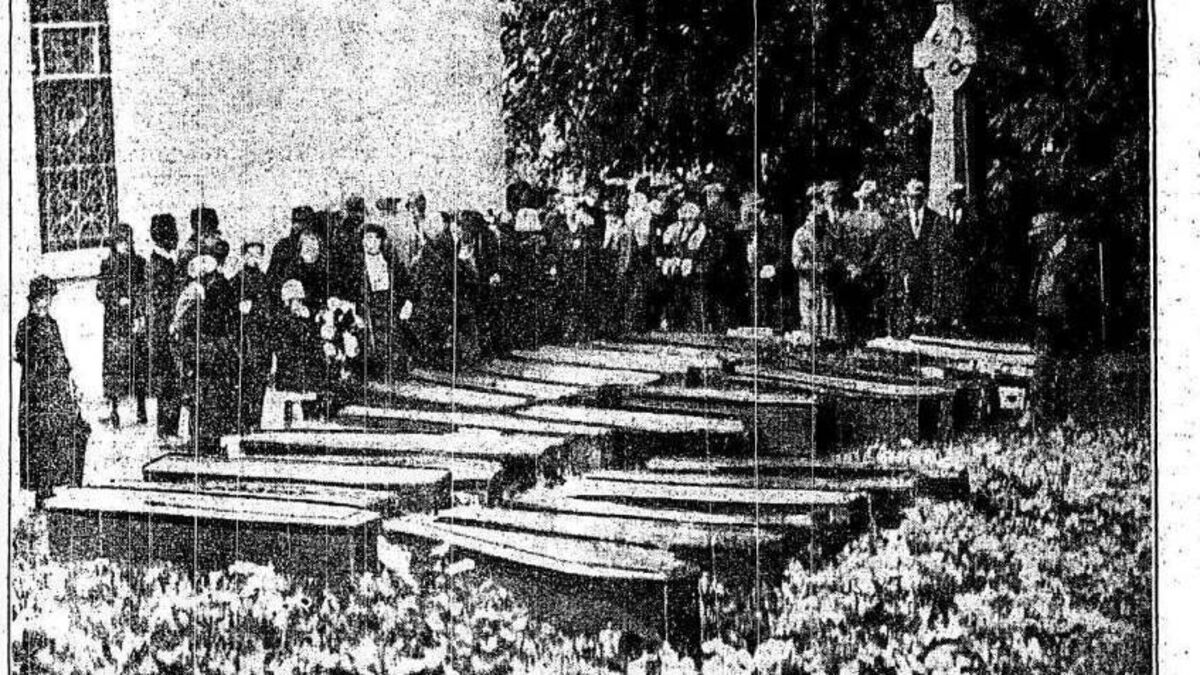
A photo from the Cork Examiner report of the Dromcollogher fire in September, 1926, showing some of the coffins. More than half the victims could not be identified and a mass burial took place.

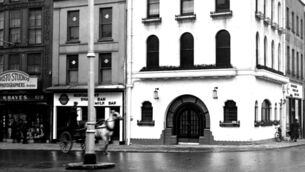
On Saturday night, September 3, 1926, Patrick C. Downing left the Assembly Rooms cinema on South Mall, where he worked as a projectionist.
As he made his way to his home at 42, MacCurtain Street - now the site of Shandon Cabs - he may have had a spring in his step.

That night’s film in ‘The Assems’, a cowboy flick called The White Outlaw, starring real-life rodeo performer Jack Hoxie and Scout the Wonder Horse, had gone down well with the patrons.

The cinema did not open on Sundays, owing to strict observance of the Lord’s Day, but Patrick had a plan up his sleeve that evening - a nixer.

The next day, he would take the train to Charleville, and from there cross the Cork border, to Dromcollogher in Co. Limerick, with the reels that were currently under his arm.

He planned to show the films at a makeshift cinema in a barn there for some extra cash.

However, on Sunday, September 4, 1926, one of the worst disasters ever to take place in Ireland occurred in Dromcollogher - and you wonder if Patrick ever managed to put a spring in his step again.

******

That Sunday night, after Benediction at the local church, a large swathe of people - some say 150, others as many as 250 - entered the barn in the Limerick village for the movie night, paying ninepence each. Many still had their rosary beads entwined in their hands.

But when a candle set fire to the film reels, it set in motion a raging inferno that spread across the room in seconds. 

By the end of that night, 48 men, women, and children lay dead - a tenth of Dromcollogher’s population.

Although the barn was a death trap waiting to happen, in the aftermath, Patrick’s role in the tragedy as the projectionist was put forward as a contributory factor.

The scene of the disaster was the upstairs of a large two-storey shed - about 20ft wide and 50ft long - in Church Street, owned by Patrick Brennan, which had hosted travelling plays, film shows, and concerts in the recent past.

A local hackney car driver, William Forde, with an eye for a business opportunity, decided to hire the hall that Sunday night in September, 1926, and, as he knew Corkman Patrick, had asked him to provide the movie reels.

Downing, who had been working as a projectionist for more than a decade, arrived in Dromcollogher with his films in a bag, leaving their metal protective cases in Cork, a fact that was to prove crucial to the night’s events. Film was then made of celluloid - a highly flammable plastic.

A generator hooked up to a lorry was used to power the projector, and candles illuminated the makeshift box-office.

The film show began shortly after 9pm. With macabre irony, a film was being shown called False Alarm, when a candle ignited one of the film reels, and this set off the horrific chain reaction as flames spread across the enclosed space.

One report stated that a local Garda, Sergeant Long got up to kick the film off the table, but another man got to it first and started using his cap to beat the flames, fanning them and causing the table and the film to be engulfed in fire.

The raging fire was so intense that it was seen in Charleville more than 10 miles away.

Panic ensued, and there was a surge to the sole door. A few people managed to escape from one of the two windows - below one of which, fortuitously, was a pile of hay. However, a woman got wedged in one window, sealing the fate of herself and many others behind her.

When the loft floor collapsed onto the hardware store room, which contained wood, glass and five gallon tanks of petrol, the horror was complete.

More than half of the victims were aged under 25, and 15 were children. The youngest of the dead were two seven-year-olds. Many of these children had been gathered at the front nearest to the screen, and furthest away from the exit.

Jeremiah Buckley, a 52-year-old national teacher, his wife, Ellen, 47, daughter Bridie, 10, sister-in-law Kate Wall, 45, and their maid, Nora Kirwan, 18, all perished - an entire household wiped out. The family terrier was seen whining at the door of the family home the next day.

Amidst the terror were scenes of valiant bravery.

Robert Aherne, a 31-year-old publican, who lived on Church Street, escaped the blaze with his pregnant wife of five months, Nora, but returned to try to rescue his mother-in-law, Anne O’Callaghan, and perished along with her.

A man who had been confined to a wheelchair for years lost his wife and only daughter. He died shortly after, it was said, from a broken heart.

One of the victims had not even been at the film show. William Savage, a 56-year-old butcher and farmer, who lived across the road, was wrongly told his two sons, Patrick and John Joe, were trapped in the inferno. He rushed into the burning building and was never seen alive again.

The location fatefully conspired against the cinema-goers that night.

The nearest fire brigade was more than 30 miles away in Limerick and, after a fine summer, both wells in the village were dry, while the river at the back of the church had been reduced to a trickle.

The screaming from the blazing inferno was said to be deafening. The Limerick Chronicle reported: “Heart-rending cries for help were raised by these unfortunate creatures, but none could be given. They had to be left helplessly to their doom.”

A survivor, many years later, said the huge number of deaths was down to sheer panic and chaos. He added: “I can’t understand how the melodeon player, with his instrument, who was at the very front of the hall, made it all the way back and out, while others, who were near the back, were burned.”

More than half of the burned corpses were unidentifiable. It was decided a mass burial would have to take place.

******

In the aftermath of what locals came to know as ‘The Burning’ and the Limerick Chronicle dubbed ‘the Dromcollogher Holocaust’, Corkman Downing and William Forde were both charged with manslaughter, but the state dropped the case before it went to court.

The decision must have come as some relief to Patrick, who told the inquest a few days after the fire that he had urged the crowd to “keep cool, stay in your seats” when the flames broke out.

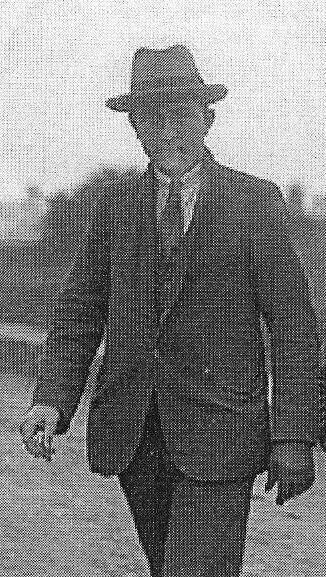
Patrick C. Downing, who lived on MacCurtain Street, Cork, in the aftermath of the tragedy at the makeshift cinema in Dromcollogher, for which he had provided the film reels. His hand is gloved having been hurt when he tried to re-enter the building to save those trapped inside

He added: “But they rushed down to the door. I stayed there for a good bit. Honestly, as true as God is above in heaven, I thought there was nobody else in the hall when I rushed out myself.”

Once outside, Patrick, who was “overcome with emotion” at the inquest, explained that he tried to access the premises via a ladder when he heard people were still inside the building, but it fell down and injured his hand.

A local Garda corroborated this, having witnessed Downing “make several attempts to get back in to help, but he was eventually restrained by Sergeant Long”.

Under questioning, the Corkman admitted he had had reservations about the safety of the hall, and that he had neglected to put the celluloid reels in the metal cases as he should have done.

Downing is said to have continued working as a projectionist in Cork after the tragedy, and died of cancer in St Luke’s Hospital in Cork in the 1950s.

As for William Forde, he emigrated to Australia, where he reportedly died after accidentally replacing flour with the pesticide stricnine when baking bread during a rabbit-hunting trip.

******

Some years later, a film show was being held in a marquee outside Dromcollogher. It was a stormy evening, and, as the film was about to start, a flash of lightning lit the sky outside.

By the time the rumble of the thunderclap had died away, the tent was empty. Every member of the audience had dashed out under the canvas and away, many of them surely suffering the effects of what we now call Post Traumatic Stress Disorder (PTSD).

The 48 lives lost at Dromcollagher constituted the worst single disaster in the new state until the fire at Whiddy Island in Cork in 1979, in which 50 people died. Two years after that , 48 people also perished in the Stardust tragedy in Dublin.

You can see a British Pathe News film of the Dromcollogher tragedy on YouTube.

Mallow link to young victim 

Among the victims of the Dromcollogher cinema fire was a little girl who had been staying with her relatives in Mallow shortly before the tragedy.
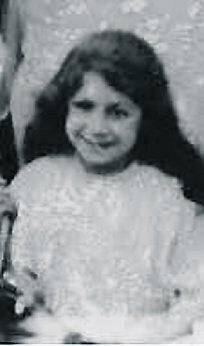
Nora Hannigan
Nora Hannigan

Nora Hannigan  lived in London, but was in Ireland on a family holiday at the time with her mother.

During her stay, Nora left Mallow to visit family in Dromcollogher and was among the 15 children killed at the fateful cinema show. A memorial was erected to her by the people of Deptford in London, at Brockley Cemetery.

A relative, Brid Considine Pulker, explained the family connection.

“My great great grandmother was from Mourneabbey. and a few of the family moved to London in the 1880s. Some family stayed in London, and mine moved back to Mallow.”

This story originally appeared in the 2025 Holly Bough.
more Holly Bough articles

Cork's National Monument...and the friendship that helped to  build it Cork's National Monument...and the friendship that helped to  build it
Muhammad Ali, Joe Frazier 97 days after 'Fight of the Century', champion boxer failed to draw crowds to concert in Cork
Is Jim Young Cork’s best ever sportsman? Is Jim Young Cork’s best ever sportsman?

More in this section

Cork's National Monument...and the friendship that helped to  build it Cork's National Monument...and the friendship that helped to  build it
Throwback Thursday: My Kilgrew’s train set from 1964 still works perfectly Throwback Thursday: My Kilgrew’s train set from 1964 still works perfectly
Throwback Thursday: 'I still have the pram I got from Kilgrew’s in Cork city' Throwback Thursday: 'I still have the pram I got from Kilgrew’s in Cork city'

Sponsored Content

Coca-Cola Thank You Fund sponsored Coca-Cola Thank You Fund to surpass €2m invested in local communities
Discover the heart and soul of Irish Whiskey at Midleton Distillery Experience Discover the heart and soul of Irish Whiskey at Midleton Distillery Experience
Aimee Connolly’s content room is pretty in pink Aimee Connolly’s content room is pretty in pink
Contact Us Cookie Policy Privacy Policy Terms and Conditions

© Examiner Echo Group Limited

Add Echolive.ie to your home screen - easy access to Cork news, views, sport and more