Throwback Thursday: Memories of the Cork bridge you had to walk across
There have been many incarnations of the Youghal bridge to Waterford, and for many years it was closed to traffic, recalls JO KERRIGAN in Throwback Thursday
Throwback Thursday: Memories of the Cork bridge you had to walk across

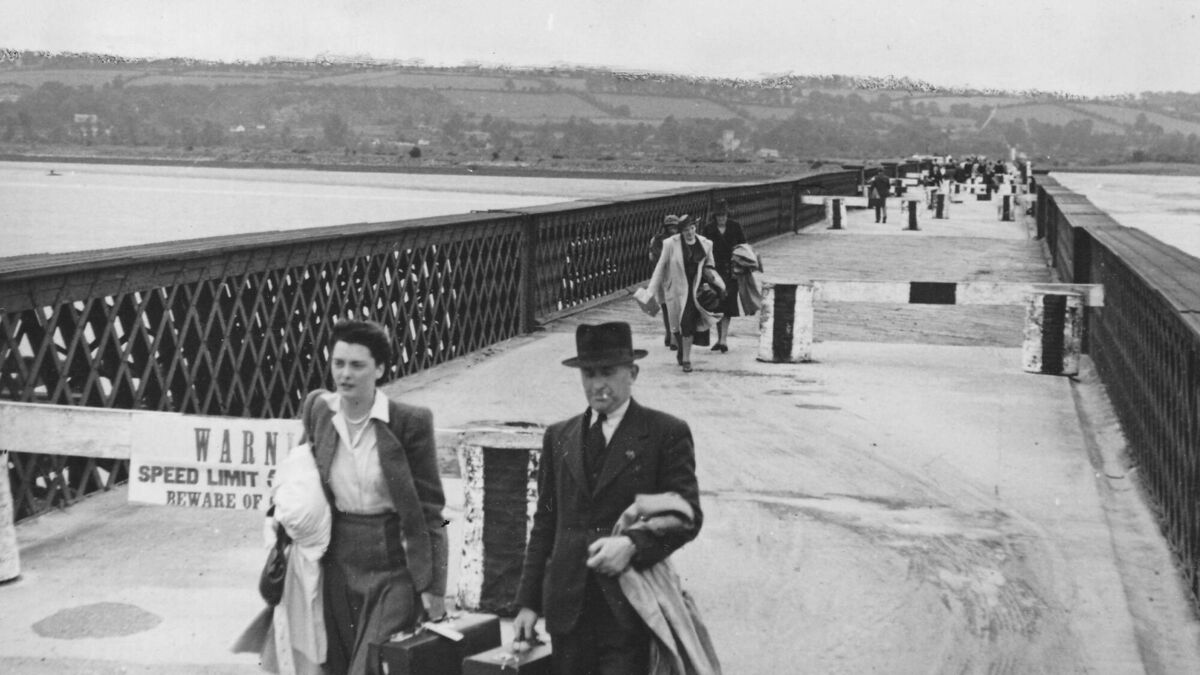
Bus passengers crossing the Old Youghal Bridge on foot in 1944

We have some great memories and pictures to share in relation to Cork’s old railways and bridges this week.

But first, a very trenchant observation from Micheál Kenefick on how he in childhood felt about the degrading and (to today’s women, unbelievable) Catholic Church practice of ‘churching,’ that is, ‘forgiving’ and ‘accepting back into the fold’ women who had done their obedient duty to church and husband, and given birth, often many times.

“I enjoyed Patsy Hunter’s piece recently in which he spoke of this, and I’d like to make a point on the churching,” said Micheál.

“I was an altar boy in the 1950s, spouting Latin without a clue as to what the words meant. It’s also worth noting that as a 10/11 year old, I hadn’t a clue about the ways of the world either.

“However, I always felt uncomfortable at a churching, as some hidden instinct told this young child that this was wrong.

“Also, not a year of the 70 since has gone by without some recollection of this practice. That shows how strongly this negative experience affected me.

“I never remember anyone in the church, except the woman, the priest, and one altar boy kept back after Mass.”

Thank-you for that, Micheál. It isn’t something that should be forgotten. A relic of crueller times.

And now to bridges. Slow bridges!

Prompted by the reference last week to bringing bicycles by country bus to places far and wide, reader Cyril McIntyre has sent us some memories and photos of the ‘infamous’ and legendary Youghal Bridge.

“The original bridge carrying the main road between Cork and Waterford across the River Blackwater east of Youghal was completed in 1832 and was rebuilt in 1880,” explains Cyril.

“By the 1930s, it was showing signs of deterioration in its condition and eventually, in February, 1939, Waterford County Council found it necessary, in the interests of safety, to place severe restrictions on motor traffic crossing the bridge.

“A maximum laden vehicle limit of 3.5 tons was imposed with a speed limit of five miles per hour, and a series of barriers (old oil barrels painted in black and white stripes and filled with cement) were put in place to restrict traffic movement.

“Effectively, the bridge was closed except to cars and small commercials,” recalls Cyril. “Buses on the Cork/Waterford route had to turn at either side of the bridge and passengers were obliged to walk across to join the bus waiting at the other side.”

Was that really so? Oh yes, confirmed my older brother, Tommy.

“I can remember when we drove that way, you would see passengers getting off their bus at one end, and walking carefully across to the other side to board another bus and continue their journey,” he confirmed.

Well, I never noticed that myself, although I do recall quite vividly how scared I got as our Kerrigan Bus (whatever battered vehicle it was at the time) made its way waveringly between the barrels while my father cheerfully made bets about how far we would get before the whole thing collapsed and we were plunged into the river far below!

Whenever I pass that way, particularly on the Waterford side where there is still a little paved quayside, I remember the old bridge with a kind of nervous nostalgia.

Cyril continues his memories.

“From October 1, 1939, the Great Southern Railways altered the route to run via Fermoy and Lismore so as to avoid Youghal Bridge.

“This resulted in problems serving places such as Ardmore.

“For a time, the GSR (Great Southern Railways) ran a service between Ardmore and Youghal using a Dodge nine-seater estate car which was light enough to cross the bridge, but this was far from satisfactory.

“So, from June 1, 1940, the original method of working was restored.

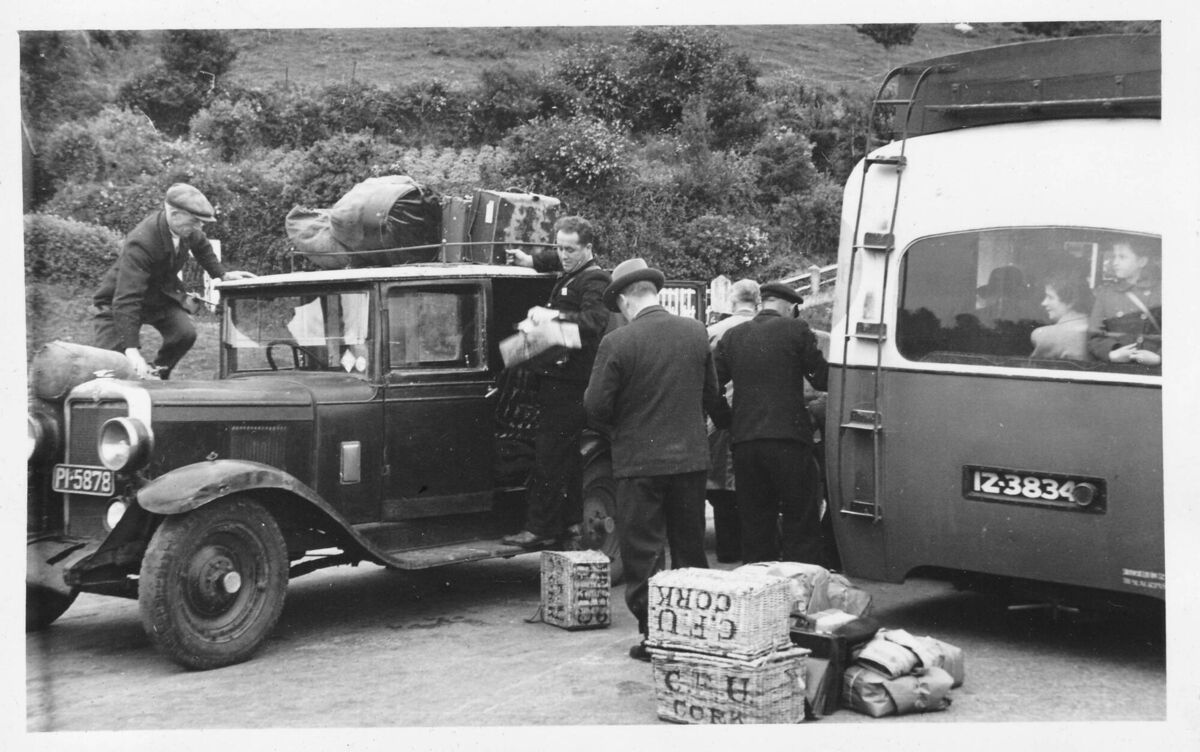
Luggage being transferred to the Waterford bound bus at Youghal Bridge in 1944. Picture supplied by Cyril McIntyre

“Michael Ahern, of the Strand Garage in Youghal, was contracted by the GSR to provide a Chevrolet five-seater hackney car with trailer to carry parcels and luggage across the bridge, along with the bus crews and those passengers who would have suffered hardship if required to walk.”
This state of affairs continued until January, 1963, recalled Cyril.

“I can remember crossing the bridge on several occasions in the 1950s, when travelling with my mother and sister for summer holidays with our grandparents who lived in Modeligo, between Dungarvan and Clonmel,” he said.

“We would leave Cork on the mid-day Waterford bus, changing in Dungarvan for the 6.15pm bus to Clonmel. The shop in Dungarvan (which was the bus agency) was owned by Alice Flynn, who was a cousin of my grandmother, so we were always treated to tea and fruit cake while waiting for the Clonmel bus!

“On one occasion my father, Inspector Philip McIntyre, got into ‘hot water’ with his District Superintendent for sending a small bus across the bridge.

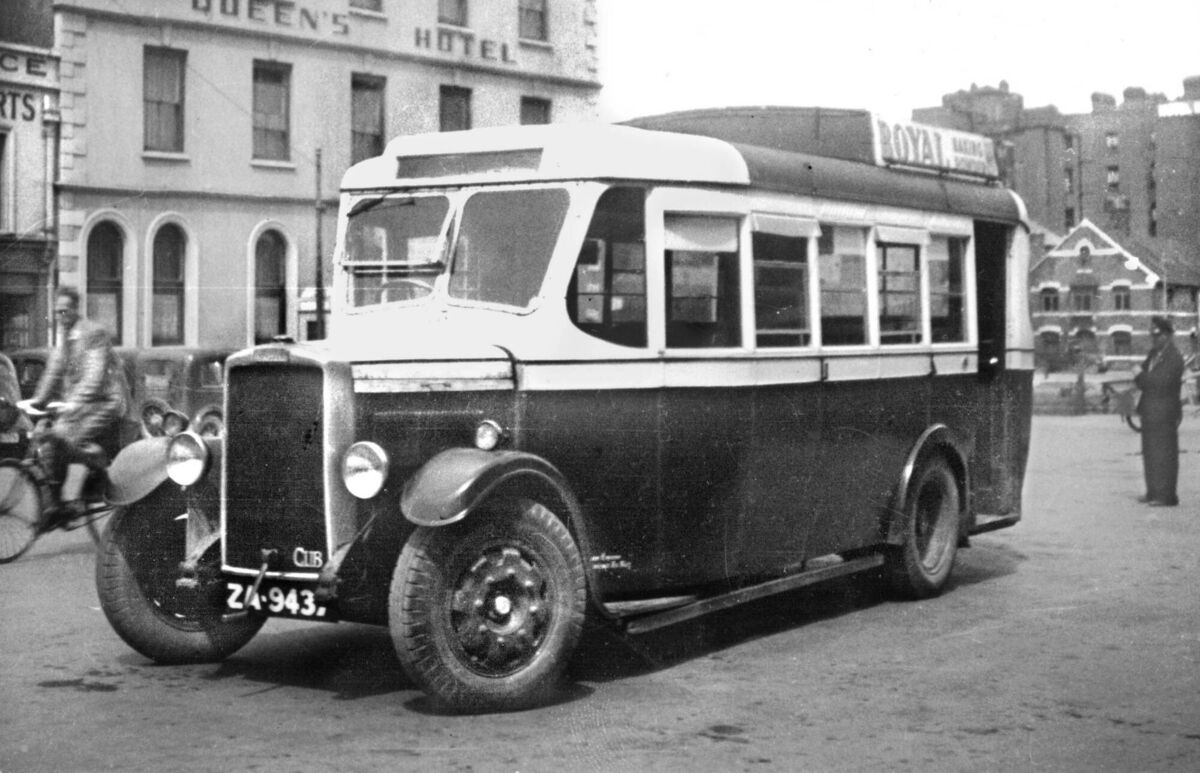
“On Saturday, May 24, 1947, he was travelling with the 8.45am service from Waterford to Cork; the ‘auxiliary’ second bus on the service was a Leyland Cub 20-seater, what would nowadays be described as a minibus.

“On arrival at the bridge, the weather conditions were atrocious with very heavy rain and a strong gale. In the interests of avoiding severe hardship to the passengers, he decided to use the small bus to shuttle people across the bridge in addition to the hackney car.

The Leyland Cub 20-seater minibus which Inspector McIntyre sent across the Youghal Bridge, pictured here at Cork Bus Station in 1946

“This was possible by placing the bus, which had an unladen weight of three tons, on the weighbridge at the bridge entrance and then boarding passengers individually until the permissible laden weight of 3.5 tons was reached.
“Two round trips with the small bus and two round trips with the hackney car got everybody across the bridge in relative comfort.”

However, Cyril explains: “CIE management took a very dim view of this initiative, as if it became common knowledge it would have led to demands for the provision of the small bus to shuttle across the bridge on a regular basis.

“My father was ‘severely reprimanded’ by the District Superintendent in Capwell but, as they say, ‘he lived to fight another day’.”

Now that is a great story, Cyril, showing your father’s thoughtfulness for the poor bus passengers. One can well imagine the distress of having to make your way across that extremely long bridge on foot with winds howling and rain driving at you sideways. They must have been extremely grateful to your dad!

Cyril was thoughtful enough to attach two great photos from 1944, one showing people walking across the bridge, the other showing activity at the Waterford side, transferring luggage and parcels from the Chevrolet car to the bus. The roof carrier and ladder for the conductor to load luggage and parcels were an essential feature of all country buses until the advent of one-person operations in the 1960s,” added Cyril.

And aren’t we all the poorer for it? Most of us can recall how well we knew the different conductors on various bus services in and out of the city – the thin, cross one, the plump, smiling one, the fella who helped old ladies on and off, the worn leather bag and the jingling machine which issued the tickets, both hung round his neck.

Now you have to make sure you have some class of card or ticket before you board the bus, and then remember to tap it on a machine somewhere inside the door. Not like the old days at all!

The new bridge, somewhat upriver from that old one, was opened on January 23, 1963, and the buses started running over it from January 27 that year.

Now, will some kind reader tell me exactly when the valiant old structure was dismantled? Or was it just left to fall down? You can still see the approaches to where it once spanned the Blackwater on either side – but when did it cease to be?

Cyril McIntyre was also prompted to write about Michael Collins, following Regina Hegarty’s memories of her grandfather and his friendship with the great man in the 1920s in last week’s Throwback Thursday.

“When Collins was killed in that ambush at Béal na Bláth, he was travelling in a Leyland Straight Eight touring car, a very rare type of which only 18 were built,” said Cyril.

“The Straight Eight was an attempt by Leyland Motors of Lancashire, well known builders of trucks and buses, to break into the luxury car market and compete with Rolls-Royce. Unfortunately the economic conditions of the 1920s meant there was little demand for luxury cars of any type, hence the small number built....

“It is hard to understand why General (Nevil) Macready took delivery of such a luxurious staff car in September, 1921, during the truce leading to the Treaty negotiations, when it was clear that changes in the governance of Ireland were on the cards.

“Neither is it clear whether the car was an official Army vehicle or the personal property of General Macready, and how it came into the National Army after the Treaty.

“Equally inexplicable is why Michael Collins chose to travel in such a conspicuous, distinctive car, painted yellow, which identified him as an easy target for a potential assassin.”

Cyril adds: “Some years ago, I enquired in the Military Archives if there was any file relating to the Leyland car and the circumstances of its return to Leyland Motors after the Béal na Bláth ambush. No trace could be found of any file relating to this car.

“There is a suggestion that immediately prior to the change of government after the 1932 election there was a bonfire of files, including those relating to the death of Collins, in a Dublin barracks; whether or not there is any truth in this I don’t know... it may just be a ‘conspiracy theory’.”

Now aren’t you the mine of information, Cyril? But he has more! This time on our old local train services.

“I did a bit of digging on the history of the Muskerry Tram. This colloquial term probably derives from the fact that the Cork & Muskerry Light Railway was one of several narrow gauge lines built under the provisions of the Tramways & Public Companies Act, 1883, which enabled central and local government to finance the building of cheaply constructed railways in rural areas.

“Up to at least the late 1950s, the station building at Blarney was still in CIE ownership; part of the building accommodated public toilets while there was also a shop run by a man named Seán McNamara, who in addition had a contract for delivery of Sunday newspapers. The former tracks had been paved over to provide a parking area for tour coaches.

“The former station building at Leemount became a café named “Beauty Unadorned” where I remember getting gorgeous ice creams on some of our Sunday outings in the 1950s and 1960s.”

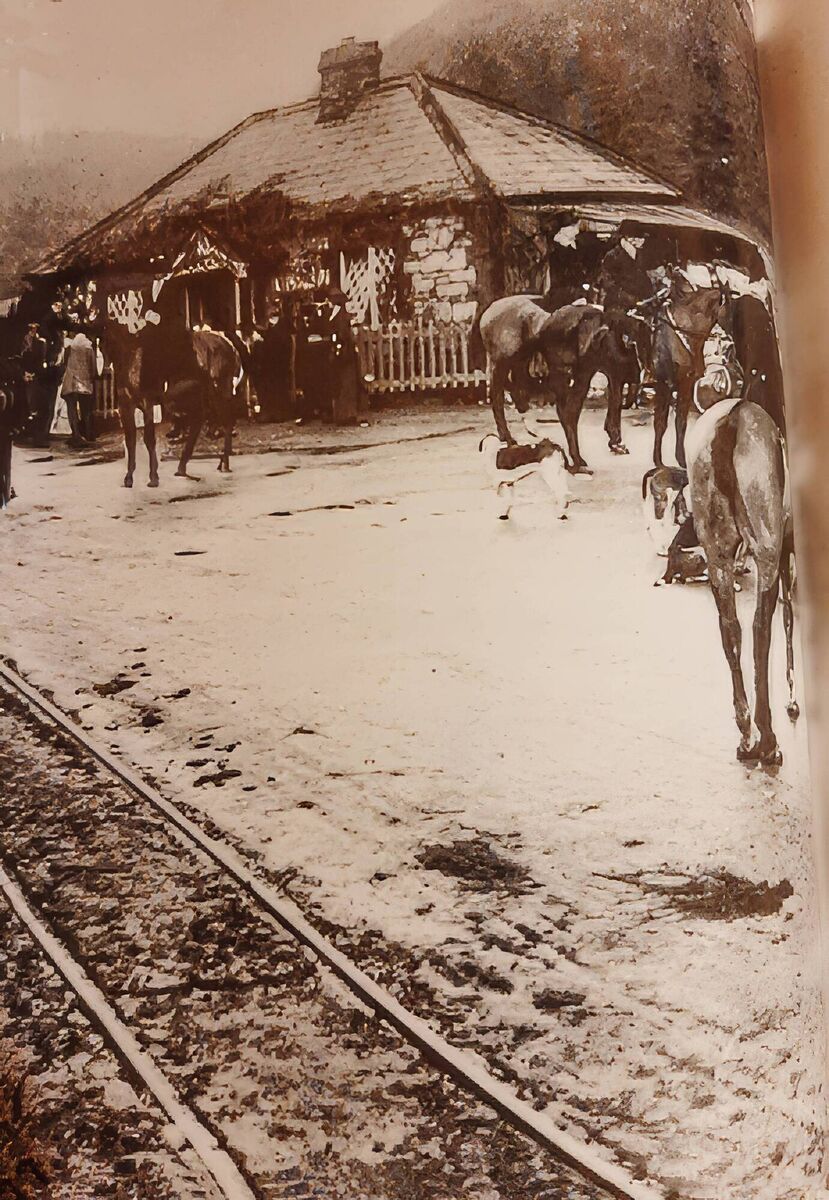
Would there be a picture at all of the (previously unknown to this writer) station or halt at Leemount, beyond the Carrigrohane turn? Well, there was, and it is published here.

The old Muskerry Tram halt at Leemount.	Picture supplied by Cyril McIntyre
The old Muskerry Tram halt at Leemount. Picture supplied by Cyril McIntyre

By the dress of the riders, and indeed some of them elegantly side-saddle, it would appear that this picture was taken during a meet of the local foxhunters. The South Union maybe? But that cottage is still there, surely? Never knew it was once a stop on the Muskerry line!
Send us your memories (and your old photographs too, if you are lucky enough to have them). Email jokerrigan1@gmail.com or leave a message on our Facebook page: www.facebook.com/echolivecork.

More in this section

Throwback Thursday: When the horse and cart ruled in Cork Throwback Thursday: When the horse and cart ruled in Cork
Throwback Thursday: 'The road was washed away...the army had to put a bridge in place’ Throwback Thursday: 'The road was washed away...the army had to put a bridge in place’
Tale of the famous actor mistaken for sailor on Moby Dick set in Youghal Tale of the famous actor mistaken for sailor on Moby Dick set in Youghal

Sponsored Content

Keeping their house in order: How PSRA regulation has raised the bar for Ireland’s property services sector Keeping their house in order: How PSRA regulation has raised the bar for Ireland’s property services sector
"My master's at UL taught me that structured learning and a demanding career can coexist" "My master's at UL taught me that structured learning and a demanding career can coexist"
Three days of steam, music and heritage at the 62nd National Steam Rally Three days of steam, music and heritage at the 62nd National Steam Rally
Contact Us Cookie Policy Privacy Policy Terms and Conditions

© Examiner Echo Group Limited

Add Echolive.ie to your home screen - easy access to Cork news, views, sport and more