Throwback Thursday: 'Our father was in charge of dismantling the old Youghal bridge'
After readers shared memories of the old Youghal Bridge in Throwback Thursday, JO KERRIGAN hears from the man responsible for demolishing it
Throwback Thursday: 'Our father was in charge of dismantling the old Youghal bridge'

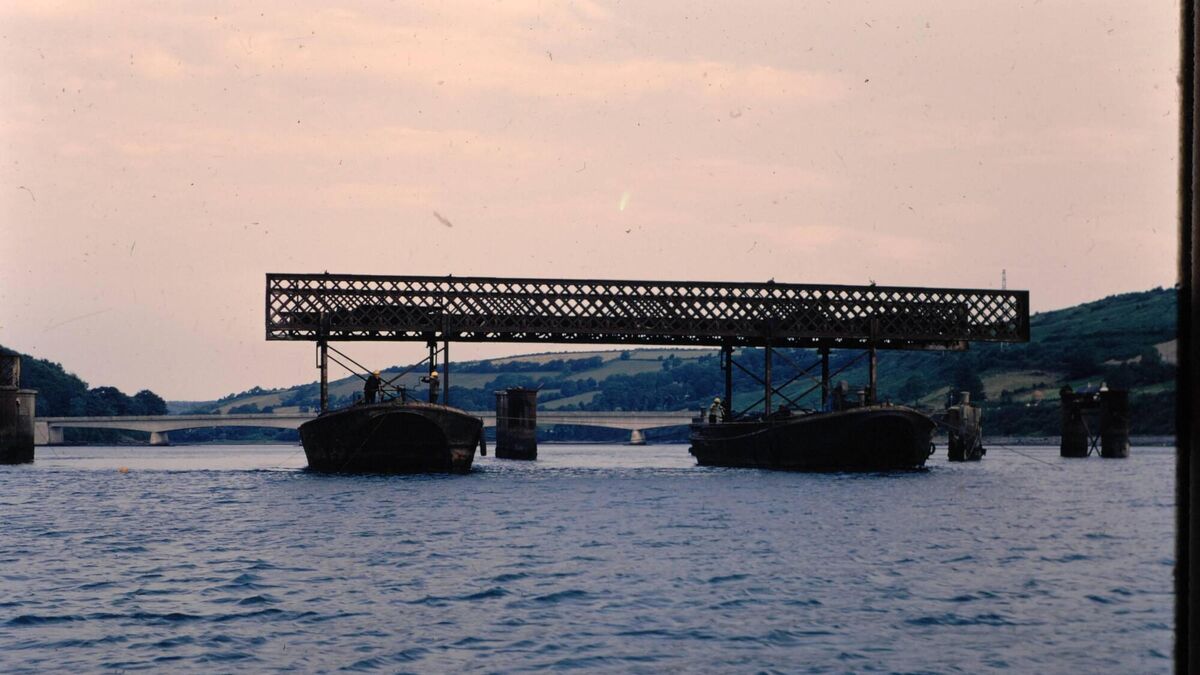
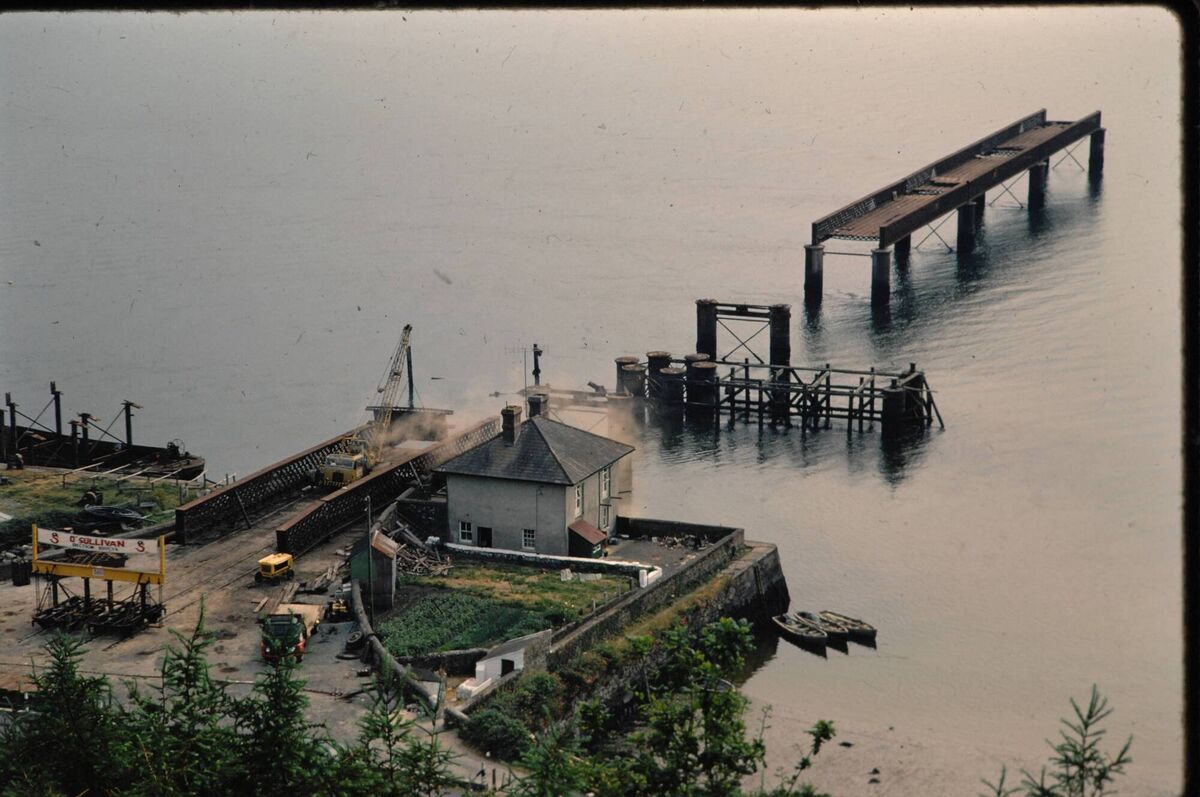
Barges lifting off the spans of the old Youghal bridge, with the new bridge in the background

Remember last week in Throwback Thursday we featured that infamous Old Youghal Bridge?
How for many decades traffic was strictly controlled on it, with cars having to cross one at a time in a slalom-type setting between barrels, to lessen the risk of toppling the decaying structure?

And particularly how bus passengers had to walk across from one side to the other, leaving either the Cork or the Waterford bus and joining the other bus at the far side?

We did ask if anyone knew what actually happened to the old bridge once the nice new strong one was opened in 1963, further upriver. And now we know!

We have heard from sisters Meabh Purcell and Marian Wilson (nee Purcell) about exactly how the old Youghal Bridge finally met its demise. Believe it or not, their dad was in charge of that mammoth event.

Gosh, don’t we find out fascinating things here in De Echo!

“In your Throwback Thursday feature of July 30, about the Old Youghal Bridge, you requested information on how and when the ‘valiant old structure’ was dismantled,” say Marian and Meabh.

“Our father, Charles J. Purcell, B.E., M.Sc, of Bishopstown, was the engineer in charge of taking down and disposing of the structural elements of the old bridge.

“He enjoyed that Echo article immensely, and has vividly recounted - at the age of 96 - the project to us in some detail.”

The pair continue their story, and sent in photos to helpfully illustrate it.

Bridge spans being brought to shore during the demolition of the old bridge at Youghal

“Our father worked with O’Sullivan Erection Services, which won a contract to remove the structure for Cork County Council during 1972 (February to August).
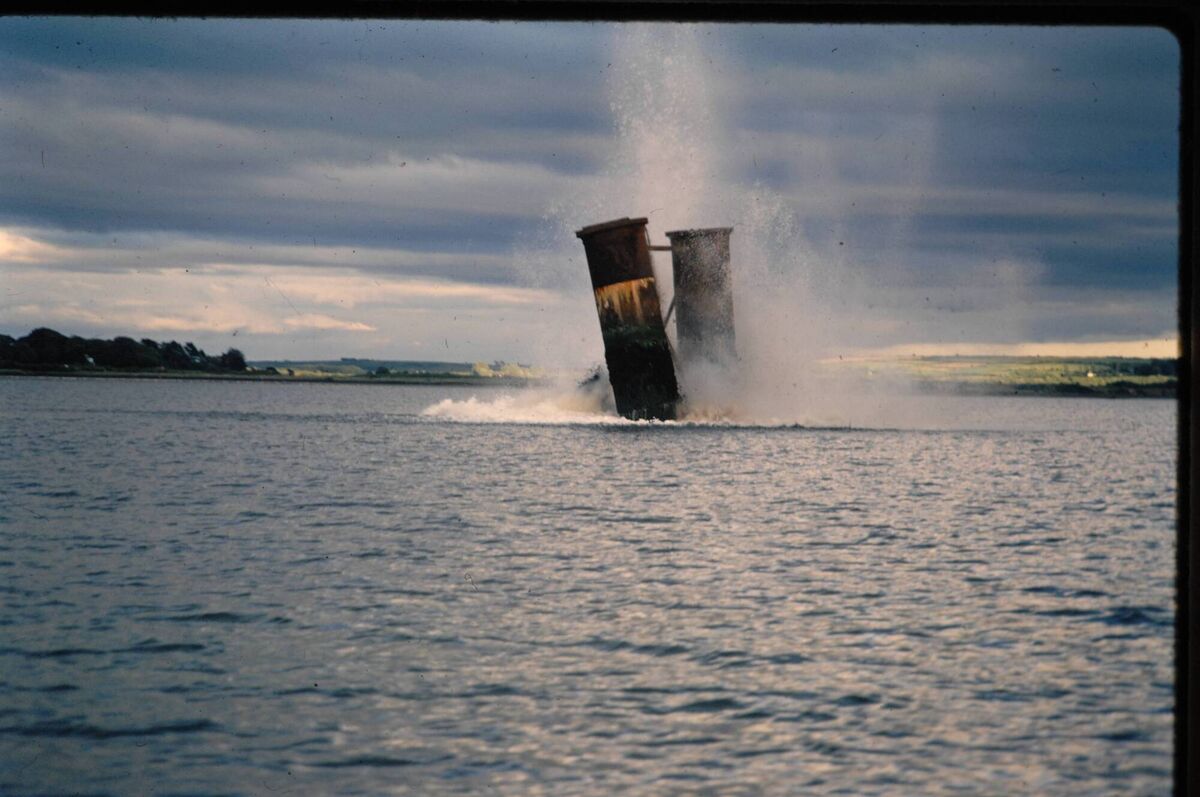
“The requirement was to remove the deck elements and to collapse the piers into the riverbed, the latter in such a way as not to cause subsequent danger to shipping on the river.

“The method involved, firstly, drilling into the piers right to the bottom of each one.

Piers being imploded during the demolition of the old bridge at Youghal

“Secondly, the deck members were removed using barges which were moored at low tide beside the piers, secured in position by pulleys located under the river-bed.
“The barges rose with the tide and literally lifted off each of the 116ft iron spans in turn (see photo with the new bridge in the background), and brought them to shore at Leamount to be disposed of (see photo) on rail bogeys fitted with steel beams to take the load.

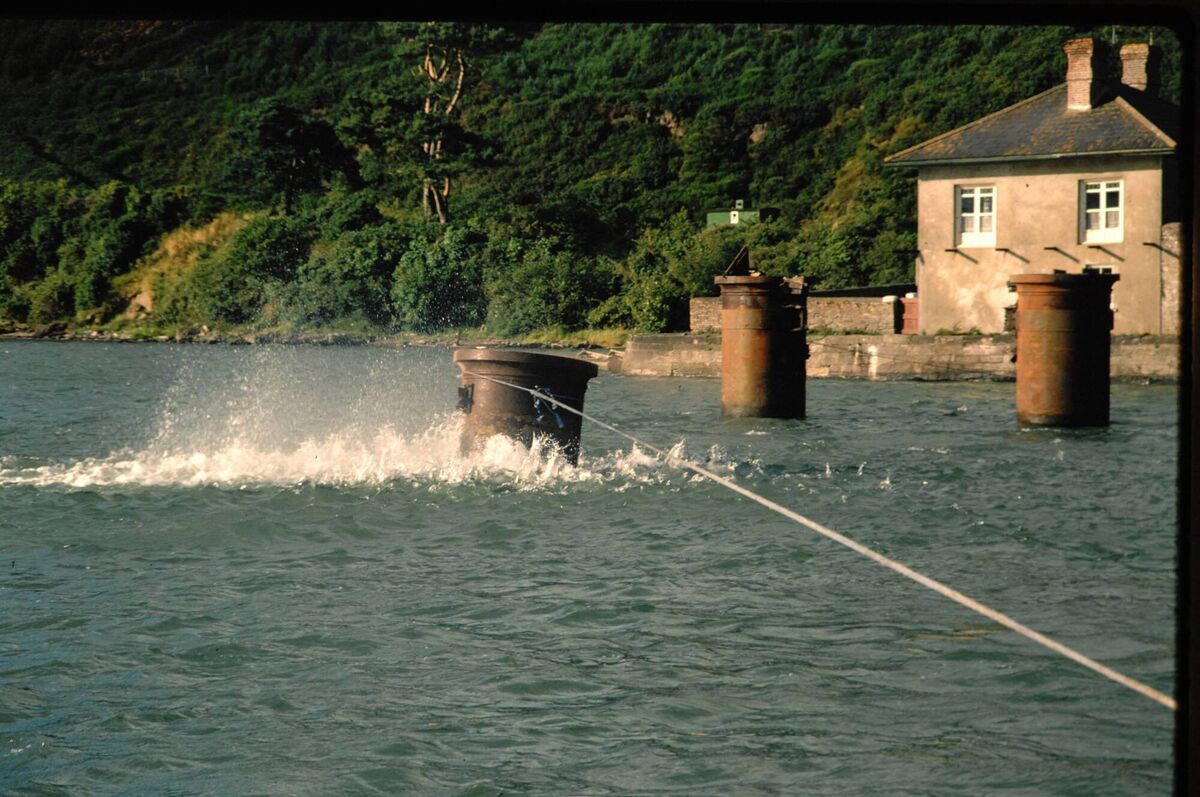
“Finally, the piers were then imploded using dynamite (see photo) and pulled over in different directions to ensure each came to rest completely flat on the river bed (see photo).”

Piers being pulled over to lie flat on the river bed during the demolition of the old bridge at Youghal

Marian and Meabh say that their father’s photographic archive of the project, “while comprehensive, is also interspersed with shots of us kids on the beach in Ardmore, Co. Waterford. This made the cataloguing fun!”

“As an aside,” adds Marian, “it was interesting for me to hear Cyril McIntyre’s memories in Throwback Thursday of how public transport services were adapted to comply with the weight restrictions imposed by the local authorities during the bridge’s last years. He is a former colleague from our time together in CIE. Small world!”

Now that is just great, Marian. Thank-you and thank your sister Meabh too, but most of all thank your amazing father, who not only masterminded that seriously major project, but at the ripe age of 96 can bring all that detail up to the front of his mind as if it were yesterday. And the photographs make it all come so alive.

Cyril, we are sure you and Marian will be getting in touch with each other. You will have so many memories to share. Don’t forget to send the best of them on to us here on Throwback Thursday!

Listen, has anybody driving that way noticed that the ‘Welcome to Waterford’ signboard appears much closer to Youghal than it used to?

Call me ineradicably Corkonian, if you like, but I know my geography, and the dividing line between the two counties was always the Blackwater. It was so, even long before the English colonists created counties here, always marking the divide between the two minor kingdoms.

Now it seems that Waterford has quietly moved its borders into our territory, and is calling the little tributary River Bride, which joins the Blackwater here, the actual borderline. Can’t have that!

Somebody, whether an Authority or a Knowledgeable Person, please explain if I am right on this suspicion!

We would remind anybody who has forgotten, that the Blackwater originally reached the sea far further east into Waterford, at the strand now known as Whiting Bay. Around the year 700, a violent storm made it change its route and cut a channel through to where the town of Youghal now stands. In fact, it most probably caused the development of that community since the new riverway and its natural harbour invited settlement.

The Vikings thought so anyway, and very definitely the Normans saw its possibilities. But the history is still there in the Irish name for Whiting Bay: Béal Abha, or mouth of the river. The land remembers, if we don’t. So maybe we should push Cork’s borders further east again?

Now, moving on, and Don Crowley wrote to say that he thoroughly enjoys our Thursday dips into nostalgia, and also – what a coincidence – he also knew Philip McIntyre who featured in recent columns.

“You might relay to Cyril McIntyre that I knew his late father Philip,” said Don. “My own late father, Daniel P. Crowley, was Chief Clerk at C.I.E Capwell, and worked with Philip. I myself met him several times in the late ’40s and 1950s.

“You can assure Cyril that my father valued Phil’s dedication and pragmatic approach to the issues of the times, and would make sure that there were no consequences for Phil resulting from the Youghal bridge incident! Keep up the good work!”
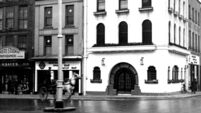
That, of course, was a reference to the utterly praiseworthy action of Philip McIntyre in packing as many passengers as he could into the small bus which normally just took their luggage across the Youghal bridge, because of the exceptionally inclement weather, an action which had him called up for an explanation when he returned to base.

Cyril was delighted to hear that Don had written in.

“It was really nice to hear from him with his kind words and memories of my father and his father working together in Capwell.”

“On another topic,” continued Mr McIntyre, “reading Micheál Kenefick’s recollection of that abominable practice of ‘churching’ women who had given birth reminded me of another piece of ‘dogma’ that was handed out to us as children during catechism classes at school.

“Before moving to Mayfield in 1951, we lived at Glenbrook Terrace, between Passage West and Monkstown. I started school in Monkstown in 1948. It was a small private school, run by two nuns from the convent school in Passage, and located at the corner of De Vesci Terrace in what is now the clubhouse of the Monkstown Bay Sailing Club.

“I remember that during one catechism class we were told that ‘Protestants could never get to Heaven....you had to be a Catholic to get there’.

“Now there were two girls in the school, Yvonne and Avril Carpenter, whose father was a Protestant; he owned the Club Hotel in Glenbrook. I was only six years old then, but I distinctly remember thinking that it was very unfair that they could get to Heaven but their father couldn’t!

“And in later years I have often reflected that it must have been very hurtful for Avril and Yvonne to hear that from their teacher.”

Cyril adds: “It was of course strictly forbidden to enter a Protestant church! In 1950, my Aunt Nellie, when visiting a brother who lived in High Wycombe near London, went into a church one evening to go to Confession.

“All went well until the priest said the Absolution Prayer in English, which she thought a bit strange; then he concluded by saying, ‘I’ll pray for you, and I’ll ask my wife to pray for you’. She had entered what would be described as a ‘High Anglican’ church, virtually indistinguishable from a Catholic church in layout and decor, etc!

“On returning home to Virginia in Co Cavan, she confessed to her local parish priest who, clearly ahead of his time, told her not to worry about it as she had acted in good faith.”

What a wonderful story!

Cyril adds: “I’m sure there are some readers who may remember the General Mission in Cork city in 1961. It lasted for a month - two weeks for men and two weeks for women.

“I recall one particularly fiery Redemptorist from Belfast thumping the pulpit and telling us that it was a mortal sin to listen to Radio Moscow!

“Our Murphy radio could pick up short wave stations and I delighted in listening to a variety of foreign stations, including Radio Luxembourg, Voice of America, Paris International, Radio Espana, American Forces Network, PCJ Hilversum, etc.

“By then, in my Leaving Cert year, I decided that listening to the music of Shostakovitch and Borodin on Radio Moscow would not endanger the salvation of my immortal soul!

“Thank God we now live in more enlightened times and can pray together in the company of our fellow Christians.”

I think the appropriate comment here is ‘Amen to that’, Cyril!

Did you see that RTÉ documentary a week or so back about the strict censorship days in Ireland, when no film got through without being checked by one determined and dedicated official in Dublin?

It reminds one irresistibly of that monthly magazine, The Fold, which was sold at church doors on Sundays. That little religious publication brought out a list of the films due to be shown in Ireland in the weeks ahead, with O or OP before some of them, ie, Objectionable, or Objectionable in Part. And that was after the censor’s scissors had done its work! What could have been left?

Well, it often caused confusion in the cinemagoer, since you would have one scene, then a jump and an entirely different scene where clearly something serious had happened, but you never knew what!

Have you memories of censored films? Or eagerly checking The Fold after your parents had dutifully scanned the religious articles, to see what new Elvis film was coming up? (Elvis films always got OP, probably because of his gyrating actions.)

Come to that, do you remember which cinemas showed the newest releases, and which could be relied upon to bring back the popular classics time after time, so you could go and see them again? Or which venues showed the foreign language ones?

The Sound Of Music is currently enjoying huge success at the Opera House, and everybody compares it favourably with the Julie Andrew movie from 1965. But who recalls the far older Trapp family films, with English dubbing or subtitles? I think they were screened at the Ritz, but might be wrong…

Email jokerrigan1@gmail.com. Or post on our Facebook page: www.facebook.com/echolivecork.

More in this section

Throwback Thursday: My grandad, Michael Collins, and the Black and Tans Throwback Thursday: My grandad, Michael Collins, and the Black and Tans
Throwback Thursday: When the horse and cart ruled in Cork Throwback Thursday: When the horse and cart ruled in Cork
Throwback Thursday: 'The road was washed away...the army had to put a bridge in place’ Throwback Thursday: 'The road was washed away...the army had to put a bridge in place’

Sponsored Content

Keeping their house in order: How PSRA regulation has raised the bar for Ireland’s property services sector Keeping their house in order: How PSRA regulation has raised the bar for Ireland’s property services sector
"My master's at UL taught me that structured learning and a demanding career can coexist" "My master's at UL taught me that structured learning and a demanding career can coexist"
Three days of steam, music and heritage at the 62nd National Steam Rally Three days of steam, music and heritage at the 62nd National Steam Rally
Contact Us Cookie Policy Privacy Policy Terms and Conditions

© Examiner Echo Group Limited

Add Echolive.ie to your home screen - easy access to Cork news, views, sport and more