The Cork man who became the youngest ever resident engineer at the city's waterworks 
Cork man Michael Riordan beat stiff competition to become the youngest resident engineer of the city’s waterworks. JOHN O’SULLIVAN looks back at the developments during his tenure.
The Cork man who became the youngest ever resident engineer at the city's waterworks 

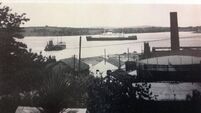
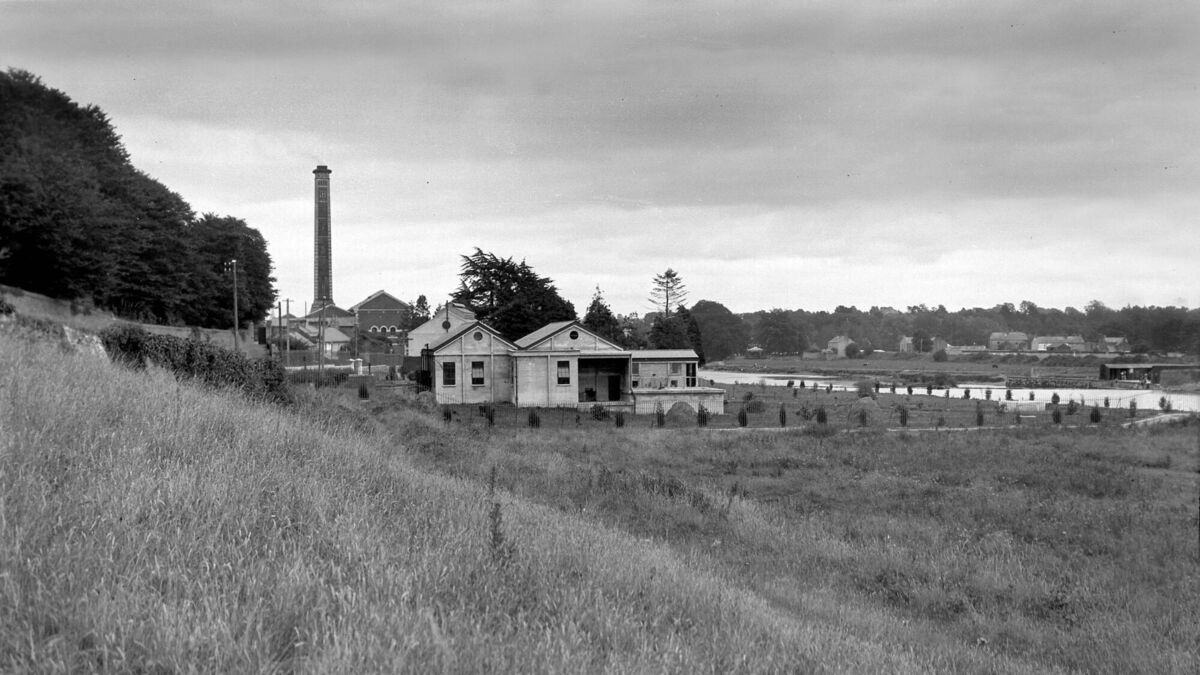
The waterworks, and surrounding areas, in the 1920s
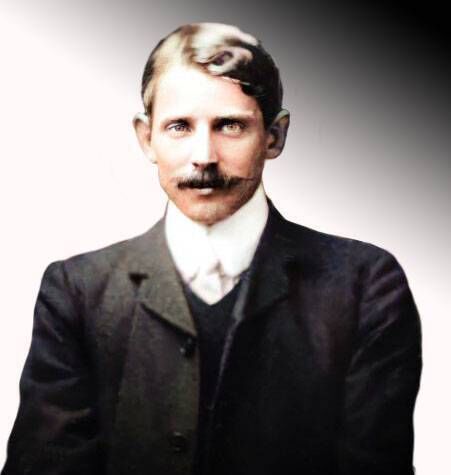
Michael Riordan grew up in the Friars Walk area of Cork city. He was a mechanical engineer and despite strong competition nationally, and from overseas, he became the youngest resident engineer of the Cork City Waterworks, a position he held for 27 years.

According to my research, over that period he had the unique distinction of operating the plant using four different sources of power. He used steam power, water power, diesel power, and finally electric power following the establishment of the ESB in 1927.

Under the Cork Improvement Act of 1852, Cork Corporation had purchased the Water Works Plant, reservoir, and associated pipe network from the Trustees of the Cork Pipe Water Company. At that time, a permanent water supply was certainly not plentiful to the citizens of Cork.

Michael Riordan served as Resident Engineer from 1906 - 1933

The production of water for a growing city required an enormous investment at that time. Two new reservoirs were constructed in 1860 for water storage. A new building was constructed by Gerald Mahony of Dyke Parade to house the steam plant, which was required to facilitate pumping to the reservoirs. Some years later, in 1875, a new system of water filtration was installed so that a certain standard of good quality water would be delivered to the public.
Water production at the Lee Road was a 24/7 operation. In the mid-1800s and subsequent years, the majority of the workforce would have lived in the Blarney St, Sundays Well, and the Middle Parish areas of the city. For those workers, getting to work was either by cycle or walk, with a night shift as part of the working day.

The operation of the steam plant at that time was extremely labour-intensive; 1,000 bags of coal were required every week to satisfy the demand.

This would be delivered from the Cork docks, trimmed in the storage area, and then carted to the boilers. This ongoing operation on a daily basis was most demanding. The continuous operation of the massive pumps, turbines, and huge moving parts would have generated quite a degree of noise. These were the conditions the workers faced on a daily basis and were very demanding in nature.

Some difficulties arose with the operation of the plant in 1905, resulting in a Local Government Board enquiry being set up to consider all aspects of the operation and management of this vital utility.

The inquiry came up with many proposals and was considered at length by the Corporation. Sir Edward Fitzgerald proposed that they advertise for a competent mechanical engineer, who would reside at the Waterworks, to take charge and be responsible for the machinery, reservoirs, and to have full control of the employment of the workforce at a salary of £ 250/year. He stated that the appointment of a resident engineer should be made by a competitive examination to be conducted by the President of the Institute of Civil Engineers of Ireland. Three people were appointed to conduct the examination process.

The Town Clerk gave details at a Council meeting of those selected W.E Lilly, Trinity College, Dublin; R.H Lesk, College Green, Dublin; W.F. Ross, North Wall Foundry, Dublin.

There were over 160 applications for the position. The Examiners were asked to forward the names of the three best-placed candidates to the Council.

At a meeting of the council in January 1906, the Town Clerk gave the decision of the Examiners of the three best placed candidates namely; A.T. Quelch, Clapham, London; R.P. Adams, Alderglass. London; and M. Riordan, St. Ann’s Villas, Ringaskiddy, Co. Cork.

Councillor Curtin pointed out that Mr. Riordan had been a fellow student of his in the Crawford Technical School. He had already won a Gold Medal and Queen’s prize. It was said that he was talented and capable. He also stated that Mr. Riordan held his present appointment in Hawlbouline as a result of a Civil Service Examination.

Councillor Sisk stated that Mr. Riordan was denied a position in the past at the Technical Institute in Cork as a result of a decision by the Technical Department in Dublin.

There was overwhelming support that a local person was among the three best placed nominees, and the Lord Mayor declared Michael Riordan as Resident Engineer at the Waterworks Lee Road.

At that time, the Lee Road plant was purely a pumping station. It had limited water filtration facilities.

Michael Riordan took charge of a new steam plant, which was built by Coombe, Barbour of Belfast. Leakage of water at that period was a constant problem, and over the years he installed bulk water meters in several areas throughout the city. He took charge of the installation of some new turbines, which were imported from Dayton, Ohio.

Michael Riordan concentrated heavily on the practicalities of solving leakage of water throughout the city. He increased the number of water inspectors operating within the Corporation. He introduced night-time monitoring of usage, and over time, this began to have a huge impact on the water network. The immediate result of this operation was that the entire supply was now coming through the Infiltration Tunnel. On some occasions when the supply could not meet the demand, water was pumped directly from the river.

Cork Waterworks, Lee Road in 1936. 

When Cork Corporation took ownership of the waterworks in the 1850s, there were two sources of power in the plant, water driven turbines and steam. Power was required to pump water to both the Shanakiel and Blarney Road reservoirs. The use of the water-driven turbines was very beneficial to the running costs of the plant, as a fast-running and full river drove these turbines to their maximum output at very little cost. While this was a very efficient form of pumping in winter/spring seasons, it was not fruitful in the summer months. To achieve maximum pumping in that period, the generation of steam to drive the pumps was a very necessary requirement. This operation carried very significant costs as the production of steam could only be created by the coal-fired boilers. Vast quantities of coal were used, all of which was imported and very labour-intensive. This was the major cost in the production of water for Cork city for many years.
Together with Stephen Farrington (City Engineer 1924 – 1958), Michael Riordan set about replacing coal with a new and more efficient concept.

In the early 1900s, the large scale industrial diesel engine was evolving as a significant source of power for large-scale productive installations. To provide a replacement for the use of coal, Stephen Farrington sought expressions of interest from overseas suppliers for the supply and installation of a diesel engine, which should be capable of pumping 1,000,000 gallons of water to the Shanakiel Reservoir and 500,000 gallons to the Blarney Road Reservoir on a daily basis.

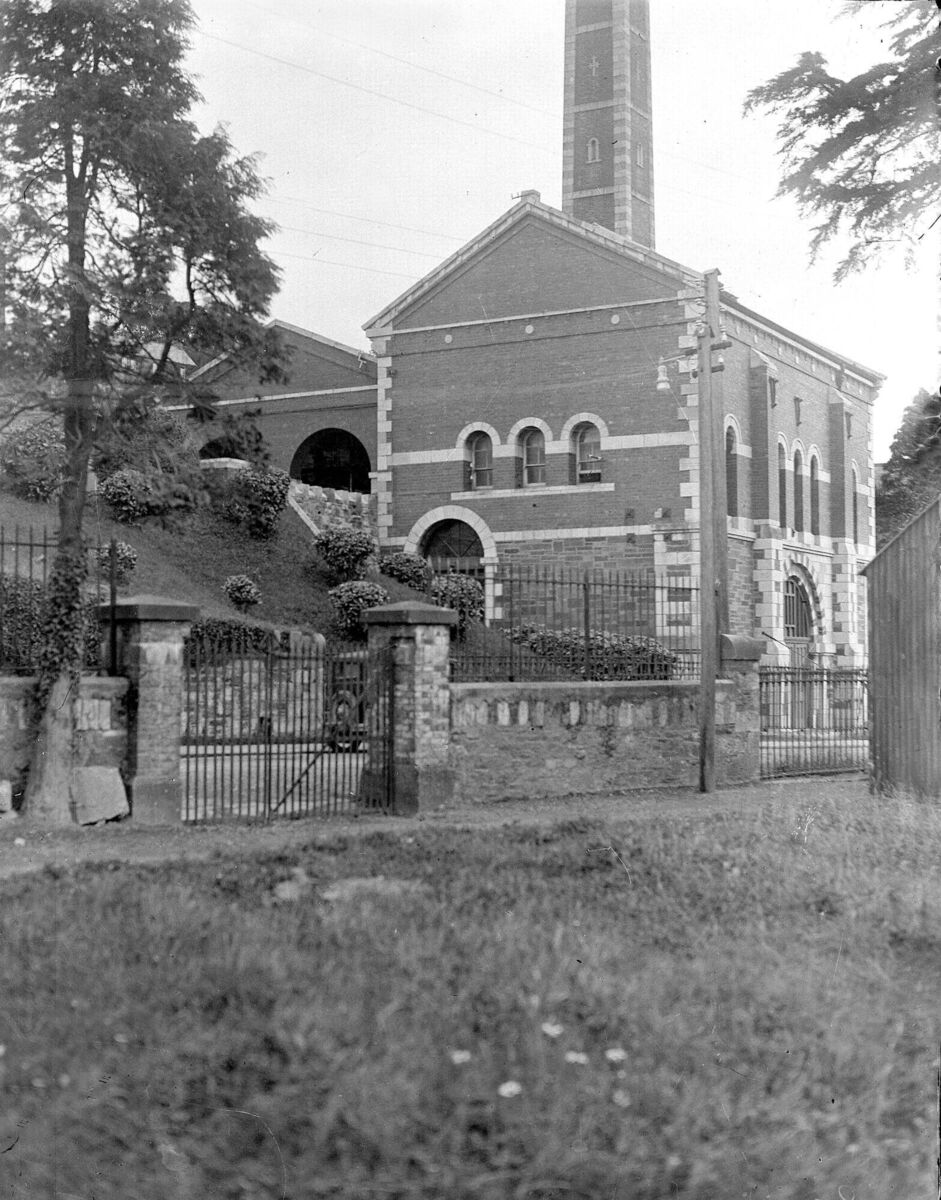
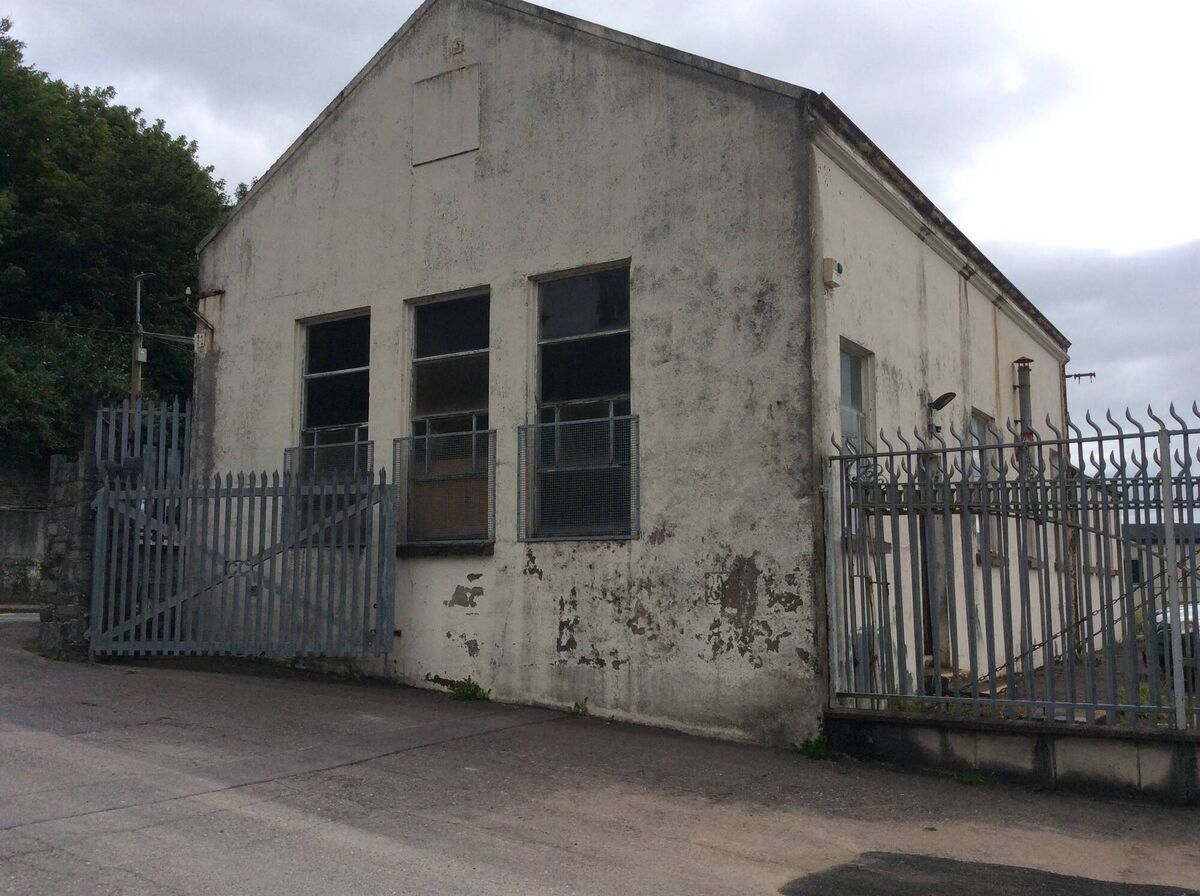
The Blackstone Engine Building at the waterworks 

The tender of the Blackstone Co. of Stamford England was accepted by Cork Corporation on October 29, 1925. A 66-horsepower diesel engine coupled with all the pumping requirements was purchased at a cost of £1,777. This was such an exceptional item of equipment that it became known as the auxiliary pumping plant. To accommodate such machinery, the first building of the modern waterworks was constructed , and today it serves as the machinery workshop for the current plant. The Blackstone Engine served the people of Cork with their water requirements for over 30 years.
Michael Riordan was the first engineer to live in the present-day Waterworks Residence. When he initially took up the position in 1906, the original lodge, which was limited in size was not adequate for himself, his wife, and family. He lived in the Mardyke, while the alternative arrangements were taking place.

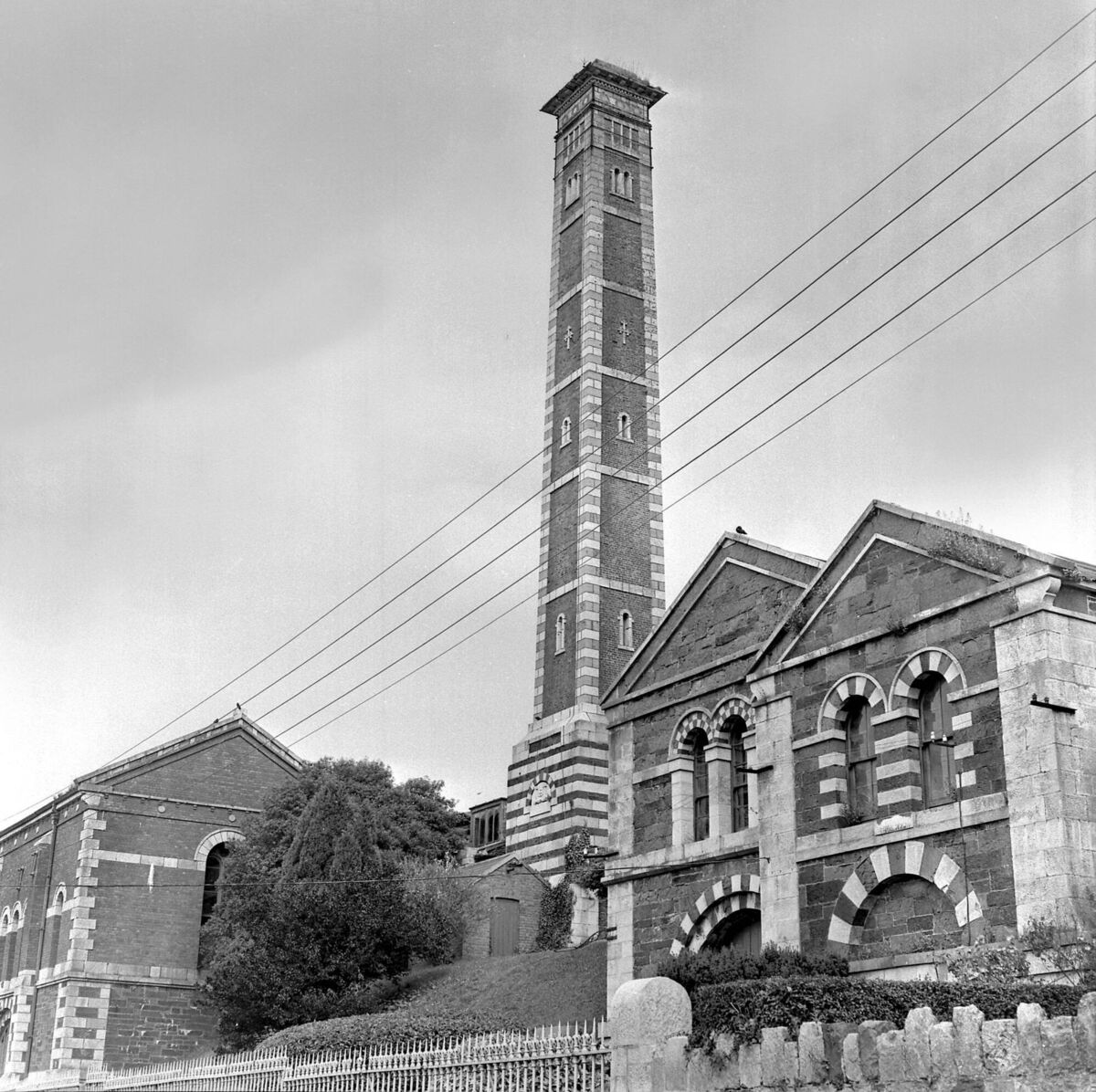
A view of Cork city waterworks, Lee Road in July 1968 

The quantity and more particularly the quality of the city water supply was a constant and recurring issue during the 1920s. Waste of water was constantly being addressed by the local authority in an effort to conserve supplies for domestic use. The Corporation directed, as an interim measure, that those builders charged with the rebuilding of Cork in 1922 should pay a water charge of 10 shillings per £100 of masonry built. Dr. Donovan, the Superintendent Medical Officer of Health in the city, stressed that a scheme should be put in place similar to London, which had a relatively new water filtration system.


In May 1924, Michael Riordan, with the Lord Mayor, City Engineer, and Ald. Charles Coughlan visited the water treatment plants in both London and Birmingham to inspect their installations with a view to enhancing the Lee Road Plant.

Both Stephen Farrington and Michael Riordan played a huge and significant part in the provision of water filtration at the plant, so that improvements to the quality of water for a growing city would take place. 

While the condition of the water supply was good, advances were being made in the water industry in the provision of filter beds and settling tanks, which were producing water of a higher standard. Following a tender process, the contract was awarded to the Candy Rapid Filter Co. of London at a cost of £15,430. This contract provided 2,000,000 gallons of filtered water per day for the citizens. It was installed in 1927.

Having brought major developments to the Cork city water network, Michael Riordan retired on health grounds in 1933 after 27 years’ service as Resident Engineer, Lee Road Waterworks.

more Holly Bough articles

Christmas in July: Looking back at the origins of the Holly Bough Christmas in July: Looking back at the origins of the Holly Bough
Mary MacSwiney Mary MacSwiney: ‘A life motivated as much by love as her political ideals’
100 years on from tragic inferno at Dromcollogher cinema  100 years on from tragic inferno at Dromcollogher cinema 

More in this section

Christmas in July: Looking back at the origins of the Holly Bough Christmas in July: Looking back at the origins of the Holly Bough
Throwback Thursday: My mother’s treasure trove of memories stored in an old teapot... Throwback Thursday: My mother’s treasure trove of memories stored in an old teapot...
Mary MacSwiney Mary MacSwiney: ‘A life motivated as much by love as her political ideals’

Sponsored Content

Say cheese, think Kerrygold: Dinner is a dream with a simple but tasty pasta bake Say cheese, think Kerrygold: Dinner is a dream with a simple but tasty pasta bake
CS Yuno Energy July 2026 Yuno Energy brings clarity to customers’ energy bills
Don’t skip the foundation: The PSRA’s role in making property transactions transparent Don’t skip the foundation: The PSRA’s role in making property transactions transparent
Contact Us Cookie Policy Privacy Policy Terms and Conditions

© Examiner Echo Group Limited

Add Echolive.ie to your home screen - easy access to Cork news, views, sport and more