Kathriona Devereux: I hated soccer, now I’m up at midnight to watch World Cup!
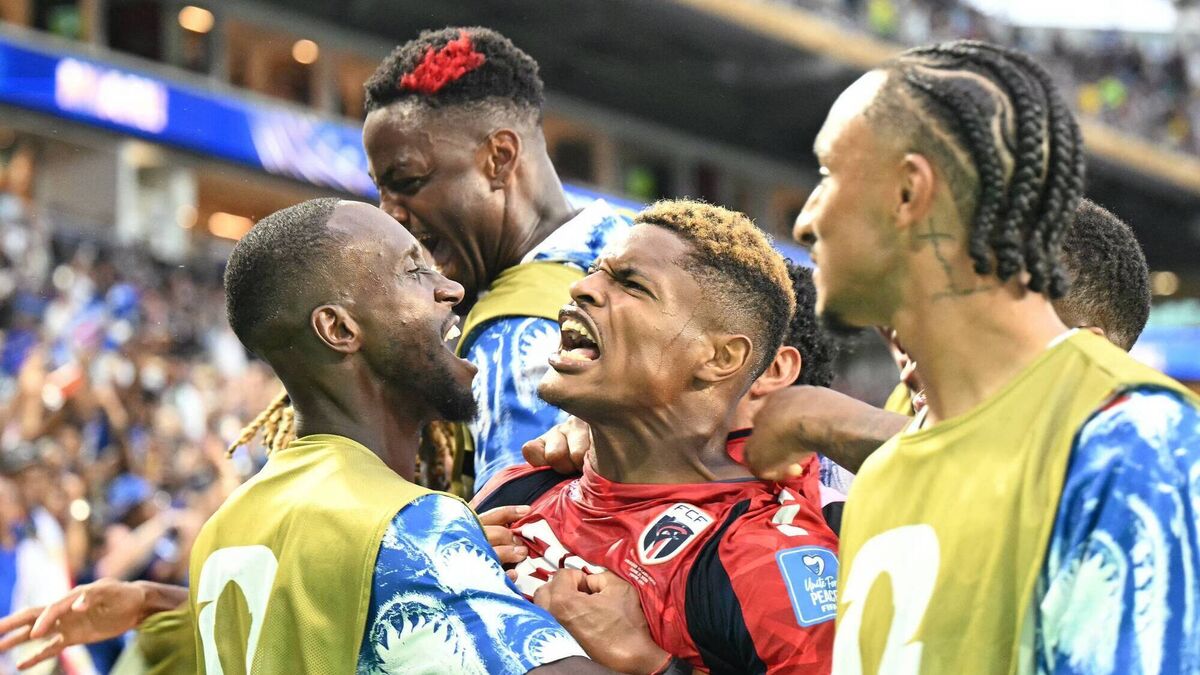
Cabo Verde forward Helio Varela celebrates his team’s second goal against Uruguay on Sunday night - Kathriona Devereux has fallen for the African country’s World Cup fairytale story. Picture: CHANDAN KHANNA / AFP via Getty Images
They bought multiple newspapers a day to devour the sports pages, played Championship Manager religiously and, to me, spent an inordinate amount of time talking about football and the various permutations of how the Premiership, as it was then, would pan out.
Not having been indoctrinated from an early age to the ubiquity of soccer, I simply couldn’t understand such devotion to overpaid footballers and their clubs in pursuit of trophies - did they realise that 19 teams were going to be losers?
I’d wind them up, suggesting that there should be a global social experiment to pause football for a season. A grand intervention to ascertain what would happen if the playing and watching of professional football, and all the time and money it absorbed, was diverted to other, worthier, causes: World peace? Spikes in GDP? End of global poverty?
If all the men in the world dedicated as much time and brainpower as my two clever pals to other issues, would the world become a better place?
They scoffed at my hypothesis and ludicrous suggestion. Of course not, there would be just loads of bored and miserable men.
One of them went on to become a successful soccer journalist so perhaps his devotion was exceptional, but my ambivalence to soccer remained strong.
Of course, I will happily jump on the national team bandwagon whenever a Troy Parrott-hat-trick-like-moment comes along and captures the public’s heart and imagination, but whether or not Burnley FC (that’s a real team, right?) are relegated or not is of no concern.
That is, until I became the mother of a football-obsessed boy. Small break, big break, PE class, evening training, weekend matches - there is a lot of soccer circulating in my family life so I can’t show disdain for something that is so interesting to my nearest and dearest.
Which is how I ended up at Turner’s Cross on a sunny Friday evening, cheering as Hans Mpongo slotted in another goal and a modest but enthusiastic crowd cheered loudly.
Turns out a family outing to Cork City FC is something I can actually get behind.
No-one is being paid obscene pay cheques; every player on the pitch is doing what they love, doing their best, and entertaining a loyal, local crowd. It’s such a wholesome, intergenerational, multicultural night out.
Last Friday, there were a bunch of Brazilian supporters cheering on Cork ahead of Brazil’s World Cup match at 1am against Haiti. A corner of the grounds was a sea of yellow cheering the goal celebrations of Mpongo - a Dutch player of African heritage.
When it is played at this local grassroots community level, I can understand the appeal of cheering and supporting your team. The universal power of soccer and the way it brings people and countries together is undeniable.
My family were seated between a Ballyphehane resident and two lads from Eritrea and Malawi. Where else would you get it?
Even with this recently found appreciation of the unifying power of football, I still wasn’t relishing the prospect of the World Cup hullabaloo. Two months of endless soccer - sarcastic yay!
Like everyone, I jumped on the fairytale story of Cabo Verde, Shamrock Rovers defender Pico Lopes, and their 40-year-old hero goalkeeper Vozinha holding former world champions Spain to a goalless draw on their World Cup debut.
Only gaining independence in 1975, Cabo Verde is a country with a heartbreaking history. The Portuguese turned it into one of the transatlantic slave trade’s key hubs in the 15th century, enslaved Africans were trafficked through its harbours and onto ships bound for the Caribbean and Americas.
It has a long history of emigration and twice as many Cabo Verdeans live abroad (nearly one million) as in the country itself.
It is a story arc I can get behind that has nothing to do with first touches or team formation.
Which is why, on the longest day of the year, after flinging strangers around Elizabeth Fort at the Solstice Céilí, I was staying up way past my bedtime to watch Cabo Verde take on Uruguay with the hopes the underdogs would make history again.
Uruguay, ranked 19th in the world rankings, versus Cabo Verde’s 63rd position. Surely, they couldn’t recreate the same focus and determination that kept the scoreline clean in their historic performance against Spain? Miraculously - yes!
They survived the most nerve-wracking eight minutes of extra time to draw with Uruguay and scored their first two goals at the World Cup.
What the goals meant to the players, the fans, and the cool-as-a-cucumber manager Bubista would soften the heart of the hardest football cynic.
And so I silently clapped Cabo Verde’s result in my living room on Sunday night (everyone else in the house was asleep!) and wondered if my old flatmate, deep in some press box for this World Cup, would believe that the woman who once proposed banning football for a season is now losing sleep over the football team of an archipelago nation off the west coast of Africa.









 App?
App?


