Kathriona Devereux: On your bike..It’s so cheap and you skip jams and parking grief
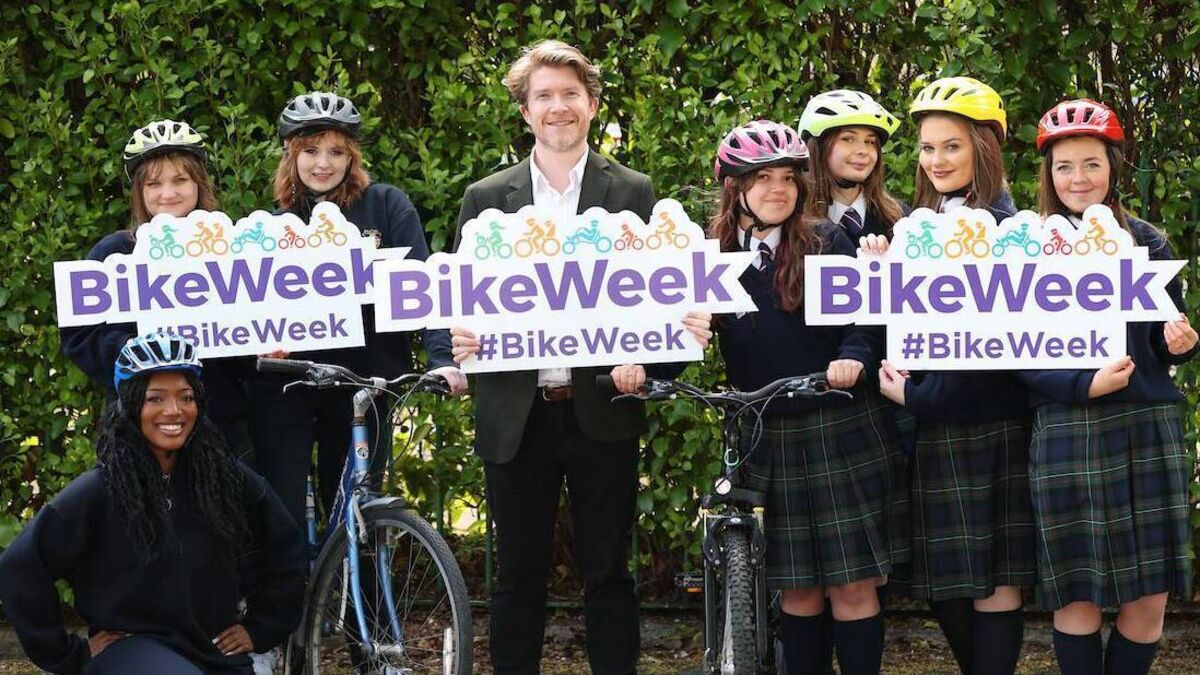
Bike Week is about nurturing a love of cycling, in an inclusive and welcoming environment
This is National Bike Week, and it could not be timelier given the fuel protests, the cost-of-living squeeze, and the geopolitical instability driving diesel and petrol prices.
A celebration of cycling as the weather improves is just the encouragement we need to invite more people to leave the car in the driveway and take the bike instead.
According to 2025 surveys, the average cost of fuel, insurance, motor tax, tolls, parking, maintenance, and depreciation attached to owning a vehicle adds up to around €10,000 a year.
That was before the U.S war on Iran. In March, diesel prices were up 16.5% on 2025. Who knows how costs will tally when the year is out?
The fuel crisis has exposed how vulnerable households are to geopolitical shocks completely beyond their control - a war in the Middle East, the Strait of Hormuz closing, and suddenly filling your tank costs a small fortune.
Bikes save you money, reduce stress and help you live longer
Apart from the significant running cost savings, for me the main advantage of cycling is predictability. I know how long a journey will take and where I will park - right outside my destination!
All the stress of traffic congestion and seeking elusive parking spots disappear. That’s even before you look at how cycling helps you live longer!
A University of Glasgow study looked at the commuting habits of more than 264,000 people for five years. It found that those who cycled to work had over a 40% lower risk of heart disease, cancer, and overall mortality than those who drove to work - or a “non-active commute” as the scientists liked to call it.
Regular cyclists are significantly less likely to die early from heart disease or cancer.
If a pill could do what a bike does, there would be queues for a prescription.
If you think you are too old to cycle because your joints are creaking - think again! Another study recruited sedentary middle-aged and older adults with osteoarthritis for a 12-week exercise routine to study the effect of cycling and swimming on people with arthritic joints.
After 12 weeks, there were significant reductions in joint pain, stiffness, and physical limitation accompanied by increases in quality of life in both groups. However, you generally can’t swim to work.
There are basketfuls of two- wheeled events happening across the city until May 17, ranging from social group bike rides at sunset to explore bike routes and greenways, bike maintenance workshops, and even bicycle-themed movie nights (most likely Italian movies - they know how to make a bike look attractive!).
What’s wonderful about Bike Week is that it does not just help with practical information and learning sessions, but it is also a way to connect with fellow cyclists. Plenty of casual chats happen at traffic lights between cyclists, and cycling builds community and connection to the city in a way sitting alone in a car never could.
Many of the city events start from the Michael Collins statue (surely Ireland’s most distinguished cyclist before An Uachtaráin Catherine Connolly?) on Grand Parade. Find out more at https://corksports.ie/cork-bike-week/
As the researchers of that Scottish longevity study say: “There are a million reasons to ride a bicycle. Pump up your tyres, dust off your saddle, and come join us!”
The week Bike Week launched, the world celebrated David Attenborough’s 100th birthday.
The outpouring of affection was remarkable for the man who made his first natural history documentary, Zoo Quest, in 1954. Turns out if you dedicate your life to bringing the wonders and delights of the natural world to people plonked on their couches, you burrow a place deep into their hearts.
A cycling festival and a centenarian naturalist might seem like an unlikely pairing. But both carry the same truth: that our wellbeing is bound up with the health of the natural world around us.
Every cyclist who leaves the car in the driveway is, in their own small way, acting on the same message Attenborough has spent a lifetime delivering from rainforests, ocean floors, and frozen tundra - that minding our precious planet is essential for our wellbeing.
The affection people feel for him is connected to the love he has kindled in us for the planet itself.
“Every breath of air we take, every mouthful of food that we take, comes from the natural world,” he has said. “And if we damage the natural world, we damage ourselves.”
He has been repeating that warning and, unfortunately, at one hundred years old, the urgency of his message has only grown.
But as he said in Frozen Planet “We can do it. It’s within our power. We must do it. Then there will be a future for the planet.”
So, this week get on your bike. Watch Attenborough. Both are good for your health.


 App?
App?


