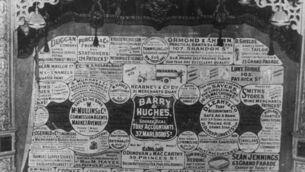
The man who resurrected Cork City’s library service from the ashes
James Wilkinson, Cork City’s longest-serving librarian, steered the library through many difficult times including the Burning of Cork. MAIRÉAD MOONEY looks at the critical role he played in restoring the city’s public library service.
The man who resurrected Cork City’s library service from the ashes

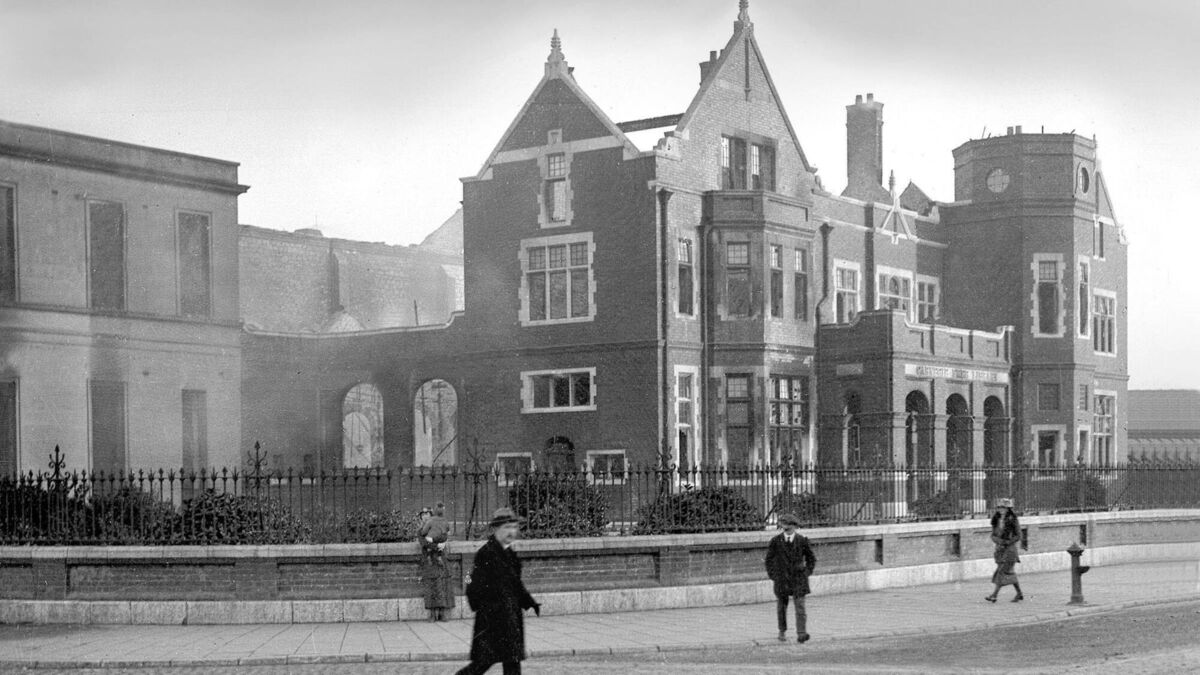
The ruins of Cork's Carnegie Library following its destruction in December 1920. 
James Wilkinson is, to date, Cork City’s longest-serving librarian. He steered it from his appointment in 1892 through its opening in 1893, securing a purpose-built Carnegie Library in 1905, and over the tumultuous intervening years until his retirement in 1932.

1920 was the year in which the impact of civil unrest in Ireland was to swell from manageable service disruptions to overwhelming the library, reducing the building to a ruin and its collections to ashes.

The War of Independence had began in January 1919. What became known as The Burning of Cork occurred on the night of 11 December 1920. In retaliation for an ambush of auxiliary police in the Dillons Cross area, the city centre was targeted. In addition to attacks on civilians, several fires were started and became conflagrations that consumed many city centre premises. Located adjacent to Cork’s City Hall, which was set alight, the Carnegie Free Library became a casualty of the British Crown Forces’ reprisal actions. The fire in City Hall subsequently engulfed the public library. Some 14,000 of the 15,000 texts that comprised the stock were destroyed (the surviving titles having been on loan at the time). Since its opening to the public in 1893, the library had issued almost 2.5 million books to its citizens, witnessing the demand for its services. By the morning of 12 December the Carnegie Library was a shell, a mere 15 years after it had been purpose-built for the people of Cork.

This surely must have been a bitter pill for James Wilkinson to swallow, bearing in mind that he had also just lost his home (there was a librarian’s residence within the library building) and had to consider the welfare of himself and his family in a patently unsafe city. In fact, his wife and daughter went to England after the Burning of Cork, though they did return after about six months.

Fortunately for the citizens of Cork, Wilkinson stayed on in his role as city librarian and applied himself to the prodigious task of resurrecting the city’s public library. Wilkinson and his staff found themselves operating out of the original library premises: the School of Art, now Crawford Art Gallery. The first step was to recall all books that had been out on loan at the time of the fire. Notifications to this effect were made through the press from early January 1921. This was followed by an appeal for book donations. This appeal galvanised sympathisers both at home and abroad, witnessing the goodwill and generosity of book-lovers, library advocates, and those falling into neither of those categories but wishing to show their support.

James Wilkinson applied himself industriously to the task of seeking support for the re-establishment of a library service, both in the short-term and the longer-term. It must be remembered how the loss of the library did not occur in a vacuum: thousands of people were impacted by the unemployment resulting from the destruction of businesses in the city, and the Carnegie Library was only one casualty of the crises precipitated by the Burning of Cork.

It would be 1924 before the library opened its doors to the reading public once again, albeit from temporary premises.

Nonetheless, the benevolent response to the librarian’s appeal for book donations can only have been heartening. Having lost 14,000 books at the time of the fire, by the time of the re-opening of the service four and a half years later, upwards of 10,500 volumes had been donated, as well as financial donations.

None of the donated children’s books remain within Grand Parade Library’s holdings, but it is very fortunate that some from the general collection do survive.

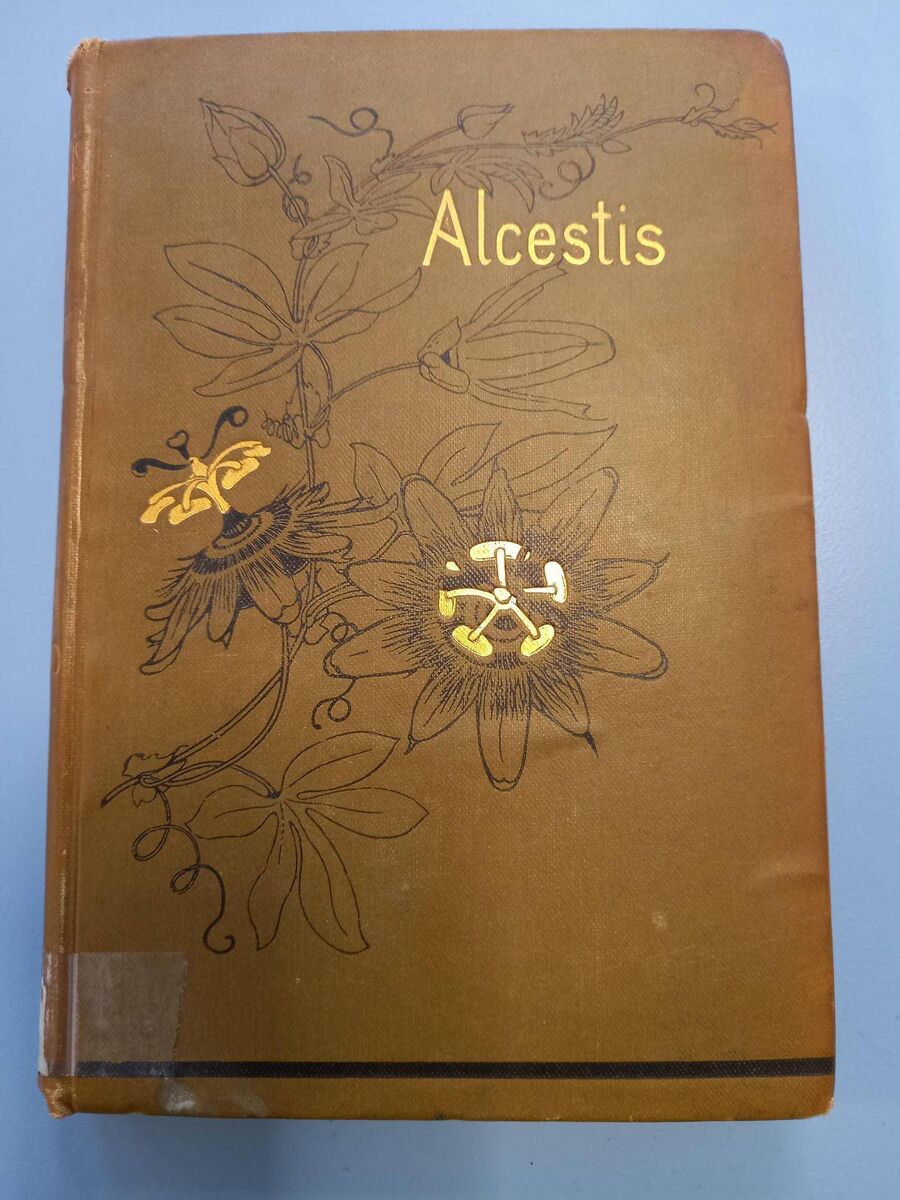
Alcestis: A Dramatic Poem, by John Todhunter, was published by C. Kegan Paul & Co., London, in 1879. It was donated by his wife. John Todhunter was a co-founder with W. B. Years of the Irish Literary Society, which also donated books to Cork Public Library.

Alcestis: A Dramatic Poem by John Todhunter, was published by C. Kegan Paul & Co., London, in 1879.

The Right Hon. Benjamin Disraeli, Earl of Beaconsfield, K.G., and His Times. Volume I, by Alexander Charles Ewald and published by William MacKenzie, London. 1883 was donated by Dr Magner, Cork.
Poems by Eva of the Nation, the adopted name of Mary Anne Kelly (1830–1910) was also donated.. Kelly’s largely patriotic verses were regularly published in the Young Ireland nationalist newspaper, the Nation.

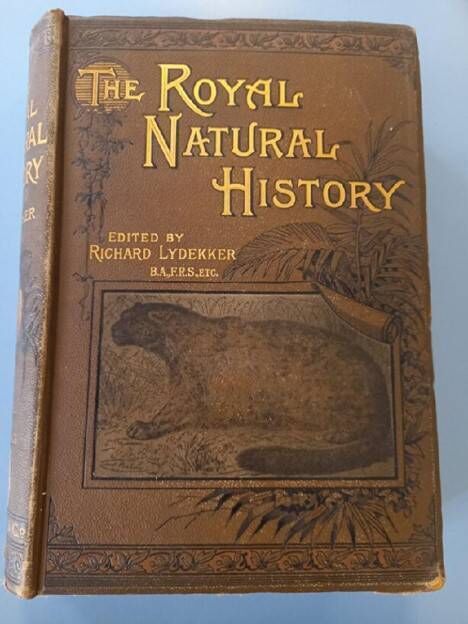
George D. Croker of Waterford donated beautiful volumes of The Royal Natural History and also donated a book to the juvenile collection. This children’s book was added by James Wilkinson to the library records on 19 October 1922 and was one of the books borrowed within the first three days when the temporary library opened in 1924. The title of the book is Royal Youths: A Book of Princehoods by A. R. Hope Moncrieff, published by T. Fisher Unwin in 1892.

George D. Croker of Waterford donated beautiful volumes of The Royal Natural History and also donated a book to the juvenile collection.

Royal Youths was just one of the children’s books available when the library re-opened to the public from temporary premises at No. 2, Tuckey Street, in 1924. A former RIC barracks, this building had suffered a similar fate to the original Carnegie Library as it had been burned for political reasons. The newsroom opened on 10 June, enabling its users to stay abreast of the latest news.

The Lending and Reference departments followed in September. The reception by its young readers after a hiatus of nearly four years is illustrated in the library’s annual report for 1924-25: The initial stock of juvenile books — 492 volumes — proved altogether inadequate to meet the demands of our youthful clients, inasmuch as on the third day following the opening the shelves were denuded of books; this caused much inconvenience for a time, however, within the shortest possible period the stock was practically doubled, and the situation eased; nevertheless more books are required for this department, as borrowers still outnumber the stock.

The fact that the issue of books in this section totalled 19,832 within six months, as against 14,329 the highest previous record for a whole year in the old Library, emphasises the unexpected extraordinary demand for children’s literature.

While this is a significant endorsement of the children’s service, not everyone was as gratified by the Tuckey Street library, or, at least, not Hewson Cowen who wrote a satirical letter of complaint to the Irish Examiner about noise levels in the library. He proposes that Andrew Carnegie chose to support public libraries “to atone for the perpetual assaults inflicted on the delicate drum of the human ear by the noisy products of his steel works” but that, regrettably, in the Tuckey Street Library “certain persons spar vocally in bouts of perfectly audible gossip”, though he does admit that this is a defect in “an otherwise well-conducted library”.

It is to be hoped that Wilkinson subscribed to the view that you can’t please all of the people all of the time. The praise heaped on the Grand Parade Library when it opened in 1930 may have been of consolation to this diligent and committed man of books.

  • You can read more about James Wilkinson in Mairéad Mooney’s book,James Wilkinson Cork City Librarian 1892-1932, which is available to buy, or to borrow from Cork City Libraries.
  • This article originally appeared in the 2025 Holly Bough. 

more Holly Bough articles

The legacy and legend of Cork's 'Yella Horse' The legacy and legend of Cork's 'Yella Horse'
Recipe collection compiled by woman in Cork 100 years ago is uncovered Recipe collection compiled by woman in Cork 100 years ago is uncovered
The journey to building Cork's City Hall...and how it was almost developed at another location  The journey to building Cork's City Hall...and how it was almost developed at another location 

More in this section

The legacy and legend of Cork's 'Yella Horse' The legacy and legend of Cork's 'Yella Horse'
Throwback Thursday: A list of North Main Street shops in 1875 Throwback Thursday: A list of North Main Street shops in 1875
Cork ‘nerd’ professor who landed role in an Oscar-winning film Cork ‘nerd’ professor who landed role in an Oscar-winning film

Sponsored Content

Where tech meets care: At the forefront of IVF Where tech meets care: At the forefront of IVF
10 minutes with Shannon O’Sullivan of Corlann 10 minutes with Shannon O’Sullivan of Corlann
10 minutes with Jason Cooke of Cheshire Ireland 10 minutes with Jason Cooke of Cheshire Ireland
Contact Us Cookie Policy Privacy Policy Terms and Conditions

© Examiner Echo Group Limited

Add Echolive.ie to your home screen - easy access to Cork news, views, sport and more