The legacy and legend of Cork's 'Yella Horse'
A piece of street furniture brought down and destroyed more than 163 years ago still gives its name to one of Cork’s most important thoroughfares. DONAL O’KEEFFE looks at the history and the legacy of ‘The Yella Horse’.
The legacy and legend of Cork's 'Yella Horse'

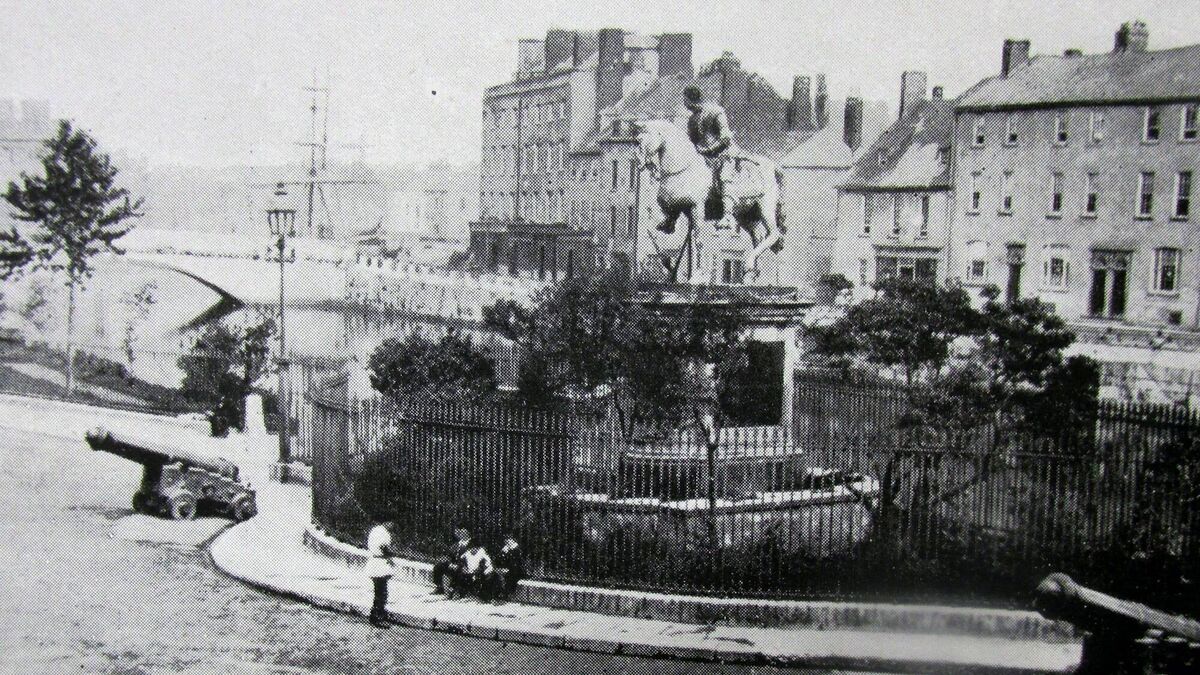
George II 'Yellow Horse' statue. Picture: Cork Camera Club collection, Cork City Libraries
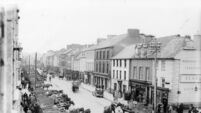
Cork’s Grand Parade is known as Ghaeilge as ‘Sráid an Chapaill Bhuí’ or The Street of the Yellow Horse, and the origin of that name dates back more than a quarter of a millennium.

In 1760, George William Frederick ascended to what was then the throne of Great Britain and Ireland, becoming King George III and succeeding his grandfather, George II, who died at 77, having reigned for 33 years.

Across the Irish Sea, the port city of Cork was thriving, its merchant princes having benefitted handsomely from George II’s reign as king. In the year that George II died, 100,000 barrels of butter and 60,000 barrels of beef were exported from Cork, supplying Britain and its imperial outposts.

To celebrate the new king’s ascension, the then mayor of Cork – we’ve only had lords mayor since 1900 - commissioned John Van Nost the Younger to create a statue of the old king.

The stone plaque on the front of the statue’s pedestal read: “The citizens of Cork erected this statue to the memory of King George II in gratitude for the many blessings they enjoyed during his auspicious reign, A.D. MDCCLXII” (1762).

It was in July of 1762, when John Wrixon was mayor, that the statue was unveiled on Tuckey’s Bridge, which then spanned a river channel on what is now the Grand Parade. A plaque from the back of the pedestal read: ‘George Square’, the name then given to the area near the present-day Berwick Fountain.

The city was a network of river channels in those days, and it was romanticised as ‘The Venice of the North’, but in truth, those channels were mostly silted up and used as open sewers and rubbish tips. Not to put too fine a point on it, but the place stank.

According to historian and former lord mayor Kieran McCarthy, Tuckey’s bridge was named after Timothy Tucker, who had property on what is now Tuckey St.

“He and Captain Dunscombe, who had land on what is now Oliver Plunkett St, and was then George St, built the bridge between them. It was wide enough for carriages to pass either side of the statue,” Mr McCarthy said.

In 1761, Cork Corporation had to paint the statue a bright yellow to disguise the fact that it was gradually turning an ugly shade of green, and it quickly became known locally as The Yella Horse, or George a-Horseback.

In his book The Stranger in Ireland (1805), John Carr wrote, perhaps uncharitably: “In the centre of the parade, which is very spacious, there is an equestrian statue of George the Second; it is of stone, and painted yellow, and has nothing belonging to it worthy of further notice”.

By the start of the 19th century, the river channel had been filled in to create the Grand Parade, and the statue, which had already begun to fall into disrepair and had to be supported on wooden crutches, was moved to a site near the south channel of the River Lee.

Depictions show the statue surrounded by railings, and by the river, with Parliament Bridge in the background, suggesting it was sited around where the Peace Park and War Memorial are now, at the Grand Parade end of the South Mall.

A surviving photograph in the Cork Camera Club collection, taken in 1861 or in early 1862, clearly shows the wooden supports holding the statue upright.

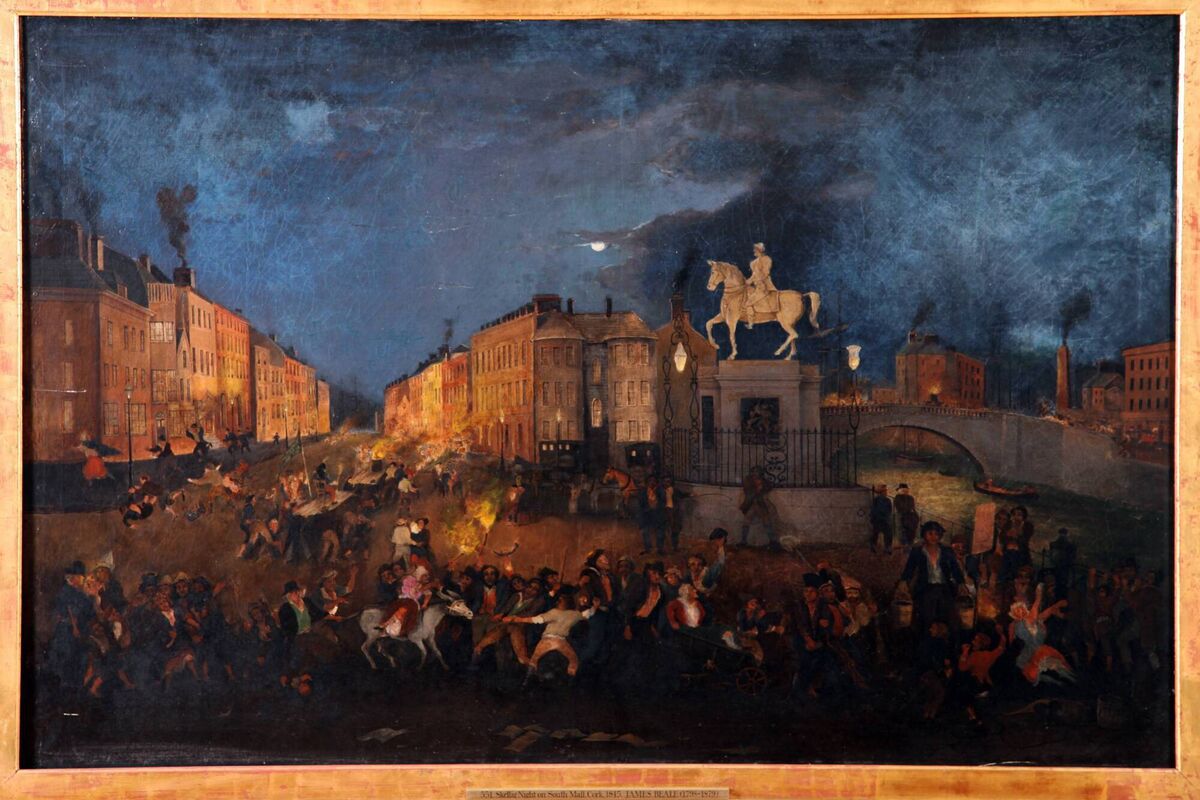
James Beale, Skellig Night on South Mall Cork 1845, 1845. Picture: Collection Crawford Art Gallery, Cork

The statue appears in James Beale’s painting Skellig Night on South Mall 1845, which is in the Crawford Art Gallery collection. Beale depicts the statue in its garish yellow, but the king is sitting bolt upright in a very formal pose, whereas in the Cork Camera Club photograph, he is leaning forward in the saddle.
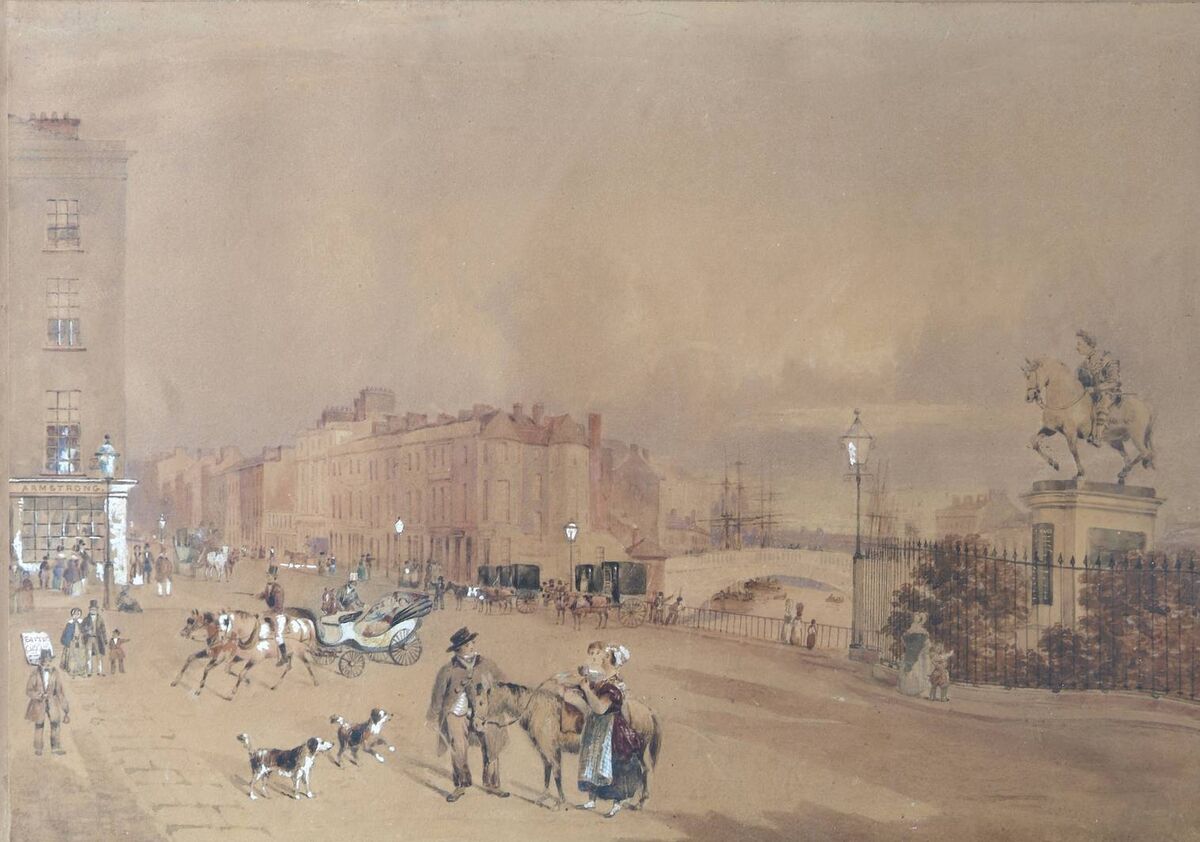
The statue appears in another work in the Crawford collection, King George’s Statue, Grand Parade 1860 by Michael Angelo Hayes (1820 - 1877). It features the statue at its South Mall site, and Hayes too shows the king leaning forward in the saddle.

King George's Statue, Grand Parade, 1860 by Michael Angelo Hayes. Picture: Collection Crawford Art Gallery

The artist colours George-a-Horseback in more normal shades than his usual garish yellow. Perhaps he was using artistic licence, or perhaps the paint had faded from the statue by the time Hayes depicted it.
On the night of Monday, March 3, 1862, a century after it was first unveiled and in times perhaps changed in the wake of the Famine, the statue came down and was dismembered.

The Cork Examiner reported the following day: “The mounted statue of George 2nd, at the end of the Parade, popularly known as ‘George a-Horseback’, met with a mishap last night, which seems likely to prevent it from adding any longer to the ornamentation of our city.

“For some time past the royal equestrian was observed to keep his seat very badly, in fact, he was in quite a shaky position, and latterly a prop had been placed under his right arm to preserve him from falling off.”

The report notes that the prop “seems by some accident to have slipped from its place and the monarch, deprived of his stay, turned over towards the South Mall, to which his position on his steed had always given him a tendency, and fell to the ground, rolling several feet from the pedestal.

“In the fall he displaced several stones from the pedestal, besides suffering considerably in his own limbs. The arms and legs are broken off close to the trunk; the former are still lying near it, but the latter, with exception of one foot which is lying on the trunk, have rather mysteriously disappeared, not a trace of them being about the place.

“The trunk is lying on its back, something in the position of a man lolling about in a ‘jolly spree’ and seems to be the object of considerable curiosity to a large crowd, who amuse themselves with running remarks on the misfortune that has for ever destroyed the glory of the celebrated George, and with curious and entertaining anecdotes of his past history.

“The horse still remains on the pedestal with the same jaunty air as usual, but a large square cavity in his back, which the fall of his master has exposed, and a very clumsily put in patch on the left flank, gives him rather a dilapidated appearance.”

Although the Examiner account suggests George’s downfall happened “by some accident”, whether it means that literally or tongue-in-cheek, Cork legend has it that it was a local who got over the railings and, using a saw, decapitated the monarch. Then, it is said, the mob brought the rest of the statue down, and it was dismembered for souvenirs.

Some 44 years later, on St Patrick’s Day 1906, a new statue, the National Monument, was unveiled near where George II had once stood.

All that remains of Van Nost’s sculpture are the two plaques from its pedestal, both of which are now in the City Museum in Fitzgerald’s Park.

This article originally appeared in the 2025 Holly Bough

more Holly Bough articles

Recipe collection compiled by woman in Cork 100 years ago is uncovered Recipe collection compiled by woman in Cork 100 years ago is uncovered
The journey to building Cork's City Hall...and how it was almost developed at another location  The journey to building Cork's City Hall...and how it was almost developed at another location 
Meet the collectors who have amassed 100,000 match programmes, coins and thimbles Meet the collectors who have amassed 100,000 match programmes, coins and thimbles

More in this section

Cork ‘nerd’ professor who landed role in an Oscar-winning film Cork ‘nerd’ professor who landed role in an Oscar-winning film
Throwback Thursday: The day I fainted at communion in church Throwback Thursday: The day I fainted at communion in church
Recipe collection compiled by woman in Cork 100 years ago is uncovered Recipe collection compiled by woman in Cork 100 years ago is uncovered

Sponsored Content

10 minutes with Shannon O’Sullivan of Corlann 10 minutes with Shannon O’Sullivan of Corlann
10 minutes with Jason Cooke of Cheshire Ireland 10 minutes with Jason Cooke of Cheshire Ireland
Foróige - Eric Cork 10 minutes with Thomas Moloney of Foróige
Contact Us Cookie Policy Privacy Policy Terms and Conditions

© Examiner Echo Group Limited

Add Echolive.ie to your home screen - easy access to Cork news, views, sport and more