The pubs of Cork city in the 1960s: Taking a stroll down memory lane
Seamus White and Tony O’Sullivan both worked in a number of pubs in Cork city over the years. They took a stroll down Oliver Plunkett Street, recalling the pubs which stood there in the 1960s. Here, CIARAN WHITE shares their recollections of the time.
The pubs of Cork city in the 1960s: Taking a stroll down memory lane

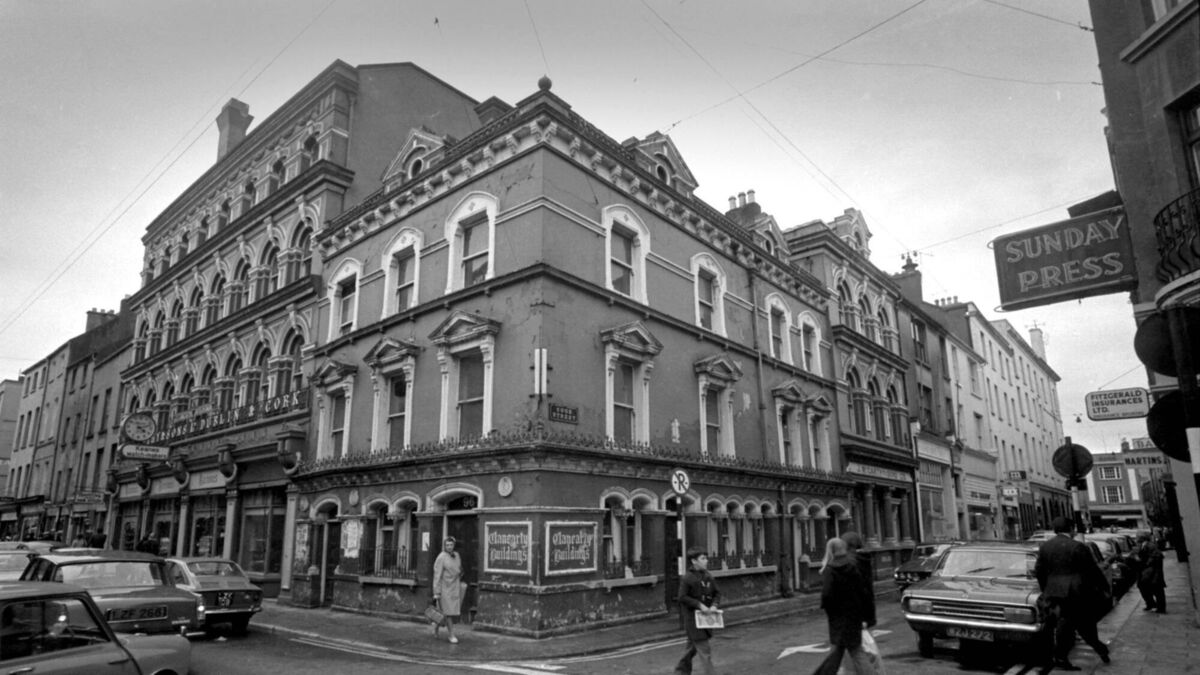
The corner of Oliver Plunkett Street and Cook Street in 1973. The sign for J McCarthy’s is visible on the premises next to the Clancarty Buildings.

My Dad, Seamus White, and his lifelong friend and fellow barman, Tony O’Sullivan, had both worked in a number of city centre pubs in their time. They recently took a stroll down Oliver Plunkett Street to recall the pubs, shops, and characters that made that part of Cork city such a vibrant place in the 1960s.
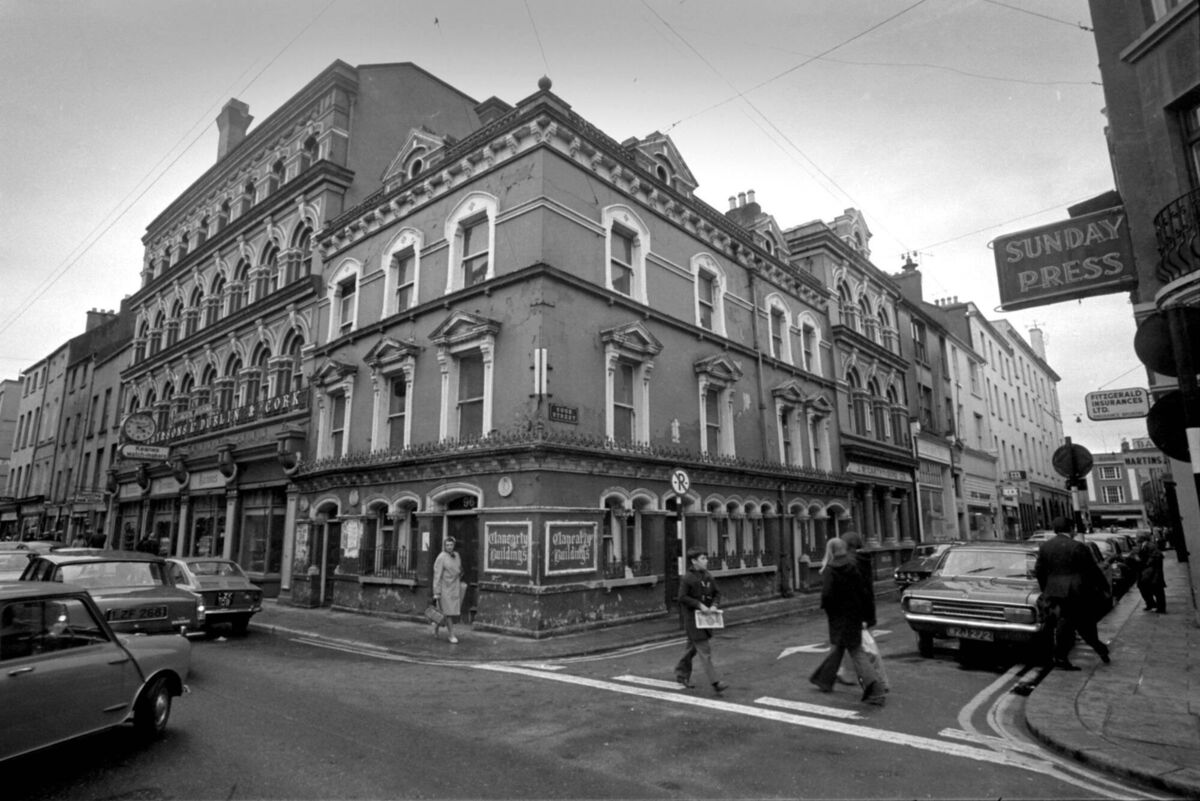
Dad started as a barman on 19 June 1960, as a 17-year-old, in the business of J S McCarthy Tea and Wine Merchants based at 96 Oliver Plunkett Street, which gave the pub the name by which it was more commonly known: the 96.

Well, in fact he started the previous Monday. Another McCarthy’s employee had gone to London, initially on a holiday, which turned out to be permanent, leaving a vacancy that Dad was to fill.

The corner of Oliver Plunkett Street and Cook Street in 1973. The sign for J McCarthy’s is visible on the premises next to the Clancarty Buildings.

Con O’Callaghan, a charge hand in the 96, brought him to see the managing director, Cashel O’Riordan, and Mr O’Riordan enquired if he was free to staff the bar at an outdoor catering function that McCarthys had been contracted to provide in the City Hall for a function hosted by then Lord Mayor, Stephen Barrett. 250 international journalists attended a function in the City Hall that night, 13 June 1960. As a raw lad from Mitchelstown, he recalls having to ask a shawlie for directions to the City Hall, which drew a slightly shocked and sarcastic response from the woman, who pointed to the obvious building and said, ‘Over there, boy!’ After the function in the City Hall, he took the number 11 Tivoli bus to its last stop and hitch-hiked home to Mitchelstown.
He recalled some of his colleagues in the 96, such as Lily Lynch, Mamie O’Shea, and Margaret Crowley, who were the female bar assistants. Mr Leahy was the secretary, and Mick Finegan was a lorry driver, while Ted O’Brien, from Glen Rovers, worked in the office, and a Mr Muldoon was the tea blender. John Linehan was another charge hand, and as chance would have it, John’s brother, Billy, was to be a neighbour of ours when we lived in Togher.

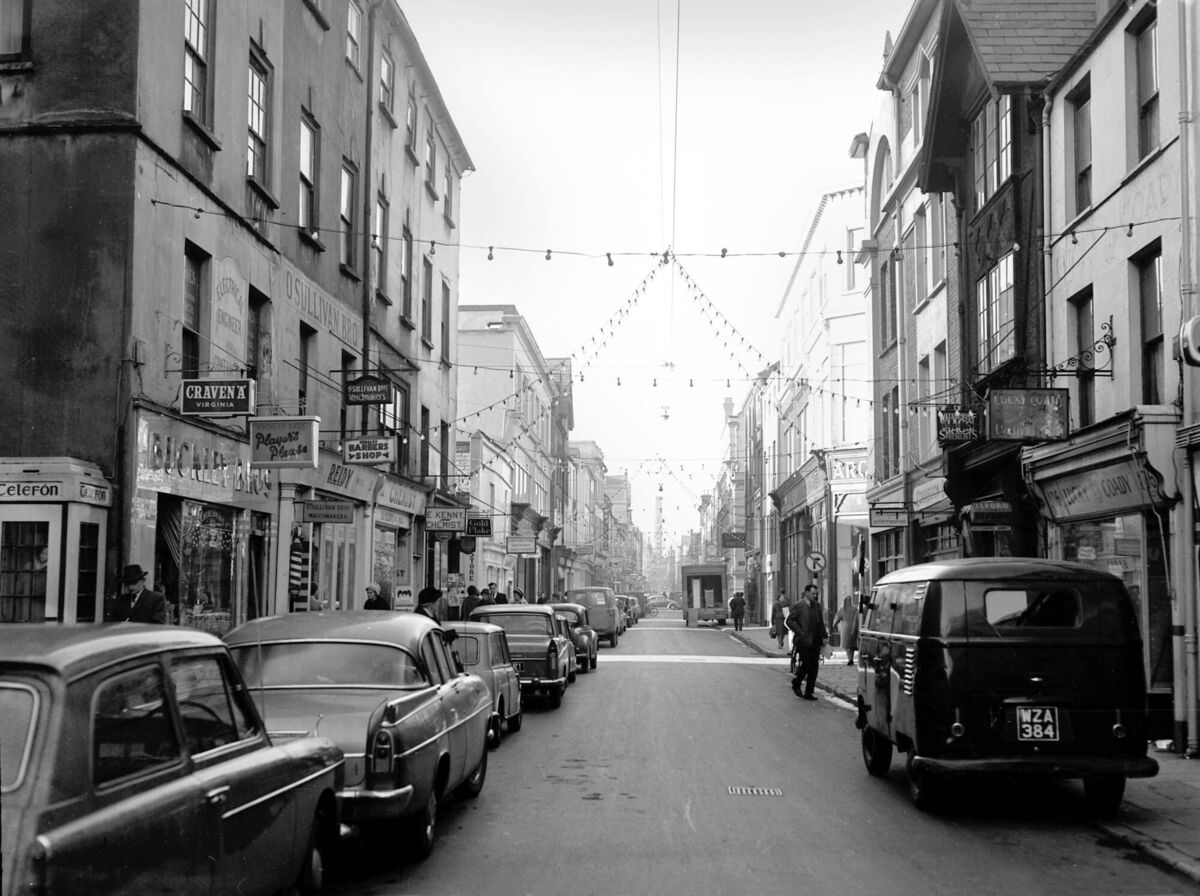
A section of Oliver Plunkett Street, Cork pictured in December 1962.

Good-natured banter was the order of the day, and regulars would slag him about being from ‘cheese country’ and he would in turn wind them up by pretending to be a sort of country buffoon who was intrigued by the sight of one bus on top of the other whenever he saw a double-decker.
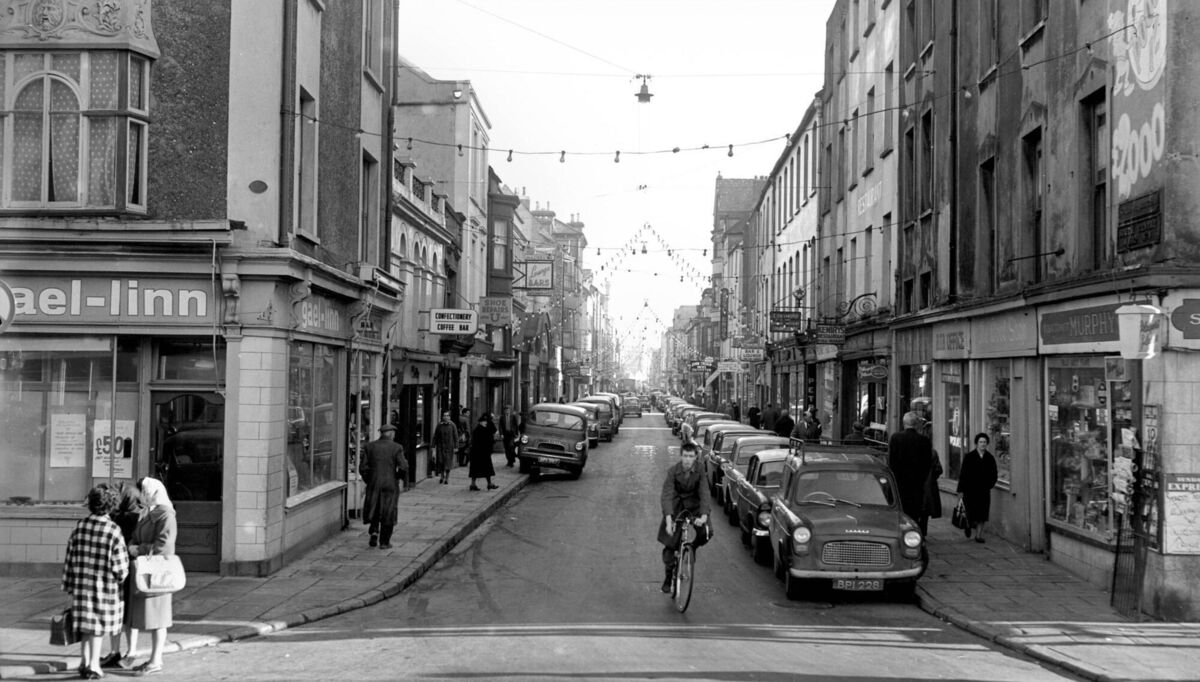
Starting on the Grand Parade end, Dad and Tony immediately pointed out the Bodega, where now stands JJ Walsh and Co, and which was at one time Turner’s Hotel. In their time, Cork and Glen Rovers hurler, Paddy Donovan - ‘a great character’, they both agreed - had owned the Bodega before moving on to get a top job in Clover Meats. Upstairs, he had the Stella Restaurant, that Mary and Martin Burke owned after him: older Cork people will remember that they also had the Step-In 1 and the Step-In 2 restaurants.

Next along, they identified Jack Mackesy’s, where now stands the Barbarossa and Voodoo Rooms, which had a back entrance that could be accessed from the Market.

Mackesy’s was a restaurant by night. Jack Mackesy’s brother, Liam, owned the Vineyard in Market Lane, and a sister of his owned a pharmacy further along Oliver Plunkett Street, where Silver Wood Jewellers is now found.

Where now stands the Examiner office, was once Norvan’s pub, at the Princess Street corner, they recalled.

If its name sounds unusual to Cork ears, it was because it was formed of the amalgam of the names of the two owners, each adding part of their surnames to the title. 

A view of Oliver Plunkett Street in 1962. 

Across the street, they noted Cronin’s Menswear was still trading - many decades after first established.
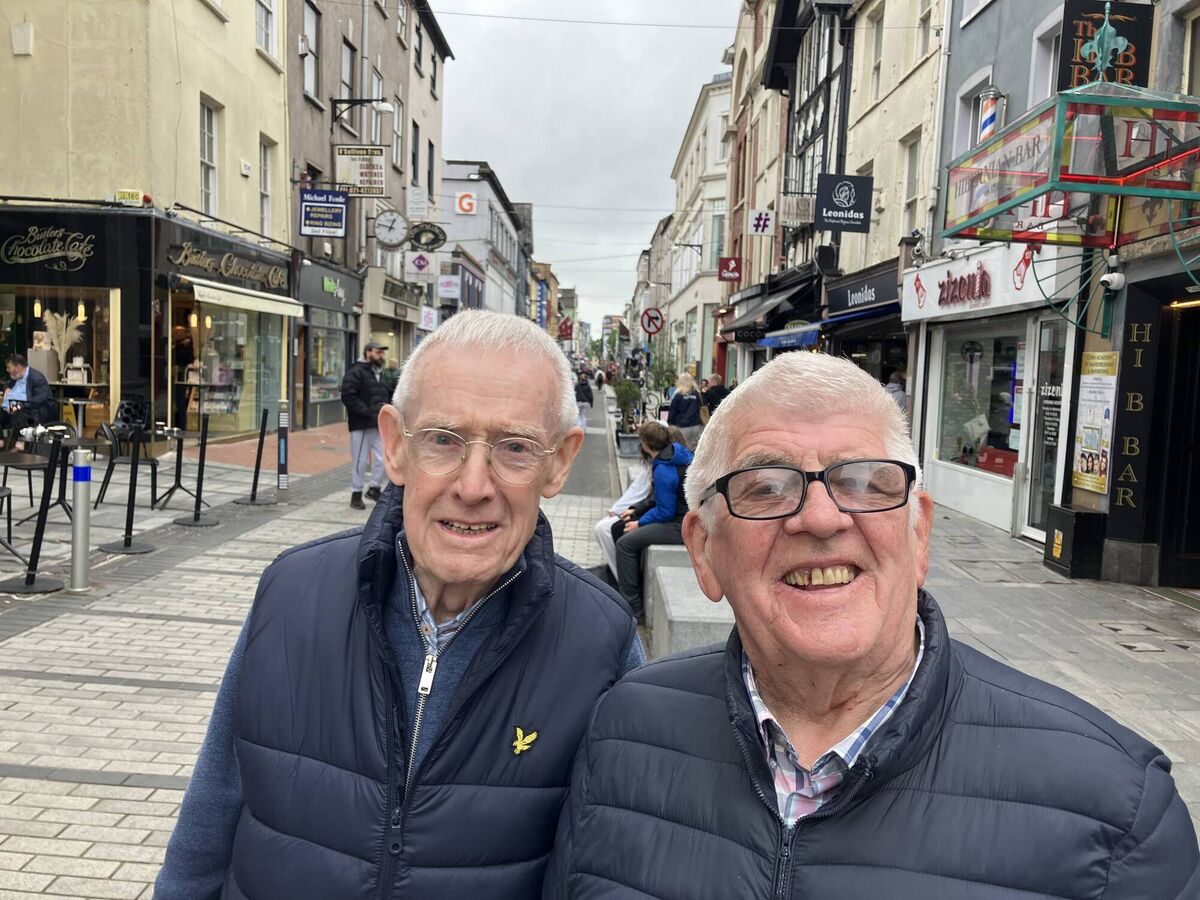
Mention of Cronins prompted the recollection that Mr Cronin’s sister, Mrs Bennett, ran the Bargain Stores on North Main Street, and a recollection that Arthur Beasley, a scion of Cork Constitution FC, ran a draper’s store across the street from Cronins.

The Plough and Horses had been at the corner of Marlborough Street. It was run by Pidgie and Con Horgan, a brother and sister who lived overhead, on a site where the Dulce Bun House now operates.

Other pub names bubbled to the surface of their memories, like the Mall Tavern, Con’s American, and Jerry Sullivan’s.

Down Marlborough Street, you could find Davy McDonnell’s, a pub with the sort of swing doors that you now only see in cowboy movies. This prompted the observation that it had only one toilet and meant that if a lady was using it, Dave McDonnell stood guard to avoid males gaining access in the meantime. The fact that there was only one toilet may not have been all that unusual because it caused Tony to recall that Corrigan’s, near to Mooney’s, also only had only toilet and its female clientele would often cross to Mooney’s on a Saturday night to use their ladies’ toilets.

Burns’ pork butchers nearby was the source of many a fine feed of cheap bodice, they said, and likewise, they remembered Mortell’s and Quaine’s fish shops, which faced each other across Oliver Plunkett Street. The former had the slogan, “if it swims, we have it”. Vanessa, who worked in Mortell’s for years and years, was fondly recalled.

Where O’Donovan’s office licence now sits, was a newspaper shop - Sullivans - from which, each day, Dad would collect the Examiner and Irish Independent newspapers that were made available to the clientele in the 96.

Liam Russell’s bookshop, of course, was then still in existence, and today is replaced by Here’s Health. The Yankee Candle shop was Galvins, a Nemo pub, according to Dad and Tony.

An Bodhrán had, in their time, been Geaneys, and next door to it, where Carl Scarpa now sits, was Joe Dignam’s. On the other side of Geaney’s was Mia’s Picture Hall, later Hanover Cycles, selling Honda 50s, and which is now Saville Clothing company.

Dignam’s, being located near to the county board offices in Cook Street, attracted a considerable GAA clientele, they said.

Joe Dignam had been a manager in Mooney’s but made the leap into pub ownership, and like a lot of proprietors at that time, lived over the premises as well.

McCarthy’s bread shop and McGrath’s haberdashery were also swiftly recalled, premises now occupied by Diesel and IT Repairs respectively.

The 96 was located where Lush is now to be found, opposite Geaney’s and Dignams, with two entrances on the Oliver Plunkett Street side - one to the bar and the other to the upstairs lounge - with a third entrance round the Cook Street side leading to the bar as well. A snug was to the left-hand side, as you entered from the Oliver Plunkett side. Dad recalls the famous sculptor, Seamus Murphy, as well as the poet, Sean O’Riordáin, being among the clientele spotted in the bar over the years.

Seamus White and Tony O'Sullivan take a trip down memory lane.

The premises owned by J S McCarthy extended back into Cook Street, and what was once the Denim Store in more recent times was the location of the off-licence and the tea vending department, with the company offices overhead. On peering through the door, Dad could see the original staircase leading to the upstairs offices, where the whiskey blending and tea tasting were also overseen.
Directly opposite that door to the offices of JS McCarthy in Cook Street was a shop named Martins, though actually owned and run by three sisters and a brother, all named Philpott. Like other traders in the city centre, they too lived over the premises.

Martins specialised in flowers and cigarettes. It was handy to the 96 if the pub needed change.

Directly next door to Martins was the finance house of Lombard and Ulster (today the Central Shoe Stores), once the employer of Jimmy Barry-Murphy. Over Lombard and Ulster, Dr Jim Young, the Cork hurler, had a surgery.

Back towards Oliver Plunkett Street, at the corner opposite to the 96, where Murphy’s of Dingle now sell ice cream, was the offices of the Irish Press. Jim Madigan, a good friend of my parents, worked there before being transferred to Sligo on promotion.

Mam and Dad married in 1966, and while Mam made the wedding cake, it was generously iced for free by Lehane’s confectioners, who operated out of the shop where Bperfect Cosmetics can now be found. Lehane’s was later occupied by Wolfgang Grabbe, the well-known jeweller. Next door to Lehane’s, in a shop which is now a nail bar, was Caesar’s Hair Dressing.

Down Cook Street was found one end of Elbow Lane, on the Patrick Street side of Mooney’s, where Tony had worked at one time - as well as in Keeley’s, the Marlborough and the Mountain, before moving to the Orchard in Ballinlough in 1974, where he retired in 2020 - while the other end emerged onto Oliver Plunkett Street, creating the elbow shape that gave it its name.

Mooney’s also had an overhead lounge, accessed by a door to the right-hand side of the main entrance in Cook Street. Denis Atkinson was one of those who worked there. (Mooney’s will be known to my generation of Corkonians as the former Ambassador Chinese Restaurant, having been Hennessy’s Record Shop prior to that.)

Off Elbow Lane was found another entrance into Mooney’s, leading into what was wittily known as the Elbow Room. When Mam worked as a telephonist in the GPO, because Mooney’s was one of the few places serving sandwiches at lunchtime, Elbow Lane was a discreet way for GPO telephony staff [mostly female] to pop out to for lunch without being seen entering a pub at lunchtime.

It was through the Oliver Plunkett Street entrance to Elbow Lane that not only were deliveries made, but John Chamberlain, the then manager of Mooney’s, and later the manager of Nemo Rangers clubhouse, would park up his Lambretta moped. They recalled that John was not the first to make the transition from city centre pub working to managing a GAA club bar and premises, as Brian Clarke had made a similar journey previously, leaving his job in Kealey’s on Faulkner’s Lane (now Tommy Hilfiger) to go to manage the social club and bar in the ’Barrs in 1970, where Dad was to become his Assistant Manager in 1980.

Opposite Mooney’s was Horgan’s pub (now trading as Café Now), officially known as The Criterion, but more commonly known as the Crit, and one of Dad’s favourite haunts. It was owned by Eamonn Foley, and Breda and Mary Kingston were two barmaids there.

Returning to Oliver Plunkett Street, the duo identified the site of the Anchor Buffet at the other end of Cook Street, where the side entrance to Saville Menswear is found, and next door to the Rob Roy.

Continuing on up Olver Plunkett Street, they soon identified the former site of the Tower and Shamrock [now Wicked Vapes]. The Five Star Supermarket was based where Guiney’s now is.

Next along, they remembered the Arcade Tavern, named after the nearby Winthrop Arcade, owned by Annie and Paddy Crowley. And right beside the Arcade Tavern was Lombardi’s chipper, owned and run by Mickey Lombardi.

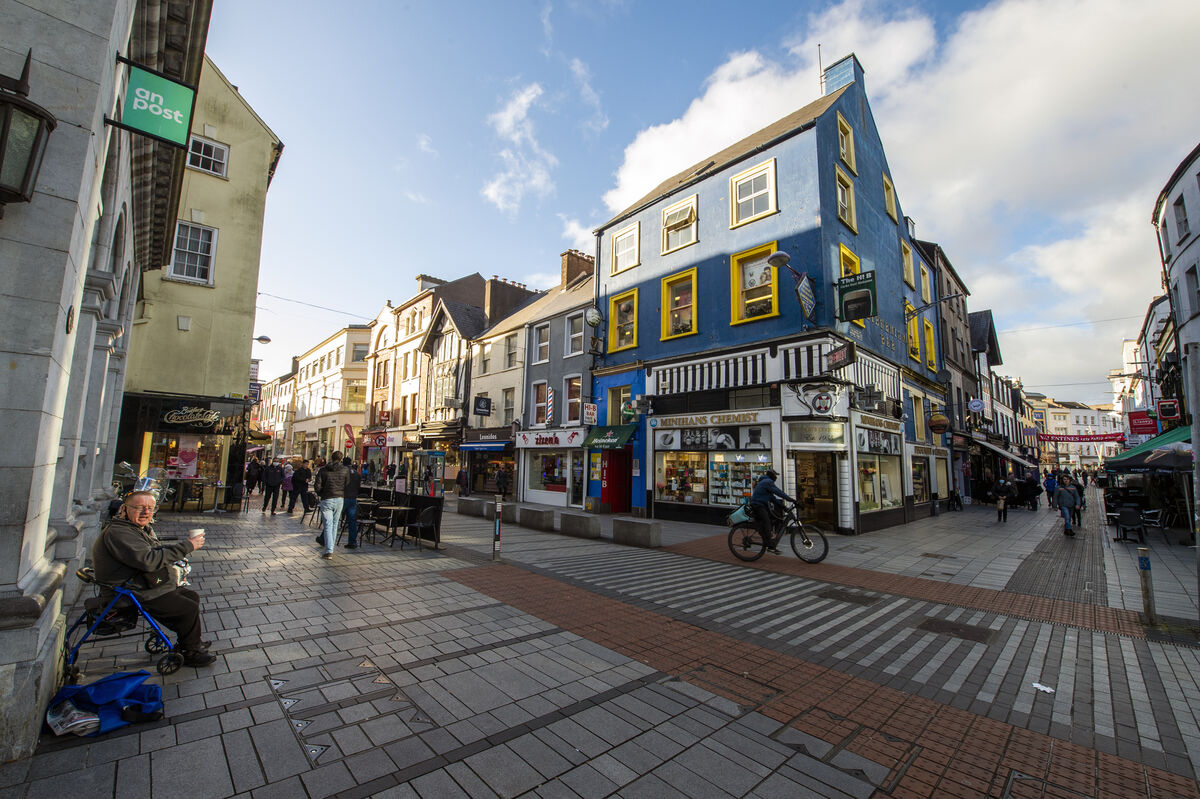
The Hi-B has remained a feature on Oliver Plunkett Street for many years. Picture: Dan Linehan

A few doors down further was the entrance to the Hi B. It, and Minihan’s Chemist next door, are a handful of traders still engaged in the same business and retaining the same identity as they did back then.
Surveying the street, they said it appeared that the only businesses that remained trading from that time were Cronins menswear, Keanes the jewellers, Casey’s furniture, and Minihan’s Chemist, with the Hi B and the Old Oak the only pubs retaining their identities.

Looking round them, to the corner of Pembroke Street, they fondly remembered the Desmond Bar and Grill, (where Impress Alterations now operates) once managed by a former colleague of theirs, Dan Whelton (now coming up on a significant birthday), taking over from Sean O’Brien, whom Dad remembered from the Grocers Club.

Mam remembered that the staff in the Desmond would sometimes keep little treats and delicacies back for the GPO staff, which otherwise might have been considered luxuries that they should not waste their money on.

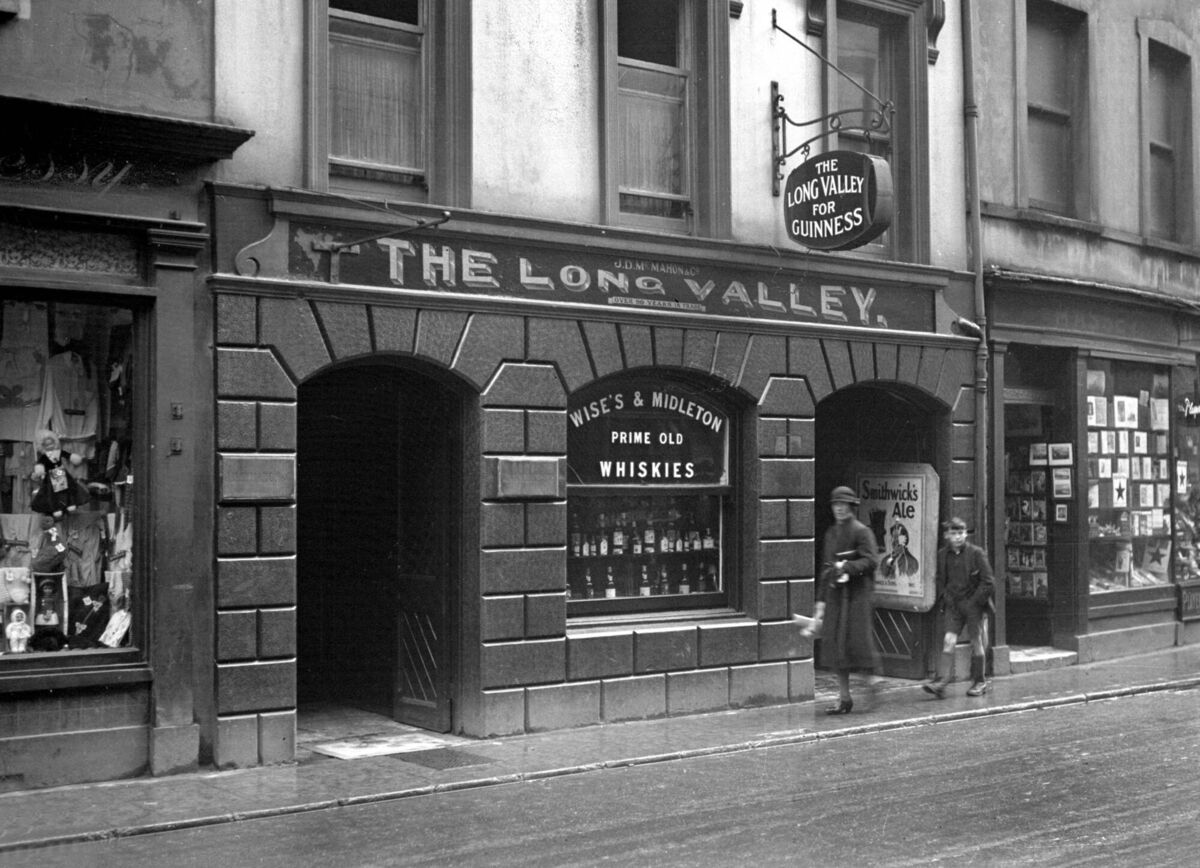
The Long Valley, of course, still occupies pride of place at the junction of Winthrop Street and Oliver Plunkett Street, but at one stage, Tony recalled, the Moynihans also owned and ran a tailor’s shop next door, on a site now dominated by the Vodafone shop. Further along Winthrop Street, Tony could recall the Arch Bar (now Boojum).

The Long Valley Bar, Winthrop Street, Cork pictured back in 1934. 

The junction of Winthrop Street, Pembroke Street, and Oliver Plunkett Street seemed to mark the natural boundary of the vibrant streetscape they remembered.

True enough, the Old Oak (then owned by an O’Driscoll man from Schull, a distant relation of my mother’s), Mick Murphy’s, and Hanley’s lay further on, but it seemed to be a less frequented part of town in the ’60s.

And so, the reminiscences naturally drew to a close, and the ghosts of friends and characters of yesteryear, having been fondly recalled by the duo, retreated once more.

This article originally appeared in the 2025 Holly Bough.

Read More

Life at Cork’s now obsolete Queen’s Place
Best in Cork - 50 years since the soccer star lined out for Cork Celtic
Religious order marks 150 years in East Cork

more Holly Bough articles

And the winner of the 2025 Holly Bough colouring comp is... And the winner of the 2025 Holly Bough colouring comp is...
Pictures: Holly Bough makes its way around the world  Pictures: Holly Bough makes its way around the world 
Arrival of Cork's ‘Holly Bough’ heralds countdown to Christmas Arrival of Cork's ‘Holly Bough’ heralds countdown to Christmas

More in this section

Amazing WWII heroics of Cork Navy man Tom Ryan Amazing WWII heroics of Cork Navy man Tom Ryan
Throwback Thursday: We sang The Banks at campfire on scout trip to Scotland in 1950s Throwback Thursday: We sang The Banks at campfire on scout trip to Scotland in 1950s
The day 15 Nazi sailors landed on Cork soil The day 15 Nazi sailors landed on Cork soil

Sponsored Content

Turning risk into reward: Top business risks in 2026 Turning risk into reward: Top business risks in 2026
Top tips to protect Ireland's plant health Top tips to protect Ireland's plant health
River Boyne in County Meath, Ireland. Water matters: protecting Ireland’s most precious resource
Contact Us Cookie Policy Privacy Policy Terms and Conditions

© Examiner Echo Group Limited

Add Echolive.ie to your home screen - easy access to Cork news, views, sport and more