Throwback Thursday: The day I fainted at communion in church
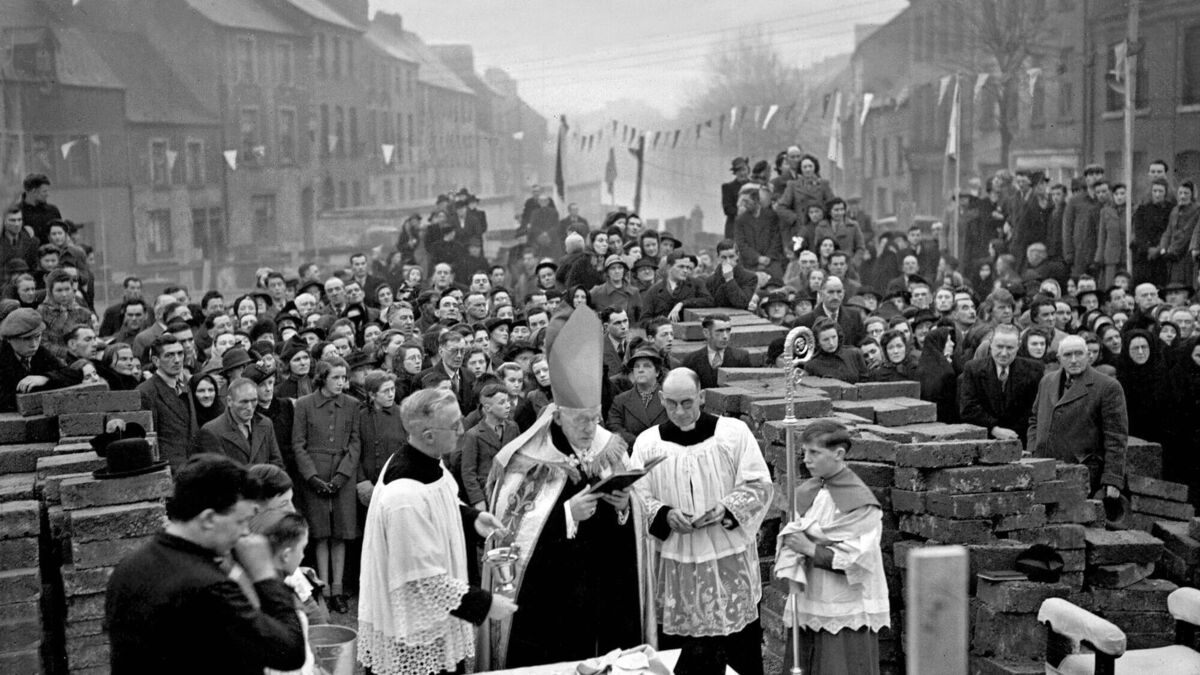
The foundation stone of the Church of the Annunciation, Blackpool, being laid by Bishop of Cork Daniel Cohalan in 1945. Readers recall going to Mass during Lent in today’s Throwback Thursday
We had some entertaining responses to the belief we printed a couple of weeks ago, that to ensure a fine day for a christening, a communion, a confirmation, or a wedding, you had to put the household’s cherished statue of the Infant of Prague out in the garden the night before.
For best results, apparently, he had to be buried!
Old friend Mary O’Leary was quick to write: “Hi, Jo. It’s a long time since I was in touch. I did know the Child of Prague (pronounced Prayge) should be put under a bush in the garden the night before a wedding but never heard of it being buried.
“It was St Joseph’s statue should be buried, head first, in a flower bed when selling a house! What kind of Catholic thought that one up?”
Now that last one is new to us, Mary, and all the more delightful for that.
Perhaps in earlier times, displaying religious statues in your garden was a sign that this was a Good House and you could buy with confidence that there would be no ghosts, no poltergeists, no echoes of a wicked or sad past.
But burying them, head down? Has anybody else ever heard of that one? Do make haste to tell us if so.
Micheal Kenefick also contributes to the statue of Prague legend.
“A short note on the multi-pronounced Infant. He even had the title of The Infant of Praying on the Middle Road down in Whitegate. We have been putting him out since the 1950s, but only for weddings, and always on the window sill.
“Family and near neighbours’ events only, and I have no recollection of failure. Admittedly, we have had very few requests in a 70-year period.”
Micheal also remembers An Tostal, which we mentioned in Throwback Thursday two weeks ago.
“My only recollection of that major event of 1953 is getting locally what we called ‘a rock’. It was that pink cylindrical yoke designed to break every tooth in your head.
“Normally, they only arrived after a once-in-a lifetime visit to some tourist spot or a pilgrimage to Knock. The An Tostal version, available locally for the one and only time, was green, white, and gold.
“I got mine in Margaret Keeffe’s in Whitegate. Margaret and the siopa, sadly, both long since gone.”
Oh don’t you bring back memories with that stick of rock, Micheal!
Does anyone else recall demanding of family and friends heading off to exotic places like Knock or Dublin, ‘bring me back a stick of rock!’?
Most of them had lettering circling the stick, giving one message or another (presumably a suitably religious one from Knock), and it was always a fascinated subject of discussion among us youngsters as we sucked on the stick, as to how exactly that lettering got in there.
Let’s have more memories on the stick of rock, beloved of all dentists for the work it brought in!
The Connie Dodger
And now back to the Connie Dodger, which we spoke about last week on this page.
Gerry Ryng writes from Glounthaune: “Jo, you referenced the ‘Connie Dodger’ in Throwback Thursday, and you related how several old establishments have claimed the rights of creating it first.
“You instanced the Green Door and asked if somebody had another version of the story, another location for the invention to please ‘tell us at once’.
“Well, the late Michael Harrington, who was a long-time resident of Glounthaune Parish, often referred to the origin of the said confection, as the Lenten ruling would definitely have had an adverse effect on his business, Harrington’s Confectionery of Churchfield.
“However, his enterprising, shrewd salesperson, the late Jim Barry, had the foresight to circumvent that situation.
“The company produced extra large biscuits so that those on the Lenten fast could stave off the pangs of hunger while staying within the letter of the law.
“There was a variety of flavours such as those of jam, cherries, etc, so the biscuits were in fact cakes in disguise.
“However, if such an imaginative initiative was not enough, Harrington’s Confectionery then actually proceeded to market the biscuit as a ‘Connie Dodger’. The reason was so simple and oozed of Cork wit.”
Well, that is an excellent addition to the story of the legendary treat, Gerry, and thank you so much for sharing it with us. Have a biscuit, do! Ah go on, it’s one of Harrington’s best…
And here is a memory from regular contributor Joe Terry.
“Commenting on another of your enjoyable stories from yesteryear, these are a few insights of my own,” says Joe..
“Regarding your mention of ‘cutting out meat’ and Bishop Cornelius Lucey’s strictures on fasting, where ‘a cup of tea and a biscuit’ was considered the height of indulgence, it brought some memories back to me.
“I distinctly remember my first primary school teacher instilling in us during ‘Christian Doctrine’ sessions that we were allowed only ‘one full meal and two collations’.
“We knew what coal was; it kept us warm by the open fire in winter. But ‘collations’, a word we were not familiar with, remained a mystery, never properly explained.
“Again, it reminds me of how, whenever that teacher was caught off-guard by a difficult religious concept, she would simply explain it away, saying it was a ‘mystery’, and leave it at that.”
Joe continues with his memories of Lents past.
“Mentioning fasting also brings back memories of life shortly after my First Holy Communion. To remain in ‘a state of grace’, I would fast from six o’clock on Saturday evening until returning from Sunday Mass.
“I recall waiting to receive the Host in Cloyne chapel, a sour taste developing in my mouth and my head beginning to spin…
“My next related memory is of sitting on a kitchen chair in Mrs Power’s hall, my face being gently patted, and the rim of a cup of water touching my lips.
“Even now, I’m at a loss as to what caused my occasional fainting in the chapel; whether it was the physical fasting or the fear of God worrying that I hadn’t made a good confession by honestly telling every last sin to the priest.”
Joe continues: “But the mention of the biscuit in your Throwback Thursday pages reminds me also of when I was a barman at The Beacon in Dagenham in the early 1960s.
“Not long after morning opening time, a certain retired man would come into the public bar with his dog. Without saying a word, he would point toward a large glass jar on a shelf behind the counter.
“I was required to unscrew the lid and take out a three-inch arrowroot biscuit, followed by pouring water into the customer’s dog’s bowl and placing both on the counter top.”
But were both of those for the dog, Joe? Or did yer man have the biscuit while the dog lapped the water? Were they both observing Lent or just one of them? Or neither?
Reader Tim Cagney writes to remind us of the atmosphere of fear and terror in which many young people grew up in the days when Roman Catholicism ruled Ireland with an iron hand (and no velvet glove about it either).
“Mention of a novena reminds me that 1960 was supposed to be the year of the Big Reveal - the disclosure of the 3rd Secret of Fatima.
“We were all led to believe that this would herald the end of the world, and the entire country was gripped with fear - my wife still has memories of it, which she has never quite shaken-off.
“Wonder what became of it? Like myself, we’re all still standing - the only thing which has suffered is the reputation and credibility of the Catholic Church.”
Yes, I remember that terrified belief that the world was coming to an end in 1960, Tim. I can still see us kids standing in the playground, whispering in fear and trembling.
Of course, it suited the Church to keep us in fear, since that was a sure way to maintain authority and control.
And I can remember also, all too vividly, the terror inspired by a nun who must surely have had serious mental problems. She would imbue her trembling class of children with terrifying stories of what would happen when Communism took over the world – how our parents would disappear, all our toys and comforts would be taken away – we were shaking and crying by the end of one of her Religious Instruction classes.
“I have often thought since that in today’s more modern thinking, I should report that presumably deceased sister for abuse, since that is what it was. It certainly gave me many sleepless nights as a youngster.
Cork's Rock Steps
Now – remember the great time we had last year discussing the Rock Steps, what went on there, who lived there?
Well, the subject has come up again, courtesy of Stephen O’Sullivan.
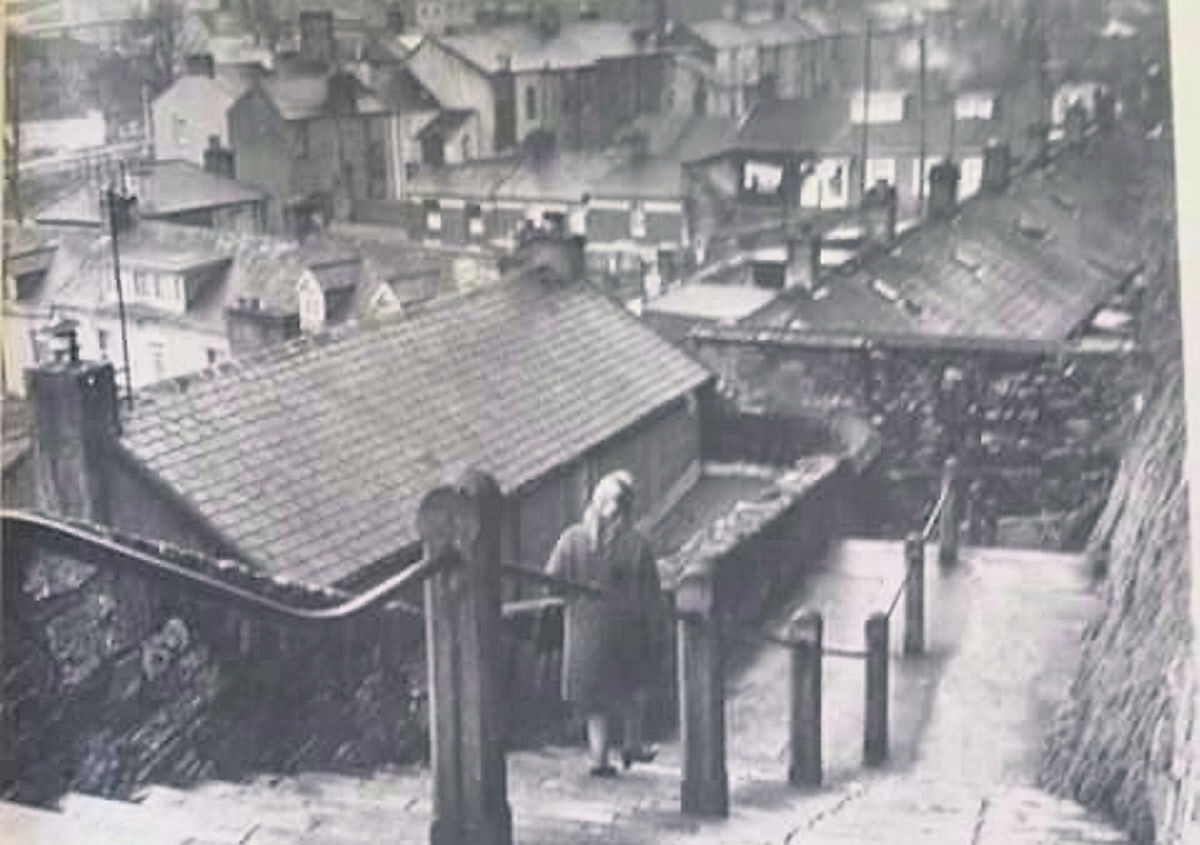
“Hello Jo, greetings from Dublin,” Stephen writes. “I’m getting in touch because I stumbled across a Throwback Thursday piece of yours from May of last year. It contained a photo taken from near the top of the Rock Steps, looking across the terrace, and it showed the roof of a two-storey house, one of just two or three on the terrace.
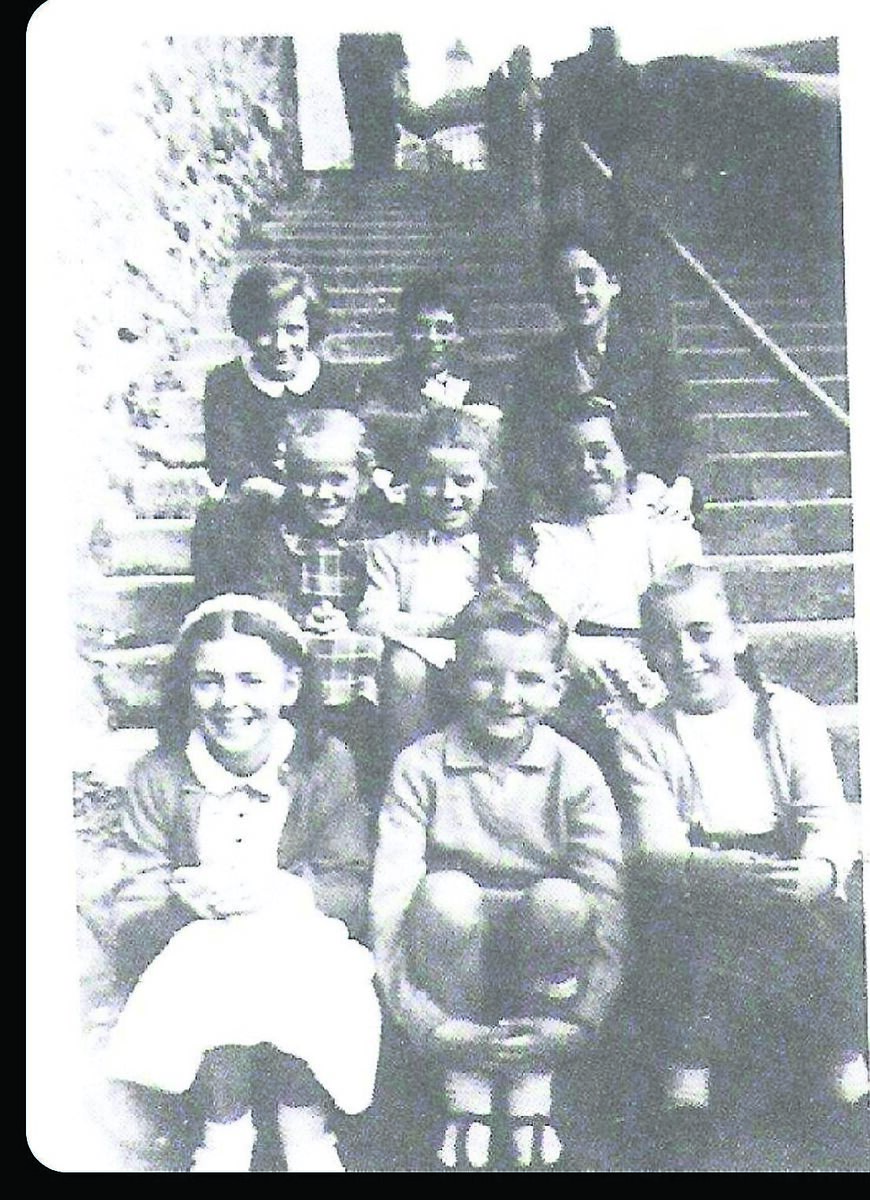
“There was also a photo of a group of kids on the steps and the question was asked whether people could identify any or all of those kids.
“I’d be very interested in knowing whether you got an answer to that question.
“That’s my grandparents’ house in the photo. It was number 15 on the terrace. The Comerfords, who are mentioned in your piece, were first cousins and they lived in number 14. Other first cousins lived in numbers 16 and 17.
“The Ryans, also mentioned in your piece, lived in number 15, but the owners in the 1950s were my grandparents, Stephen O’Sullivan and Nora (Comerford) O’Sullivan. One of their daughters married a Bill Ryan, hence the Ryan name.
Stephen continues: “The other family names you mention are all accurate. I wonder what your source is?
“As a kid, I used to play on the terrace with the Brownes, a Linehan and others including a lad called Ritchie Cooke. As Dr Richard T Cooke, he later became a well-known local character/folk historian.
“Number 1 on the terrace was occupied by a shawlie called Aggie Begley, and her cottage, as I recall, featured a dirt floor.
“I’m pretty sure that the kids in the photo include some of my playmates and I think I could point you at one of them who still lives nearby.
“As for myself, I’ve tried without success to find out who built the terrace (the Earl of Cork perhaps?) and when. If you can help me on that, I’d really appreciate it.
“Although I’ve lived in Dublin all my life (my father was born in number 15 but he emigrated to Dublin when he left the North Mon), all my firsts were in Cork, on and around the terrace. First kiss, first cigarette, and first pint. All the things that matter.
“I was in Cork not long ago, and went to visit the terrace but, of course, it’s now closed to non-residents.
“Our family owned number 15 until recently. If you’re interested, I could share one or two memories with you. And, obviously, anything you picked up by way of reaction to your piece would be of great interest to me.”
Well, we will be glad to share with you, Stephen, but we are also sure that readers will be delighted to contribute to the body of knowledge on this legendary area (hasn’t Cork always been more than well blessed with ancient laneways, flights of steps, alleys, and other places fascinating for kids to explore? It comes from being surrounded by more hills than Rome!)
So come on, Throwback Thursday regulars, answer some of Stephen’s queries for him! And Stephen, we would rather like to know more about those ‘firsts’ you experienced in Cork. Wouldn’t we, gang?
Email jokerrigan1@gmail.com or leave a message on our Facebook page: www.facebook.com/echolivecork.