The journey to building Cork's City Hall...and how it was almost developed at another location 
JOHN O’ SULLIVAN looks back at the long journey to developing City Hall and details how newspaper reports show the building was almost developed at an entirely different location.
The journey to building Cork's City Hall...and how it was almost developed at another location 

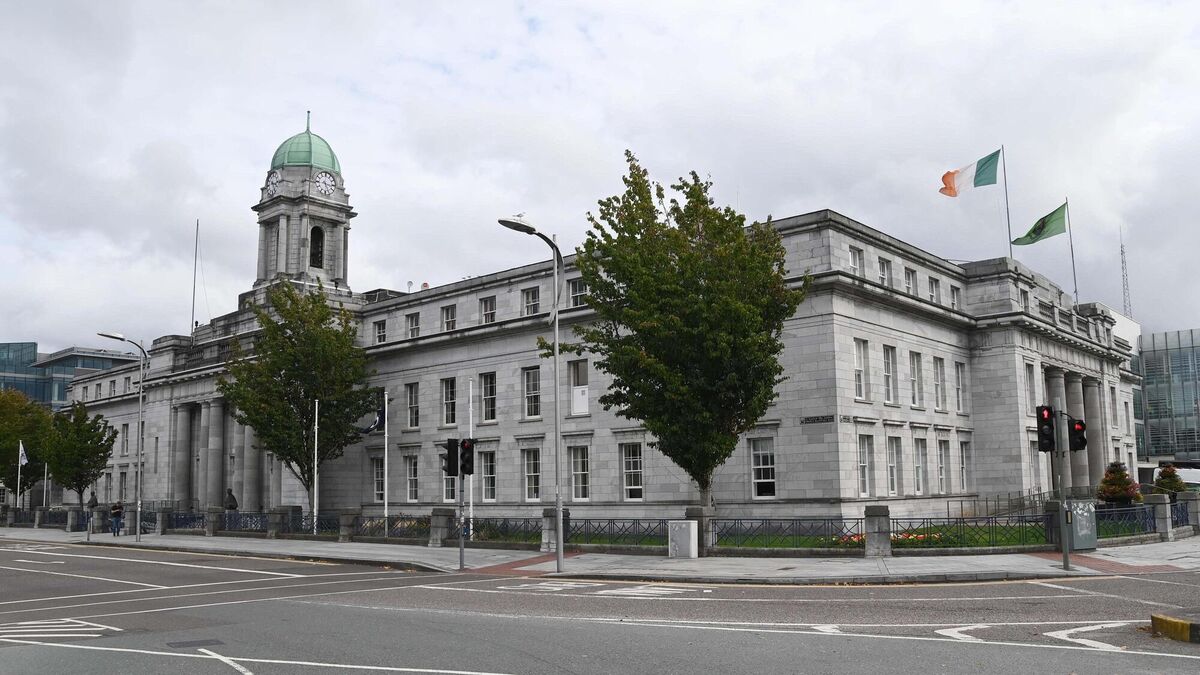
Pictured is Cork’s City Hall which was opened in the 1930s. The original building was destroyed in the Burning of Cork. Picture: Denis Minihane

Historic newspaper reports help shed light on how Cork’s iconic City Hall came to fruition, and how it ended up being developed at Anglesea Street.

In the middle of the nineteenth century, very serious consideration was given by Cork Corporation to the erection of a Town Hall in the city. It was initially discussed at Council level in 1789, but with an absence of finance, there was no development.

For many years, several distinguished musical and artistic groups, some from overseas, travelled throughout the country giving performances at various venues. In many provincial towns, these took place in local Town Halls. However, in Cork city, the absence of such a civic amenity was a cause of concern within the Town Council.

A Town Hall committee was established in 1850 and advertised for a potential site in the centre of the city. It was envisaged that such a development would need to be erected in a prominent location, and its frontage would be similar to the Courthouse or the Cork Savings Bank. The proposed site would have a frontage of 175ft. with a similar depth. There were 12 sites offered to the Corporation, ten of which were within the central island of the city, while two others were located on Sullivan’s Quay. The financial outlay for the majority of the sites was between £15,000 - £20,000. The Corporation’s finances at the time were in a very depressed state, and this was a major issue.

Consideration was given to erecting an arch over the south channel of the River Lee at the Grand Parade/South Mall junction. It was felt that this approach would create a saving as it would not involve the purchase of a site.

At the Council meeting of May 7, 1851, it was noted that this new Corporation must bring the development, discussed for 60 years at that stage, to fruition.

A proposed site was received from the proprietors of Monarea Marsh with a frontage of 185 ft, to which one councillor replied “we may as well erect it on Blarney Road”. Ironically, this site may have been adjacent to the current City Hall.

Sir Thomas Deane, the renowned architect, felt that it would be unsafe to erect a building of such proportions unless there was a central supporting pier in the river beneath the arch. However, erecting a support in such a location would create a serious impediment to any river activity. Eventually, it was decided by the Town Council that this approach would not have the consent of the Admiralty and therefore the idea was not pursued.

A debate took place on the merits of a site on Sullivan’s Quay.

The owner of this site was Sir Augustus Warren of Warren’s Court, Macroom. While some felt it was somewhat removed from the city centre, it was felt, nevertheless, that if a bridge was built across the river at the South Mall corner, it would provide direct access to the proposed Town Hall. It was agreed that the lower part of the building would include offices for Corporation officials and that the upper floors would be let to other Public Bodies.

In October 1851, tenders were sought from architects for the design of a new Town Hall, to be located at Sullivan’s Quay. The plans were to include the following: a hall for public assembly, a Council Chamber, Mayor and Secretary’s office, Town Clerk and Treasurer’s office, two committee rooms, reception rooms, a record room and plans for a library.

At that time, the principal officers of Cork Corporation were situated in offices primarily in no. 20, South Mall, while another office was occupied in 13, South Mall. Some other Corporation officials were working from the Courthouse.

The raising of funds for this project was creating huge difficulties for the Corporation.

In early 1852, the Cork Improvement Bill was published. With this bill, the purchase of the Cork Pipe Water Co. by Cork Corporation became an immediate reality. This had been a long-held position of the city authorities for many years, as the absence of quality and quantity of the current water supply was a major issue for the citizens of a growing and expanding city. To acquire the city waterworks, pipe network and reservoirs was in excess of £13,000. This would be followed by further substantial investment.

Following the closure of the Cork Exhibition of 1852, many of the materials from the main hall were used in the construction of the Athenaeum in Nelson’s Place (Emmet Place), later to become the Cork Opera House.

On his election as Mayor in 1853, J.F. Maguire stated “that insofar as the Corporation are not in a position to fund a new Town Hall at present, the Exhibition Building will be located in Nelson’s Place as an Athenaeum on which the sum of £2,000 will be spent. This will serve all the purposes of a Town Hall for a few years”.

Municipal Buildings

In the late 1880s, Cork Corporation acquired some of the Corn Exchange site on Anglesea Street so as to erect new Municipal Offices. This building would include offices for its expanding staff, a Council Chamber, offices for the Mayor and hopefully a purpose-built Town Hall at the rear. The Corn Exchange Trustees were also given the use of the Council Chamber for their meetings. Some of their buildings were removed to facilitate the project.

On May 15 1890, six tenders were received for the construction. They were all close to £14,000. As the Corporation had no more than £8,000 to spend, the City Engineer was asked to modify the plans to stay within their finances. The Town Hall and some other units were removed from the project, and the tender of Mr. E. Fitzgerald, High Sheriff was accepted, and he was to proceed immediately to construct Cork’s first Municipal Building.

This was the beginning of Cork Corporation establishing the seat of local government on this site, which still exists today. At the time, it was possibly enabled as a very accessible site with the opening of the new Parnell Bridge in 1888.

The foundation stone was laid on July 14, 1890, by the Mayor, Daniel Horgan, in the presence of a large gathering which included Alexander McCarthy, Town Clerk and Michael J. McMullen, City Engineer. Beneath the foundation stone, a large bottle was laid which contained the three Cork newspapers of the day, an official parchment showing the title to the site and some coins and was closed with the corporate seal.

Of note, in the year 2000, a time capsule was placed beneath the floor of the Millennium Hall, which contained many items, among which were a Cork Jersey, Barry’s tea, a tin whistle, some photos of JFK in the City Hall and skating on the Lough in 1947.

The public was notified on May 25, 1892, that all business connected with Cork Corporation will be carried out at the New Municipal Buildings, Albert Quay (McSweeney Quay).

New Town Hall

Once again, the provision of a New Town Hall was raised in 1901.

In connection with the Cork International Exhibition (1902-1903), additional buildings were being erected in the Corn Exchange close to the rear of the Municipal Offices.

The architect was advised that the large hall being constructed should facilitate in some way, the future construction of a Town Hall.

Following the Exhibition, Cork Corporation was offered the Grand Organ as used in the large hall, the gallery and the roof of the building on condition that they erect a suitable building.

This was erected at the rear of the Municipal Buildings, to be known as the Town Hall, with the Grand Organ occupying a very prominent position.

When the present City Hall was under construction, the installation of a Grand Organ was also given serious consideration, but at a cost of £4,000, it was not proceeded with.

It was also felt that a permanent fixture of such magnitude might impact on the general use of the Hall.

The tender of John Delany, Builder, Henry Street to construct the Town Hall was accepted in early 1905. The tender price was £5,000. The Hall, being a very basic structure was completed in July 1906, with the first event, Feis na Mumhan, taking place in August of that year.
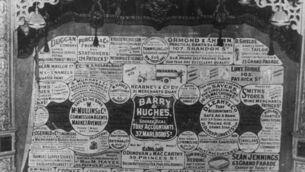
Due to financial constraints the Town Hall was very limited internally.

It had no official seating. Serious competition arose between the Electric Light Co. and Cork Gas Co. as contractors for the lighting within the building, with the tender awarded to the Gas Co.

One thousand seats were provided by the Aylesbury Timber Co, Edenderry, Co. Offaly. That firm was at the centre of carriage building and seat manufacture for many years.

Incidentally, the current seats in the City Hall were made by Howe & Co. and 2,500 similar seats are in use in St. Paul’s Cathedral, London.

With the construction of the Town Hall and its attachment to the Municipal Buildings, the title of the complex was somewhat confusing.

A meeting of Cork Corporation was held on Friday, October 12, 1906 and Lord Mayor Joseph Barrett declared that both buildings would now be referred to as “The City Hall”.

Proudly, that same title is still carried today.

This article originally appeared in the 2025 Holly Bough

Read More

'Sunlight bounced off his robes like an apparition': The day Cork pupils met the Pope on school tour
From Cork to Knock: The gifts from Cork pilgrims that still have pride of place at the Mayo shrine a century later 
The pubs of Cork city in the 1960s: Taking a stroll down memory lane

more Holly Bough articles

Meet the collectors who have amassed 100,000 match programmes, coins and thimbles Meet the collectors who have amassed 100,000 match programmes, coins and thimbles
And the winner of the 2025 Holly Bough colouring comp is... And the winner of the 2025 Holly Bough colouring comp is...
Pictures: Holly Bough makes its way around the world  Pictures: Holly Bough makes its way around the world 

More in this section

Meet the collectors who have amassed 100,000 match programmes, coins and thimbles Meet the collectors who have amassed 100,000 match programmes, coins and thimbles
Throwback Thursday: Pies and pints...Life of a Cork barman in ’70s Throwback Thursday: Pies and pints...Life of a Cork barman in ’70s
Throwback Thursday: 'My brakes failed when I tried to stop for the garda, and we ended up in the ditch' Throwback Thursday: 'My brakes failed when I tried to stop for the garda, and we ended up in the ditch'

Sponsored Content

Charity places available for Cork City Marathon Charity places available for Cork City Marathon
Turning risk into reward: Top business risks in 2026 Turning risk into reward: Top business risks in 2026
Top tips to protect Ireland's plant health Top tips to protect Ireland's plant health
Contact Us Cookie Policy Privacy Policy Terms and Conditions

© Examiner Echo Group Limited

Add Echolive.ie to your home screen - easy access to Cork news, views, sport and more