Throwback Thursday: ‘Connie Dodgers’ took the biscuit in Cork...
In the season of Lent, JO KERRIGAN recalls a biscuit named after a Cork bishop. Also in Throwback Thursday, she reveals why folk went to Skellig to wed. 
Throwback Thursday: ‘Connie Dodgers’ took the biscuit in Cork...

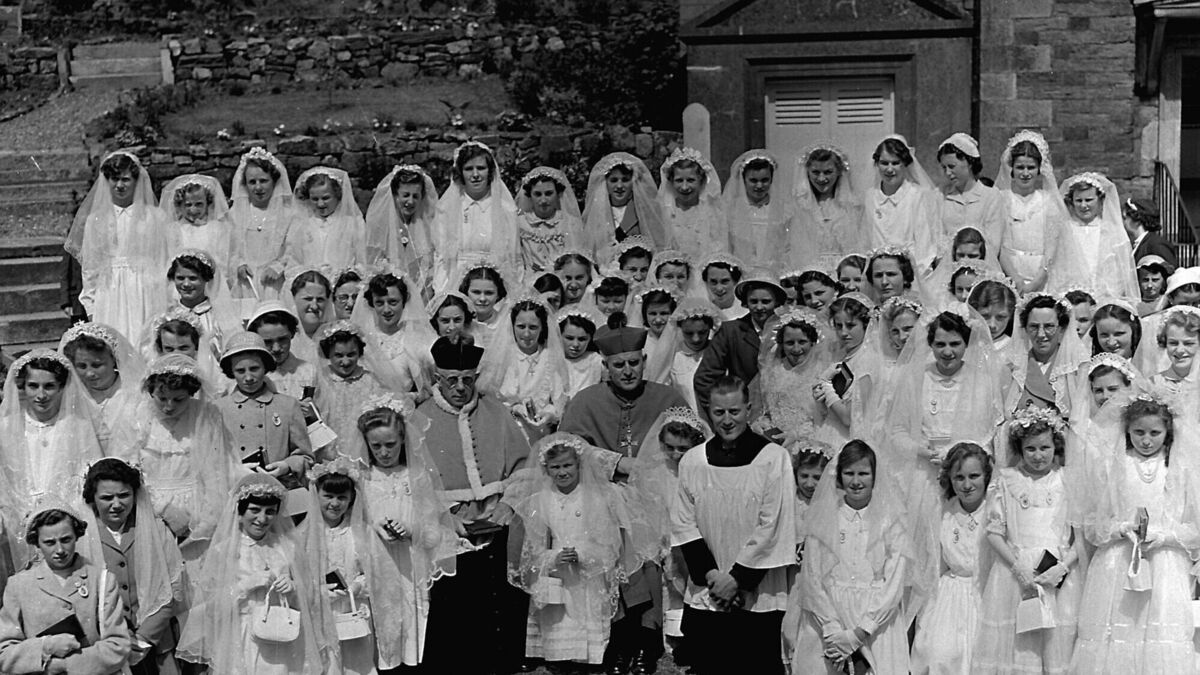
Bishop Cornelius Lucey at a confirmation ceremony for girls in Kinsale in May, 1957. The ‘Connie Dodger’ biscuit, a filling treat during Lenten fasts, was named after him

It might not be so now, but Lent was a very serious event in the Ireland of days gone by, even if people in both city and countryside had enough to do without piling more penitential practices on top of an already frugal life.
Cut out meat, have only one good meal a day? Oh, chance would be a fine thing, many a bitter elder must have muttered, while living in a remote location with hardly a handful of oatmeal left in the sack, the potatoes not even showing above ground, and the cow putting off her calving (and thus her milk) for as long as possible.

No, it was often the better-off, the well-to-do middle class who suffered most from Lenten restrictions, and in true Irish style, they were quick enough to invent ways around those laws.

The ‘Connie Dodger’ is of course the prime example of Cork creative adaptation, and regular readers will forgive us if we reprise that classic once more, for the benefit of those who have only come recently to the joys of Throwback Thursday.

The Lenten rules (as ferociously upheld by the long-time Bishop of Cork in the late 20th century, Cornelius Lucey) dictated that you could have only one main meal a day, and at other times, if you were genuinely fainting with hunger and weakness, you might yield to the sumptuous luxury of ‘a cup of a tea and a biscuit’.

Well, for most of us, a cup of tea and a biscuit might be pleasant enough at mid-morning or afternoon, but to replace good, nourishing food they weren’t, as you might say, quite enough.

And so the Connie Dodger (you don’t need me to point out the link to Cornelius Lucey do you, for heaven’s sake?) was invented.

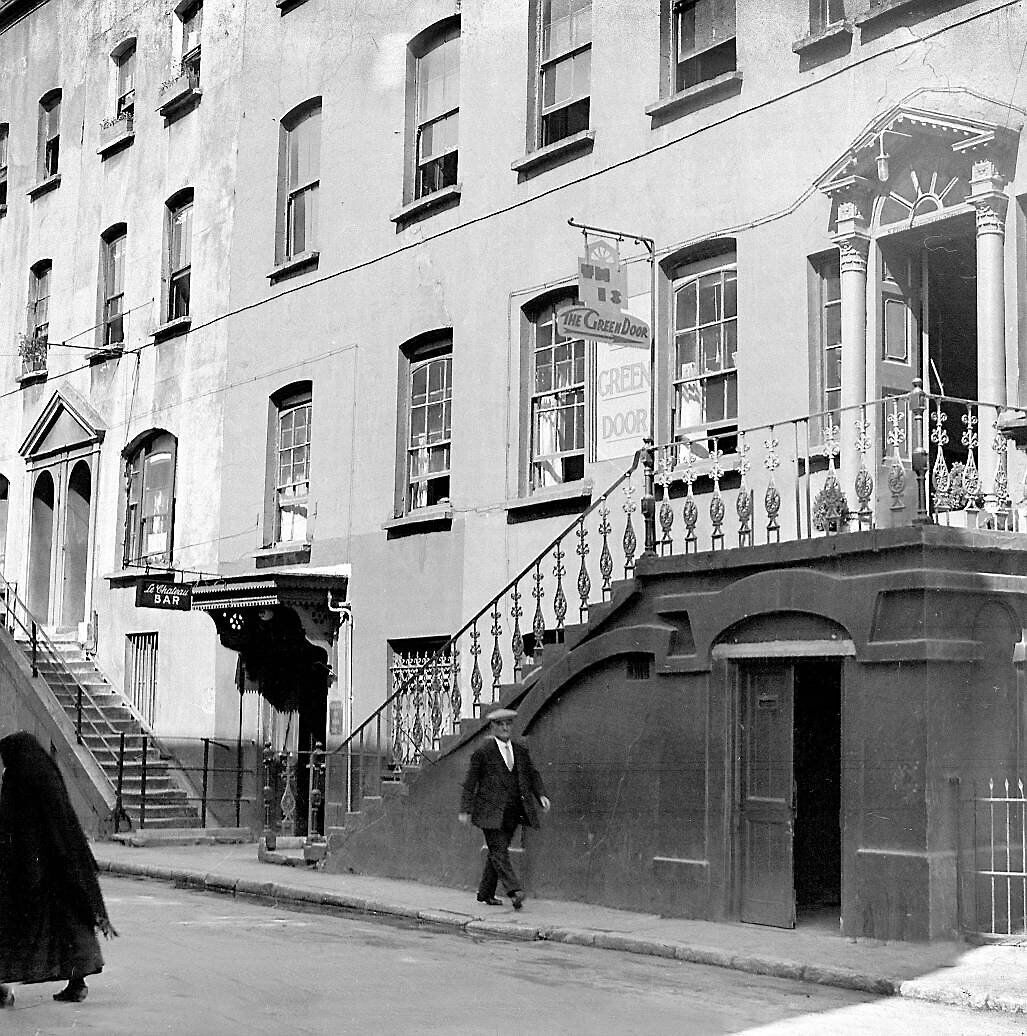
Several old establishments have claimed the rights to first creating this culinary lifebelt, but the only one we can be sure of is the great old Green Door, which held sway for so long up those steps above Le Chateau on Patrick Street.

Here, the staff, accustomed to dealing with the demands of Cork’s busy solicitors and merchants at mid-morning, and well used to hearing the laments about the limitations of that aforesaid cup of tea and biscuit, decided to take matters into their own capable hands.

They thus created a gigantic biscuit, twice the size of a normal one, and, not being a crowd who did things by halves, then coated it with a thick layer of chocolate. And so the Connie Dodger was born.

After eating one, the legal expert could truthfully declare with hand on heart that all he had had was the stipulated tea and biccy.

(Now that we come to think of it, was it one of the South Mall boys who first conceived the idea that there was more than one way of interpreting the letter of the law, and suggested it to the Green Door staff? Sounds more than likely, knowing the cleverness of those lads.)

The Green Door restaurant near the old Echo and Examiner offices at Academy Street, Cork, in 1935. The ‘Connie Dodger’ was sold here - but did it also originate here?

If you happen to have another version of this story, another location for the invention of the Connie Dodger, then do tell us at once please. (Plus, send us the actual recipe if you happen to have it. In these crazy times, we all have need of a comforting snack like that as we watch the news...)
Here is a genuine recipe from the 1930s:

“Ash Wednesday and Good Friday were ‘black fast’ days. The people around here often used for dinner potatoes and light gruel. The gruel was made thus: Spring water was put in a pot to boil. Then oatmeal and a couple of spoonfuls of cold water were mixed together and put into the boiling water, along with an onion chopped finely and flavoured with salt. Sometimes, flour was used instead of the oatmeal and flavoured the same way with salt and onions and pepper.”

Well, that would riz the heart in you, as they say, wouldn’t it? Gruel with a bit of onion, and even salt and pepper – what more could you ask for on a wet Good Friday?

Easter is a little earlier this year (Easter Sunday falls on April 5), but often it is later (the first Sunday after the first full moon on or after the spring equinox, and don’t you forget that, we’ll be asking questions at the end!) - so Lent might only just be starting by now in a typical year.

And that would have meant the usual rush to get married before Ash Wednesday, since weddings were forbidden during the 40 days of Lent.

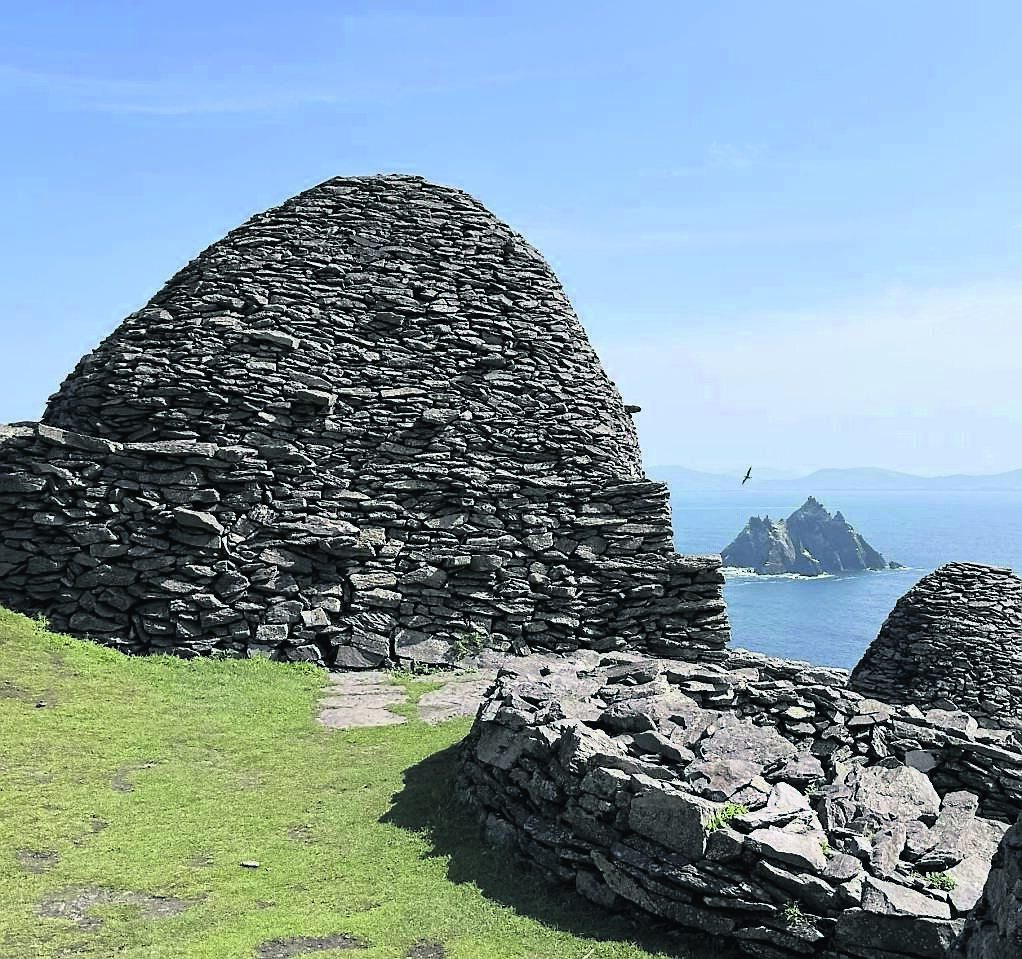
Down in Kerry, they had another chance though – the bleak little rocky fastness of Skellig Michael (yes, yes, where they filmed all of five seconds-worth of Star Wars, and now that’s the sole thing most of the world knows it for) was believed to observe the older Celtic Christianity, which didn’t agree with the ever-changing dictates of Rome.

That meant that Lent started a week later there, so it became the custom for young people to go out in boatloads, ostensibly to get married, but really to have a good time, laughing, eating and drinking, playing games, and making music, while over on the mainland their parents were observing black fasts and swearing off wicked things like milk in their tea or, heaven forbid, a wee sup of the hard stuff.

Of course, the monks had left Skellig centuries before, so presumably the excursions had to include a priest to carry out any ceremonies, but then perhaps he didn’t object too much to having just a little fun on the side before returning to the reality of Lent on the mainland.

There were also the Skellig Lists, somewhat disgraceful doggerel poems composed in both Cork and Kerry, identifying and lampooning those who could or should have got married, but hadn’t done so.

Older men, believed to be possessed of hidden wealth, were often the butt of these jokes, also older women, past their days of charm.

Skellig Michael in Kerry - there was a belief that Lent started later here, and young people would flock there to enjoy life without the restrictions of the Church

These poems were cruel, and must have distressed those named very much indeed, but many can recall them being printed right up into the 1950s and beyond.
Here is an excerpt from the Schools Collection of the 1930s:

“When marriagable boys and girls let yet another Shrovetide pass unmarried, the younger lads watch them on Shrove Tuesday evening and circle around them with a rope to carry them by force to Skelligs.

“They also make out a Skellig List, sometimes in verse, where all the characteristics of marriageable lovers in the district are unmercifully recorded. Troublesome old maids and prim old bachelors have good reason to avoid reading a copy of the Skellig List.

“Pert madams and namdach young boys who as a rule hold themselves beyond the crowd, get more to rob them of their night’s sleep than even the old maids.

“To be omitted from a Skellig List altogether is a sign that a boy or girl is beyond reproach. A Skellig List is a criterion of popularity or otherwise, but not always a criterion of people’s worth.”

And here is another sample from the same source. Really, you should trawl through the Schools Collection yourselves (duchas.ie).

“Long ago, it was said that eligible bachelors and dames who did not marry in Shrove should go to Skelligs Rock on Shrove Tuesday night as a punishment - and a Skellig List used be made out, and here is one following. We make no apology for the scansion and rhyme:

“We had on board our gallant barque a crowd of noble dames,

Tied up in pairs with strong sugáns, you soon shall hear their names,

With a number of smart gentlemen, real Koffy ones you know,

To kiss the ladies’ tears away to Skelligs they all did go.

We had Reggie so fat, Aggie so lean, and Bridget, Criss and Kate,

And Nora D. and Katherine E. and Debbie out of date.

And Kattie from the public house and others of lesser note.

We gave them each a nice young man and stowed them in the boat

Poor Peg we fear another year must mourn her sad fate

For Pat Costelloe cares not for her of late.

Many’s the night near Trenches wall

We stood listening to what they said

And now because she is hard up she is hunting Sonny Rice

Aggie Dowd is weeping loud because she is left behind

The sisters fair from Ardfert square are left to hatch the coals

Thomas Gigs O’Gallagher who was late commenced to roam

To Charles Kelleher’s mansion when his daughter is at home…”

What, one wonders, was the justification, the reasoning behind this emphasis on marrying? Not just before Lent, but that people should be mocked for not entering the wedded state?

Cruel for the younger ones certainly, but why should it matter to anyone if an elderly man or a woman well past her prime should remain single?

Loneliness was probably part of it. Country communities were tight-knit places where everyone kept an eye on everyone else. Perhaps they felt it was only right that isolated men and women should join up and enjoy each other’s company.

John B. Keane identified that in his Letters Of A Country Matchmaker. He saw and heard a great deal in his Listowel pub, and used it in so many of his writings.

There is the Irish instinct for making fun of oddities, laughing at others, refusing to take anything seriously. The desire simply to make mischief was probably paramount in the Skellig Lists. But they go back further – a lot further.

In ancient times, a powerful druid could put the ‘glam dichen’ on someone who had insulted them or otherwise behave badly.

This was a vicious personal attack in poem form which brought shame and disgrace on the offender and could even inflict real bodily harm.

Again, Keane knew of this, as anyone who has ever witnessed the entrance of the tinkers in Sive will know. They come in friendship, but the man of the house has insulted their leader and he immediately demands retribution:

But they scorned the tinker’s son when his song of praise was done,

And his father, Pats Bocock, smote on the floor,

Saying ‘Carthalawn my jewel, let a song both wild and cruel,

Bring a curse upon this house forevermore’.

The late, great Michael Twomey was in the Southern Theatre Group’s original production of that legendary play, and remembered how that scene grew to be a seismic part of the action.

“It got so we would start beating the bodhran as we left the dressing room, and played it all the way along to the wings,” said Micheal.

“The audience would hear it and start clapping and cheering, until we got an ovation when we actually came on stage.”

So the Skellig Lists were in many ways continuing an ancient tradition that shamed those who had not behaved according to local custom.

Cruel, yes, but then, those were different times.

Let us hear your own memories and recollections of stories you have been told. Email jokerrigan1@gmail.com or leave a message on our Facebook page: www.facebook.com/echolivecork.

Read More

Throwback Thursday: 59 days of rain...should we bury the Infant of Prague?
'Disaster struck.. and petrol seeped into our instant mash in the boot': Recalling Cork school's epic European tour 
Throwback Thursday: Memories of the last hurrah before Lent 

More in this section

Infant Of Prague Throwback Thursday: 59 days of rain...should we bury the Infant of Prague?
'Disaster struck.. and petrol seeped into our instant mash in the boot': Recalling Cork school's epic European tour  'Disaster struck.. and petrol seeped into our instant mash in the boot': Recalling Cork school's epic European tour 
Throwback Thursday: Memories of the last hurrah before Lent  Throwback Thursday: Memories of the last hurrah before Lent 

Sponsored Content

The power of the G licence The power of the G licence
Happy couple receiving new house keys from real estate agent Time to get to grips with changes in rental laws
Boatbuilder turned engineer proves alternative paths can lead to success Boatbuilder turned engineer proves alternative paths can lead to success
Contact Us Cookie Policy Privacy Policy Terms and Conditions

© Examiner Echo Group Limited

Add Echolive.ie to your home screen - easy access to Cork news, views, sport and more