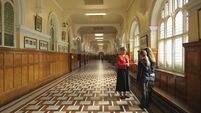
I put my ear to the floor at home to hear trains!
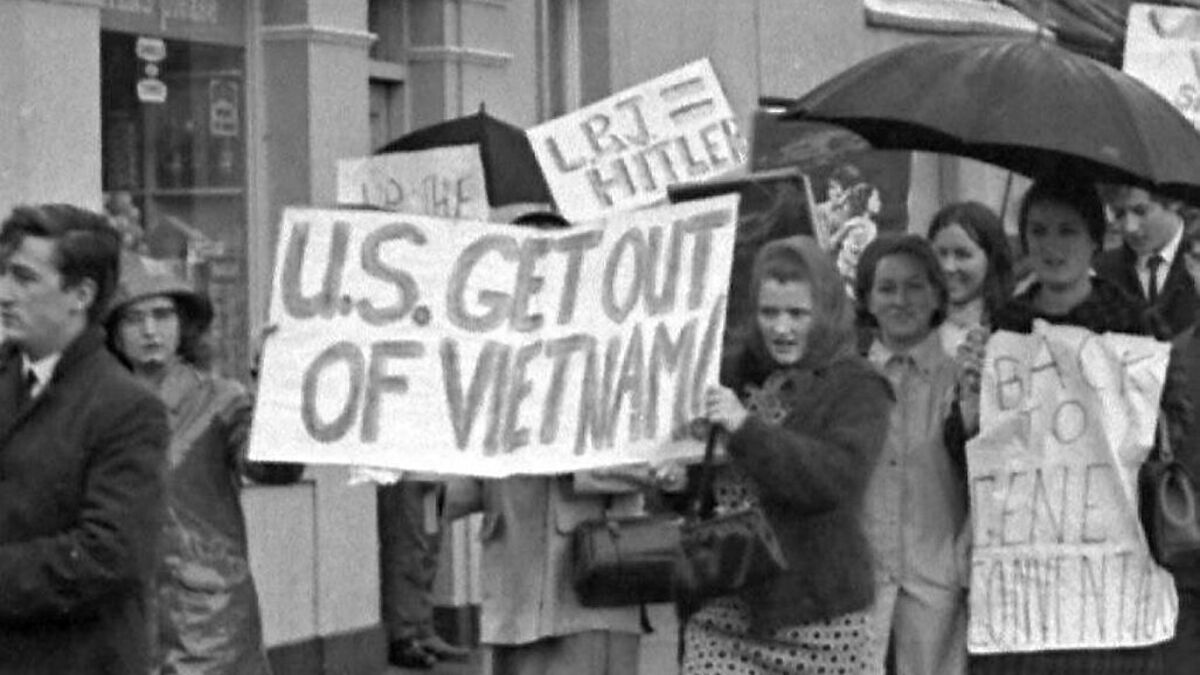
UCC students take part in an anti-Vietnam War protest on November 20, 1967 - it was around this time that Johnny Campbell was at the college and struggling through his Oral Irish exam
JOHNNY Campbell’s happy memories of crazy nights in the Hamburg beat scene, which we featured last week, awoke plenty of interest, but - as is always the case - a few queries as well.
Oliver McKane wrote to say: “Enjoyed the Johnny Campbell story, but can you refresh Johnny’s memory and tell him that Oliver Tobin never had a Volkswagen van? The yellow and white Austin J2 belonged to Bernie Tobin, the very same van they travelled in as the Fontana Showband.”
Back to Johnny we went immediately, and he sorted that out promptly. “Yes, the Austin van which the Fontana used was certainly yellow and white and belonged to Bernie Tobin. However, that wasn’t the equipage we utilised for getting to Hamburg on that marathon trip. We had a Volkswagen on that occasion!”
Johnny also points out that last week’s photo of the group on stage had Dave Whyte’s name as keyboard player. “It should have been John White of course. Dave Whyte was the drummer with Southpaw, a group we formed later.”
Sorry for that, Johnny.
But lookit, we plead, at least finish the story. When we left you last week, you were right up there in the north of Germany, with the academic term already well under way back in Cork, and we have to know what happened next!
“Well, the next gig was at the Crazy Horse back in Hamburg, and as I mentioned last week, unless you were a good performer for the first three nights, you might not even get paid, so I realised I would have to do the full three days there for safety’s sake, if I wanted to see any of that money - which was badly needed by then, just to get home!
“The Crazy Horse was right in the centre of Hamburg, but fortunately quite close to the railway station, so when the three nights finished, I legged it to the station and caught the first train to London.
“When I reached London, more delays, as I’d missed the boat train. I had to stay overnight with our agent, but headed straight to Euston the following morning and caught the boat train to Holyhead.
“So the same journey in reverse. But, it comes back to me, Penny Lane had just been released, and it was playing on the train all the way to Holyhead. Brilliant.”
“I eventually reached Cork the following afternoon and walked the short distance from Kent Station to my home. No fanfare, bells or whistles, just a laconic “Oh, you’re back, are you?”
“The following morning, I headed up to UCC, feeling some slight trepidation, but nobody in authority seemed to have missed me.
“However, before the end of the week I was called in by the Oral Irish head honcho (the legendary Padraig Tyers) and asked to explain why I wasn’t attending his classes.
“As you couldn’t pass your course without having attended and passed your oral Irish course, I had to invent some cock and bull story, and attend extra Irish classes to make up for those I had missed.
“I did realise that I had gotten off lightly though, and when I somehow passed the summer exams, I was suitably grateful to my friends and colleagues who had provided me with the notes I had missed, and even signed me in for classes I hadn’t turned up for.
“In one instance, I actually had to copy a friend’s version of my signature so it wouldn’t be noticeable!”
Johnny, your recollections of those heady Hamburg nights are priceless, filling in so many of the gaps that still make a patchwork of the Beat Sixties. Send us anything else you remember, do!
Now - you may recall that Mary Holly sent us the cover picture from Old Ireland In Colour, by John Breslin and Sarah-Anne Buckley, and asked if anyone could possibly identify the people in the traditional hayfield scene in Wilton.
Of course we consulted Mike English, an expert on that side of Cork, but he was regretful:
“Hi Jo, I have no idea who the people in the image are. That photo appeared somewhere else and the houses in the background were more visible. I had theories as to the location of the farm, i.e present CUH with Wilton Road houses, but they are facing in the wrong direction.
“My other guess is where the Presentation Brothers’ sports field is now located, but again I think the houses don’t fit in.
“Buckley’s Farm, which stretched from the Model Farm Road up to and including the Bishopstown GAA complex, is a possibility, while others suggest that it could be around Lehanaghmore and not Wilton.
“That’s the best I can offer, Jo, I’m afraid. Sure I was only a garsun at the time!”
Well thanks for trying, Mike. And Mary, don’t lose hope. Others may well come up with a few answers.
Even the little girl in that photo must surely be around and reading Throwback Thursday every week? Let’s hear from you if you are!
Pat Kelly, of Marion Park in Blackrock, has contacted us to say how much he enjoys all the memories of times past, and contributes a few of his own:
“I can clearly recall my mother throwing lumps of coal and bread at the front door after the bells had rung at midnight on New Year’s Eve, to ensure cold and hunger were banished from the house in the year ahead.
“She would not spend money on the first Monday of the new year, which she called Hansel Monday, as if she spent money then, she would spend it throughout the next 12 months.
“The first man to call would have to be tall, and with money in his pocket, ensuring wealth for the year.
“At Christmas, we would get a box of lead soldiers, a shiny new penny, and a plum. And who else remembers when milk was delivered from churns, with a tap on the churns, and the milk jug was put on the step of the stairs, with the front door unlocked, ready for the milkman who would measure two pints of fresh milk, and a drop for the cat, the tilly? Ah, that we may be alive next year!
“PS: On December 15, I was 70 years in Marian Park, never having left it!”
Pat, your memories are always wonderful to read. Long may you continue to share them with us!
And the rest of you out there, enjoying his contributions, what’s keeping you from sending in your own? Even if you don’t enjoy emailing, that’s no excuse.
Rose, from Ballyvolane, writes down her memories and posts them in. Here is her latest sharing:
“I was reading about the tunnel supposed to be running under Collins’ Barracks (contributed by Mick McSweeney, Throwback Thursday, January 4].
“It’s true. I lived there as well, as I told you before. That’s where I came from, and one of the houses I lived in, I remember my dad telling me as a child to put my ear to the floor and you could hear the sound of a train passing!”
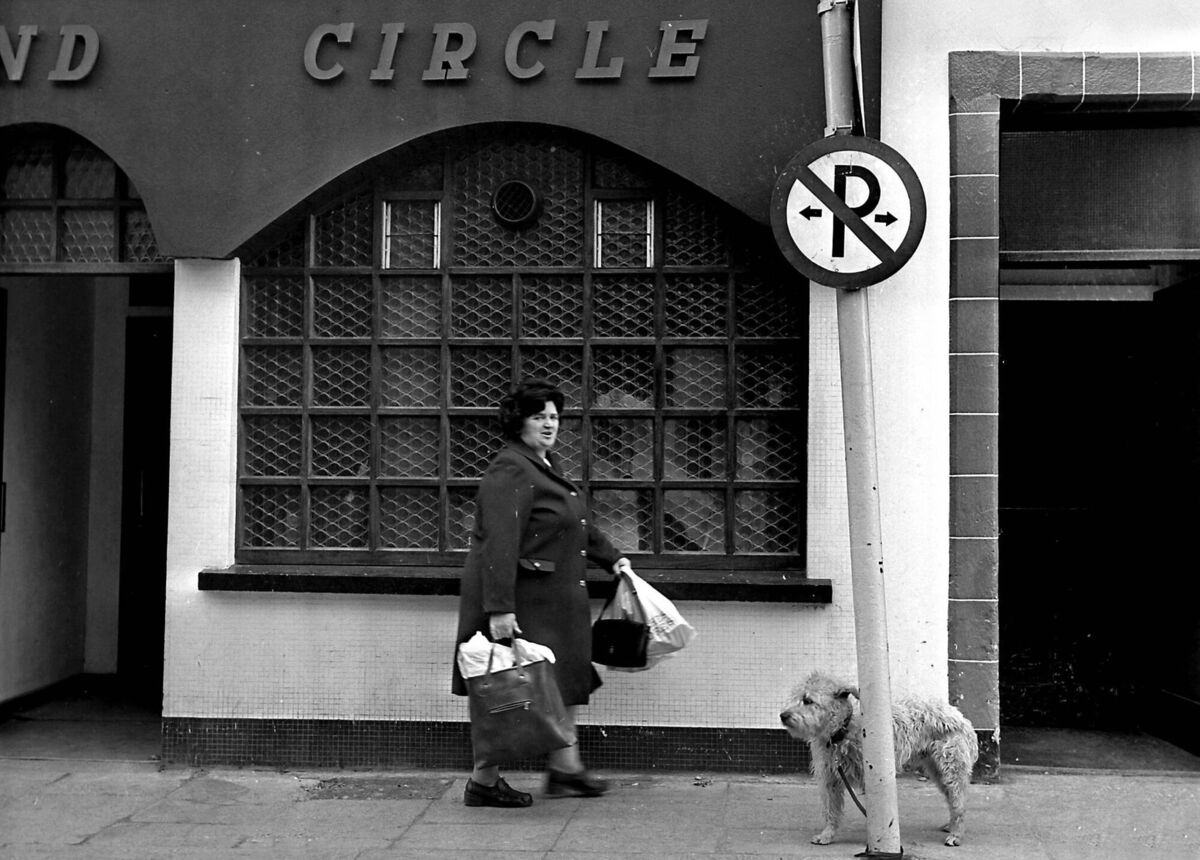
Rose knows the McSweeneys well, “but I’d be older than Mick. I have brothers around his age, and I often dined in the Grand Circle when his dad was there too.”
So glad to find others who remember this great old Cork pub that was so much part of our city’s history, reminding us even in its name of the old Opera House which we lost back in 1955.
“And now the Grand itself is gone, swept away to make room for modern, high-rise, anonymous shopping malls. Sic transit gloria Corcagiense…”
And finally, here is an explanation of a common phrase by Tim Cagney:
“I’m sure you’re all familiar with the expression ‘dead ringer’, but do you know where it came from? It’s usually used to describe something - usually a person - who bears an exact likeness to another.
“In the 19th century, it could refer to a racehorse, which might be used to replace another animal in a race. The duplicate horse was usually a creature of superior racing capability, substituted for a similar-looking (slower) one, in an attempt to defraud the bookies.
“In the century prior to that, however, it had a more macabre connotation. In those days, many people used to fear being buried alive. It was not uncommon for someone who might have, for example, entered a state of coma (or similar) which would be mis-diagnosed as death - remember, medical science was not quite as sophisticated as it is today.
“To avoid the prospect of being interred prematurely, a system was devised where a length of string would be tied to a finger of the occupant of the coffin. At the other end of the string - above ground - was a bell.
“If the “deceased” were to awaken, all he/she had to do was wiggle the finger, and the bell would ring. Some hapless individual was usually engaged to stand at the graveside, observing the bell. If this rang, the coffin would be hastily unearthed, and the ‘corpse’ released.
“Frequently, such ‘resurrections’ went unreported - no social media, in those days - so the person, once thought deceased, might be observed strolling around several days later.
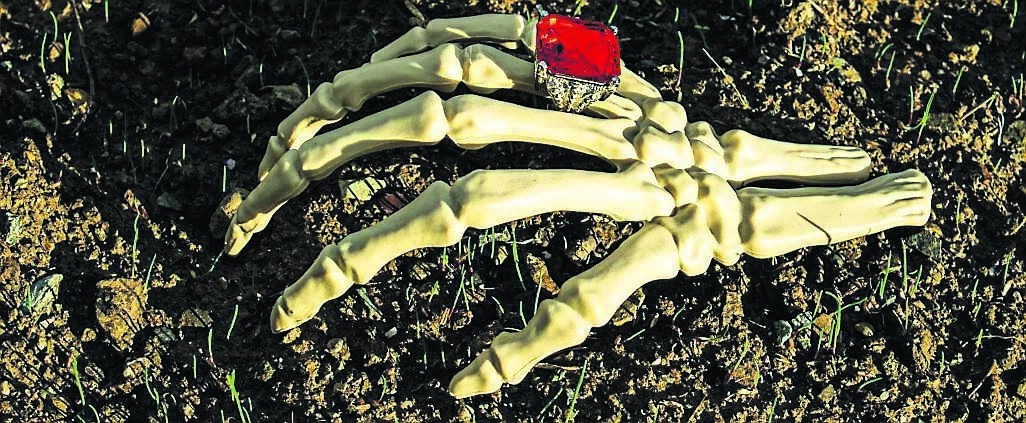
“People would remark on the striking resemblance and - in time - the term ‘dead ringer’ was coined.
“Another related expression was ‘the graveyard watch’, which became associated with the duties of the person keeping watch on the aforementioned bell.
“I’m interested in photography, especially of the quirkier kind. Thinking about ‘dead ringers’, I purchased a plastic skeletal hand at Halloween, along with a gaudy ring which boasted a lump of red glass, The hand cost €1.50, and the ring €3. Not exactly expensive ‘props’, I’m sure you will agree, but they gave me enough material to create an image to illustrate the topic.
“In addition, our local Council decided to instal new kerbstones at the side-roads in our estate. Nobody is exactly sure why, as these do absolutely nothing to improve the appearance of the local terrain, but fresh earth had to be laid, giving me an ideal backdrop for my grisly creation.
“I just hope none of my neighbours actually saw me setting up and shooting this image!”
Let’s hear your memories for Throwback Thursday! Email jokerrigan1@gmail.com. Or leave a comment on our Facebook page: https://www.facebook.com/echolivecork