Amazing WWII heroics of Cork Navy man Tom Ryan
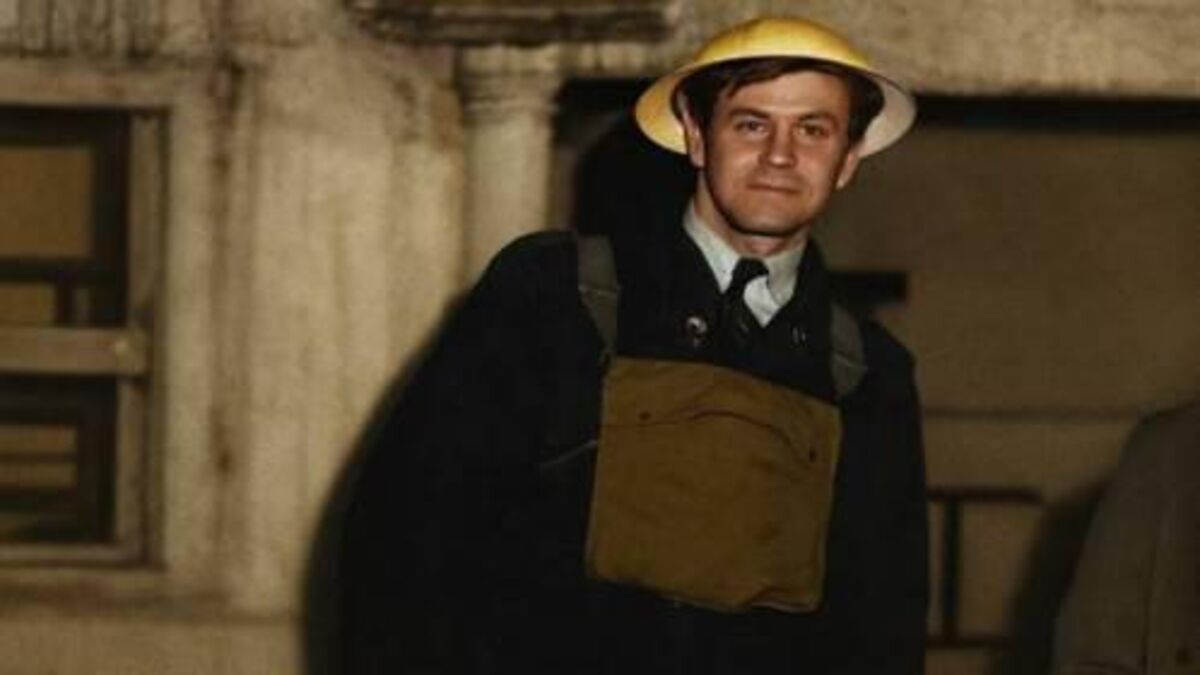
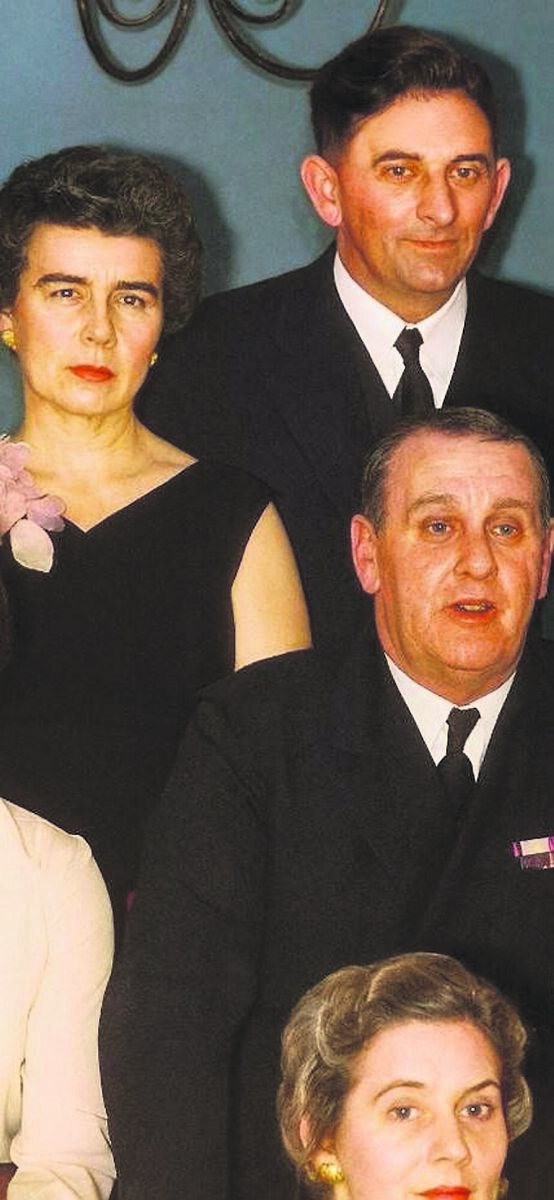
Tom Ryan participating in a Civil Defence exercise in 1960, a role he filled after his exploits in World War II
Thomas Ellis Ryan was a native of Youghal, the son of a couple who ran the post office at William Street.
Born around the time of the outbreak of World War I, in his youth he was captivated by stories from the many old salts who hailed from that great sea-faring port. So much so, that in 1934, at the age of 20, he resolved to follow the example of those “that go down to the sea in ships and do business in great waters” and joined the Royal Navy.
An outstanding athlete, Thomas’s array of trophies for running, jumping, swimming, and football, won in many parts of the world during his navy service, would, one day, grace the shelves of his home in Beaumont, Cork.
On the outbreak of World War II on September 3, 1939, he was stationed in Singapore. But it wasn’t to be all work and no play for the intrepid young mariner.
Courtship and marriage were part of his agenda, and, during a brief period of leave, on June 20, 1942, he married Maura McCarthy, of Golden Villas, Common’s Road, Cork, at the Benedictine’s St Anne’s Church in Edge Hill, Liverpool.
They had a very good reason for choosing St Anne’s. Just six miles away, at the Cammell Laird Shipyard in Birkenhead, the Royal Navy’s latest submarine, HMS Saracen, was a week away from its official commissioning, and Tom had been appointed its Chief Petty Officer. The boat’s company was on stand-by to report back to base at short notice.
As he bade farewell to his new bride, neither could know that almost three years would elapse before they saw each other again.
******
Saracen’s first patrol was in the North Sea where it sank a German U-boat. Assigned to the 10th Submarine Flotilla based in Malta, it made three patrols during which it accounted for an Italian submarine.
With the invasion of North Africa in late 1942, the port of Algiers came under Allied control, and their submarines had now a strategic base from which to roam the Mediterranean, seeking out targets.
Saracen conducted six patrols, sinking seven ships and landing secret agents in enemy-held Corsica and Sardinia.
On July 10, 1943, after participating in Operation Husky, the Allied invasion of Sicily, the boat was attacked with depth charges by an Italian destroyer. Upon returning to base, it was discovered that the main ballast tank had been punctured, the periscope was bent, and the casing was peppered with gashes.
Most damning of all, the propeller shaft was found to be out of kilter: a repair that was not possible in North Africa and would have to be undertaken in the UK.
Nevertheless, with the boat’s integrity compromised to such a significant, and dangerous, extent, someone made the decision to order it to sea again, on a voyage that would turn out to be its final one; a ruling that amounted to sheer negligence, according to Paddy Neill, its Engine Room Artificer.
******
Just before midnight on Friday, August 13, 1943, HMS Saracen was sunk by depth charges from a mixed force of German and Italian warships off the Corsican coast. The submarine surfaced before finally foundering and the entire crew of 48, including the commander, Lieut Lumby, DSO, jumped overboard.
Machine-gun fire was opened on the men in the water, two of whom were killed, while Tom Ryan received gunshot wounds in both legs.
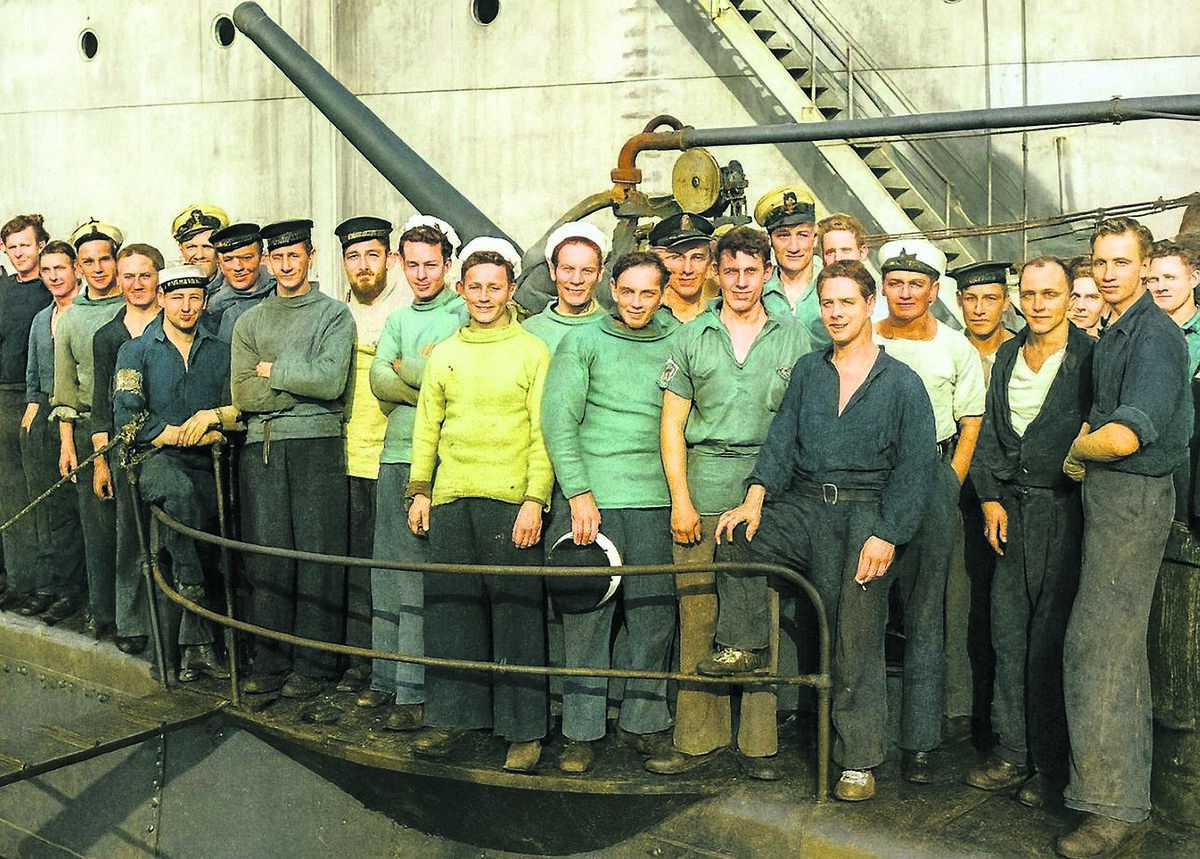
The survivors were picked up by an Italian destroyer and taken to the town of Bastia in Corsica. (In 2015, the wreck of Saracen was discovered on the seabed at a depth of some 430 metres off the coast of Corsica).
Tom took up the story:
“We were taken to hospital there. Five of the bullets were removed from my leg - without anaesthetic. I was given a stick to hold and a cigarette put in my mouth while this operation was performed.
“I spent ten days in this hospital, the first three of which I lay in my cot without anyone paying the slightest attention to me.
“We were then removed to a prison camp: No.1 Marine Camp at Manziana, 160 miles north of Rome. This was an interrogation camp, and we were closely questioned by German intelligence officers.
“We were housed in a tiny hut in the encampment, which was surrounded by barbed wire and patrolled by sentries. We were allowed five minutes’ exercise in each 24 hours.
“The food consisted of cabbage water and a chunk of bread for dinner, and dandelion leaves and cabbage water, plus whatever bread they had left over, for supper. We were also allowed five cigarettes per day.
“Our pay (in accordance with the terms of the Geneva Convention) was 1½ lira (about 2½ d) per day, but after we had been supplied with shaving gear and toothbrushes, we discovered that we had to pay 15 lira for those articles.
******
Outside of the walls of the camp, and unknown to Tom and his comrades, the political situation in Italy was in a state of turmoil.
On July 25, Italian dictator Benito Mussolini had been voted out of power by his own Grand Council. Summoned to a meeting with the King, Vittorio Emanuele III, he was told the war was lost. Shortly after, he was arrested and spirited away to a remote, empty mountain-top hotel on the Gran Sasso, there to await his fate.
Secretly, on September 3, 1943, the Italians signed an armistice with the Allies. General Eisenhower waited five days to publicly announce Italy’s surrender, to which the German response was immediate and brutal.
Nazi divisions poured in to northern and central Italy, attacking any Italian troops where they found them, committing atrocities and, on September 12, freeing Mussolini in a special forces ‘spectacular’. The deposed Duce was installed by Hitler as head of the so-called ‘Italian Social Republic’ based at Saló on the shores of Lake Garda: a futile gesture.
Meanwhile, the many Prisoner of War camps, which housed an estimated 75,000 Allied troops, were in a state of disarray. The previous June, the Ministry of Defence had issued the so-called ‘Stay Put’ order to Senior British Officers which, in the event of a surrender, forbade prisoners from leaving a camp.
With the Italian guards having fled, however, and the gates wide open, many chose to ignore the order and left, including Tom and 40 of his navy comrades. Those who procrastinated were caught by the Nazis within days - an estimated 50,000 - and transported to camps in Germany.
Tom reflected on what happened next: “We decided to try to march to Naples - over 400 miles to the south. In the camp we prisoners had been clothed in uniforms of the German Afrika Korps, and our chief difficulty was to obtain less obtrusive clothing.
“Marching by night and hiding by day, living off tomatoes and peaches which we picked in the fields, we managed to reach a place called Forano in Sabina, in the province of Rieti, central Italy. On the way, two of my companions were picked up by Germans, but I had managed to secure rough clothing from a shepherd. We found the villagers in this mountainous country friendly and willing to help us.
“One woman living in a village on the Tiber told us that British troops would be in Rome (90 miles away) in a few days, so we decided to wait in the shelter she offered us. The woman’s son - a railway employee - lent me his uniform and I managed to go to a house to listen to the radio news, only to learn the Allied troops were still south of Naples, so we decided to move on.
“We reached a place called Nerola, in Latium, and again found the villagers most willing to help escaping prisoners. They supplied us with food daily. One of my companions who had spent seven years in Germany before the war was stopped by a patrol of Italian Fascists, but he persuaded them he was a German officer and escaped. We stayed in that village till December. Of my two companions one was killed attempting to reach Naples on his own, while the other, who had posed as the German officer, was eventually captured. I heard afterwards that he had died in a prison camp in Italy.
“Rt. Rev. Mgr. H. J. O’Flaherty, a Kerry priest resident in Rome, who has since been made a Commander of the British Empire (CBE) for his services to Allied prisoners, used to send out parcels of clothing and I became one of his chief distributors.
“I was still 45 miles from Rome and one day I made up my mind to reach the city. I got there all right and climbed over the wall of the Vatican City in an effort to reach the Irish Minister, but I was stopped by the Swiss Guards and put outside again. So, I returned to Nerola.”
But Tom’s sojourn at large was about to come to an abrupt end. On New Year’s Day, 1944, he was captured for the second time. He went to a house at Nerola where, he had heard, Allied airmen were hiding, but found a batch of Allied prisoners in the hands of German soldiers, and the trap was sprung on him.
As he was being marched off by his captors, he told the German officer that on account of his injured leg he could not go as fast as the rest of the party. He was allowed lag behind under the guard of a German soldier, as he continued in his story: “After some time, the party in front had got well ahead of the two of us and I shot the sentry with an automatic pistol which I had concealed under my armpit.
“I made my way to a place called Longoni, due east of Rome, and hid in the mountains. There, I contacted a band of Italian irregulars and joined forces with them from February 1 until May 15. I rose to the rank of Lieutenant, second in command of a troop of five or six hundred men and during those months we were continually skirmishing with the Germans.
“During my time with them, I went for the first ten days without boots. I shot a German despatch rider and tried his boots, but they would not fit. I then managed to kill a German staff officer and found his fitted me perfectly. I also put on his trousers and came close to being shot by my comrades as a German officer!
“We captured and held a town called Rocca Sinibalda, about 50km north-east of Rome. On May 28, the first British troops reached our area and the first man I met was a Cork officer who was in charge of a mine-sweeping party.
“Before I left for Rome I had won the confidence of the Italians to such an extent that they did their best to persuade me to stay with them and even offered to make me Mayor of Rocca Sinibalda, but I was too anxious to reach home.”
Tom arrived in Naples on June 24, 1944, and was repatriated to Belfast on a British destroyer. He returned to Chatham, the naval dockyard in Kent, and after serving a further period at Gosport Submarine Depot was discharged at Easter, 1945 on medical grounds.
After years of exciting adventures, Tom settled down to civilian life in Cork, securing employment at the ESB power station on the Marina. In 1957, at the height of the Cold War, the Civil Defence Corps was established in Cork and Tom enrolled in the Warden Service. He became the driving force behind the Social and Recreation Club, and his Sunday night dances, ‘socials’, and film shows were legendary. Not a few couples were known to have ‘tied the knot’ having met at Tom’s socials.
Thomas Ellis Ryan passed away unexpectedly on January 25, 1966, at the early age of 52. Survived by his wife, Maura, and their two sons, he was laid to rest in North Abbey Cemetery in his native Youghal, his former comrades in Civil Defence providing a Guard of Honour.