Build a nuclear power plant in Aghada? Forget this pipedream
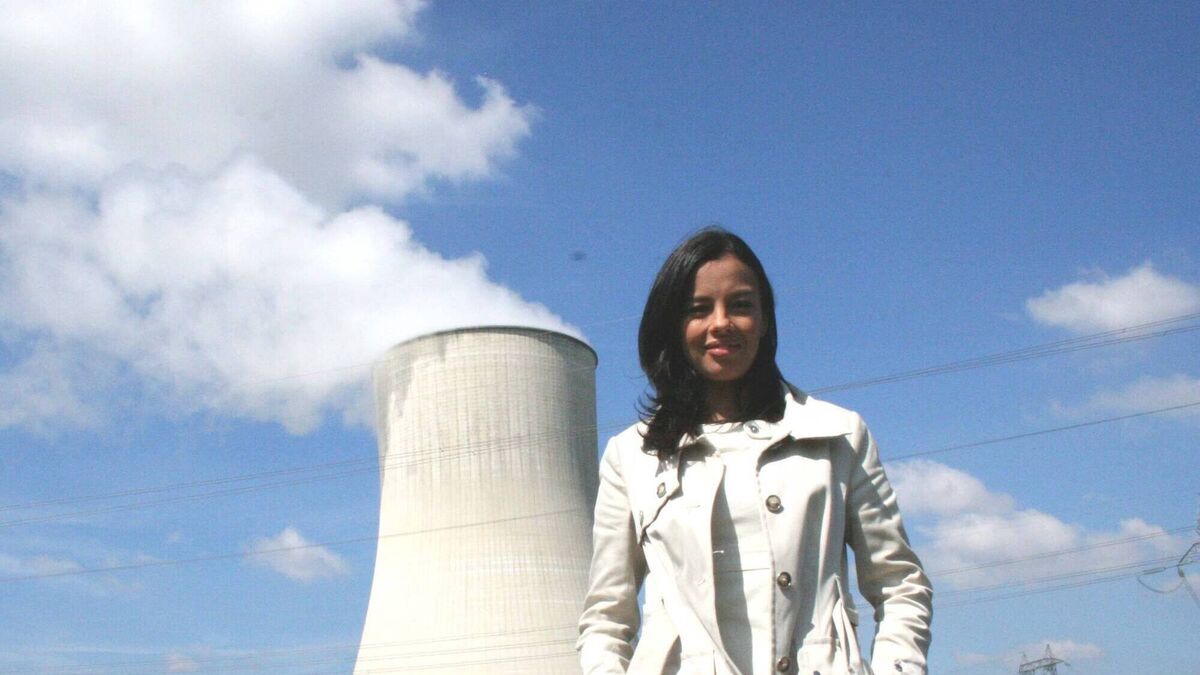
Liz Bonnin at Civaux nuclear power station in France, in a programme that was produced by Kathriona Devereux
East Cork TD James O’Connor is bringing forward legislation to address Ireland’s 1999 statutory ban on energy generation by nuclear fission.
Unless Deputy O’Connor is willing to champion his own constituency as a location for a future nuclear power station, any talk about reversing the ban on the generation of nuclear energy in Ireland is a waste of time.
What community on the island of Ireland would accept the construction of one in their vicinity?
I visited a French nuclear power station almost 20 years ago. At the time Civaux 2 was France’s newest nuclear plant, located in a typical rural village in the middle of the country.
With a population of more than 1,200, Civaux has a boulangerie, a pharmacist, and a modest archaeological museum. Warm yellow- stoned buildings have colourful hollyhocks growing outside.
As you walk about the village, you get incongruent glimpses of two enormous industrial cooling towers amid the pretty, well-tended buildings.
At the time, I was producing a documentary series called for RTÉ. Presented by Liz Bonnin, the series took a straight look at fraught scientific topics - nuclear power, stem cell research, and obesity treatment - long before GLP-1 jabs upended that last field.
We had travelled to see how the French did nuclear. Calmly, it appeared.
We filmed the ordered power station, interviewed the diligent manager, and were generally impressed at the well-run operation. I came away from the French shoot thinking, ‘that’s lovely for them but we could never have that in Ireland’.
Plans to build a nuclear power station in Carnsore Point in Wexford in the 1980s were met with mighty resistance. Ireland had a very visceral reaction against the notion of nuclear power.
Deputy O’Connor might look at some of the archive footage from that period and ask could he countenance one in his backyard? What would his constituents think about a nuclear power station in Shanagarry?
I suspect most Irish politicians would rather swallow a bucket of wasps before championing a nuclear power station in their constituency.
Writing in the Irish Examiner last week, O’Connor likened the ambition of building a nuclear power station in Ireland to the achievement of constructing Ardnacrusha in the 1920s.
Yes, Ardnacrusha was an enormous, audacious and expensive achievement that paid off, but technically it was like building an enormous Jenga tower compared to the engineering complexity of building a nuclear power station.
Even if Ireland was open to nuclear, would we have the capacity to deliver it efficiently?
Modern reactors require specialist steel vessels, multiple layers of reinforced concrete containment, miles of safety-critical piping and instrumentation, and commissioning an entirely novel regulatory and safety framework from scratch.
And once the station reaches the end of its operational life in 50, 60 or 70 years, we will need to deal with the radioactive spent fuel it generated for millennia.
Ireland has no nuclear engineering workforce or expertise, no regulatory body, no trained operators, no waste strategy, no legal framework, no uranium. And a poor track record for delivering complex infrastructural projects within projected time-frames and budgets.
France, a country that went all in on nuclear energy after the oil crises of the 1970s, operates 57 reactors across 19 power plants producing 60% of the nation’s electricity. Even with decades of professional nuclear experience, the construction of France’s newest power station, Flamaville 3 in Normandy, experienced a series of technical setbacks leading to a 12-year delay and a four-fold increase in the project’s overall cost.
It cost more than €13 billion and now has the unfortunate title of Europe’s most expensive nuclear plant. If the French can encounter problems despite 50 years of experience, who knows what would happen here should we go down the nuclear route.
Deputy O’Connor cites Finland as a country to emulate - a similar population but with five operating nuclear reactors providing about one third of its electricity.
Finland is a country with strong support for nuclear power. Finns see nuclear as a low carbon source of power that gives them energy security. A recent survey found more than 80% of Finns want to increase the use of nuclear power or keep it at its current level.
O’Connor writes: “Finland’s newest nuclear reactor, Olkiluoto 3, entered regular production in 2023 and is now one of the largest nuclear reactors in Europe.”
Construction of the reactor started in 2005 and faced enormous setbacks and delays - it took 18 years before it was fully operational and, yes, you guessed it, the cost ballooned 3.5 times beyond the initial budget to €11 billion. Olkiluoto is more of a cautionary tale than a shining example.
It’s comforting to know Ireland is not alone in our difficulties to deliver large infrastructural projects.
Eirgrid’s plan for a North-South Interconnector is 25 years in the making and nowhere near materialising, as is the Metrolink, same for the Cork Luas.
How long would it actually take to deliver a nuclear power plant project, and at what cost?
Any discussion about reversing the ban on nuclear power generation is therefore a distraction from the urgent business of creating a practicable indigenous, resilient, renewable energy industry.




 App?
App?


