Monument honouring steadfast Republican Moss Twomey unveiled in Cork

Twomey’s grandnephew, Mark Fanning told how Twomey’s commitment to Irish freedom was forged in earnest when he witnessed Thomas and David Kent from Castlelyons being marched across the bridge in Fermoy by the British in the wake of the 1915 Easter Rising.
Monument honouring steadfast Republican Moss Twomey unveiled in Cork

Dr Brian Hanley addressed the assembled crowd at the unveiling of a monument to Moss Twomey in Clondulane.

North Cork born IRA leader Moss Twomey is a much-neglected figure in Irish history whose importance to the republican movement goes far beyond his military exploits, a leading historian told a recent commemoration to honour the Corkman’s role in the fight for Irish freedom.

Dr Brian Hanley, of Trinity College Dublin, said he was honoured to be asked to speak at the unveiling of a monument by craftsman Edward Sheedy to Twomey in Clondulane where he was born in 1897 and to where he frequently returned to up until his death in Dublin in 1978.

Dr Hanley said Twomey’s “centrality to Irish republicanism during a key period of Irish history in the aftermath of the Civil War had been somewhat neglected by historians” so it was fitting it should be examined now as the first memorial to him anywhere in the country was unveiled.

Dr Hanley began by outlining how Twomey joined the Irish Volunteers in 1914 while working with his friend Michael Fitzgerald in Hallinan’s Flour Mill in Clondulane and how five years later, they took part with Liam Lynch on the first attack on regular British troops in Ireland since the 1916 Rising.

“In September 1919, Moss Twomey and Liam Lynch and others took part in the first attack on regular British soldiers in Ireland since the Easter Rising, when they attacked the Shropshire Regiment in Fermoy. 

“It was also the day we saw the first reprisal, as British troops ran amok in Fermoy, destroying property, beating people, and threatening them.” 

Dr Hanley outlined Twomey’s participation in the Civil War after he opposed the Anglo Irish Treaty and how he was with Liam Lynch when he was mortally wounded while attempting to flee from National Army troops in the Knockmealdown Mountains in April 1923.

IRA chief of staff

He also outlined how, unlike many of his former comrades in the anti-Treaty IRA, Twomey opted not to join Fianna Fáil when it was established by Éamon de Valera and others in 1926 and instead remained within the IRA, becoming chief of staff that year and holding the post until 1936.

He said while Twomey was primarily a military man during both the War of Independence and the Civil War, it would be wrong to see him as being apolitical in the years after the conflict when he headed up the IRA as he was clearly a man with a political vision and ability.

“It’s hard to be the leader of a revolutionary movement if you’re apolitical. But Moss Twomey was certainly not apolitical. 

“In fact, when you look at both his internal correspondence and what he wrote publicly, and what he wrote publicly is there for people to see in newspapers like An Phoblacht and also in the national press. 

“Moss Twomey thought deeply about Irish politics and society in the decade after the Civil War.”
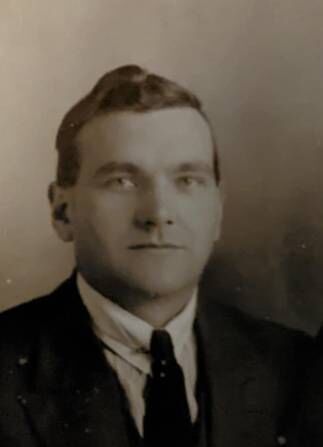
'Moss' Twomey whose exploits made international headlines and who was the longest serving chief of staff of the Old IRA.

Dr Hanley said that among Twomey’s achievements while IRA chief of staff in the early 1930s was his ability to hold together disparate elements within the republican movement where some favoured adopting left wing political positions while others believed it should just be a military entity.
“There were major debates within the IRA about the way forward, and Twomey found the IRA condemned by the Catholic Church because it felt it was becoming communist, and he also found himself condemned by others in the republican movement for taking it in too radical direction.

“But Twomey was unapologetic in his defence of the launch by the IRA of the Saor Éire project, which stemmed from the impact of the great depression on small farmers and workers which in addition to bringing increased hardship, also cut off the traditional escape of emigration.

“His defence was characteristic of Saor Éire when he wrote, ‘If it is communism to undo the conquest, to destroy landlordism in its many forms and restore their heritage to the dispossessed to enable those who produce wealth to obtain the fullest advantage of that wealth … to end robbery and exploitation by a privileged minority, then Tone, Emmet, Mitchel, Lalor, Connolly, Pearse and Mellows were communists and the Irish Republican Army is a communist organisation.’

“Equally impressive was his unstinting commitment to a republicanism that recognised the importance of staying true to the vision of Wolfe Tone and the United Irishmen that sought to unite people of all faiths and none in the pursuit of Irish independence,” said Dr Hanley.

“Twomey never lost sight of the fact that his aim was an all-Ireland republic and at various moments of crisis, all branches of republicanism felt that he was a somebody they could approach and talk to,” said the Limerick born academic who has written extensively on Twomey.

“He was asked to speak at a commemoration to Roger Casement in Co Antrim on August 1 1971 and he noted Casement, like Tone, was born and reared a Protestant but adopted Irish nationalism and he was very aware by this point of the growing crisis in the North and the need to help people.

“But in his address, Twomey stressed that the ultimate aim of Irish republicanism must be a non-sectarian one and said that Irish republicans should learn from old experiences that the chief internal problem, religious conflict, was being exploited by the British and their allies.

“He stressed that republicans, as they did in Tone’s day, and Casement’s day, ‘must doggedly adhere to the essential non-sectarian character of the movement and irrespective of what provocation, they must have as their guiding aim, uniting Protestant, Dissenter and Catholic’.” 

Dr Hanley said that Twomey in his speech recognised the challenges that the republican movement faced at the time and said that no one should minimise these difficulties, but republicans should frequently recall the guarantee of religious and civil liberties included in the 1916 Proclamation.

He pointed out that Twomey was consistent in his conviction about the need that Irish republicanism must not lapse into sectarianism as some 40 years earlier when chief of staff of the IRA, the IRA had reached out to members of the Orange Order to remind them of Tone’s legacy.

“He actually saw hope in the 1930s that unity might come about in Northern Ireland in terms of unity between Catholic and Protestant workers – in 1932, the IRA launched an appeal to the Orange Order during the marching season to remember Wolfe Tone and the United Irishmen and come together as workers – ultimately of course, they were to be disappointed.”

Family members in attendance 

Introducing Dr Hanley, Twomey’s grandnephew, Mark Fanning told how Twomey’s commitment to Irish freedom was forged in earnest when he witnessed Thomas and David Kent from Castlelyons being marched across the bridge in Fermoy by the British in the wake of the 1915 Easter Rising.

“Moss was one month shy of his 19th birthday when he saw the Kent brothers cross the bridge in Fermoy and subsequently Thomas being executed and their mother’s plea for the return of his body from Cork Gaol – it all fuelled Moss’s commitment to the principles of the 1916 Proclamation” 

Twomey’s granddaughter, Helena Walker travelled from the UK and said it was a privilege to attend the commemoration and her mother, Myra who died just two years ago, would have been so touched while her grandfather who was “a very modest man would have been amazed.” 

Mayor of the County of Cork, councillor Bernard Moynihan, said he was delighted to attend and honour Twomey as together with Liam Lynch, he collaborated closely with Sean Moylan from his home parish of Kiskeam who similarly devoted his life to the republican ideals outlined in the 1916 Proclamation.

Moss Twomey Commemoration Committee chair, Ned O’Keeffe said he didn’t hesitate to get involved in the plan to honour Twomey as he knew him well from his regular visits to his late father, Tom O’Keeffe from Ballylough who also took the Anti-Treaty side in the Civil War.

“Moss Twomey started here in Clondulane on a campaign for a free Ireland – families like the Twomey’s, the Fanning’s, the Egan’s and the Condon were the people of no property and small holdings who opposed the British and secured the freedom which we now enjoy,” he said.

Moss Twomey Commemoration committee member Mary Carolan read the Proclamation before bugler Ruairí Dineen of Fermoy Concert Band played Last Post and Fermoy Men’s Club brought the ceremony to a close as they sang Amhran na bhFiann.

Among the public representatives to attend were Cork East Fine Gael TD Noel McCarthy from Fermoy: Tipperary South TD, Mattie McGrath; councillors Frank O'Flynn and  Deirdre O’Brien of Fianna Fáil and councillor Kay Dawson of Fine Gael, both from Mitchelstown, and councillor Kenneth Collins of Sinn Féin from Cork city.

more #History articles

How Frederick Douglass fell out with Cork-based Fr Mathew  How Frederick Douglass fell out with Cork-based Fr Mathew 
Don't give our historic Irish annals back to Oxford, urges Sinn Féin TD Don't give our historic Irish annals back to Oxford, urges Sinn Féin TD
'A treasure of Ireland': Irish manuscript on loan from Oxford goes on display in UCC 'A treasure of Ireland': Irish manuscript on loan from Oxford goes on display in UCC

More in this section

Kerryman's long conviction list stems from alcohol issues after six members of family killed in crash, court told Kerryman's long conviction list stems from alcohol issues after six members of family killed in crash, court told
Two Echo journalists win at national awards event for local media Two Echo journalists win at national awards event for local media
RNLI rescues 25ft yacht from rocks off the coast of West Cork RNLI rescues 25ft yacht from rocks off the coast of West Cork

Sponsored Content

Rockwell College – 160 years of excellence Rockwell College – 160 years of excellence
Tesco How Tesco’s Community Fund is helping to keep a vital search and rescue team afloat
Flexible, affordable and functional: Why Irish travellers prefer a travel eSIM to outdated roaming Flexible, affordable and functional: Why Irish travellers prefer a travel eSIM to outdated roaming
Contact Us Cookie Policy Privacy Policy Terms and Conditions

© Examiner Echo Group Limited

Add Echolive.ie to your home screen - easy access to Cork news, views, sport and more