'Everybody was terrified': Remembering Cork’s polio epidemic of 1956
An outbreak of polio in Cork 70 years ago caused 220 cases of ‘infantile paralysis’ and cost the lives of five children. Donal O’Keeffe looks back at a time of terror across the city and county and the life-changing injuries borne by those who survived infection.
'Everybody was terrified': Remembering Cork’s polio epidemic of 1956

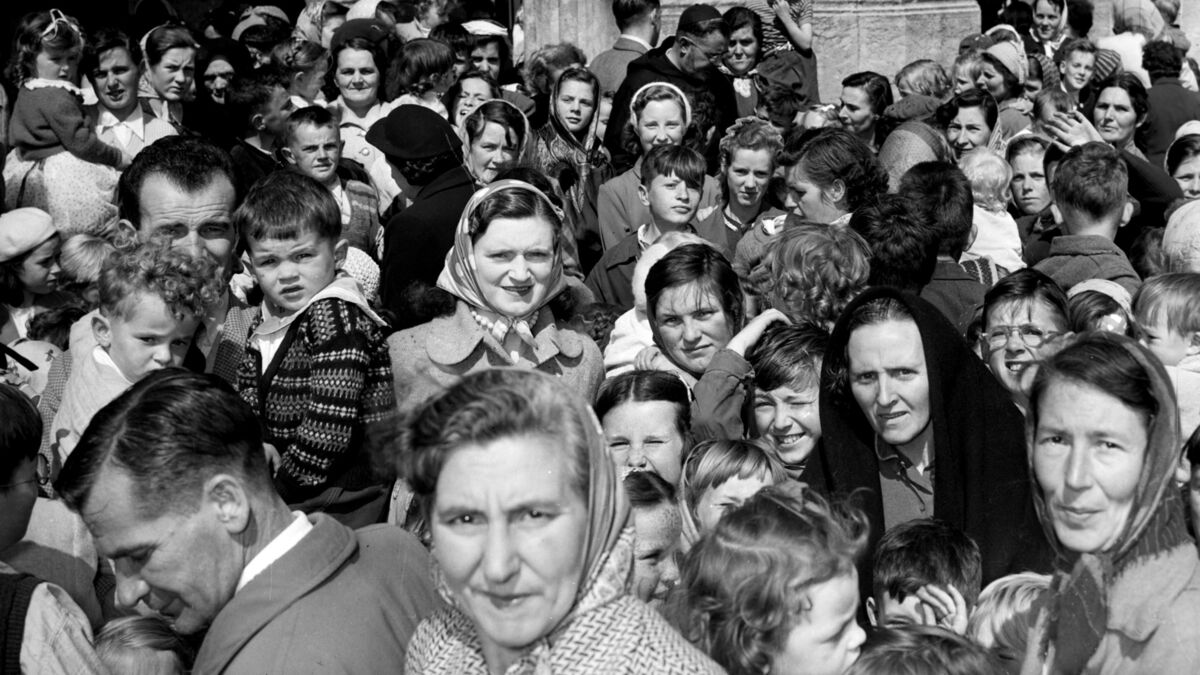
There was a blessing of children at Holy Trinity Church in Cork city in August 1956 during the polio epidemic across the city and county that year. It was a time when nobody knew the disease’s cause and the fatality rate in some instances was as high as 27%.

“Getting polio was like getting leprosy,” says Máire Ní Chorcora.

“That’s what it was like before the vaccine came out, everybody was terrified that their child would get it, it was like leprosy.”

A native of Mallow, she was 16 months old when she contracted poliomyelitis in October 1954, in an isolated case, two years before an epidemic broke out in Cork.

In 1956 there were 499 cases of polio in Ireland, resulting in 20 deaths, and a quarter occurred in Cork.

Polio a highly infectious disease

Poliomyelitis, once known as infant paralysis, is a highly infectious disease spread through person-to-person or faecal–oral contact. Its effects range from a minor transient illness to long-term paralysis and even death.

The virus invades the nervous system and, in a matter of hours, can cause total paralysis, or paralysis of the limbs. 

However, most cases produce very mild or no symptoms and these usually go unrecognised.

Seven decades on, it is still unknown why only a small percentage of infections lead to paralysis. 

Between 5% and 10% of those paralysed die when their breathing muscles become immobilised.

Polio can strike at any age, but it mainly affects children under the age of five. There is still no cure. 

Between 25% and 50% of those who have recovered from paralytic polio in childhood can develop post-polio syndrome decades later, with symptoms including chronic pain, muscle weakness, mobility and respiratory issues, and extreme fatigue.

Panic in Cork 

In the summer of 1956, panic spread across Cork city and county with each new report of polio. 

It was a time when nobody knew the disease’s cause and the fatality rate in some instances was as high as 27%.

“The biggest outbreak of polio in over twenty years is rife in Cork city at the moment,” read the Evening Echo lead story on Thursday, July 5.

“Six cases have been reported, and, owing to the outbreak, the Victoria Cross open-air swimming baths have been closed.

“The city medical officer, Dr JC Saunders, has warned that bathing in any part of the River Lee must be regarded as highly dangerous.”

Six children, ranging in age from three to 10, had been infected and Dr Saunders warned that “the occurrence of more than one case in the short period of one month must be regarded with some anxiety as a possible prelude to a more widespread epidemic”.

Four days later, the reported number of cases had risen to eight, with seven confirmed, and Dr Saunders issued an appeal to parents across the city: “Get your children to bed before nightfall and help to stop the possible spread of polio in Cork”.

In 1955, Dr Jonas Salk had produced a working vaccine but it had not yet reached Cork.

We know now that poliomyelitis is a faecal-borne disease spread by close human contact, but in the 1950s doctors disagreed over the cause and transmission of the disease. 

In hindsight, the prohibition on swimming in the River Lee, into which all the city’s waste was flushed, was wise.

By Saturday, July 21, there were 45 confirmed cases in the city, with most treated in St Finbarr’s Hospital, where one of the country’s three regional poliomyelitis centres had been established.

Two days later, Dr Michael Goold, medical director of St Finbarr’s Hospital, said there had been 60 hospitalisations and one confirmed death, that of a five-year-old girl. 

“There is a panic reaction to the polio epidemic in Cork, which is totally without justification and there must be an intelligent approach to it,” he said.

The Evening Echo reported that the outbreak appeared to be concentrated on the city’s southside, “especially in the Ballinlough, Friars Walk, Ballyphehane, and Wilton circle”.

By August 9, 90 cases had occurred in the city and 34 in County Cork. Of the 90 city cases, 71 were under six years of age, eight were between six and 10 years old, five were aged between 10 and 20, and the remaining six were older than 20.

Social and commercial life affected 

Writing for History Ireland in 2006, UCC’s Maurice Geary noted that Cork’s social and commercial life was badly affected, with school reopening deferred.

“Tourism and business suffered, especially in the wake of advice by some government departments against unnecessary travel into or out of Cork. 

“Many Cork people who worked in places like Dagenham, especially those with young children, cancelled their annual visit home.
“Attendance at cinemas, dance halls and sporting events dropped dramatically ... ”

Patients whose respiratory muscles had been affected were strapped into the huge metal cylinders — so-called iron lungs — that operated like a pair of bellows to regulate breathing.

Geary quoted one survivor who likened the experience to lying in a coffin with one’s head sticking out.

Cork’s polio epidemic peaked in September of 1956, although the number of reported cases nationwide would remain high until the following May. 

For most people, though, life slowly returned to normal. 

On Monday, October 8, primary schools reopened.

There had been 220 confirmed cases across the city and county, with five deaths.

Noting that the outbreak had been relatively mild, Dr Saunders maintained there had been no justification for the panic which had spread across the city and county, and he blamed certain newspapers for sensationalist reporting.

Cork Poliomyelitis Association would later become Horizons 

One legacy of the outbreak was the Cork Poliomyelitis Association, soon renamed the Cork Polio and General After-Care Association.

Years later, it became the Cope Foundation. 

Rebranded in 2024 as Horizons, the charity these days works with people with intellectual disabilities and autism.

Polio vaccinations began in Ireland in 1957. 

The last recorded case of wild polio in Ireland was in 1984, and the disease was eradicated in Europe in 2003. 

According to the World Health Organization, wild poliovirus remains endemic in Afghanistan and Pakistan, where 40 cases were found this year.

Polio Survivors Ireland says there are more than 4,000 Irish people living with post-polio syndrome. 

With disability allowance only available to those aged between 16 and 66, most polio survivors will not receive the €500 cost of disability payment introduced in Budget 2027.

A special event to mark the 70th anniversary of the Cork polio outbreak took place earlier this week at Cork International Hotel.

more #History articles

Monument honouring steadfast Republican Moss Twomey unveiled in Cork Monument honouring steadfast Republican Moss Twomey unveiled in Cork
How Frederick Douglass fell out with Cork-based Fr Mathew  How Frederick Douglass fell out with Cork-based Fr Mathew 
Don't give our historic Irish annals back to Oxford, urges Sinn Féin TD Don't give our historic Irish annals back to Oxford, urges Sinn Féin TD

More in this section

Closeup, scales and law on table, office and attorney man in blurred background with reading for crime analysis. Advocate, lawye Woman charged with multiple thefts from Cork stores remanded in continuing custody
Surveillance led gardaí to 'low level mule' as she travelled to collect drugs in Co Laois Surveillance led gardaí to 'low level mule' as she travelled to collect drugs in Co Laois
Lidl to invest €306m in Cork creating 250 permanent jobs Lidl to invest €306m in Cork creating 250 permanent jobs

Sponsored Content

Aisling Walsh, customer and strategy manager at ESB Networks More than 50,000 households are being rewarded for flexible electricity use
The office worker presents a document to the client across the desk. Pensions become part of the talent equation
CS ESB Networks Oct 2026 Got a smart meter? Time to unlock its value with an ESB Networks online account
Contact Us Cookie Policy Privacy Policy Terms and Conditions

© Examiner Echo Group Limited

Add Echolive.ie to your home screen - easy access to Cork news, views, sport and more