Monument honouring steadfast Republican Moss Twomey to be unveiled in Cork
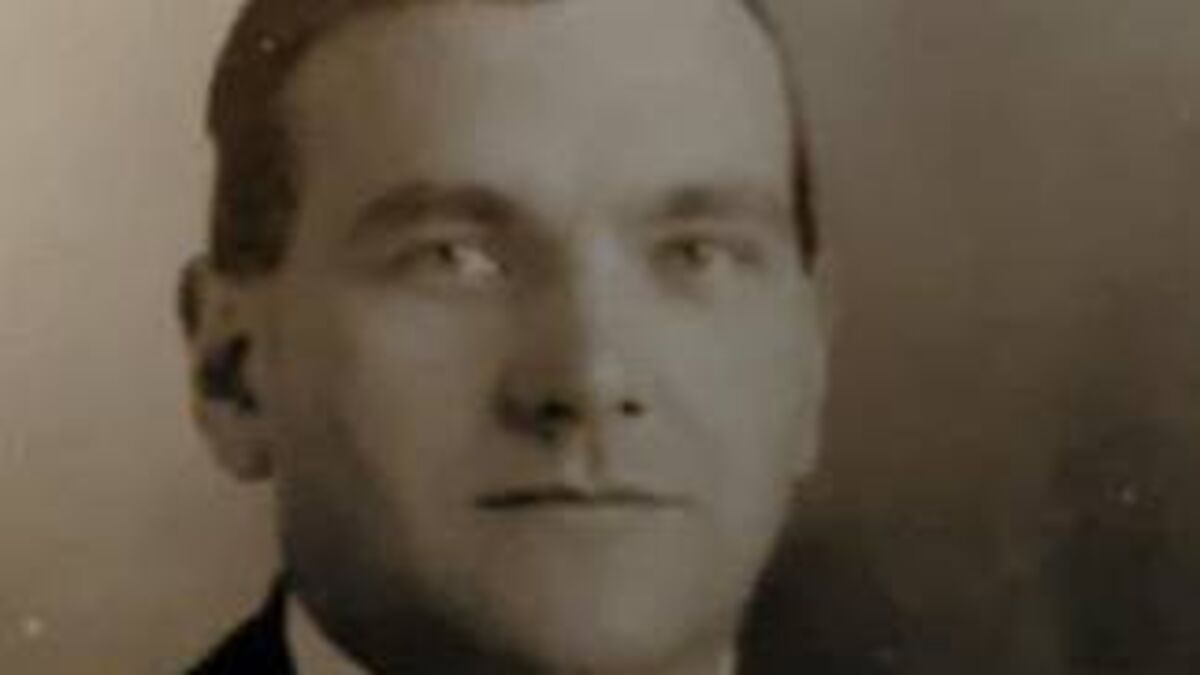
A monument is to be unveiled in the Co Cork birthplace to honour 'Moss' Twomey whose exploits made international headlines and who was the longest serving chief of staff of the Old IRA.
A monument is to be unveiled in the Co Cork birthplace to honour a man whose exploits made international headlines and who was the longest serving chief of staff of the Old IRA.
The historical importance of Maurice ‘Moss’ Twomey may have been largely forgotten over the years, but not by the community of Clondulane where he was born, a village near Fermoy.
The monument will be unveiled on Sept 6 at 2pm.
Born in the village in 1887, Moss went on to live an extraordinary life and some of his exploits made international headlines.
He joined the Volunteers at 17 and in 1918 became adjutant of the Fermoy Battalion of Irish Volunteers and a year later he became adjutant of the Cork No 2 Brigade.
In 1919 Moss was involved in the capture of a number of British soldiers in Fermoy and stole their weapons.
This was one of the first attacks on British soldiers in Ireland since the 1916 Easter Rising and one of the first since the War of Independence.
In 1920 he was also involved in the capture of three British officers - General Lucas, Colonel Tyrell, and Lieutenant Colonel Danford just a few miles from Clondulane.
General Lucas was held captive by the IRA for five weeks. His abduction made world headlines and the front page of many American newspapers.
During 1920 Moss helped direct the IRA intelligence in his brigade areas and was Commandant of Liam Lynch’s 1st Division.
On May 16, 1921, Moss was arrested and jailed in Spike Island. That November he and six other prisoners made a daring escape.
They had to scale two 7m high walls, pass through rolls of barbed wire and avoid searchlights.
The escapees managed to swim out to a boat and rowed it to Cobh. This escape made headlines around the world.
During the Civil War he was a member of the IRA forces which occupied the Four Courts, but left before the Free State army bombarded it.
On April 9, 1923 Moss was part of an IRA executive meeting to discuss the possibility to end the Civil War.
The meeting took take place in Goatenbridge, Co Tipperary.
Free State troops were on Lynch’s tail and caught up with him and some of his officers the following day in the Knockmealdown Mountains.
Lynch was shot and later died in hospital in Clonmel.
A short time later Moss was arrested and imprisoned in Mountjoy. But he escaped dressed as a prison guard.
Soon after this escape he was rearrested and imprisoned until 1924.
He became involved in the reorganisation of the IRA.
Moss was appointed IRA chief of staff and held the position for 10 years.
He was still on the run when he unveiled the famous monument in the Knockmealdown Mountains to Lynch on April 7, 1935.
“There were thousands of people at it, including special branch. He gave the oration and then disappeared into the crowd,” said Mark Fanning, who is Moss’s grandnephew.
Moss packed in his IRA activities between 1938 and 1940.
He then went on to open a tobacconist and newsagents shop on Dublin’s O’Connell Street.
“Moss died in Dublin in 1971 as a result of injuries he received in a motoring accident,” Mark said.
A large crowd is expected to attend the unveiling of his monument, with relatives coming from all over Ireland and some from Britain.
The oration will be delivered by Dr Brian Hanley, a leading historian who has written several books on the Old IRA.




 App?
App?


