Throwback Thursday: Memories of fair day in Midleton in 1930s
This week on Throwback Thursday, JO KERRIGAN hears precious memories of fair day in Midleton almost a century ago, plus a Moby Dick extra is identified
Throwback Thursday: Memories of fair day in Midleton in 1930s

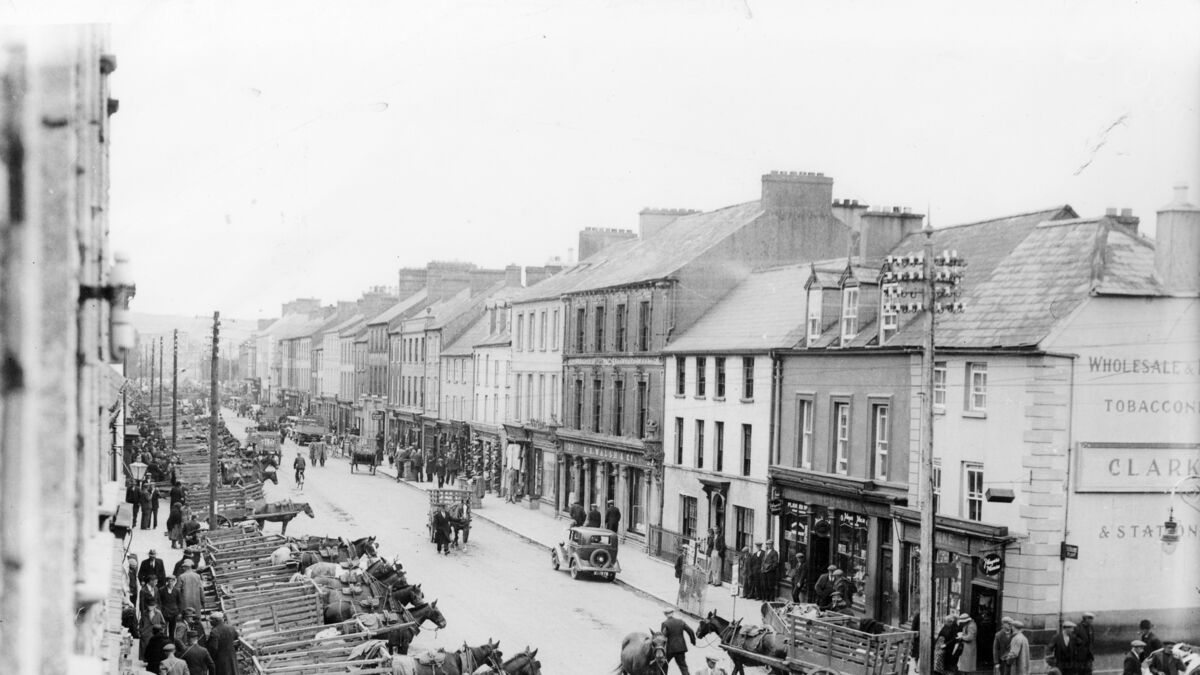
A busy scene at Midleton Fair on June 13, 1938. A Throwback Thursday reader in his 90s recalls attending the events in that decade with his farmer father

Remember that picture of the local people dressed up as extras in the 1954 filming of Moby Dick in Youghal that we showed last week in Throwback Thursday?
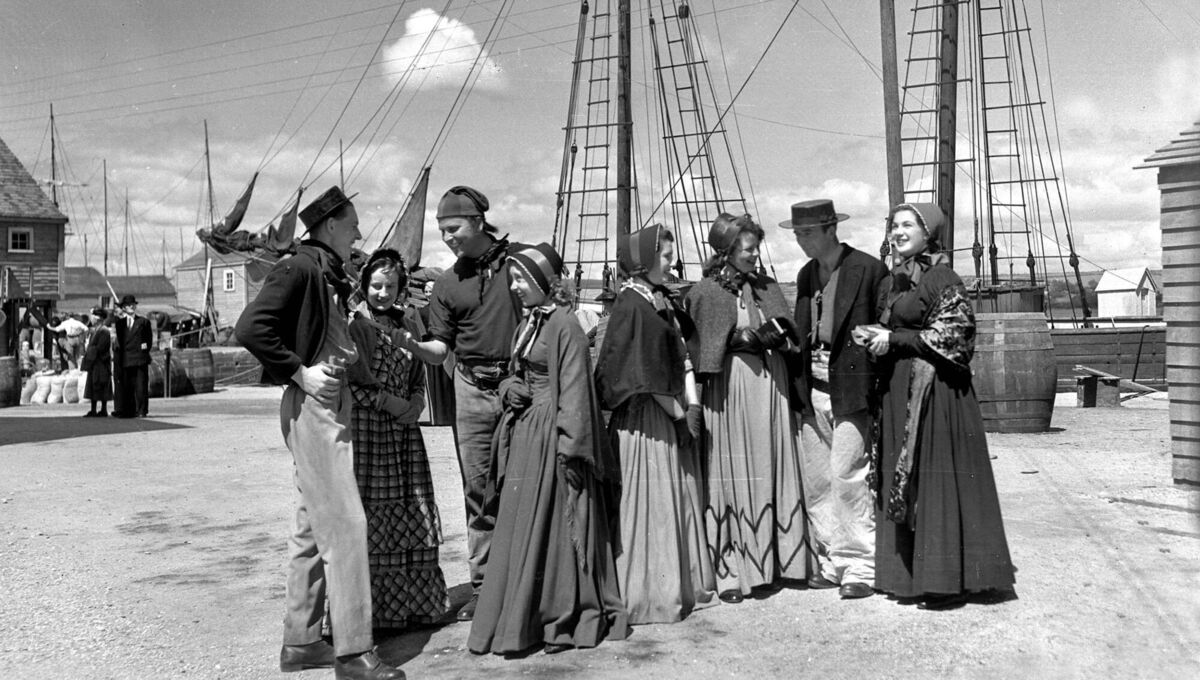
Emma Valentine had pleaded with us to help identify the individuals in that shot, and we passed her plea on to you, sure as always that you, indefatigable readers, would come up with the goods.

Pat O’Reilly was the first off the mark to give us an identification.

“Hi Jo, that photograph of the Moby Dick extras brought back memories!

“The third person from the left is Dick Donegan. Dick was a teacher in Glasheen Boys School in the 1950s. He used to teach 4th class and I was one of his pupils.

“He used to play the guitar, and I remember two of the songs he sang for us and taught us - Brennan On The Moor and The Fox. These songs were a welcome change from other prescribed songs.

“The 5th class teacher was Joe Holly who, as far as I can remember, lived on Wilton Road. When I was in his class, he told us one of his neighbours had died and left a black cat which had no home. He asked if anyone wanted a cat. I volunteered and collected the cat, which he put into a large box. We called the cat Holly and it lived for many years with us.”

Well isn’t that nice to hear, Pat!

Extras on the set of the film 'Moby Dick' at Youghal, Co. Cork in 1954. 

Did Mr Holly ever know that you called your new pet after him? Don’t suppose you have a picture of Holly the cat?

But back then, I guess cameras were scarce enough, and we tended not to go around snapping pictures of pets. (Well, we did in the Kerrigan household, but not many others had a mother utterly and unashamedly devoted to felines.)

Well, that’s one extra identified from Moby Dick. Let’s be hearing from the rest of you. I can’t believe somebody out there doesn’t recognise the others!

And don’t forget that we also asked for any old memories of what life was like back that year that Hollywood came to East Cork: what it was like to see stars like Gregory Peck strolling along the street, Noel Purcell enjoying the craic with friends in the pubs, John Huston himself, for heaven’s sake, taking a walk on the cliffs and thinking up forthcoming spectacular harpooning scenes while breathing in the sea air.

Weren’t we lucky that New Bedford in Massachusetts had changed so much from Herman Melville’s day that it wouldn’t do at all for the location shots, and they had to head for little ol’ Youghal instead, where nothing had really changed in centuries?

Although this writer does remember the painted cloth backdrops used to disguise the fronts of houses while they were filming. It was a first and exciting introduction to the make-believe world of the movies and one that was never forgotten.

They say the distinguished writer and journalist Claud Cockburn advised John Huston to take a look at Youghal, since he was living there himself when he wasn’t dashing all over Europe interviewing soon-to-be-deposed monarchs or very new political leaders. And Huston came, looked, liked what he saw – and the rest is history.

Now, we have had a very nice letter from Jo-Anne O’Brien expressing her fervent wish to share her father, Denis O’Shea’s, stories about old fair days in Midleton with us.

“He will be marking his 92nd birthday in October and still has very distinct and fond memories of his childhood in the 1930s and beyond,” she said.

“Fair Days were held in the market town of Midleton on the second Monday of each month for the trade of cattle, sheep and pigs.

“Cattle were sold on the road leading to Midleton Cottage Hospital, sheep were traded at the top of the town by the courthouse, and pigs were traded along the right hand side of the Main Street from the Munster & Leinster Bank down as far as Dick Barry’s.

“The animals were brought to the fair for a very early start at say 5 or 6am, and business was all concluded by the time the banks opened for the farmers to cash in their cheques.”

Jo-Anne adds: “My father recalls the town would be black with people, not only for the trade of livestock, but for a social gathering including matchmaking, politics and music that would often be performed by Pecker Dunne.

“By the time the fair was over, the purchased livestock would be led onto the cattle train bound for Cork by the cattle drovers using long ash sticks. The drovers were employed by the butchers in Cork.

“Dad clearly remembers Fair Day in Midleton as he was often kept at home from school to help his own father, John, who himself was a full time farmer.

“They would walk the mile or so into town with the cattle that they had fattened to be sold.

“My father clearly recalls the noise of cattle bawling when separated, the smell of cow dung, and general mayhem of the Fair Day each month.

“Although most farmers were paid by cheque by the cattle dealers, he has a distinct memory of a pig buyer who had with him a biscuit tin full of cash to pay for the pigs and bonhams that he was buying.

“He remembers the butchers that came to the fair, each wearing a mackintosh and overshoes to protect their footwear whilst farmers wore boots or wellingtons.

“My Dad recalls, as he was kept at home so frequently to help out, that at age 14 his formal education came to an end.

“He often recalls stories of his own father, himself a Kerry man, who bought a smallholding in Midleton in 1933 after working for 20 years or so in America on various building sites and at the Ford factory in Detroit.

Jo-Anne concludes: “The schedule of fairs nationally was listed annually in The Old Moore’s Almanac that also contained a correct calendar and tide table with monthly weather guide and prediction charades, horoscopes and enigmas!

“Fairs were also held in the locality of Killeagh, Fermoy, Youghal, and Cloyne. The first fair in Cloyne was introduced by a school teacher from Macroom called Gerry Moynihan, and took place on the fifth Monday of the month in Rock Street.”

Those are great images of past times conjured up there, Jo-Anne. Thank-you, and in particular thank your father for sharing them with us. Any more memories he might have, get hold of them and send them in for all our other readers to enjoy!

Now – have you heard about the new European Union rules on repairing rather than replacing?

Just in case you missed it, the rules which have just come into force are designed to encourage us all to repair rather than replace, which just might go some way towards tackling the estimated 35 million tonnes of waste that is caused by us throwing out and buying new.

Manufacturers of certain products must now observe a ‘repair obligation’, and the national repair directory, RepairMyStuff.ie, will be further developed to fulfil the role as Ireland’s national repair platform.

Well, what an excellent idea, don’t you think? Whether it is actually possible to make it work, we don’t know. One can envisage quite a few roadblocks along the way before anything like this becomes remotely workable. But it really is a step in the right direction.

It’s time we stopped dumping that washing machine, vacuum cleaner, TV, or PC before heading out to Harvey Norman’s or Curry’s for the latest shiny replacement.

I can hear a hearty ‘Hear hear’ from many of you, and I would bet that a great many memories are being awakened about the good old days when you DID make do and mend, repair, or take something to the local ‘little man’ to fix.

Remember when your father or grandfather headed out to the shed in the back yard to fix the wobbly leg of a chair with glue and some little scraps of wood to jam the joint so it wouldn’t happen again? When your mother stitched the split seam on those trousers, took the hem up on that skirt? When you didn’t create a fuss if a button fell off your blouse, but went and found the button box and sewed on a replacement? What’s happened to us in just a generation?

And if it was something you couldn’t fix at home (although Dad always had an amazing collection of old screws, nuts and bolts in the shed, and Mum never threw out anything that might come in useful), what did you do? Why, you went down the road to the shop that tackled more demanding repairs.

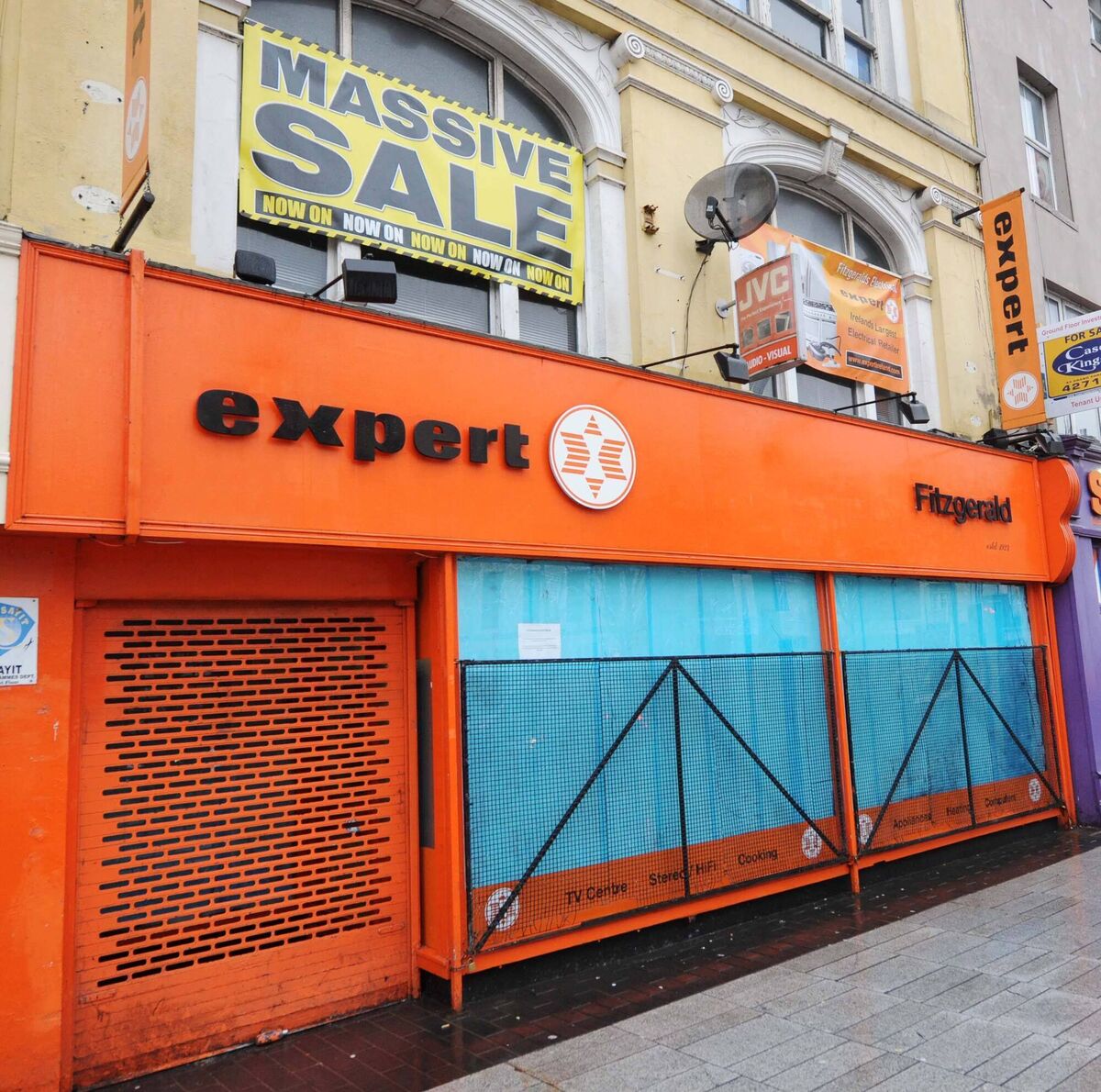
Fitzgerald Electrical on Grand Parade, Cork, soon after it closed in 2013 after nearly 90 years in business. Jo Kerrigan recalls a wonderful repair man out the back who fixed lots of products. Picture: Denis Minihane. 

Shoes are apparently a big throw-out problem these days. The soles are wearing thin, the laces have snapped, the heels are worn. Or they’re not the latest fashion must-have. Out they go.
Don’t you remember the good old cobbler’s shop where you could get new heels fitted (and soles too), rendering the old shoes waterproof and weatherproof once more?

If they needed a polishing before church on Sunday (remember that custom?), then the cobbler would gladly sell you a little tin of black or brown, together with the brushes (you always needed two, one for applying the polish, one for rubbing it up to a shine).

If the shoe stitching had somehow parted (possibly due to you kicking your feet along the gutter instead of walking nicely on the pavement like a good child), then you could buy a card with strong waxed thread and a specially tough curved needle to remedy the gap.

But we did so much handiwork back then that it was second nature to mend and repair.

Little girls were taught to sew and knit by their mothers and grandmothers, and by the time they were young adults they could make their own clothes.

Small boys, given their very first treasured set of Meccano, grew into seasoned mechanics by the time they were ten.

You didn’t need to watch a TV programme to learn how to put things together with nuts and bolts. You’d already learned it at the kitchen table when the tea was cleared away.

How many future designers and engineers developed their skills from these hobbies in childhood?

Does anyone repair treasured items these days? The Repair Shop, did somebody say? That’s a hugely popular TV programme. We watch it, like we watch cookery programmes, but that’s all we do. Watch somebody else doing something clever. Isn’t it time we got back to having a go ourselves?

Or, if that doesn’t work, finding a craftsman willing and able to do it for us?

Remember Fitzgerald’s electrical store on the Grand Parade? They had a wonderful man out the back who brought all kinds of equipment back into useful life.

There was a time when cracked serving dishes were riveted instead of being thrown out. Holes in saucepans fixed by a small metal plate screwed in. Carving knives sharpened by a travelling grinder.

Isn’t it time we got back to repairing and caring, rather than indulging in the ‘scrap and seize something newer’ culture?

Tell us what you remember about old household skills or the local shops which carried out repairs. Email jokerrigan1@gmail.com or leave a comment on our Facebook page: www.facebook.com/echolivecork.

More in this section

Throwback Thursday: 'Five generations of our family have gone on holiday to Courtmac’ Throwback Thursday: 'Five generations of our family have gone on holiday to Courtmac’
Throwback Thursday: Responding to a 22-year-old letter with memories of Moby Dick Throwback Thursday: Responding to a 22-year-old letter with memories of Moby Dick
Throwback Thursday: 'Our father was in charge of dismantling the old Youghal bridge' Throwback Thursday: 'Our father was in charge of dismantling the old Youghal bridge'

Sponsored Content

CS Skoda September 2026 In every hidden detail, Tapestry for Ireland captures who we are
When it comes to supporting education for children with special needs, every little helps a lot When it comes to supporting education for children with special needs, every little helps a lot
Global hit Circus Extreme brings ‘Rock It Out!’ to Cork and Dublin Global hit Circus Extreme brings ‘Rock It Out!’ to Cork and Dublin
Contact Us Cookie Policy Privacy Policy Terms and Conditions

© Examiner Echo Group Limited

Add Echolive.ie to your home screen - easy access to Cork news, views, sport and more