Cork man's World Cup adventure in London 60 years ago
Almost 60 years ago, Cork man JOHN TWOMEY literally scooped the golden ticket, securing an allocation to the 1966 FIFA World Cup. Here he recalls the experience.
Cork man's World Cup adventure in London 60 years ago

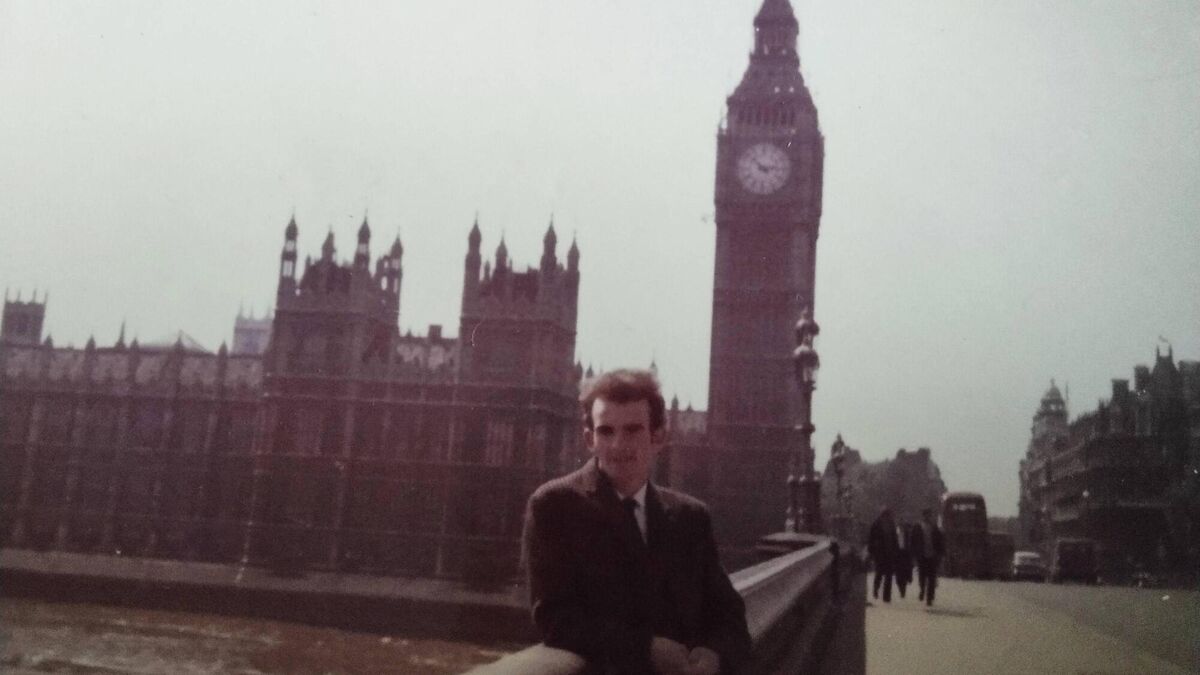
John Twomey pictured with Big Ben in the background. John first read that applications for tickets to the 1966 FIFA World Cup were open in a copy of Charles Buchan’s Football Monthly.
Sixty years ago, long before Ticketmaster and emails, an article in a magazine called Charles Buchan’s Football Monthly, inviting applications for tickets for the 1966 FIFA World Cup Finals to be held in England caught my attention.

I was a big soccer fan, and thought if only I could get tickets, I would have a place to stay in London as my eldest sister Margaret was married and living there.

I wrote to the Football Association Headquarters in London and applied for tickets for the matches to take place at Wembley Stadium. I got a reply and after some correspondence, I sent a postal order for two sets of tickets as a colleague at work, Edwin Canning, who has since died, was also interested.

The tickets duly arrived for all seven matches, and I felt like Charlie Bucket with the golden ticket!

The total cost of one set of tickets was approximately £12 - about two weeks' salary.

The 1966 FIFA World Cup Finals started badly. The Jules Rimet Trophy was stolen while on display in London and recovered a week later by a man out walking his dog, Pickles, who sniffed it out under a bush.

Sixteen teams competed in the tournament, including the hosts England and the holders Brazil, who qualified automatically. The Republic of Ireland did not qualify.

The Finals were held over three weeks, but we could only go for two weeks, so I sent on the tickets for the first two group matches to my brother-in-law, the late Pat Finnerty.

We flew out from Cork Airport with Aer Lingus very late on July 16. Flying into London in the early hours, it looked vast and magical. By the time we landed and got through arrivals, the Tubes had stopped running so we had to bed down in Heathrow Airport for a few hours before catching an early morning Tube to my sister’s flat in Finsbury Park.

The first match I attended was England’s third group match v France on July 20. We set out early, and it was thrilling to see Wembley Stadium with its twin towers as we made our way towards it.

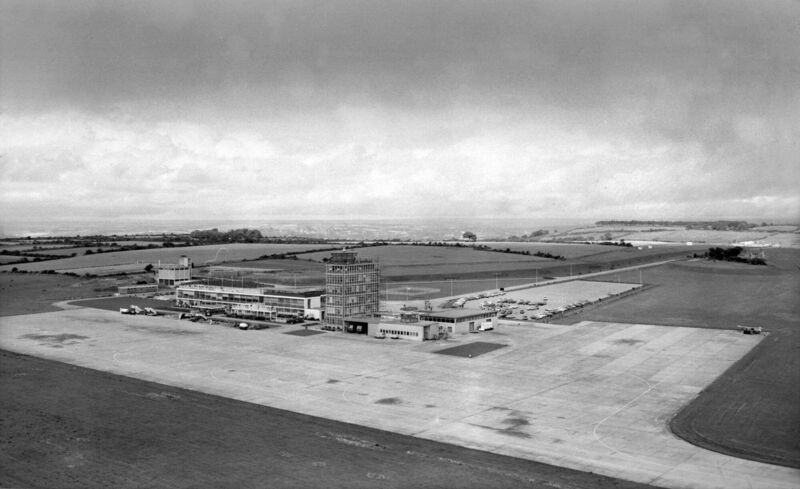
An aerial view of Cork Airport in 1967. John travelled from Cork to London for the games in 1966. 

We had the same great seats for all the matches. In the lower tier of the stand near the halfway line, surrounded by people of different nationalities which made for a great atmosphere. I was eagerly looking forward to seeing one of my Spurs heroes, Jimmy Greaves, in action. England won the match 2-0, but Jimmy Greaves - who played without wearing shin guards, got a very bad injury to his shin, which unfortunately ruled him out of the next couple of matches.

A major upset in the group stages, was North Korea beating Italy 1-0, thus sending Italy home while North Korea, who were making their first World Cup Finals appearance, went on to the quarter finals. The holders Brazil also went home.

The quarter final line up was:

  • England v Argentina
  • West Germany v Uruguay
  • Portugal v North Korea
  • USSR v Hungary

All four quarter finals took place on July 23 at the same time at four different venues.

England played Argentina at Wembley, and this is the match I attended. Manually operated scoreboards were set up high in the corners of the stadium to inform the spectators of how all four matches were progressing. When the scoreboard showed North Korea had taken a 1-0 lead against Portugal, a murmur ran around the stadium. When the score increased to 2-0 there were gasps of surprise. When the score went to 3-0 there was an audible reaction of amazement from the crowd. The scoreboard then gradually changed, with Portugal fighting back to win the match 5-3 to progress to the semi-finals.

The England v Argentina match turned into a kicking contest which the referee found hard to control. He sent off the Argentina captain Rattin after 33 minutes, including for arguing with the referee.There was much confusion as this was before the introduction of the yellow and red card system, and the game was held up for 8 minutes when Rattin refused to leave the pitch. England won the match 1-0 with a goal scored by Geoff Hurst who was making his first appearance replacing the injured Jimmy Greaves.

My sister Margaret was - and still is - a great cook and hostess. We were well looked after … all inclusive for two weeks before the term became popular with holiday makers.

I loved being in London, the excitement in the city, the 1960’s fashions, the big stores and parks, places like Leicester Square and Piccadilly Circus that we had heard about, travelling on the Tubes, the red buses and the black London cabs. 

In between the games, we got to see some of the famous London sights like Buckingham Palace, St. Paul’s Cathedral, Madame Tussauds etc. and we also went on a day trip by train to Southend-on-Sea.

England went on to play Portugal in the semi-finals. It was a very open sporting game, which England won 2-1. Two great goals by Bobby Charlton, with Eusebio scoring from the penalty spot for Portugal. A great game and I was delighted to see Portugal and their top-class players like Eusebio, Coluna and Augusto in action. Both teams were applauded off the pitch at the end of the game in what was generally considered to be the best match of the tournament so far.

West Germany had beaten USSR in the other semi-final, so the match to decide third and fourth place was Portugal v USSR. Another chance for me to see the fine Portuguese team and the great USSR goalkeeper and captain Lev Yashin who dressed all in black and was known as “The Black Panther”. He was also the only goalkeeper to win the Ballon d’Or.

Portugal was awarded a penalty in the 12th minute. Eusebio stepped up to take it, so two of the greats faced each other. Eusebio duly scored past the diving 6’-2” Yashin, making it his ninth goal of the tournament and top scorer.

USSR equalised in the 43rd minute, but Torres got a late goal in the 88th minute to give Portugal a 2-1 win and finish in third place. Another memorable game.

And so to July 30 … the World Cup Final … after a late breakfast fit for a king, we headed out to catch the Tube to Wembley. As we walked up Wembley Way towards the Stadium, the excitement was palpable. Throngs of fans in great form wearing scarves and hats and carrying flags with their team colours … no replica football shirts then. We made our way to our seats in the stand for our fifth match and settled down. I could hardly believe we were about to see the World Cup Final. The attendance was 96,924.

England were unchanged since the quarter-final match and lined out as follows:

Gordon Banks, George Cohen, Jack Charlton, Bobby Moore, Ray Wilson, Nobby Stiles, Bobby Charlton, Martin Peters, Alan Ball, Geoff Hurst, Roger Hunt.

They later became known as the “wingless wonders”.

Manager Alf Ramsey stuck with the same team since the quarter finals, and as no substitutes were allowed, there was no place for Jimmy Greaves in the final.

Germany lined out as follows:

Hans Tilkowski, Horst-Dieter Hottges, Willi Schulz, Wolfgang Weber, Karl-Heinz Schnellinger, Franz Beckenbauer, Wolfgang Overath, Helmut Haller, Lothar Emmerich, Uwe Seeler, Siegfried Held.

England were in a changed strip of red shirts with West Germany wearing white shirts … and the football was orange in colour!

Bobby Charlton and 19-year-old Franz Beckenbauer, the two outstanding footballers on opposite sides marked each other, resulting in neither one dominating the match.

Another interesting duel was that between Jack Charlton and Uwe Seeler. When a high cross came in to Seeler, the 5’ 7” centre forward would have to jump for the ball a second or two before the 6’ 3” Charlton.

West Germany opened the scoring in the 12th minute when a mistake in the English defence let Helmut Haller in. England were awarded a free kick in the 18th minute, which Bobby Moore quickly took, floating the ball into space by the near post for Geoff Hurst to run onto to head it into the net for the equaliser … a move that must have been practiced many times at West Ham's training ground. Martin Peters put England ahead in the 78th minute. Then, with time nearly up, England conceded a free kick in the 89th minute when Jack Charlton climbed all over Uwe Seeler. This led to a scramble in front of goal with Wolfgang Weber forcing the ball home to make the score 2-2. That’s how the score stood after 90 minutes, and so the match went to extra time. During the short break before extra time commenced, Alf Ramsey told his team not to sit down on the pitch to let the Germans know they were tired, but to stand up and that “they had won it once, so go and win it again”. If there was no winner in extra time, a replay was scheduled for the following Tuesday, August 2, with our final tickets holding good for the replay. We were already booked to fly home on Sunday and back to work on Monday, so it would have meant trying to change our flights and get extra holidays in order to see the replay. Thankfully, it didn’t come to that.
Extra time commenced, and in the 101st minute, Geoff Hurst scored the controversial “was it or wasn’t it over the line” goal. He crashed a shot against the underside of the crossbar which bounced down over - or on - the goal line. Roger Hunt, the player nearest to the action, immediately turned with his hands in the air to signal a goal. The referee from Switzerland consulted with his USSR linesman and awarded a goal.

Whenever this incident comes up now in conversation I am able to say “Well, from where I was sitting ……”

England led by 3-2 at the end of the first period of extra time. In the final minutes of the second period of extra time with West Germany pushing forward in search of an equaliser, Bobby Moore sent a long pass down field which Geoff Hurst ran on to and blasted the ball high into the net to make the score 4-2.

After the restart, the final whistle went and England had won the World Cup, with Geoff Hurst scoring the perfect hat trick, a header, a right-foot shot and a left-foot shot. He was the official man of the match but did not get to keep the match ball, which instead went to the West German captain Helmet Haller, conforming to a German tradition that the losing team keeps the ball. Alan Ball had an outstanding game, covering every blade of grass of the big Wembley pitch over 120 minutes, and would have been my man of the match. There was only one player booked in the game, and that was Martin Peters.

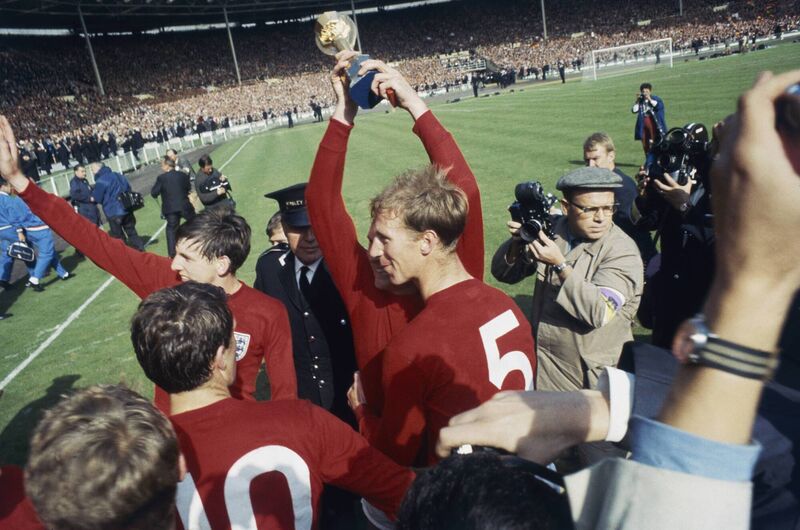
Martin Peters and Jack Charlton celebrate on the pitch after England's victory in the 1966 World Cup final at Wembley, on July 30 1966. Photo by Central Press/Hulton Archive/Getty Images

The Jules Rimet Trophy was presented to the England Captain Bobby Moore by Queen Elizabeth. No medals were presented on the day, and only the players who played in the final match were later awarded medals. It wasn’t until 2009 that the remainder of the squad and the manager were finally awarded their medals.
So after an unforgettable two weeks in London, after seeing five matches at Wembley Stadium and the best teams and players in the World, it was back to the real world in Cork to watch Cork Hibs at Flower Lodge and Cork Celtic at Turners Cross.

21 years later, I was back at Wembley for the 1987 FA Cup Final between Spurs and Coventry.

Before the final, there was a 14-minute match on a smaller section of the pitch involving two celebrity teams.

Bobby Moore lined out looking as fit and cool as when I last saw him!

Others taking part were Steve Davis, Dennis Taylor, Steve Cram, Dennis Waterman and Daley Thompson.

Coventry won the Cup 3-2 after extra time. Clive Allen scored his 49th goal of the season for Spurs in the first half, but the match went to extra time. I thought we’d have a fairytale ending with Clive Allen getting his 50th goal and winning the Cup Final. Alas it was not to be with Spurs captain Garry Mabbutt deflecting the ball for a goal which resulted in Coventry winning the Cup final.

more Holly Bough articles

Forget hurling... cricket was the first sport at St Colman’s Forget hurling... cricket was the first sport at St Colman’s
The day a Cork footballer kissed a Lisbon Lion’s knee The day a Cork footballer kissed a Lisbon Lion’s knee
Cork's Mick Barry and his impact on the development of the Seandún Division Cork's Mick Barry and his impact on the development of the Seandún Division

More in this section

Forget hurling... cricket was the first sport at St Colman’s Forget hurling... cricket was the first sport at St Colman’s
Throwback Thursday: 'I used to drive revellers to Majorca in Crosshaven' Throwback Thursday: 'I used to drive revellers to Majorca in Crosshaven'
The day a Cork footballer kissed a Lisbon Lion’s knee The day a Cork footballer kissed a Lisbon Lion’s knee

Sponsored Content

Your local hearing care experts in Cork Your local hearing care experts in Cork
AF The College Green Hotel Dublin March 2026 The College Green Hotel: A refined address in the heart of Dublin
SETU and Glassworks set to accelerate innovation SETU and Glassworks set to accelerate innovation
Contact Us Cookie Policy Privacy Policy Terms and Conditions

© Examiner Echo Group Limited

Add Echolive.ie to your home screen - easy access to Cork news, views, sport and more