Almost 190 years of Cork’s beloved Barracka band
LINDA KENNY looks back over the key moments of the past 188 years that have helped shape this quintessentially Cork institution.
Almost 190 years of Cork’s beloved Barracka band

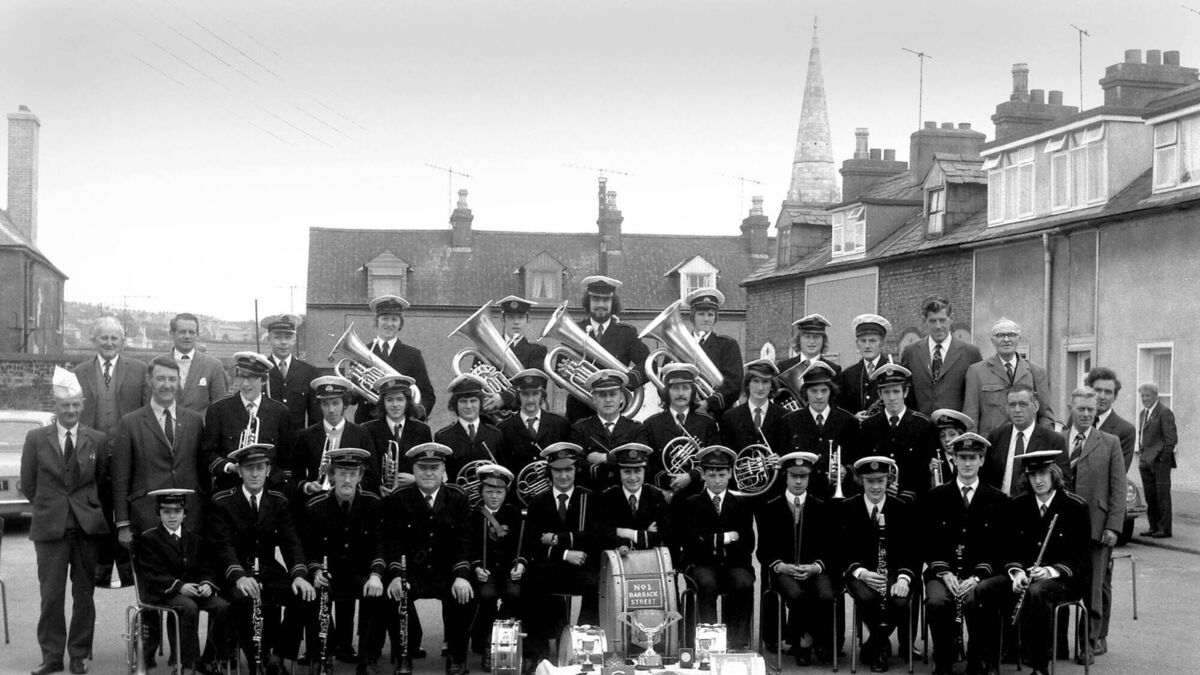
The Barrack Street Band pictured in June 1974. The band will celebrate 190 years next year. 

Founded in 1837, as part of the Temperance Movement, the Barracka, as it is so fondly called by Corkonians, is reputed to be the oldest amateur musical institution in Ireland.
It is inextricably woven into the social, economic, historical, and political fabric of Cork.

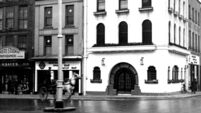
The original band-room was located on the second floor of number 1 Barrack Street, a three-storey building on the junction of Sullivan’s Quay and Little Blackamore Lane (now closed), that was home to Fr Mathew’s Temperance Society.

The society had its reading and recreational room on the first floor and band room on the second floor, where they also stored instruments and banners. They sub-leased the ground floor, which ultimately, and ironically, became a public house.

A lot of the earlier performances of the Barracka revolved around Fr Mathew’s Temperance activities.

In fact, at that time, most parishes in Cork had a temperance band. There were at least 55 working men’s bands in existence, dotted all over Cork city and county, of which 22 were based in the city alone.

They played a prominent role in processions, rallies, and recruitment drives for the Temperance Society, which, in its early years, signed up almost 3 million people, half the Irish population!

In their attempts to attract new members, the Barracka would parade through the streets by torchlight and, according to tradition, Fr Mathew would be waiting by the South Gate Bridge to welcome home the band and their new recruits.

At a time of severe socio-economic depression in Cork, one could only imagine the emotional lift it gave to the ordinary people who experienced this live band marching past their front door, playing rousing military music and dressed in impressively gold-trimmed uniforms.

No records exist of those first years to indicate players’ ability, the band arrangements that were played, or the breadth of instruments that would have been used. However, reviews from that era were not very complimentary.

One reviewer, JG Kohl, in his book Travels in Ireland, described the temperance bands’ playing as making “sounds more detestable than the caterwauling of cats”. Oh dear!

With little or no musical training, tutors, or a conductor in the first years of its existence, it is not hard to imagine the cacophony of questionable musicianship produced by the Barracka, who had learned to play by ear.

Influenced by military bands, they quickly morphed into one of the finest, most impressive marching bands of their ilk.

While Fr Mathew strove to keep the temperance bands free from political involvement, this proved an impossible task as the country, at that time, was awash with excitement for the inspiring orator and politician Daniel O’Connell. Known as The Great Liberator, he was promising to win Repeal for Ireland in the same way he had won Catholic Emancipation in 1829.

When he came to Cork to walk alongside Fr Mathew in the Great Temperance Day parade, Easter Monday 1842, the citizens of Cork went into a frenzy of patriotic joy.

It was the largest Total Abstinence Procession that had ever been held in Cork, and the No 1 Barrack Street Band proudly led the people through the wide streets, splendidly adorned with bunting, flags, and flaming tar-filled barrels.

In his wonderful biography of the Barracka, the late historian Richard T Cooke explains that the band “members were staunch supporters of Daniel O’Connell and it was inevitable that they would play at Repeal meetings and demonstrations whenever they were held in the city or county.” The biggest of these was a monster rally held in Cork, June 1846, at which 500,000 turned out to show their support for The Liberator.

While this was a wonderful day for Cork, it was a different story around the country as the potato crop was failing.

The ensuing Great Irish Famine plundered the landscape and left families devastated, depleted, and impoverished.

It is a testament to the fortitude and resilience of the membership of the Barrack Street Band that they survived this very challenging time and continued to thrive.

The 1870s saw the decline of the Temperance movement. By this time, the Barrack Street band had already begun to develop their own purpose and identity and were at the forefront of every public gathering in Cork, from sporting fixtures and funerals to religious, political and festive events.

The birth of the railway in Cork opened up a world of experiences for working-class Corkonians and the Barracka often played at out-of-town political rallies and organised social excursions.

The first documented conductor was Mr George Brady, who took up the reins in 1872. The records note he was a trained musician, and Protestant!

Under his tutelage, the band improved significantly and began entering national band competitions. Moreover, they won! A tradition that has continued to this day, where the long hours of dedicated practice and devotion, under the baton of Brian Prendergast Captain Rtd, resulted in significant successes in the South of Ireland Band competitions in recent years.

In the summer months, the band organised regular boat excursions for, on average, 700 of the well-healed denizens of Cork.

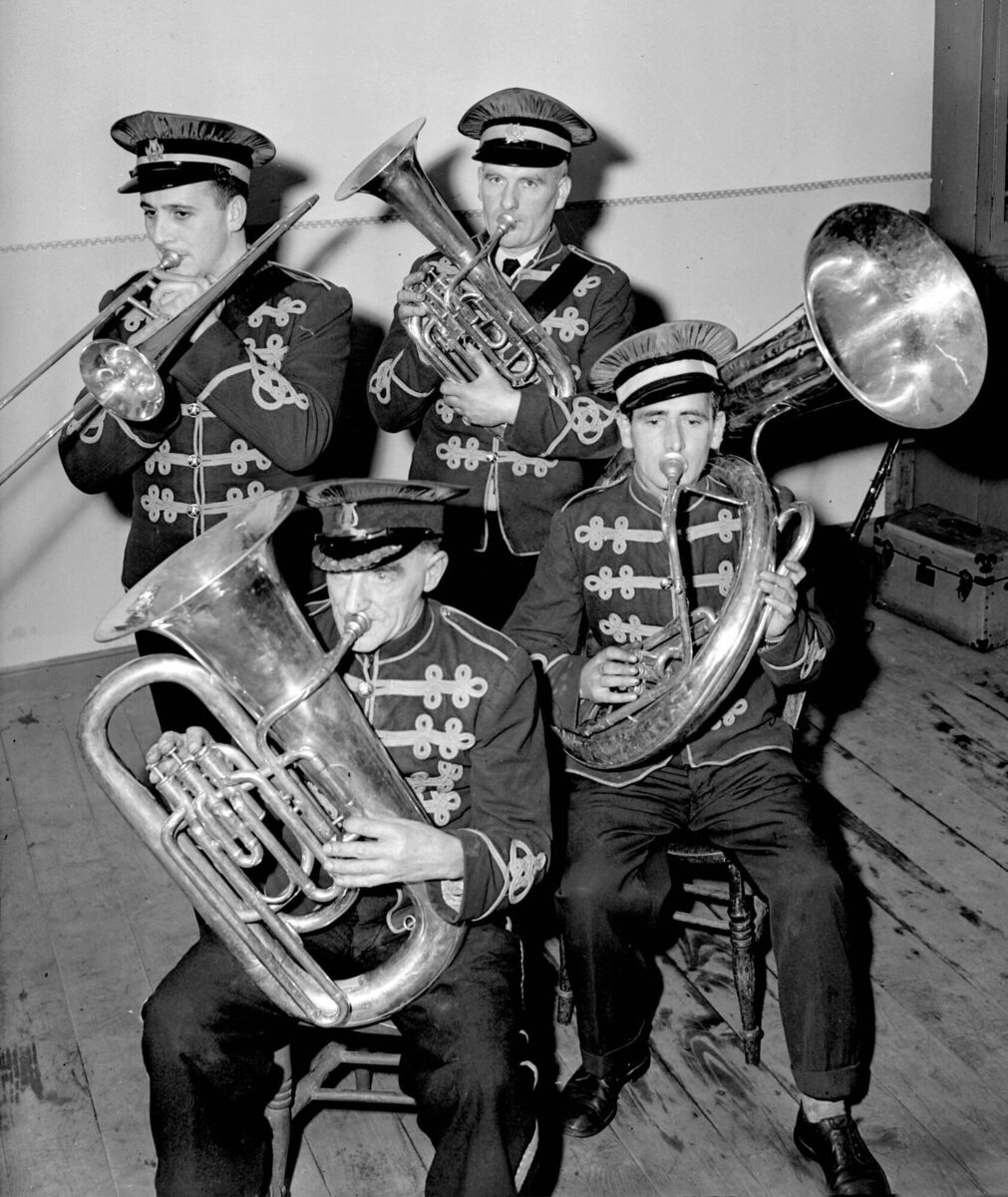
Members of Barrack Street Band during practice at their band hall in 1958. 

May to September was considered ‘Promenade season’, when the bandstands of the Mardyke and the Marina would be thronged with people from all walks of life listening to bands like the Barracka play their favourite marches, overtures and waltzes.
It was considered a huge honour for the band to be invited to the Irish Exhibition in London, in the late 1900s, to play a selection of airs for the visiting public.

Their appearance at the event attracted unwanted publicity, however, when they refused to play God Save the Queen. It was construed as an intentional insult by the organisers and attracted boos from the expectant crowd.

The band’s conductor Mr George Brady bluntly stated that they had not been given advance notice of this, and he wasn’t prepared to allow the band to play any piece in public that they hadn’t rehearsed in private beforehand.

They were duly sent home.

Throughout its history, the band has reflected the societal changes that took place in Cork and its environs, and its members have never been afraid to stand up for their beliefs.

Universally lauded for both their musical endeavours and their patriotic work, when encouraged by leading politician John Redmond to support Britain in the war efforts of WWI, a record 39 members of the band signed up to fight, two of whom died from injuries received while in service.

1918 saw their band room condemned and demolished, forcing them to move through a succession of temporary rehearsal spaces, until 1953 when, with the generous help of the community, friends, and family members, they built their current band room on Reed Square, off Barrack Street.

They soon outgrew that space too, and have been rehearsing in school halls for over three decades, but are in the final stages of purchasing a bigger space to accommodate their needs.

The Barrack Street Band has always had strong associations with sport, in particular with the GAA. The first documented hurling match at which they played was a county championship in Bartlemy in 1884, and they have entertained the masses at many GAA Championship Finals (county, Munster and All-Irelands) since.

For generations of Cork families, the Barrack Street Band is synonymous with the Cork St Patrick’s Day parade. No wonder, as it has been performing in the parade since its inception on March 17, 1889.

Family, too, is a word that is often used to define the band. Intergenerational ties have always been strong: uncles, dads, nephews, daughters, playing side by side, linked by a shared love of music. For many, the band is like a second family, and they are proud of its deep ties to the community.

Past alumni include the internationally renowned Bobby Lambe, who played with jazz greats like Sinatra, and trombonist Paul Dunlea whose bright star is very much on the ascendant!

Current band Chairman and cornet player, Billy O’Callaghan, remembers ‘growing up’ in the band from the age of 2 or 3, alongside his brother Noel, where their father Paddy, a trombone player, was the band secretary and, subsequently, its hugely successful conductor for many years.

Billy’s first musical outing with the band was at the tender age of 6. He played the triangle!

Many started that way.

Since the 1950s, the band has played at regattas, church processions, concerts, funerals, performances on the Marina and Mardyke band stands, community events, local festivals, operas, sporting events, church and state occasions, fêtes, and GAA matches.

Standout memories were two tours to Tenby in Wales, and a very memorable trip to Savannah, Georgia, in 2011, where the band led the second biggest St Patrick’s Day Parade in the world.

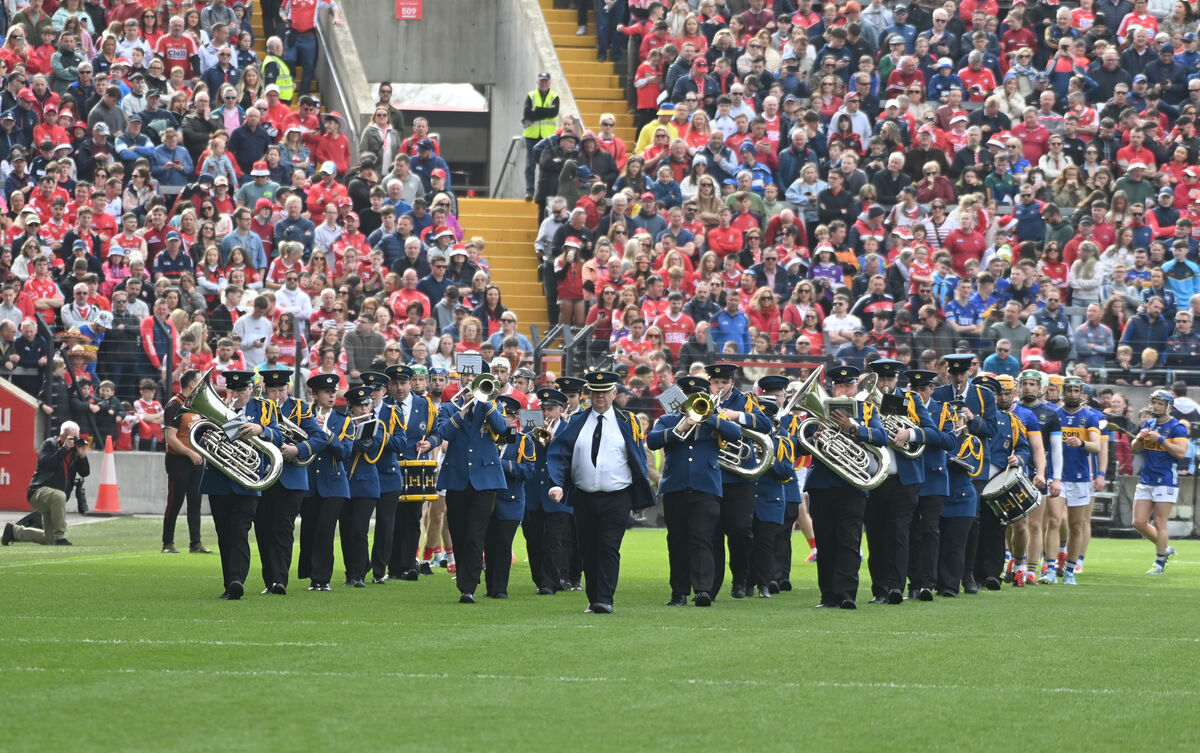
The Barrack Street Band lead the parade prior to the Cork and Tipperary during the Allianz Hurling league division 1A final at SuperValu Páirc Uí Chaoimh last year. Picture: Eddie O'Hare

“Music education has always been an essential element of the band’s survival and longevity. History tells us that the band regenerated its membership on a need-to basis, with recruitment drives taking place every 20 years or so to maintain membership levels and to sustain the band’s future”, explains Billy.
“My own father, Paddy, joined the band in the late 1940s as part of a recruitment drive at that time. As membership began to dwindle in the 1960s, he led another recruitment drive to introduce youth into the band, providing young people in the local area with opportunities to access a musical education, much like the opportunity he got himself.

“Thankfully since 1992, we have been able to maintain a constant education programme thanks to the support of Music Generation Cork City (Cork ETB), and Cork City Council.

“With three bands in operation, junior, youth band and senior, there is a defined pathway of progression for committed players.”

Brian Prendergast Captain (Rtd) has been the conductor of the Barrack Street Band since 2007, and a massive inspiration to those who have had the good fortune to work with him.

“It has been a singular honour to be the Musical Director of one of Ireland’s oldest musical institutions”, he insists.

An Honorary Corkman, he cut his musical teeth as a youngster in the Newbridge Community Band, before becoming a professional musician with the Defence Forces School of Music.

He is a passionate advocate of access for all to the arts.

“The Barrack Street Band is at the forefront of cultural inclusion and we promote easy access to the arts”, he explains. “Our Schools Education programme has ensured access to music for many that might not have had the opportunity through more traditional routes.

“We continue to serve the people of Cork through our strong connections with Cork City Council and Music Generation Cork City (Cork ETB).”

The Barrack Street Band has survived and thrived against a backdrop that has included the Great Famine, the Easter Rising, the War of Independence, a Civil War, the Great Depression, two World Wars, covid, and more. As they get ready to expand their operation and move into larger premises, the future looks bright for this beloved Cork Institution.

This article originally appeared in the 2025 Holly Bough. 

more Holly Bough articles

Cork man's World Cup adventure in London 60 years ago Cork man's World Cup adventure in London 60 years ago
Forget hurling... cricket was the first sport at St Colman’s Forget hurling... cricket was the first sport at St Colman’s
The day a Cork footballer kissed a Lisbon Lion’s knee The day a Cork footballer kissed a Lisbon Lion’s knee

More in this section

Throwback Thursday: My father was a Cork bus inspector in '60s Throwback Thursday: My father was a Cork bus inspector in '60s
Cork man's World Cup adventure in London 60 years ago Cork man's World Cup adventure in London 60 years ago
Forget hurling... cricket was the first sport at St Colman’s Forget hurling... cricket was the first sport at St Colman’s

Sponsored Content

Your local hearing care experts in Cork Your local hearing care experts in Cork
AF The College Green Hotel Dublin March 2026 The College Green Hotel: A refined address in the heart of Dublin
SETU and Glassworks set to accelerate innovation SETU and Glassworks set to accelerate innovation
Contact Us Cookie Policy Privacy Policy Terms and Conditions

© Examiner Echo Group Limited

Add Echolive.ie to your home screen - easy access to Cork news, views, sport and more