From Cork to Knock: The gifts from Cork pilgrims that still have pride of place at the Mayo shrine a century later
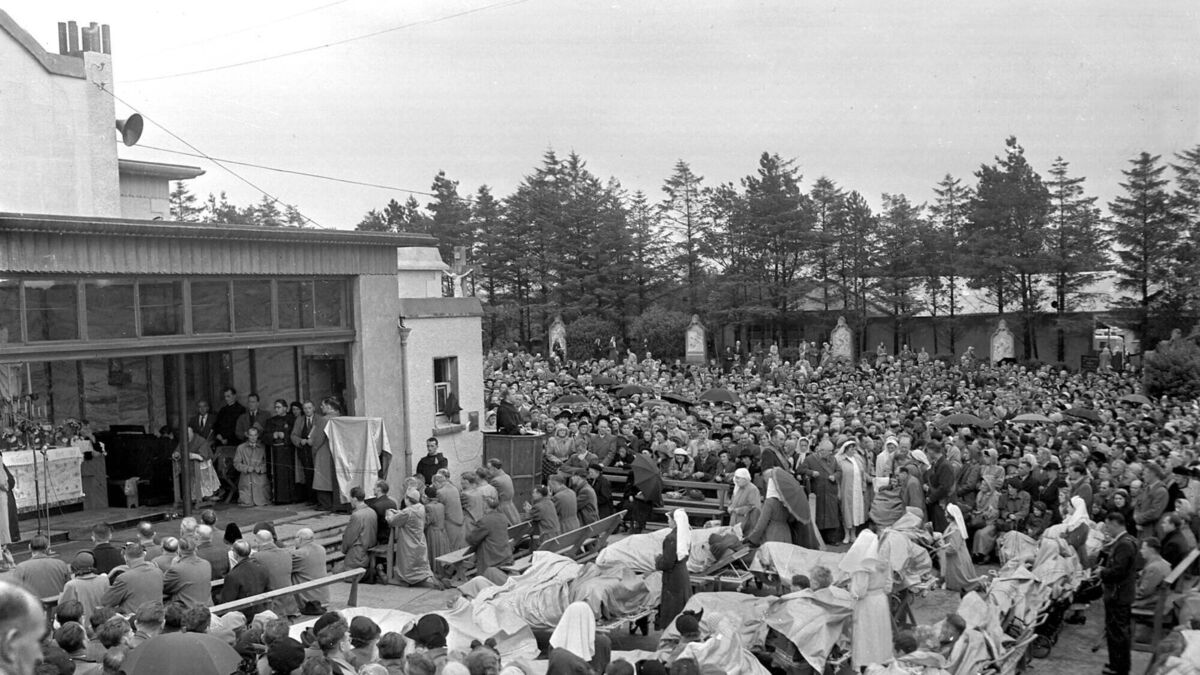
Knock Church in 1953- almost a century after the apparition.
Thousands of people descended on the village from all over Ireland, many on foot.
Some, who could afford the fare, travelled by train to Ballyhaunis and onward, walking or by horse-drawn vehicles.
One of the very first organised pilgrimages to Knock came from Cork, and today, there is still evidence of this trip at the Knock Shrine.
At the time of the apparition, the village of Knock, set on high ground, had six thatched houses, with the police station and priest’s house also thatched. There was a two-room school.
The first Knock pilgrimage by train took place on Easter Tuesday, March 30, 1880, departing Dublin for Ballyhaunis 14:22 and Claremorris at 14:49. Pilgrims could return by any train up to and including Tuesday, April 6.
On May 5, 1880, a special 3rd-class-only train, provided by the Great Southern & Western Railway, ran from Cork to Ballyhaunis. It departed Cork at 07:45 with 150 pilgrims. Further pilgrims joined at the intermediate stations. Trains from Tralee and Lismore connected at Mallow. Return fare from Cork was 12s 6d. Pilgrims could return by any scheduled service within a week.
Eastbound steamers arriving at Queenstown (now Cobh) disembarked big numbers of Knock pilgrims, mainly affluent Irish-Americans, who then travelled by train to Ballyhaunis.
However, the first organised Knock pilgrimage by train was from Cork, departing at 21:00 on Saturday, June 5, 1880, bound for Ballyhaunis.
On that evening, 240 young men, members of the Sodality of the Angelic Warfare of St Thomas Aquin, then based at St Mary’s Dominican Church, Pope’s Quay, and ten members of the Confraternity of the Most Holy Name, assembled in the church for prayers before setting off walking in procession to the station.
described the pilgrimage on June 7, reporting: “On Saturday evening, one of the most pleasing and edifying sights we have seen in the city of Cork for some time took place at eight o’clock. At that hour, and indeed for fully an hour previous, Pope’s-quay and Patrick’s-bridge were thronged with spectators, whose gaze was bent on St Mary’s Church, and if a stranger inquired the why and wherefore of the commotion he would have been told that a number of pilgrims were about to issue forth from the sacred edifice for the purpose of paying a reverential visit to the now celebrated and holy shrine of Knock, far away in that remote province of Connaught.”
Large crowds lined the route, and such was the number of well-wishers at the station, it was said the pilgrims had difficulty boarding their five-carriage train.
“Their progress through Pope’s Quay and Patrick’s Bridge was very slow for the dense mass of spectators congregated closely around and pressed them on all sides; but such a troublesome manifestation of curiosity was under the circumstances, quite pardonable,” the newspaper said.
The train arrived in Ballyhaunis at 06:00. What available horse-drawn waggonettes and side-cars were quickly hired at one shilling each for the trip to Knock. All other pilgrims walked the six Irish (eight statute) miles to Knock. A half-mile from Knock, the entire group met up and, with their six new and ten existing banners unfurled, and marched in procession to the chapel for mass and partake of the general communion.
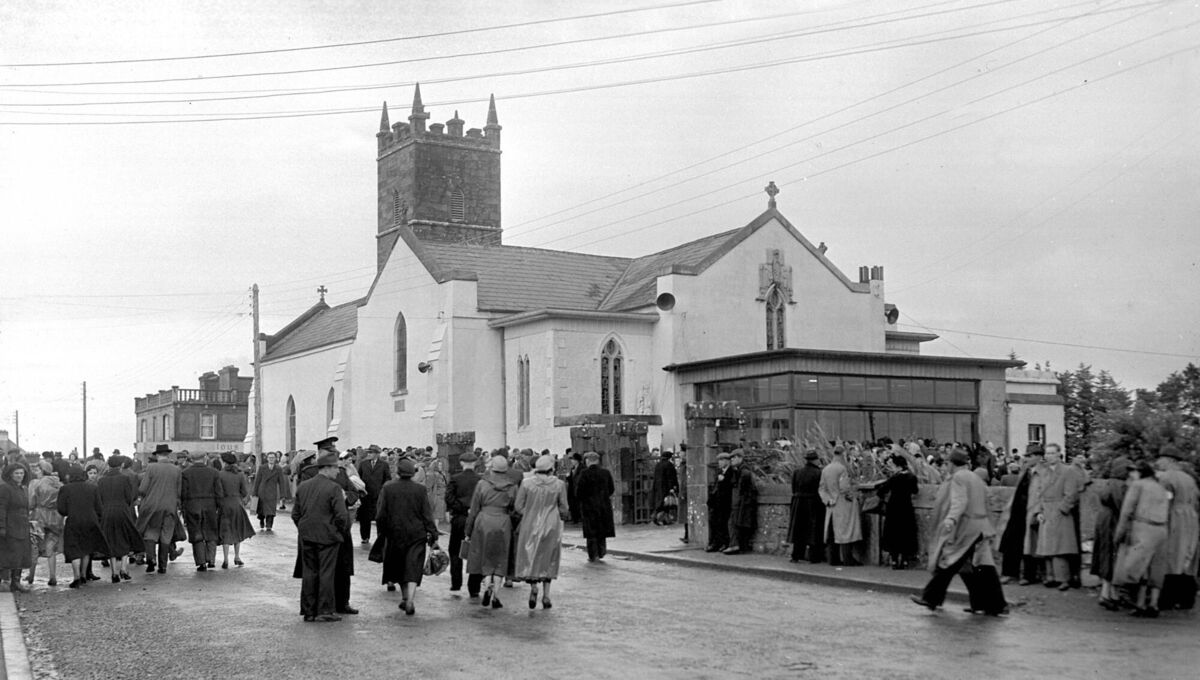
That morning, Fr Austin Rooke, the spiritual director of the pilgrimage, celebrated Mass. The pilgrims were reported to have spent much of the remainder of the day, focused on the small chapel with its clay floor and few seats.
That afternoon, the pilgrims gathered to present a very handsome sanctuary lamp to the chapel, which had been bought costing £15 at Mr Egan’s shop, Patrick St, Cork, as an offering to the Blessed Virgin.
They had brought the lamp on the train, and by that afternoon it was already hanging, replacing an earlier lamp.
After the singing of the Magnificat and the Pilgrim’s hymn, the lamp was formally lit for the first time. Fr Rooke presented the lamp, in the name of the members of the Angelic Warfare.
The inscription on the lamp read:
”
In receiving the lamp, Venerable Archdeacon Cavanagh PP expressed his sincere thanks to the Father Director, and through him to the Angelic Warfare Solidarity, to whose earnestness and piety he referred to at length. Benediction was then given with participation by the pilgrims singing and chanting, before they dispersed for tea.
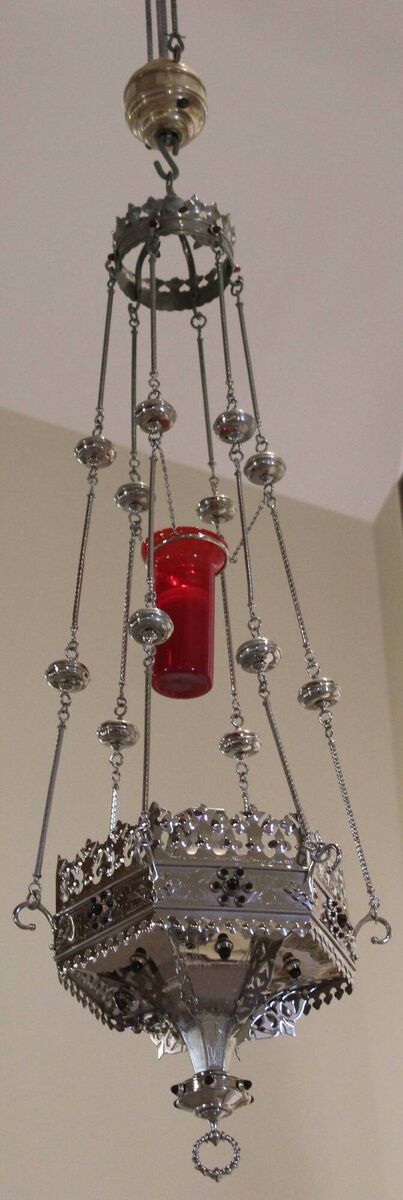
Some 145 years after that trip, the lamp still hangs in its original location in daily use.
It was professionally restored in 2018.
The conservators reported that the lamp was made of brass with silver plating.
At the time of the pilgrimage, the Southern Gable, where the apparition had appeared the previous year, was boarded up to a height of 20 feet as pilgrims had been gouging out the mortar from between the stones, threatening the wall’s stability. Many of the Cork pilgrims desired a piece of mortar. The Archdeacon, wishing to satisfy, procured a long ladder and personally removed mortar from above the boarding, dropping it down to the many outstretched hands below.
That evening, the pilgrims gathered before the gable with their banners for the return to Ballyhaunis station, accompanied by the Ballyhaunis Brass Band playing.
At Ballyhaunis station, the Claremorris Temperance Brass Band discoursed joyous sounds until the train’s departure at 20:00 when a popular air was played. After departure, the five glorious mysteries of the Rosary were recited and the train arrived Cork at 06:00 on Monday, June 7.
In a special report on the trip on Saturday, June 12, reported how on their return the pilgrims “all felt not only delighted with the trip but thankful to Providence that an opportunity, under such favourable circumstances, had been afforded them of visiting the Shrine at the Irish Lourdes”.
The newspaper noted that a number of other pilgrimages to Knock had been organised.
“We see that Limerick on-tomorrow (Sunday) is to send 500 of its young men on a pilgrimage to Knock; another is arranged for Sunday week to start from Dublin; and as Cork has been the pioneer, we might say, of the large pilgrimage to Knock, let us hope that the one on Saturday last from our city may be only the precursor of many such not in the distant future.”
Later that summer, on the feast of the Assumption, Sunday, August 15, 1880, more than 20,000 pilgrims visited the Shrine.
There was a large number of pilgrims from Cork, most of whom arrived on Friday.
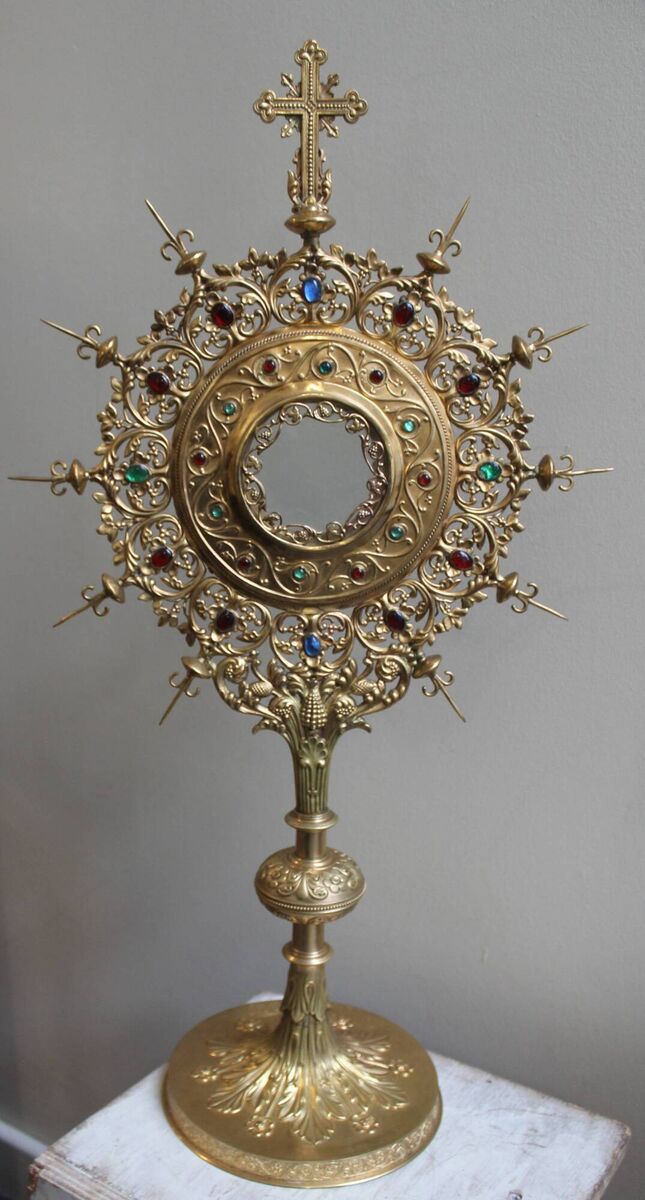
During the closing ceremony, attendees observed the solemn presentation of heavily gilted and jewelled remonstrance and chalice, of beautiful workmanship by Egan’s, Silversmiths, Cork, on behalf of a few Cork Catholic gentlemen by a deputation consisting of Messrs P F Barry, Janes Hurley, George J O’Donnell, Thomas Brindley, James O’Connell, Peter J Kingston and John Link.
This story originally appeared in the 2025 .