Cork Views: A tax on junk food will boost health of the nation
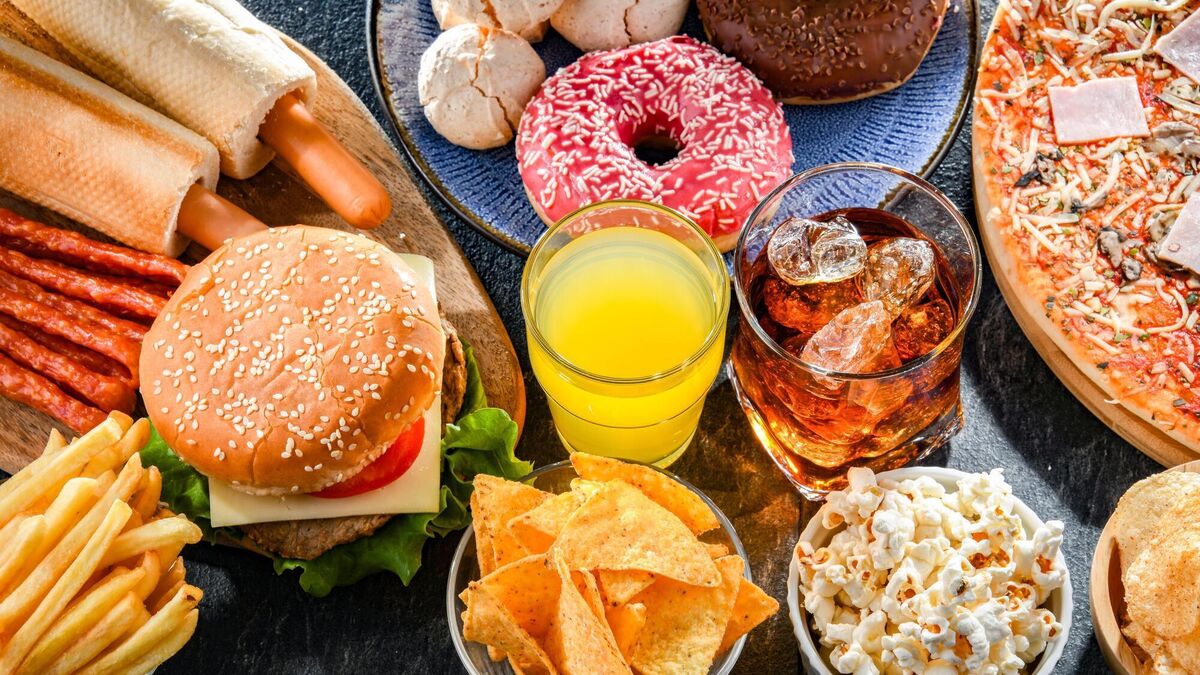
The success of the sugar drinks tax provides a template for a junk food tax, says Dr Catherine Conlon
Soccer star Cristiano Ronaldo made headlines at a Euro 2020 press conference when he pushed two bottles of Coca-Cola out of the camera line and replaced them with a bottle of water – a move that potentially caused millions of young soccer fans to ditch soft drinks for water.
And it’s not just drinks. The Portuguese legend is reputed to avoid junk and ultra-processed food to maintain his peak physique. His diet consists of lean proteins, wholegrains, and vegetables, to the extent he is reputed to guilt his teammates into skipping dessert.
Unfortunately, most of us do not have the soccer icon’s resolve when it comes to food.
In 2018, in a move to curb high rates of obesity, the Irish government introduced a Sugar Sweetened Drinks Tax (SSDT) on drinks containing more than 5g of sugar per 100ml, that forced the soft drinks industry to reformulate to lower sugar options.
Now, researchers at four Irish universities are calling on the government to increase the tax, claiming stronger measures are needed to tackle ongoing obesity and encourage drinks manufacturers to reformulate even further.
In an article in the Irish Medical Journal, the researchers said the tax worked well with major brands including Pepsi, 7Up, Fanta, Sprite and Club Orange. However, the incentive to reformulate has weakened and a more ambitious approach is needed.
The researchers point to stiffer measures recently introduced in the UK, where the threshold for the lower tax ban is set to fall gradually over the coming decade, bringing more drinks under the tax levy unless manufacturers reduce sugar content further.
“The sugar tax had a real impact,” said lead author Dr Frank Houghton of the Technological University of the Shannon, adding that that needed to go further. “It encouraged manufacturers to reformulate their recipes to avoid the tax. That is a major success. We now want to build on that and encourage further reformulation by industry.”
The paper also called for revenue to be ring-fenced for obesity prevention programmes, treatment services, and community food initiatives. The World Health Organisation has advocated for sugar taxes, introduced by over 115 countries, as a public health highly cost effective intervention.
With almost two-thirds of adults and 20% of children in Ireland overweight or living with obesity, with lifetime risks of type 2 diabetes, cardiovascular disease and dementia - much more needs to be done.
The success of the SSDT provides a template for a similar robust levy on junk food. Additionally, using the revenue to subsidise healthier options would shift the food environment towards healthier wholefoods.
While Ireland has made some progress in challenging obesity rates with health promotion, education and treatment, apart from the SSDT, government initiatives to legislate for a healthier food environment have been sparse.
Countries with far less wealth have been more successful. Colombia introduced a tax on unhealthy food in 2022 - early evidence suggests it significantly improved population diets after just one year. Meanwhile, researchers in Australia earlier this year conducted a modelling exercise on the impact of a 20% junk food tax that could reduce consumption of these foods by almost a quarter (23%).
The reluctance to introduce health taxes is aggravated by the myths that swirl around them – generated primarily by profit-driven industry interests. These myths were refuted recently by former Centres for Disease Control and Prevention (CDC) director and president of Resolve To Save Lives, Tom Frieden, who suggested that the misconceptions used by industry lobbyists to block health taxes are a “triple win for saving lives, reducing healthcare costs, and generating revenue.”
The biggest myth is that health taxes hurt industry. The evidence shows the opposite. When taxes succeed in curbing consumption of harmful substances like tobacco, alcohol, or sugary drinks, workers are healthier, productivity rises, healthcare costs fall, and absenteeism plummets.
It is widely argued that health taxes interfere with personal choice. The reality is that the addictive nature of alcohol, tobacco and ultra-processed foods means that personal choice is undermined.
The corporate industry regularly suggest health taxes will encourage smuggling. The evidence shows that illegal trade is primarily linked to the level of enforcement of legislation against it rather than health taxation.
The tobacco, alcohol and food industry argue that health taxes on their products hurt the poor the most. Frieden says no, “with money saved from spending on harmful products, low-income families can pay for food, education, and healthcare.”
In fact, the data indicates that health taxes drive healthier behaviour. A 2024 evaluation of the sugary drinks tax by the Department of Health reported that the tax cut consumption by a quarter, with the sugar intake through fizzy drinks dropping by about a third (30%).
It is suggested that health taxes drive inflation and job losses. Again, the opposite is the case. Health taxes at 10-20% have a negligible impact on inflation and allow families who reduce consumption to save money.
A review in JAMA (2022) of 86 studies and a meta-analysis of 62 studies, found that sugary drinks taxation had either no overall effect or a slightly positive effect on employment.
Finally, corporate interest spread the myth that health taxes are unpopular and will cost politicians votes. Again, Frieden highlights this as untrue. A paper in the BMJ Public Health (2025) found widespread support for taxes on sugary and unhealthy food particularly if the revenue generated is used to subsidise and lower the cost of healthy food.
For too long, the Irish Government has refused to regulate a food industry machine that delivers and promotes vast quantities of food that is harming the health of generations of Irish citizens. Its upcoming Obesity Policy and Action Plan is an opportunity to finally mandate for a healthier food market.
This includes increasing the levy on sugary drinks; regulation of the online marketing of and product placement of junk food; and a ban on two-for-one price promotions in supermarkets.






 App?
App?


