'Fatherhood used to be simple': The new rules of being a good dad
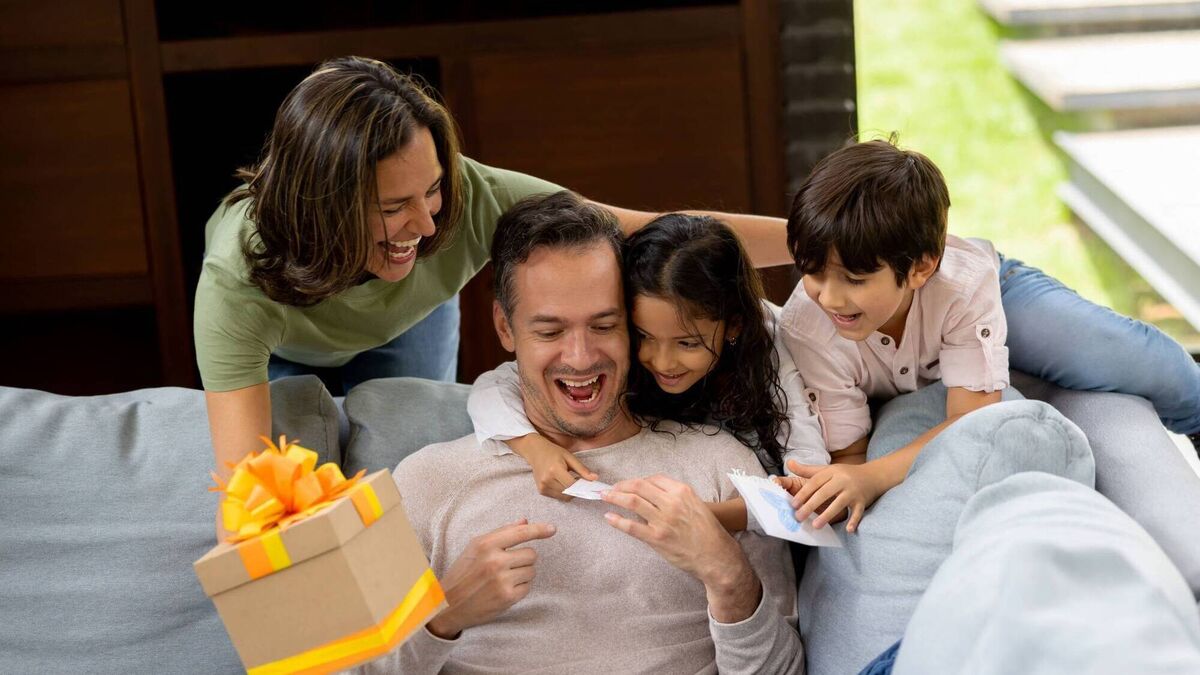
Fathers will be celebrated this Sunday, and their roles in the household have changed hugely in a few generations. iStock
It’s a parenting shift that dad-of-two Kevin Maguire began to notice more and more.
It led him to start writing The New Fatherhood newsletter about modern fatherhood, and subsequently his new book The New Fatherhood: Why Everything They Told You About Being A Dad Is Wrong And How Embracing It Will Transform Your Life.
“Fatherhood used to be simple – all you had to do was exactly what your dad did,” observes Maguire. “We’ve followed the template handed down by the dads who came before us – go out to work and bring home something, first meat, then money. Make sure your family were safe, with a roof above their heads, and be the boss of the house, handing down law and punishment.
“This is what dads have always done: protect, provide for, and preside over our families. But along the way, the once-solid foundations of fatherhood have begun to shift.”
He says there’s no single cause of the shift, and it was a “perfect storm” of factors that dented the old definition of fatherhood. “A radical rethink is required. The rules have changed, the new ones yet to be set in stone.”
He says that before writing The New Fatherhood, he researched history’s greatest thinkers and spoke to writers, academics, “and some of the smartest dads I could find” about the fundamental changes happening to fatherhood.
“We talked about our place in the lineage of dads who came before us, and the essential work to illuminate a path forward for the sons and daughters who will follow,” he says.
And after his careful research, here are some of the major shifts Maguire believes modern fathers are embracing…
Being at their baby’s birth
Childbirth was “hidden away” until the 1960s, says Maguire, who points out that until that time, fathers only met their new baby when they were invited into the delivery room after the birth.
“The one change in fatherhood that unlocked so many others was when men began to be present for the birth of their children,” he says. “The simple act of being there to witness life being created, to cut the cord, to hold them in your arms immediately, rather than being handed a baby freshly washed and wrapped in a blanket – that’s what so many of our fathers missed.”
He says being present at the birth can help enhance a father’s bond with his baby and reinforce the mantra ‘You’ve never known love like it, when you hold your baby for the first time’. He says: “It opens up new depths of feelings and levels of empathy. So yes, you’ll find yourself crying at Pixar movies more than you used to.”
Not being afraid of asking for help
Past generations of dads, and men generally, soldiered on despite inner turmoil, believing admitting they are struggling with fatherhood, or life in general, was a sign of weakness.
But Maguire says this is changing, and points to the fact research from the British Association for Counselling and Psychotherapy (BACP) has found the number of British men who’ve been to therapy has risen from 18% in 2010 to 29% in 2025.
“We are the first generation of dads to understand you either face your demons, or you watch them raise your kids,” says Maguire, although he admits men are still conditioned by society to see vulnerability as a weakness. “The data backs this up,” he says, “with almost half of men believing there is still a social stigma in seeing a therapist”.
He points out that organisations have sprouted up to help remove the shame from asking for help. “These peer support groups provide a safe space for men to open up about their struggles, a technique confirmed repeatedly by researchers to reduce the likelihood of men struggling with their mental health,” says Maguire.
Dads no longer have to be breadwinner
In past generations, dads went out to work to provide for the family while mums stayed at home to look after the children. Not any more.
Nuffield Foundation research has found about 80% of mothers with dependent children in the UK are currently in paid employment, and Maguire says: “We’ve left behind an era where men were primarily sole providers.
“Most couples now co-provide financially, with wives out-earning husbands in a quarter of UK marriages, and a third of US marriages seeing couples earning a similar salary.
“When it comes to bringing home the bacon, dad’s days of doing it on his own are cooked.”
Seeking inspiration from a cartoon dad
These days, role models can present in the most unlikely forms, and Maguire suggests a paragon of modern fatherhood is the cartoon character Bandit, dad to Bluey, the dog in the eponymous TV cartoon series.
A very hands-on, relatable dad (despite being a blue dog), Bandit is emotionally available to his kids, has relentless enthusiasm for playing with them, and is willing to learn alongside them. Maguire says: “I’ve been writing for dads for five years, and I somehow always come back to Bluey – I’ve learned more about being a better dad from watching Bandit roll around in the grass with his kids than anything TV has ever offered.
“Whenever I write about Bandit, it’s guaranteed at least one dad will email with an angry tirade, accusing him of setting unrealistic expectations for dads, annoyed he’s placing the bar for fatherhood somewhere unreachable. My reply is we should be grateful someone is raising it, even if it has to be a cartoon dad. Far from being threatened by a cartoon dog, modern dads are asking how they can bring some of that big dog energy into their own home. Today’s modern dad sees Bandit as a model to strive toward. Welcome to a brave new world of fatherhood.”
Never a better time to be a dad
The Fatherhood Institute, which researches fatherhood and advocates for father-inclusive policies, points out that dads getting involved in their children’s lives isn’t a new phenomenon – it’s just that there are a lot more of them.
“There have always been individual fathers who have fed and changed their babies and [are] very involved in their daily care,” says Jeremy Davies, deputy CEO of the Institute. “What has changed are the numbers – today we’d be hard-pressed to find a father who doesn’t regularly do these things, with around 95% now highly involved in the pregnancy, too – attending scans and of course the birth.
“Fathers aspire to be closer to their children than they perceive their fathers were to them – and indications are they’re achieving this. It’s never been a better time to be a dad. ”
The New Fatherhood, by Kevin Maguire, is published by Balance.

App?