John Dolan: As Gen Z find God, here’s a book that even made me a believer
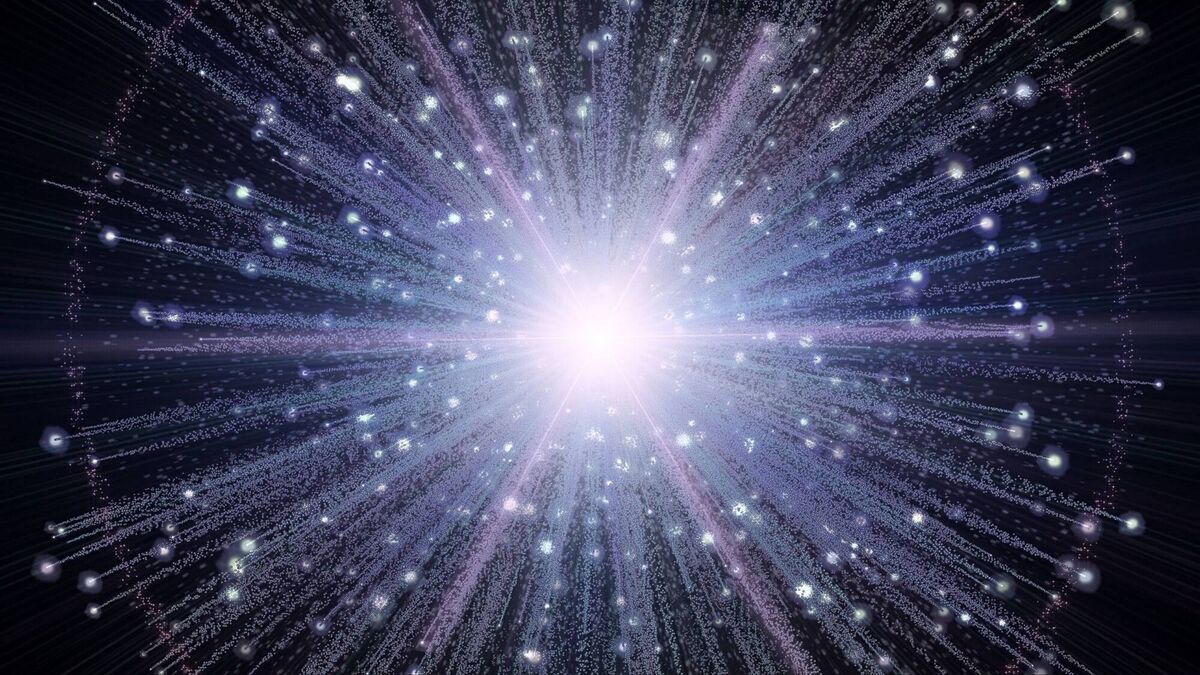
In the book, the case for a higher being really is not thwarted - but rather is backed - by the science. It argues that the perfectly precise environment created by the Big Bang defies mathematical probability.
Religion and the church are dead; God and priests are yesterday’s men. The nation is now populated, we’re told, by whip-smart, modern, liberal, and secular people who eschew all the trappings of faith.
After all, didn’t Cork’s own Sister Michael assure the that God doesn’t hate them - “he’d be ambivalent towards you at best... if he even exists.”?
Then there were all those referenda on abortion and gay marriage where a new Ireland emerged.
Or did it?
Yes, Irish society has changed hugely since Ted Crilly’s day - and much of that for the better - but people have not turned their backs on God in large numbers; far from it. And the younger generation are leading the charge.
Recent surveys have shown that Gen Z - the cohort of people now aged around 18-24 - are keeping the faith perhaps even more so than young people of previous decades.
More than half - 54% - describe themselves as religious/spiritual, and 62% report being “very” or “fairly” spiritual.
The same poll last year also showed that 61% of all Irish people describe themselves as religious and/or spiritual, with half reporting that they pray.
Fancy that. Half of adults in Ireland pray - hard to believe, isn’t it?
However, this modern sense that Ireland is a secular country, freed from the shackles of all belief and faith, is remarkably askew.
Any political party with 61% of the vote, and boasting 54% of support among Gen Z, would walk a general election. Those who label believers as ‘unfashionable’ are, in fact, the unfashionable ones, it appears.
So, what’s going on? Why are Irish people - generally highly educated and liberal in outlook - not losing their religion? A non-believer might even ask: ‘Why aren’t they following the science?’
But that may not be the ‘gotcha’ they think it is.
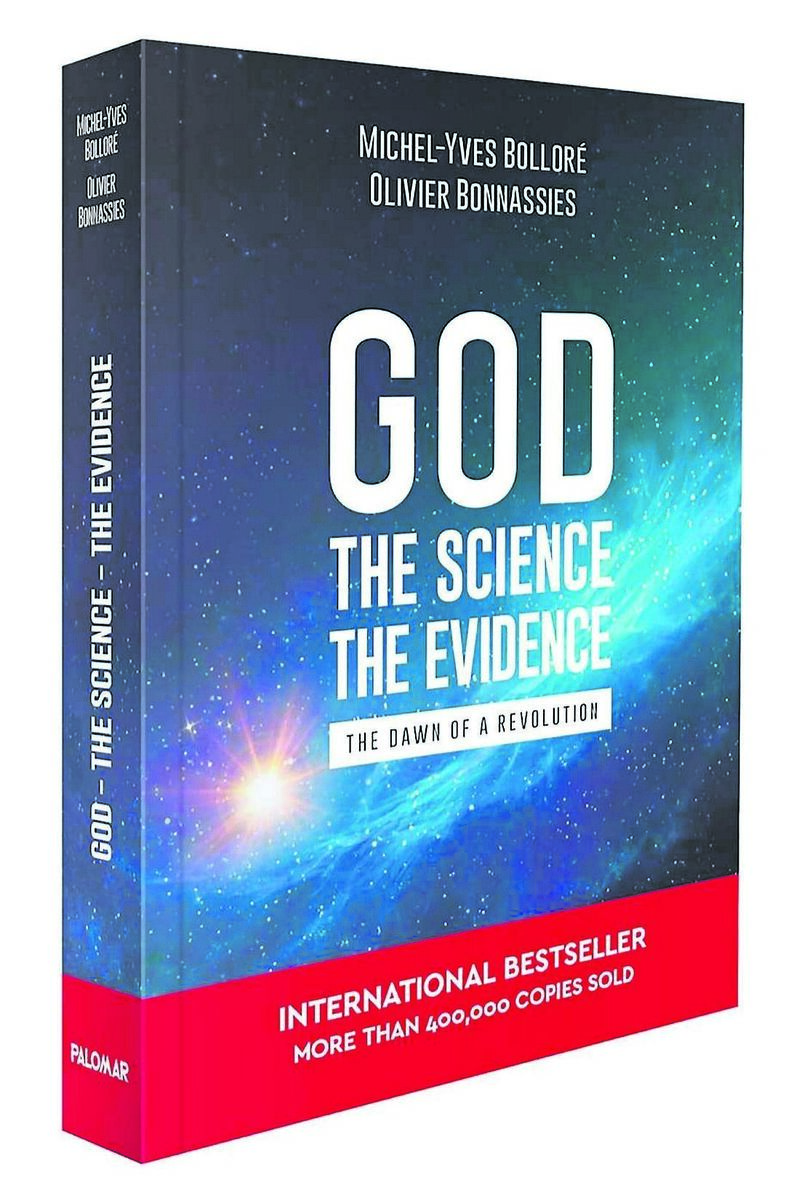
I can’t speak for Gen Z here - but I have just finished reading a ground-breaking book that analyses science and a potential belief in a greater God - and comes to the conclusion that God really does exist.
Regular readers will know I’m not one given to hyperbole, but after reading it, I too have shifted my view on the ‘God’ question. Beforehand, I was a firm non-believer. Now, I’m not so sure.
The case for a higher being really is not thwarted - but rather is backed - by the science.
I came across a review of when I saw it make the cut for a Book of the Year a few months ago. In the four years since it was published in France, it has become a best-seller, and now the tome - written by Michel-Yves Bolloré and Olivier Bonnassies - has been translated into English.
Its revelatory stance is that science is actually proving the existence of a god, rather than crushing it, and as much as scientists try to disprove this, they are failing... and many are even becoming more convinced of the God thesis themselves.
For instance, physicists are almost universally agreed now that the Big Bang was a starting point to the universe, instead of the long-held belief that the universe has always and will always be here.
For there to be a starting point from nothing, there must have been a creator, the authors posit. You can’t make something out of nothing; only God can.
Similarly, the perfectly precise environment created by the Big Bang defies mathematical probability, the book argues.
That split second led to the creation of many vital elements... and if there had been the slightest shift in the amount of hydrogen, or the slightest increase or decrease in carbon, for instance, the planets, stars and suns would never have had a chance of seeing light of day. And nor would we.
A coincidence? A fluke? Or made - created - by design?
Then there is the way life managed to form on our planet - another collection of key events that somehow occurred at the precise time required to lead to life, then us. All stretching the laws of probability well beyond breaking point.
Even non-scientists like me can ponder this remarkable sequence of events and be led to the conclusion that God must have had a hand in them.
Rarely has a book had an effect on me the way that God, The Science, The Evidence did. It hasn’t made me start to pray, or given me an urge to go to church; but having read it with an open mind, it does make it easy to believe in a higher authority. Much easier than believing the alternative.
Indeed, the authors, both engineers, point out that a study of Nobel prize winners of the 20th century showed that many more winners of the science categories identified with a religion than literature winners, for example, who made up a large proportion of atheists.
Even the great scientists who were not essentially religious, like Albert Einstein and Stephen Hawking, acknowledged the science could easily point to a god-like creator.
The book does have its faults. It is laid out in school text book form, which some may find off-putting, and although generally well written, some parts are very dense.
There is also a section arguing that Judaism is the one true faith on Earth which, although well-argued, struck me as a bit of a stretch (the authors are both Christians).
But if you’re on the fence about the existence of God, I would urge you to read this and see if it challenges your views the way it challenged mine.
It might also give sceptics an insight into why Gen Z are a lot more religious and spiritual in outlook than many older people would give them credit for.
Mad, eh, Ted?







 App?
App?


