I sat in John B Keane’s pub and sang heart-breaking Sive ditty
Yet at the West Waterford Drama Festival last Friday night, Imelda McDonagh spoke of Keane’s writing in the 1950s when he dealt with ‘made’ matches where “the old man has the money for the child”.
Nobody knows exactly how many women and children are brought illegally each year into this country- hundreds, maybe thousands. It’s a sordid, money-making, international and despicable ‘industry’.
Earlier this year, Iraq revoked legislation enacted 70 years ago which banned all marriages between people under 18 years of age. Boys can marry at 15, girls at 13 - in certain ‘exceptional circumstances’, marriages of girls as young as nine are allowed.
Iran - a country very much in the news at present - recorded more than 100,000 marriages of couples under 18 in 2023. In nearly all these cases, the marriages are arranged, fixed, and are mostly financial deals.
It sounds horrific and inexplicable in today’s world, yet it’s happening every week, day in, day out.
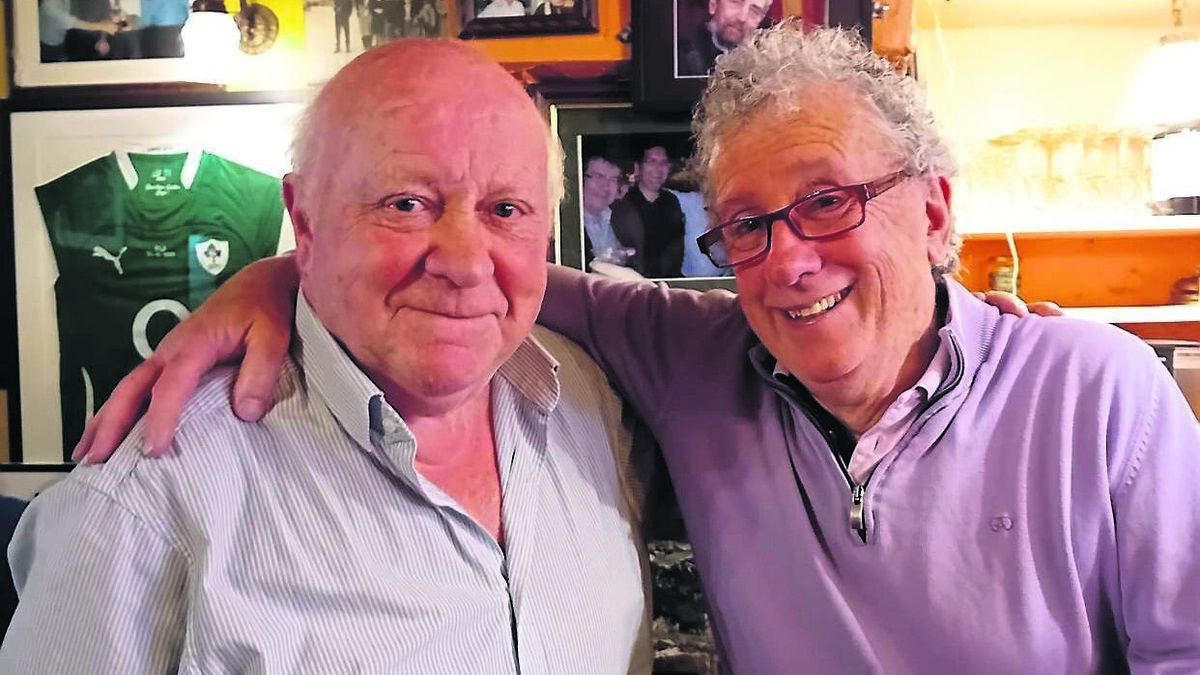
Billy himself is a poet, writer, and newspaper columnist. He explained that the family home of the Keanes - over the pub - is now an ‘empty nest’, all the family are scattered.
Billy is still a part-time publican but very much a full-time custodian, guardian and devotee of his father’s literary and cultural legacy.
In two years’ time Listowel, Kerry, and indeed Ireland will celebrate the centenary of the birth of John B, who died in 2002. I’m not sure if the plans for a huge celebration are afoot, but if not they will be shortly.
We had a mighty session in John B’s with stories, song and poetry. Billy regaled us with the story of the genius that was his father.
I think ’twas back in the 1970s that I was last in the William Street licensed premises - during a Listowel Race week. Back then, John B was behind the counter dispensing pints, wit, and wisdom to a packed house. It was more relaxed last Thursday as we had the place to ourselves.
Billy said he never saw so much ‘tay’ drank by Cork people!
John B was bitterly disappointed when his new play Sive was rejected by the Abbey Theatre in early 1959. Billy told us he was just an infant when his father got the inspiration to write it.
He got the discount he wanted on a ring - the cheapest in the shop.
The next time I met him he was with the girl. She was 17, he was 65, but he was older looking than his years. Of course, the marriage was a disaster.
That incident gave John B the inspiration and foundation to write Sive. Billy told us how his father had worked feverishly and like a possessed man in scripting the play.
They say ‘what comes around goes around’. So it was with Sive. The Listowel Drama Group, under the leadership of Bryan McMahon - another giant of a playwright - took on the play.
On the amateur drama circuit, the play literally ‘won all before it’, culminating in capturing the All-Ireland crown in Athlone.
After that came an invitation to stage the play in Dublin - in the Abbey Theatre!
The play tells the story of young Sive, born out of wedlock and reared by her uncle Mike and his wife Mena.
A decrepit ‘pisan’ of a farmer, Sean Dota saw the girl on her way to school. A combination of lust, longing for a companion and the urge of the flesh saw matchmaker Thomasheen Sean Rua being engaged to ‘do the deal’.
In most cases, the matchmakers were shrewd and cawny and introduced couples who they deemed ‘suitable’ - yes, dowries were often sought and given, but the consent of the couple needed to be forthcoming.
But there were always ‘exceptions to the rule’ and unscrupulous matchmakers were to be found whose main interest was lining their own pockets - Keane’s character Thomasheen Sean Rua was one of these.
Lady Gregory wrote a play one time called Spreading The News which deals with gossip, misunderstanding - a ‘dúirt bean liom go ndúirt bean léi’ plot that begins at a fair.
Long, long before TV, phones, or any kind of social media, the spoken word was the way people got the local ‘news’. In olden times, the travelling bards and gaelic poets played a vital role.
In Keane’s youth in Kerry, the travelling people - many were tin-smiths or ‘tinkers’ - carried on that tradition of versifying. Depending on their humour or the generosity- or otherwise, - of households, the tinkers might praise or slight you.
So John B Keane ‘invented’ Pats Bocock and his bodhran-playing son Carthalawn. Initially, the wandering minstrels complimented the Galvins with, ‘Oh Mike Glavin you’re the man / You were always in the van/With a dacent house to old man and gorsoon / May white snuff be at your wake / baker’s bread and curran-y cake/ And plinty on your table late and soon.’
The night before the wedding. she flees from her uncle’s house and is found drowned in a bog-hole.
The tinkers arrive at the wake: ‘Oh come all good men and true / A sad tale I’ll tell to you / All of a maiden fair who died this day / Oh they murdered lovely Sive / She would not be a bride / And laid her dead to bury in the clay’.
As I sang that song in John B’Keane’s pub last week, I felt the emotion of the play and the powerful message that it expresses.
Oh, we really enjoyed our morning with Billy in Listowel. We headed off for Tralee and Killarney with the image of Pats Bocock hammering his blackthorn stick three times on the floor as he commands his son to ‘Give us your best, your almighty best’.
I’ve seen Sive on stage maybe 20 or 30 times over the years and I never tire of it. It’s a timeless and profound piece of theatre.
The Drama Festival adjudicator Imelda McDonagh praised the genius of John B Keane. Down the decades his plays have entertained hundreds of thousands, built halls, renovated churches and raised funds for a myriad of good causes.
Thank-you, John Brendan Keane, we all owe you a debt; bravo and well done to Billy for keeping the flame burning brightly.






 App?
App?


