John Dolan: From Ring to Jagger to Geldof...Savoy is hallowed turf in Cork
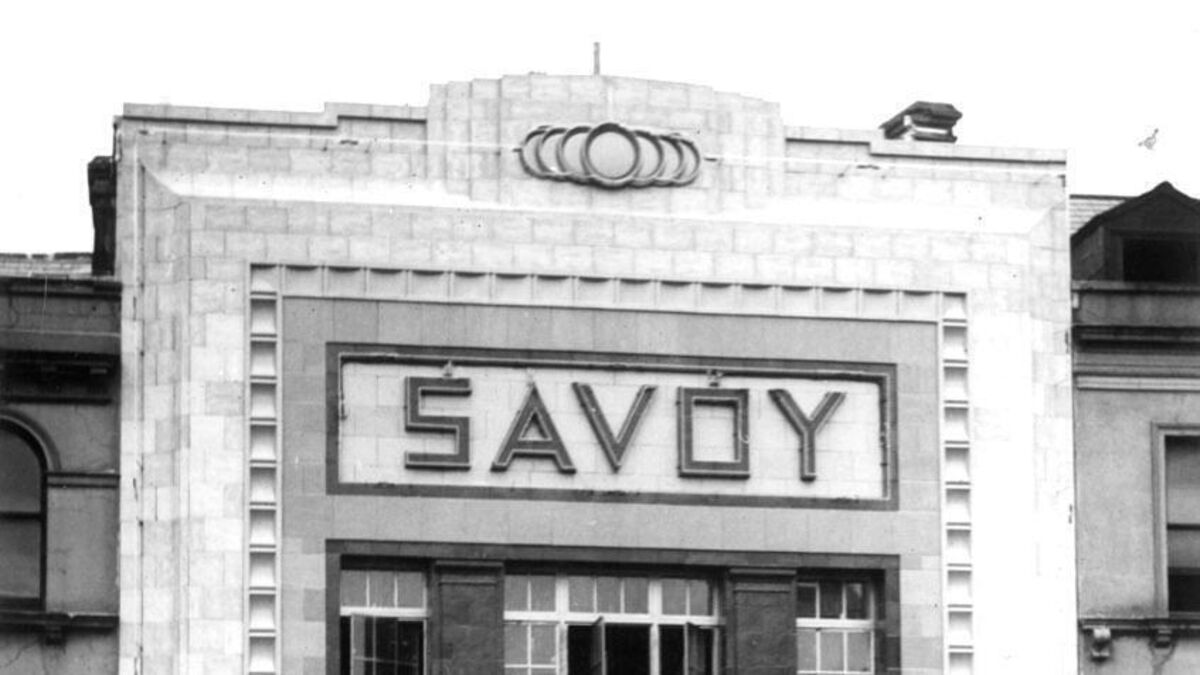
For almost a century, the Savoy has been the last word in splendour as a cultural hub for the people of Cork, says JOHN DOLAN.
But to an older generation of Corkonians, the welcome return of culture to the venerable Patrick Street venue will strike another chord altogether. To them, it will be a case of ‘tread softly because you tread on my dreams’.
For almost a century, the Savoy has been the last word in splendour as a cultural hub for the people of Cork - from its origins as a cinema in 1932, to its iterations as a music venue, attracting star names from opera greats, to the Rolling Stones, to rap. It has long been a place where Corkonians go out to play.
Now, after being closed for a decade, the Savoy is reopening on St Valentine’s Day, and the ghosts of the past, those who appeared on screen and who performed on stage, and those who looked on in wonder from ‘The Gods’, will be evoked...
******
The acts lined up for the Savoy’s (re)opening night next Saturday are an eclectic bunch - and include local brass collective BoolaBoom, Spanish guitar duo Zurito and soul band The Leon Stax Equation. They will have some tough boots to fill.
The earliest musical performers at the esteemed venue were opera greats of their day.
In 1938, when he decided to retire. Athlone tenor John McCormack’s farewell tour included a concert at the Savoy, with tickets selling for three shillings apiece.
In the 1940s and ’50s, tenors Beniamino Gigli and Luigi Infantino also graced the opulent venue.
“And oh, how both vocalists filled the theatre, right up to the Gods, with their respective renditions,” recalled Cork man Joe Murphy, who managed to snaffle a prized ticket for Gigli outside the Savoy from a Christian Brother who had suddenly been transferred to Wicklow.
That concert was in 1955, and later that year, when the Opera House burned down, the felt on the roof of the Savoy got dangerously near to melting, and firemen had to hose it down to save it.
When a documentary about Christy Ring was made in 1964, by the distinguished Louis Marcus, the Savoy was chosen for its premiere.
Perhaps the most famous act to play the venue was the Rolling Stones, in 1965. Among the crowd that night was Vincent O’Farrell, who recalled: “That gig was an eye-opener to us all during those Church-controlled years in which we were brought up.”
Billy Fury and Roy Orbison headlined there in the 1960s, while in the decade or so after, the Bee Gees, Bay City Rollers, Fleetwood Mac, Gilbert O’Sullivan, and Suzi Quatro graced the stage. Rory Gallagher played there with his band The Taste.
In the 1980s, Shakin’ Stevens, Human League, and The Smiths attracted large crowds, and latterly, Damon Albarn, Run DMC, Public Enemy, De La Soul, and Wu Tang Clan have played the venue, as well as Charli XCX - of Brat fame - as a support act in 2012.
When it opened in 1932, crowds gathered outside two hours beforehand. “By the time the doors were opened there was such a gathering on the street that it impeded traffic and numerous Civic Guards had a busy time regulating the numbers seeking admission,” reported the Echo.
Derek Cunningham, who lived in Cork in the 1930s, said of the building: “It was very fine and had an excellent restaurant. The first film I saw there as a small boy was King Kong, which gave me nightmares.”
The Savoy was one of a host of picture houses in Cork city that included The Assembly Rooms, The Capitol, The Ritz, The Pavilion, The Lee, The Savoy, The Palace, and The Coliseum. Just outside the city were The Lido in Blackpool and The Cameo on Military Hill.
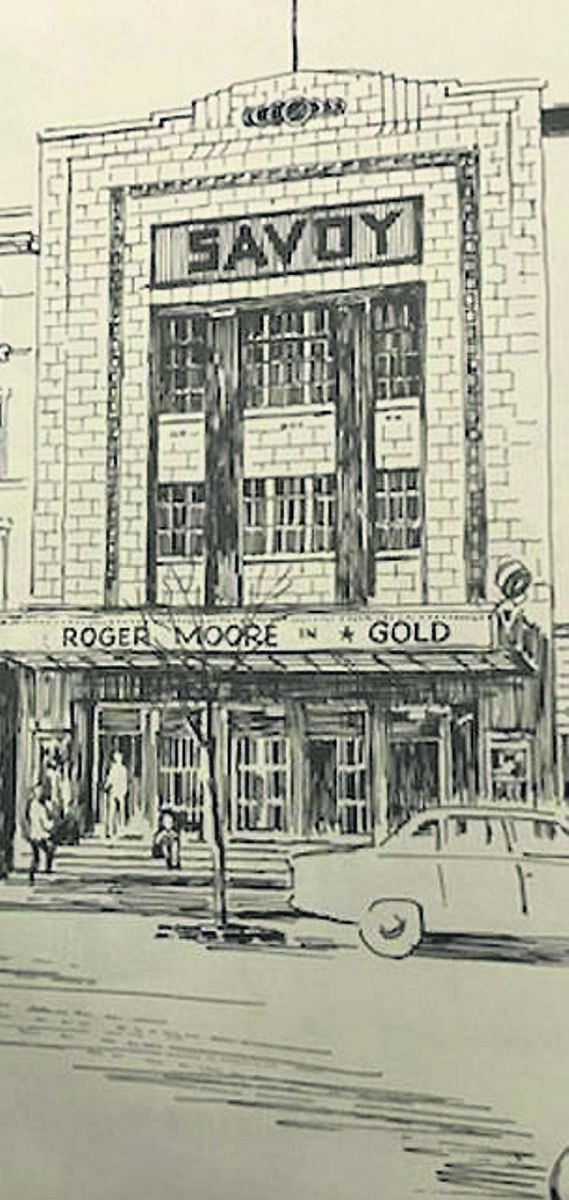
However, the Savoy had a cache and a grandeur that no other cinema could match. Its decor was said to epitomise the “realms of romance, colour and sunshine of northern Italy”. Feet sank into the depths of the posh carpets, while seats had ashtrays for the many smokers!
It had exclusive rights to the first showings of the big movies of the day, and charged a few pence more for entry. There were said to be 100 steps up to the gods, and seating for up to 2,000 people overall.
The view from the top was compared to the top tier of Croke Park, or as Jimmy Barrett remembered it, “it was like looking into the the Grand Canyon. You certainly wouldn’t want to have a fear of heights!”
It had its very own organ, and organist - Fred Bridgeman - who would rise up from the orchestra pit before the film and at the interval, and play a variety of tunes while the audience sang along.
Imagine 2,000 voices chorusing The Banks Of My Own Lovely Lee. As one patron from those days recently observed: “In hindsight, I suppose, it could really be regarded as the world’s first karaoke.”
Gladys started her working life at the Savoy as a 15-year-old usherette and worked her way up to be its head cashier. She also remembered a fellow cashier called Evelyn Waller, who was swept off her feet one night at work by a charming gentleman called Robert Geldof.
They married, and their son, Bob, became something of a big noise in the music scene in Ireland and the UK.
But the real memories of the Savoy in its cinema heyday belong to the people of Cork.
For them, in an era of austerity, it was a big treat - plush, fancy, warm, and welcoming. Dates - and the odd ‘fifty’! - took place outside it, under a canopy that kept out the rain.
Couples met, fell in love, married, and raised children while being entertained in the grand surroundings.
In 1956, the Cork Film Festival began, centred on the Savoy, adding an extra sheen of fame to the venue, when the likes of Peter Finch, Sylvia Sims, and John Gregson were feted by cast crowds on Pana.
There were also pioneer rallies for schools held there, and, famously, in 1946, an Irish-American priest called Fr Edward Flanagan gave a rousing speech to a packed Savoy after a tour of the country, where he denounced the horrific treatment of children in some of Ireland’s industrial schools.
“You are the people who permit your children and the children of your communities to go to these institutions,” he thundered. “You can do something about it by keeping your children away from them.”
It was a speech that was decades ahead of its time, and was met with prolonged applause from the 2,250 people in the Patrick Street venue.
Sadly, it fell on deaf ears in the seats of power.
Fr Flanagan had insisted “there are no ‘bad’ boys”, but a TD in the Dáil ridiculed his stance: “Fr Flanagan is a bad boy,” he said. Talk about being on the wrong side of history.




 App?
App?


