John Arnold: One man’s story of massacre that ripped apart his family
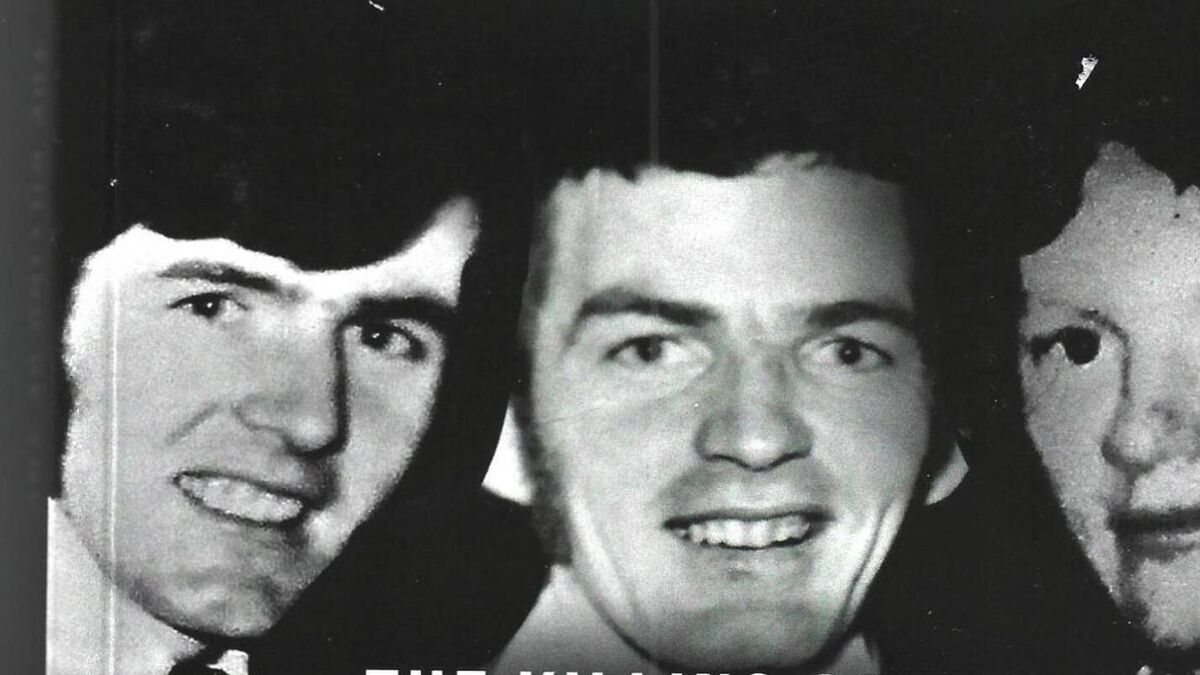
An image of the brothers from the cover of The Killing Of The Reavey Brothers book.
Apparently, the afternoon show, sponsored by Martin Walton’s Music and Record shop, began in 1951. Well, that was before my time, but during the late 1960s and all through the 1970s it was ‘compulsory’ listening after the dinner on a Saturday.
I just loved listening to Joe Lynch, Delia Murphy, Charlie McGee, Liam Devally, and Martin Dempsey. As Leo Maguire repeated so often: “If you feel like singing, do sing an Irish song.”
Now, I never classed myself as a singer, but I just loved the old ballads and history-laden songs. They took me back in dreams to olden times in Ireland and all over the country, to places that, as a young boy, I had never been.
One of my favourite songs was Bridie Gallagher’s version of . Many others have sung it and recorded it, but the girl from Creeslough in Donegal was the best. The song was so upbeat with its rollicking chorus and Bridie sang it with gusto.
To me, of course, Armagh could have been miles away - after all, I was 15 before I even went ‘up’ to Dublin. Ulster and Armagh had connotations of a mythical place - where everyone grew apples!
Every county in Ireland has a kind of ‘pet name’ and just as Cork is ‘The Rebel County’ and Wexford ‘The Model County’, Armagh is ‘The Orchard County’.
I think the first Armagh person I ever met was Jarlath Burns. Now in his third year as GAA President, we first crossed paths in Croke Park on May 26, 2009.
Christy Cooney of Youghal had been elected to the GAA’s top position that year. He asked me to serve on the Association’s National Presentations and Awards Committee and Jarlath was the Committee Chairman.
The GAA was celebrating its 125th ‘birthday’ that year so we were tasked with organising different aspects of the 125 Celebrations.
Jarlath himself went for the GAA presidency in 2020 but was defeated. Undaunted and undimmed, he threw his hat in the ring again in 2023.
I was thrilled to be in Croke Park at the Congress where he was elected the 41st GAA President. I sang Bridie Gallagher’s song that night with a crowd of Jarlath’s Silverbridge Club members. I was thrilled to get an invitation to the Silverbridge Club Hall later to present medals to club winning teams. It was my fist visit to Armagh.
On the afternoon of the Silverbridge function, I got a whistle-stop tour of south Armagh. Forkhill, Cullyhanna, Crossmaglen, Whitecross, Newtown, Mullaghbawn, and Silverbridge itself were on my epic journey that day.
Only once since have I been back to the County ‘where nature has lavished it’s bounty’, but I can safely say now, in this week in February of 2026, that I know much more about south Armagh and its people.
Just over half a century ago, ‘the Troubles’ in the Six Ulster counties under British rule were raging. I suppose, looking back now all these years, one might say ’twas only a matter of time before the ‘system’ cracked and exploded.
Years of Unionist domination and Nationalist humiliation combined with woeful systematic gerrymandering meant that the Six Counties was a divided society. Call it Orange and Green, Protestant and Catholic, Unionist and Nationalist - no matter what one called it, society there was dysfunctional.
Of course, it wasn’t all clearly defined mayhem - no, in many places, south Armagh included, people of different traditions and different religions lived side by side and were good neighbours to each other.
After 1966, then, and especially after 1969 and the Civil Right movement, things changed, utterly changed.
Violence, murder, collusion, bombings, burning, and sectarian strife unfortunatel,y became the norm in ‘the North’, and down South too.
Just this week I read a remarkable, disturbing and chilling book. Next Tuesday night, I hope to welcome the author from ‘the orchard of Erin’s green land’ in our own hall here in Bartlemy to tell his story.
What an amazingly sad and poignant account he has written of unspeakable tragedy.
For the Reavey family of Greyhilla, near Whitecross, St Killian’s GAA Club was their field of dreams. Jimmy Reavey and his wife Sadie Loughran had 12 children and growing up going to Gaelic football matches was their chief enjoyment of a Sunday.
Where the Reaveys lived, near Whitecross, was a mixed community with Catholics and Protestants living side by side. They attended different churches, had different political allegiances, but for the most part got on well.
The discrimination in terms of housing, health care and education, or lack of same, for Catholics/nationalists, was far more pronounced in larger towns like Derry and Belfast.
As unrest and sectarian violence grew in the early 1970s, several attempts were made to quell the violence. Different IRA and UVF ceasefires came and went.
For the peace-loving Reavey family, their world, their existence -everything - was shattered on Sunday, January 4, 1976. By then, Kathleen, the eldest girl, was working in London. The other three girls, along with their eight brothers and Jimmy and Sadie, were all living at home.
That Sunday, two days before Little Christmas, the parents and the three girls and five of the lads had gone visiting their Aunt Rose Ellen in Camlough - about five miles away. Just after 6pm, armed gunmen walked in the front door of the Reavey home.
A hail of bullets from a machine-gun killed 24-year-old John Martin. Brian - two years younger - tried to run but was shot through the heart. Anthony, 17, dived in under a bed which one of the gunmen riddled with bullets - 17 in total struck Anthony but he somehow survived.
He heard a car revving as the killers made their escape. Anthony, bleeding profusely, crawled along the roadside grass margin to his neighbours’ house, the O’Hanlons.
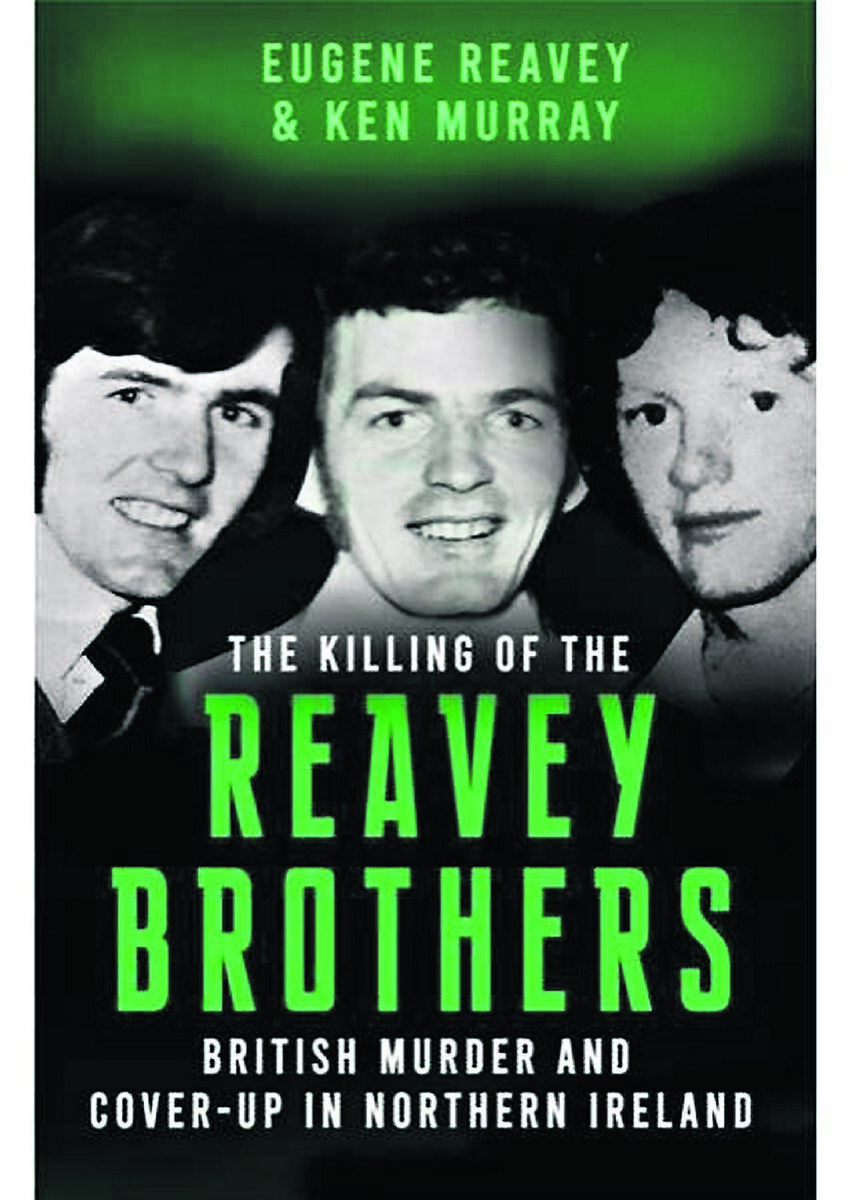
Within three weeks, Anthony was also dead - and buried with his two brothers in Ballymoyler cemetery.
“As we knelt down to say our prayers last night and prayed for my sons who died and the son who was injured, we prayed also for the men who had shot them because they will have more to suffer as the years go on. I hope there will be no retaliation either on my Protestant neighbours or indeed Protestants anywhere.”
The profound words of Jimmy Reavey, spoken on January 5.
Sadly, his words were not heeded as that very day, ten Protestant workers were killed in the Kingsmill massacre.
Eugene Reavey, one of the eight sons of Jimmy and Sadie, has written an amazing book, , in which he tells their story. He also outlines his and the entire Reavey family’s struggle and campaign - not for revenge, simply for the truth and for justice.
Alleged cover-ups, collusion, intimidation, and lies, and institutional corruption feature largely in the Reavey story.
Of Eugene Reavey, my friend Jarlath Burns wrote: “Eugene’s courage in confronting silence and lies is a testament to love, justice, and the undying spirit of south Armagh.”
I look forward to meeting this inspirational man and talking about his brave “boys from the County Armagh”.




 App?
App?


