John Arnold: A Cork dynasty ends, as last Devonshire ‘duke’ laid to rest
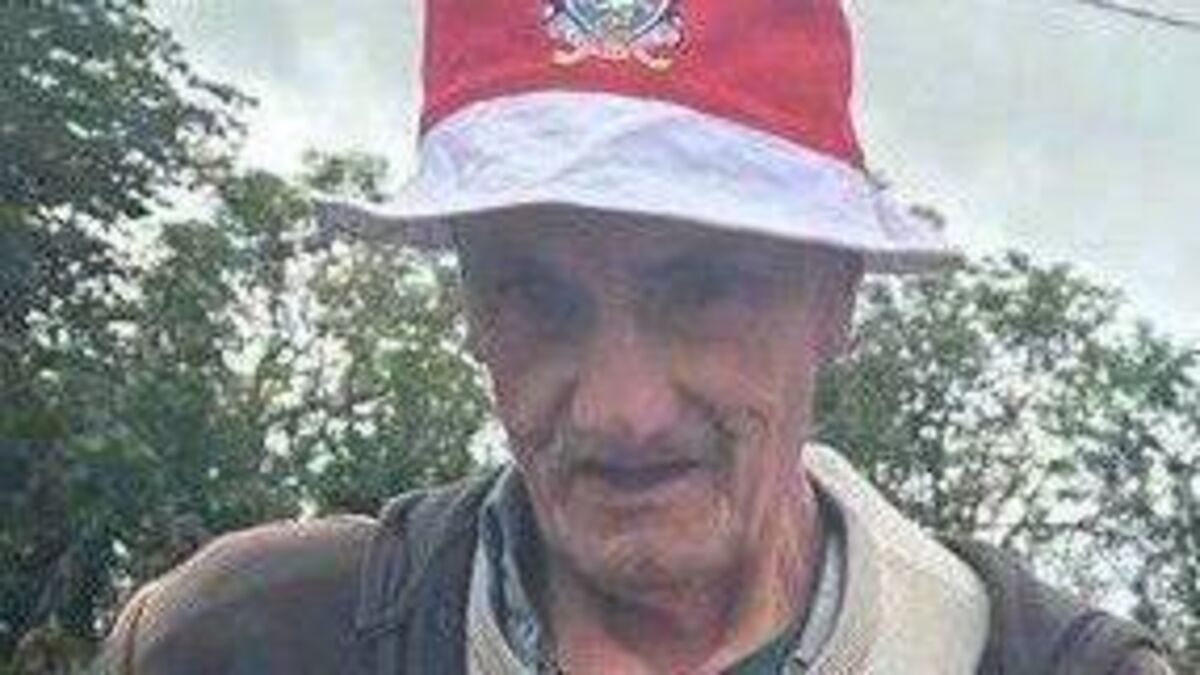
Jeremiah Devonshire, known as ‘The Duke’, who died last month. He had a noble bearing and language to match, says John Arnold
The picturesque little village came to fame in the mid-1700s after the English government enacted the Marriage Act, which forbade persons under 21 years of age to marry without parental consent.
Scotland, however, did not recognise or enforce this legislation. In their own peculiar way, and keeping with long-standing Scottish custom, any couple over the age of 15 who were not closely related were permitted to wed without yea or nay from anyone.
Gretna Green was just north of the English/Scottish border so many ‘runaway’ couples went up there to tie the knot.
In Gretna, the local blacksmith struck his anvil in the presence of the couple as if ‘forging two metals’ together. It wasn’t just younger couples who availed of the ‘anvil priest’ - couples who were marrying against the wishes of parents or without their blessing often went there.
On that April day, Harriet Devonsher married one John Arnold Wallinger. I’ve still no idea if the aforementioned John Arnold Wallinger was any of my seed, breed or generation, but Harriet had strong links with my parish.
That local connection goes back to around 1650 and sadly ended last month with the death of Jeremiah -known as ‘The Duke’ Devonshire.
Harriet Devonsher was born in 1796 so was of ‘full age’ when herself and John Arnold threw their legs over the anvil - it must have been the parents who didn’t approve of the union!
Everything changed irrevocably after Oliver Cromwell came to Ireland in 1649. Huge amounts of land held by the ‘native Irish’ was confiscated and granted as rewards to Cromwellian soldiers and planters. One such man was Michael Weber, and in 1662 his daughter Sarah married one Thomas Devonsher - his family had extensive property in and around Cork city -Devonshire Street still bears the family name to this day.
After his wife Sarah died in 1669, Thomas married twice more. His third wife was Sarah Morris and her son Jonas succeeded in the Kilshannig estate. In turn, it passed down to Abraham who married a Mary Moore.
It was this couple who engaged the famous David Ducart, around 1764, to build the present Kilshannig House, probably on the site of an older, smaller dwelling.
Abraham was a successful banker and a Quaker. The magnificent house features stunning ceiling plaster-work by the Swiss Lafranchini brothers.
After Abraham’s death in 1783, the house and lands passed to his grand-nephew John Newenham of Maryborough in Cork city. He assumed the Devonsher name - John Newenham Devonsher.
John married well! At Glanmire in 1792 he wed New York-born Cornelia Schuyler - daughter of Cortlandt Schuyler and relative of future USA Presidents Theodore Roosevelt, George Bush and George W. Bush!
One of John and Cornelia’s children was Harriet who headed off to Gretna Green to marry my ‘namesake’. Her brother Abraham John Newenham Devonsher was next in Kilshannig.
After the end of the Napoleonic Wars around 1815 there was a severe ‘economic crash’ which naturally affected the fortunes of merchant bankers. Abraham was forced to sell Kilshannig in the 1830s and it was purchased by the Burke Roche family, later Lords Fermoy - subsequently, KIlshannig was owned by the Myles and Rose families and since 1962 has been the home of the Merry family.
During their years in Kilshannig, the Devonshers had built another residence, Mountain Lodge in Bartlemy - they used it as a hunting lodge. During ‘the season’ family members and friends would move here to hunt and shoot grouse and pheasant in the uplands of Bartlemy.
After Kilshannig was sold, Abraham J. N. Devonsher moved lock, stock, and barrel to Mountain Lodge. He was still the owner of over 1,000 acres of land. With his wife Louise Cooke he had three daughters but the couple separated in 1836.
Abraham then had Martha Davis - ‘a Welsh woman’ - as his partner -after Louise died in 1871, Abraham wed Martha in a private ceremony in Mountain Lodge.
Amongst the family of Abraham and Martha was a son, John Davis Devonsher. He married Frances Burton Norman of Ballybrowney, in Rathcormac Church in 1876.
In 1889, the Mountain Lodge holding was put up for sale, bought by RIC officer Robert Smeltzer, from Tipperary, and his wife Caroline Sophia Armit. John, Frances and family moved to a small farm in the townland of Rathgobane - literally a mile and a half up ‘Devonsher’s Hill’ on the road to Leamlara. Here they reared five children John, George, Charles, Florence and Frank - a little girl, Mary, died in 1890.
From Quaker bankers to small farmers, the Devonshers had certainly seen ups and downs in their family, but life went on. In 1919, George married Mary Crowley from Lisgoold. He became a skilful and much in demand stone mason -gifted hands were a feature of the family down through the years.
The family sold their farm to the Forestry Department and the land was planted. They then moved to a house on the Knockeen/ Coolequane Road.
Last month, Jeremiah Devonshire, son of Frances and grandson of George the mason, died. Truly, the end of an era as the last of the Devonshers in this district has gone.
Known as ‘the Duke’, Jerry was a talented and skilled worker. He was a master at woodcarving and building, and also very witty - he was a true character in the ‘mould’ of generations gone before him.
Many ‘big house’ landlord families hadn’t a great reputation when it came to dealing with tenants and estate workers. Not so the Devonshers, or Devonshires. They had a great relationship with locals.
During the Penal Laws, when the Catholic Bishop of Cloyne, John O’Brien, was living in semi-hiding in a little house not far from the Kilshannig estate, the Devonshers assisted him in every possible way.
Down the years, successive generations of the family who lived around here were good neighbours. Pragmatic people who knew of their storied past with no sense of resentment or bitterness.
Jerry was a very tall individual with a noble bearing and language to match. His great-grandparents were married in the Protestant Church in Rathcormac in 1876, and now, a century and a half later, Jerry lies in the shadow of that same church.





 App?
App?


