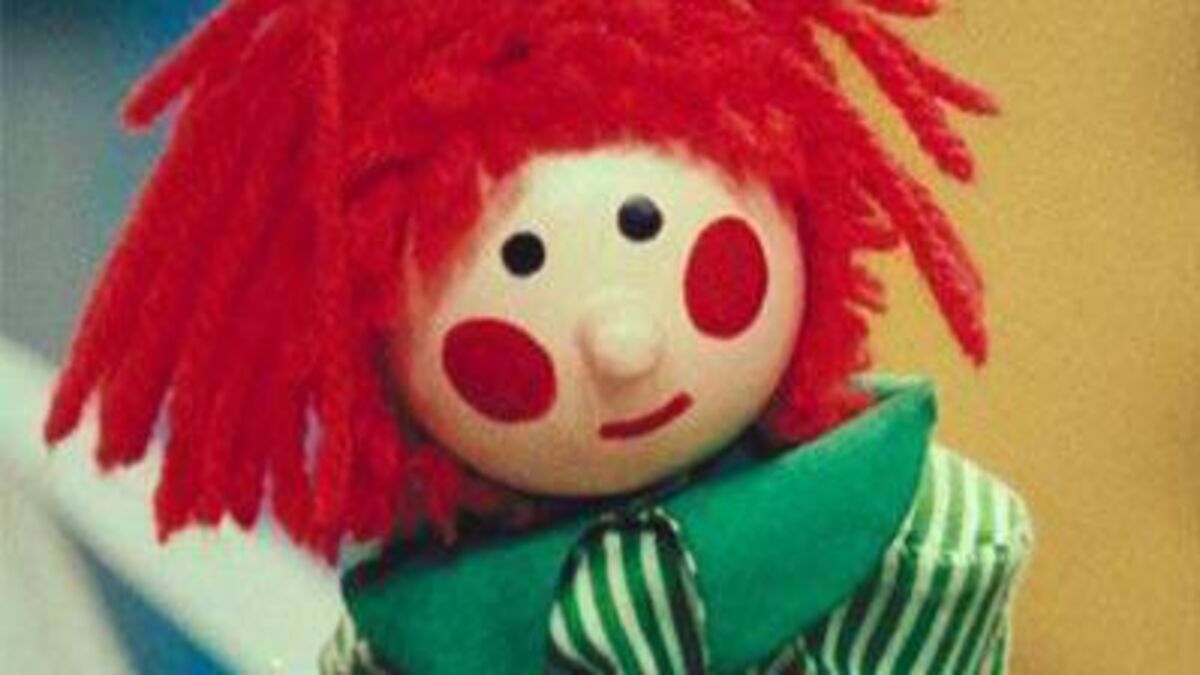
'I still remember the feeling of delight when we got a glimpse inside Bosco’s box'
As with most scientific achievements, the development of television happened incrementally. Scientists had been tinkering for decades, but the credit for the first television transmission goes to Scottish inventor John Logie Baird.
He managed to transmit an image of a ventriloquist’s dummy ‘Stooky Bill’ across the room, and in doing so changed the way humans communicated forever.
This centenary milestone made me reflect on the significance of television in my life.
It’s an understatement to say I like television. I have been watching it happily for more than 40 years, and became so intrigued by it, I decided to make a career out of it.
It is important to me both as a consumer and a creator. I have worked as a television producer and presenter for more than 25 years - yikes.
Even though I’ve produced a lot of science television and documentaries over the years, and claim to understand how recording, editing and transmission work, I’m still slightly amazed by it all.
You can film an image anywhere - a windswept mountainside in Kerry - bring it to an editor, shape it into a programme, and eventually transmit it through the air to be picked up by an aerial, possibly back on that same mountainside.
Despite the fact that we all have cameras on our phones and live in a time of constant ‘content creation’, television still is a little bit magic to me.
Perhaps I can trace that ‘magic’ feeling back to my earliest exposure to television. To dear old Bosco, his bijou box, and his friendly human sidekicks.
My mother has a cassette recording of me aged two asking when Bosco is going to be on. was clearly the highlight of my day as I repeated the question multiple times during the short recording. My ever-patient mother repeatedly told me it would be on at half-two - but I hadn’t mastered the clock yet.
In the mid-1980s, somewhere as colourful as Bosco’s studio was a bright splash in the day. I can still remember the feeling of delight when we got a glimpse inside Bosco’s box to see his minute internal world. Or the joy of ‘going through the magic door’ and watching glass bottles whirl around a production line in a factory, or spy zookeepers cleaning out the pens of elephants in the Dublin Zoo.
This was a distant time before 24-hour access to and . When it was over, the TV would be turned off. Sin é. Go back outside and play. Imagine no ‘the next episode will play in 10 secs’ to lure you to over-consume.
I suspect now this idea of going ‘behind the scenes’ and witnessing the inner workings of unusual places might have whetted my appetite for a life in television. But who knows? I was only a toddler; my long-term career plans and prospects were not fully developed.
Television was important to me growing up. I was an only child and suspect I spent more than my fair share glued to the box. Or as much as one could when reared in two- channel land. RTÉ 1 and Network 2 as it was then.
Can you imagine the incomprehension when I explain this to my own children? Children’s programming was available for only a short window - not the always-on tap of entertainment we have now.
, , , Pinky And The Brain. These are the programmes that come to mind when I think about the telly viewing of my youth.
My mother thought was too adult for me, but my other friends were hooked. and were staples. too.
I have a very strong memory of watching Eurovision the year Johnny Logan won for the second time. My mother was watching standing up while catching up on her ironing. I was jumping on the couch eating a Cadbury’s Caramel bar, bleating untunefully.
I was reared in two-channel land, but my childminder was hooked up to the exotic world of Sky cable television.
For reasons I still don’t understand, we spent our childhood watching 1960s television on Sky - , and It was as if we had to catch up on all the television that we had missed out on in previous decades.
Another unexplainable quirk of 1980s television was how it fostered an irrational fear of quicksand. Children were continually getting stuck in it and needing rescuing by a dog (Lassie), a kangaroo (Skippy) or a dolphin (Flipper).
1980s telly also encouraged you to always carry a Swiss Army knife in case you ever found yourself in a MacGyver-esque fix and needed to dismantle a bomb with a penknife, Bic biro, and a roll of Sellotape.
I don’t think I have watched or enjoyed telly as much since then. I lost that sense of pure immersion once I started working in the industry - watching became analysis. Wondering how something was made, what kind of budget was behind a production.
But I was attracted to the central tenets of public broadcasting - inform, educate, and entertain.
Since I started working in the television industry in the early 2000s, the global entertainment system has metamorphosed. Appointment television is increasingly replaced by instant access.
Now there is so much content available to watch that people suffer from choice paralysis and end up pointlessly watching old reruns of .
That’s why live shows like , and football matches where Troy Parrot scores in the 96th minute still feel special. They are a joyous national shared collective moment.
The Future of Media Commission has found that television remains culturally and socially important in Ireland.
Public service broadcasters like RTÉ and TG4 are still essential to democracy - providing trusted news, Irish-language and cultural content that commercial players have little incentive to produce.
Will television as we know it still exist in another 100 years? Will public service broadcasting survive?
Or will our screens be filled with globalised, algorithm-driven slop, designed to keep us scrolling for as long as possible?
I’ll be long retired - and long gone - but these are questions we need to ask now.
What we choose to watch, fund, and value will shape whether Irish voices and stories still matter in the future.
Television may have lost some of its magic, but it still has the power to bring us together. And that’s worth protecting.





 App?
App?


