Rivers in West Cork are not being unblocked 'due to fear of prosecution'
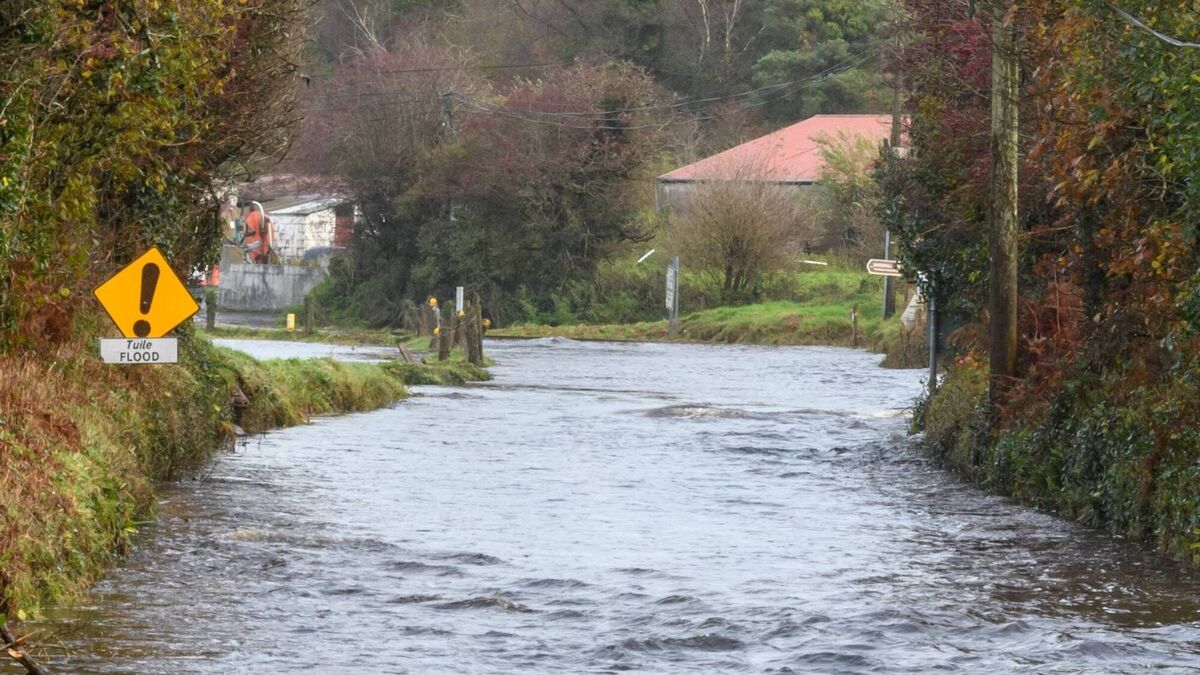
Fianna Fáil councillor Deirdre Kelly said that the continued flooding at Ardcahan Bridge, above, near Dunmanway was “unacceptable”. Picture: David Patterson.
Rivers across West Cork are not being properly cleared of debris and blockages due to fear of prosecution which is leading to preventable flooding, a meeting of Cork County Council’s Western Divisional Committee was told.
The issue was raised by councillors following the presentation to the meeting of the quarterly management report on flood projects in the Western Division.
Fianna Fáil councillor Deirdre Kelly said that the continued flooding at Ardcahan Bridge near Dunmanway was “unacceptable”. Ms Kelly said homes were continually being flooded and cut-off with people unable to leave for hours.
She said that during the most recent incident a local man who had undergone surgery was unable to get prescribed medicine because his home was cut off. Ms Kelly said that the public would not “buy in” to supporting environmental policies if flooding was allowed to keep happening because rivers were not being properly cleaned.
Independent Ireland councillor Danny Collins said there was a similar situation in Ballylickey where the river was dredged regularly in the 1970s and ’80s but this is no longer the case, leading to regular flooding. He said that local people were willing to clear the river themselves but are afraid that “if they do they will go to jail”.
Fine Gael councillor John Michael Foley said that farmers were afraid to clear rivers and streams on their land for fear of prosecution.
DAMAGED
He said that the flooding caused by clogged rivers was ultimately costing the council a significant amount of money to repair roads that were damaged by floodwaters.
Social Democrats councillor Isobel Towse asked if representatives from Inland Fisheries Ireland, the Office of Public Works, and the National Parks and Wildlife Service could meet councillors to explain what solutions are available to address the issue.
Independent councillor Finbarr Harrington said that there was a misconception that clearing rivers of debris was bad for biodiversity. He said that in some cases clearing rivers was environmentally beneficial and invasive species like Japanese Knotweed were also a serious contributing factor.
Council engineer Catherine Murphy said that dry gravels could be cleared from rivers between July and September and landowners were also expected to remove debris like fallen trees from rivers and streams.
She added that trees could be cut back from September to February but dredging was “getting more difficult due to environmental factors.”
It was agreed to invite representatives from the IFI, OPW and NPWS to discuss the issue with councillors at the next meeting of the council’s coastal, marine and flooding strategic policy committee.
Funded by the Local Democracy Reporting Scheme.
More in this section

App?