European mayors to gather for climate and health 'summit' in Cork
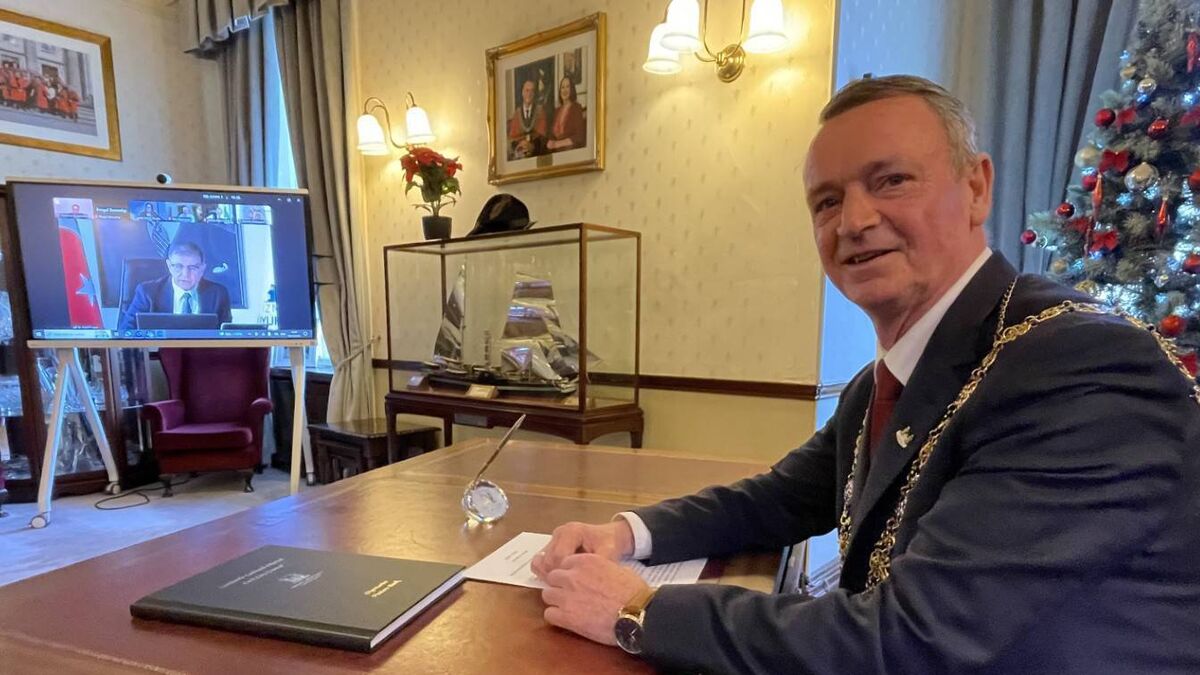
The Lord Mayor of Cork, Fergal Dennehy, has invited mayors from across Europe to the European Mayors’ Summit on Climate and Health in Cork next year.
The Lord Mayor of Cork, councillor Fergal Dennehy, has invited mayors from across Europe to attend a major summit in Cork next year on climate and health.
He issued the invitation on Wednesday during a keynote address to the Pan-European Commission on Climate and Health, in which he highlighted Cork’s leadership as both a WHO-designated Healthy City and an EU Mission City committed to achieving climate neutrality and net zero emissions by 2030.
Mr Dennehy announced that the summit of mayors will take place in Cork City on October 5 and 6, 2026, saying: “Ireland will hold the Presidency of the Council of the European Union from July to December 2026.
“In this context, I invite Mayors from across Europe to join us in Cork City on October5 and 6, 2026 for the European Mayors’ Summit on Climate and Health. Together, we will amplify city-level priorities at EU level and advance a unified agenda shaped by the recommendations of this Pan-European Commission.” It comes as this summer, the World Health Organisation Regional European Office issued a formal invitation to Cork City Council for Cork to host the Summit of Mayors.
The event will see mayors, elected political leaders and public health professionals from across the WHO European Region gather, to strengthen political leadership and cross-sector collaboration on climate action and health.
Explaining the importance of these events during his address, Mr Dennehy said: “Our health, and the health of future generations, depends on the climate decisions we make today.
The Commission, led by Katrín Jakobsdóttirir, the former Prime Minister of Iceland, is an independent WHO Europe expert body created to advise governments on how to protect health and strengthen resilience in the face of climate change.
In his address on Wednesday, the Lord Mayor outlined the lived realities of climate change in a coastal city increasingly defined by its environmental vulnerabilities, saying: “Cork is proud of its dual role as a WHO Healthy City and an EU Mission City.
Mr Dennehy described how climate pressures, ranging from poor air quality to more frequent heatwaves, are translating into diverse public health impacts, with vulnerable groups including older people, children, those with chronic illness, and households facing economic hardship the most affected, and said that Cork has responded decisively by placing climate and health at the core of the City Development Plan.
“The urgency is clear. We must deliver solutions that reduce emissions, strengthen resilience, and enhance the well-being of our population.”
He highlighted several major initiatives underway in Cork including a new Sustainable Healthy Food Policy, promoting nutritious, locally sourced food, supporting food producers, improving diets, and reducing emissions and investment in resilient and people-centred urban spaces, including flood-resistant public areas and expanded active travel routes to promote walking and cycling.
Air quality is a political and public health priority, with cleaner transport measures being implemented, new electric bus fleet capacity, and safer cycling infrastructure aimed at reducing respiratory illness especially among young people.
He emphasised the need for joint action and cooperation among European cities, and he urged cities across the region to endorse the Commission’s forthcoming recommendations and to champion integrated climate and health policies within their jurisdictions.
Mr Dennehy concluded: “Climate and health now intersect with every portfolio—housing, migration, social equity, economic development, and public health. Political leadership is essential to ensure that climate action is evidence-based, community-led, and fair.”








 App?
App?


