Cork farmers, a butcher, and a chef leading a revolution on food
KATE RYAN finds out about a novel project between a Cork pig farmer, a chef, a dairy farmer, and a butcher to produce local and sustainable ex-dairy beef near Cork city.
Cork farmers, a butcher, and a chef leading a revolution on food

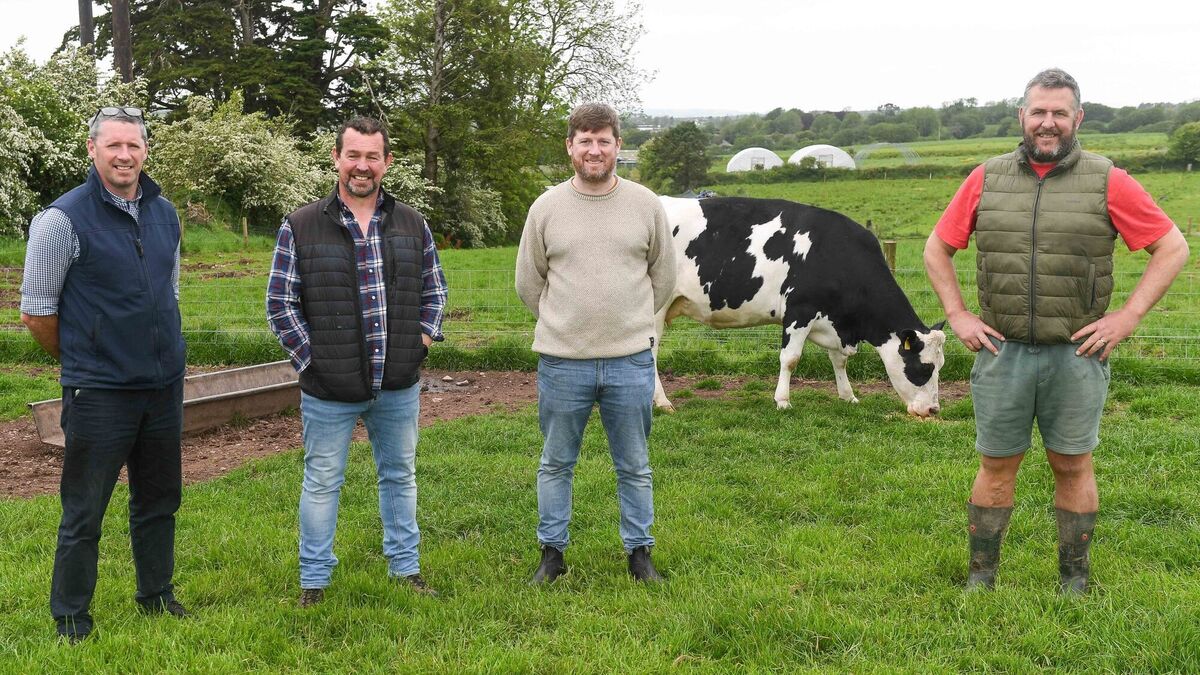
Peter Twomey of Glenbrook Farm, right and Brian Murray of The Glass Curtin restaurant on MacCurtain St Cork, second right, with their friesian cow on Peter's farm in White's Cross. Also included are Glanmire dairy farmer Denis Cashman, second left and Barry Fitzgerald of Fitzgerald's butchers, Fermoy, left. Picture: David Keane.

There’s a food revolution happening in the suburbs of Cork, and at the centre are a pig farmer, a dairy farmer, a butcher, a chef, and a cow.
The battle plan? Go farm-to-fork as sustainably as possible, as local as possible.

Along the way, these plucky revolutionaries will encounter jeopardy, a cocktail of emotions, and forge friendships through a shared mission to produce the best possible local food.

Sounds like a summer blockbuster!

Earlier this year, Peter Twomey. of Glenbrook Farm near Glanmire, called and said he and Brian Murray, of The Glass Curtain, had gone halves on a cow, and was I interested in following the farm-to-fork journey?

Here we are, a few months later, ready to tell the tale.

Not any old cow

Ireland has an abundance of cows, neatly grouped as dairy cows or cattle reared for producing beef. The country is hugely successful in rearing cows to service both the domestic and export demand for grass-fed Irish beef.

Bord Bia’s 2025 Meat Industry Report said: “The total value of primary beef exports in 2025 is estimated at €3.4 billion, up 24% on 2024.”

The food board also reported a 14% increase in Irish dairy exports in 2025, valued at a record €7.3 billion; half from butter and cheese.

When it comes to these two cow-driven industries, ne’er the two shall meet. Until now.

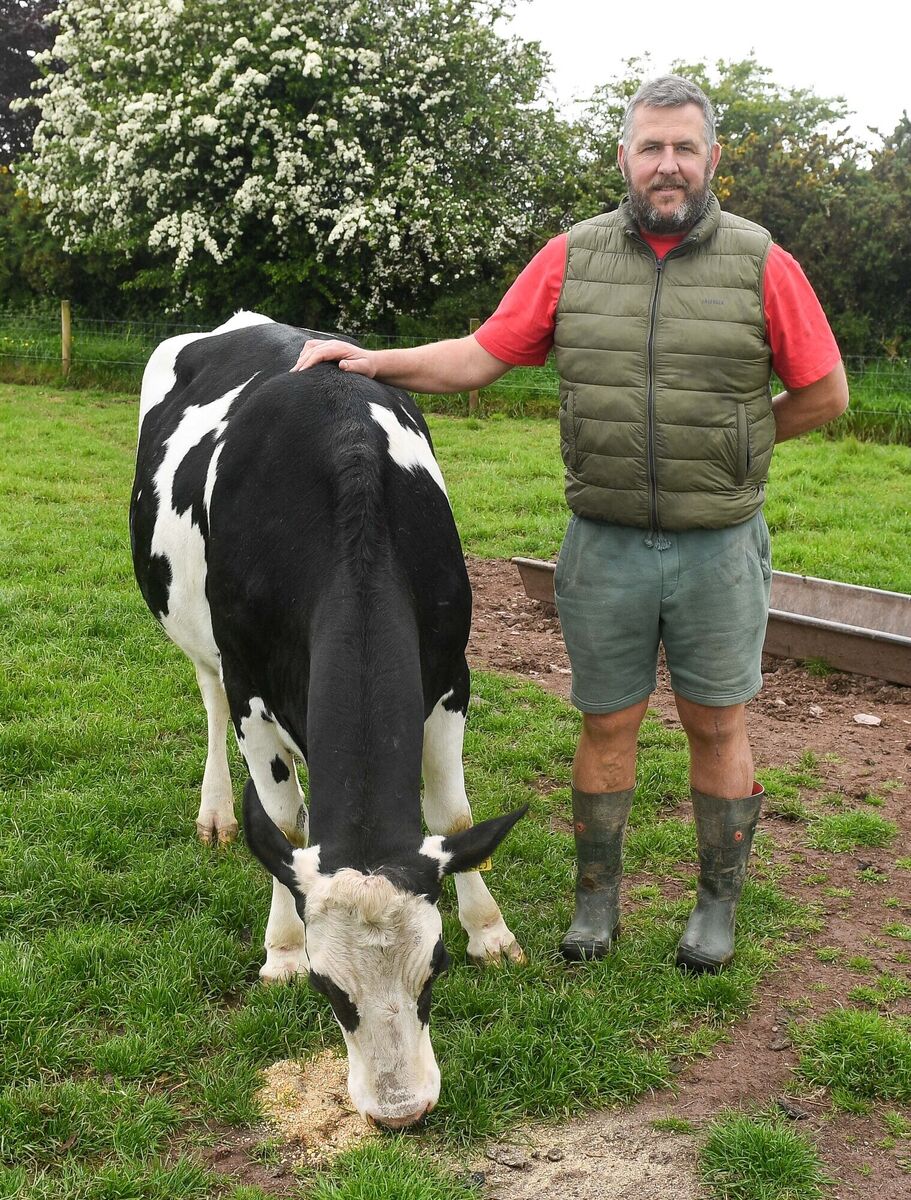
 Peter Twomey with the friesian cow at Glenbrook Farm. Picture: David Keane.
Peter Twomey with the friesian cow at Glenbrook Farm. Picture: David Keane.

At Glenbrook Farm, Peter and Brian have returned from Denis Cashman’s dairy farm, where he tends 600 dairy cows across two herds.
Denis is an ‘at-scale’ dairy farmer, which means his farm produces as much milk at the best quality possible, and sells to a processor.

In this intensive world of dairying, a cow is at peak production for just five to six calvings, or lactations, at which point volumes dip, cows are dried off and culled from the herd. When the price of a litre of milk depends on volatile global markets where prices can fall and rise quickly, consistency of volume is the difference between turning a profit and not.

But because a dairy cow is not bred for beef, her meat is not valued or prized.

This is what Peter wants to change.

The cow they have bought looks well, already putting on weight in the right places when Peter and Brian arrive.

On Peter’s farm, she will be the only cow in his herd, free to graze on lush pasture growing well since the warmth of spring kicked in.

Making it work

Peter knows a thing or two about cows. He was a third generation dairy farmer until 2023, when he gave it up and went free range pig farming instead. The pigs have brought joy back into his farming life, but he never lost his grá for the cow.

“I loved the years I was milking cows; I loved everything about them. The noise of them pulling the grass out of the ground, the characters, the smell of their breath after lush grass or kale. Chewing the cud, the happiness you can see in them,” he says.

It’s clear it didn’t take much persuading to have a cow back on the land.

“It’s an old farming tradition to go halves on a heifer, so I thought, why don’t I go halves with a restaurant on a cow?” says Peter. “I sent Brian a very blunt text asking him, and he came back straight away saying yes – but which half!”

“It’s about not being exposed to the full cost of buying a cow and the full quantity of meat you’d get from a whole cow. Our farm shop is only open four hours a week; it’d be hard to sell it fast.”

Brian Murray has had Glenbrook Farm free-range pork on the menu since it was available.

“That’s four years of relationships being built to have the confidence to ask one of the best chefs in the country if he’s interested,” says Peter.

The Glass Curtain is one of Cork’s premier restaurants with a loyal clientele on board with its ethos of hyper-local seasonal food.

“I don’t know if it does make a lot of financial sense yet; we’ll find out after we’ve portioned everything out. For the restaurant, a lot of it is about the story,” says Brian.

“I went out to the dairy farm and met the cow before it went to Peter’s. It’s about getting closer to the produce, closer to the reality of the system: it’s not just arriving in a packet. The sustainability of this obviously is huge. I don’t pretend I know everything about it, but I know that this is in the right direction.”

Brian has created a food story at The Glass Curtain about the hands that grow, raise, tend and catch the larder of produce Cork is celebrated for. Menus proudly name check Peter’s pork, Brian’s vegetables, Darcie’s cheese, and Ultan’s asparagus.

The idea of eating ex-dairy beef is not new to him. He is a chef who loves to travel, and in the gastronomic capital of San Sebastian, he has dined on it and witnessed the prevalence of ex-dairy beef on menus where it is as prized as conventional beef.

He knows how good it can be, and this is where the biggest risk is.

“We’ve bought this one cow, but we don’t know what the beef is going to be like until you cut into it,” says Brian. “Sometimes, marbling can be completely uneven. It could have a lot of fat content, but it might be all on the outside and not through it. We just don’t know for sure until we cut into it whether it’ll be exactly right and what we’re looking for.”

What he is looking for are the prime cuts, the steaks on which the restaurant has carved a reputation as one of the best in the city.

Steaks are the most valuable but are a small percentage of the overall meat haul from a cow.

“If I was to go down the route of getting a whole cow for the restaurant, it would be very hard for us to utilise all the less prime cuts in the menu realistically.

“We’ll do everything we can with as much as possible, but ultimately on the tasting and á la carte menu, we won’t get the same ratio of use. But that’s what makes this a great collaboration with Peter. We each have different requirements between his shop and my restaurant, so neither of us need to have all the cow,” Brian says.

“I’m super-excited to the potential positives. I’m curious and open-minded, and if we can make it work then great; we’ll keep it going.”

From farm to fork

It’s one thing to have a cow in a field living its best retirement and enjoying a well-executed plate of food in a great restaurant. The other thing is how it gets from farm to fork.

Enter Fermoy-based butcher, Barry Fitzgerald.

Fitzgerald Butcher’s, established in 1964, is a traditional craft butcher. Barry is also a beef farmer with his own lands surrounding their own abattoir.

“I have a connection with the two lads,” says Barry. “If someone comes to me and they want to kill something for their own farm or for their own use, I do that all the time. The nuances of what they want to kill is their choice.

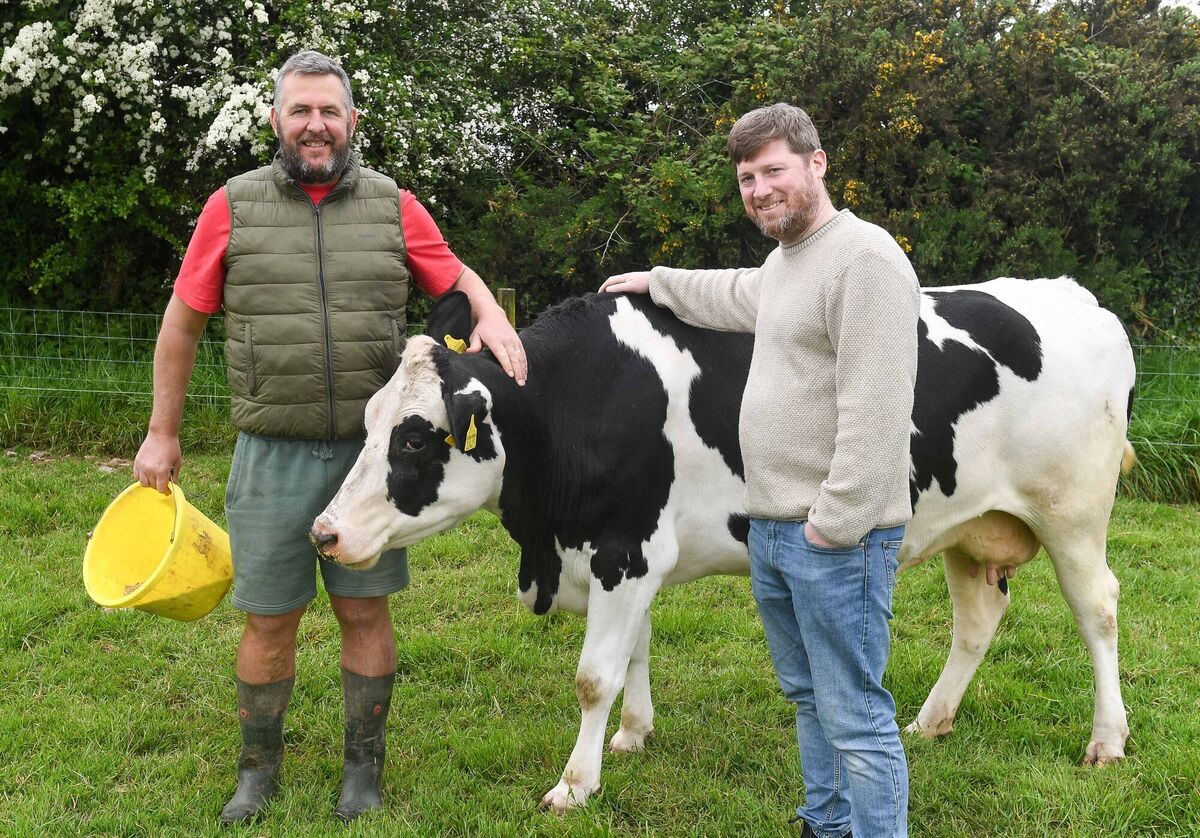
 Peter Twomey of Glenbrook Farm, left and Brian Murray of The Glass Curtin restaurant on MacCurtain St Cork, with their friesian cow on Peter's farm in White's Cross. Picture: David Keane.
Peter Twomey of Glenbrook Farm, left and Brian Murray of The Glass Curtin restaurant on MacCurtain St Cork, with their friesian cow on Peter's farm in White's Cross. Picture: David Keane.

“This kind of project is not something traditionally any butcher with his own abattoir would’ve done before. I’m interested to see how this turns out and how it eats. I’m as curious as anyone else; I love to know how it pans out, especially the steak side which Brian is taking.”
Peter, Barry and Denis could have all the notions in the world about retired dairy cow beef, but without the skill and craft of a butcher-slaughterman, the idea would simply wither on the vine.

“My template in the butchers’ shop is quality. Something that has a nice fat cover on it, very tender, and great flavour. They are the three things I would be looking at from this project.

“All the cattle I’m killing are cross-dairy, Friesians with Angus and Hereford, all heifers, and the meat quality is excellent. But the pure-bred Friesian is just different. It’s not a road I have gone down but never say never! I’m very curious to see how it does turn out.”

Sustainability

A big feature of this project is changing the narrative that cows can’t be farmed sustainably.

“The idea is that, if we can buy the cow in the locality, if it’s produced all its food in the locality and if it gives us its beef in the locality, that’s the job,” says Peter.

“The amount of food this cow has produced is the holy grail: 25,000 litres of milk over five lactations and five calves that have gone on for either milk or meat. Now, she’ll provide enough meat to feed so many more people.”

This is a crucial point: It’s not the cow that’s the problem; it’s the food system around the cow.

“When I was milking cows, the whole world was blaming us for killing the planet. But every [dairy] farmer has a co-op report which tells you how your cows and farm are performing. The information has always been there for co-ops to say these cows are producing food. But I didn’t feel they supported us very well.”

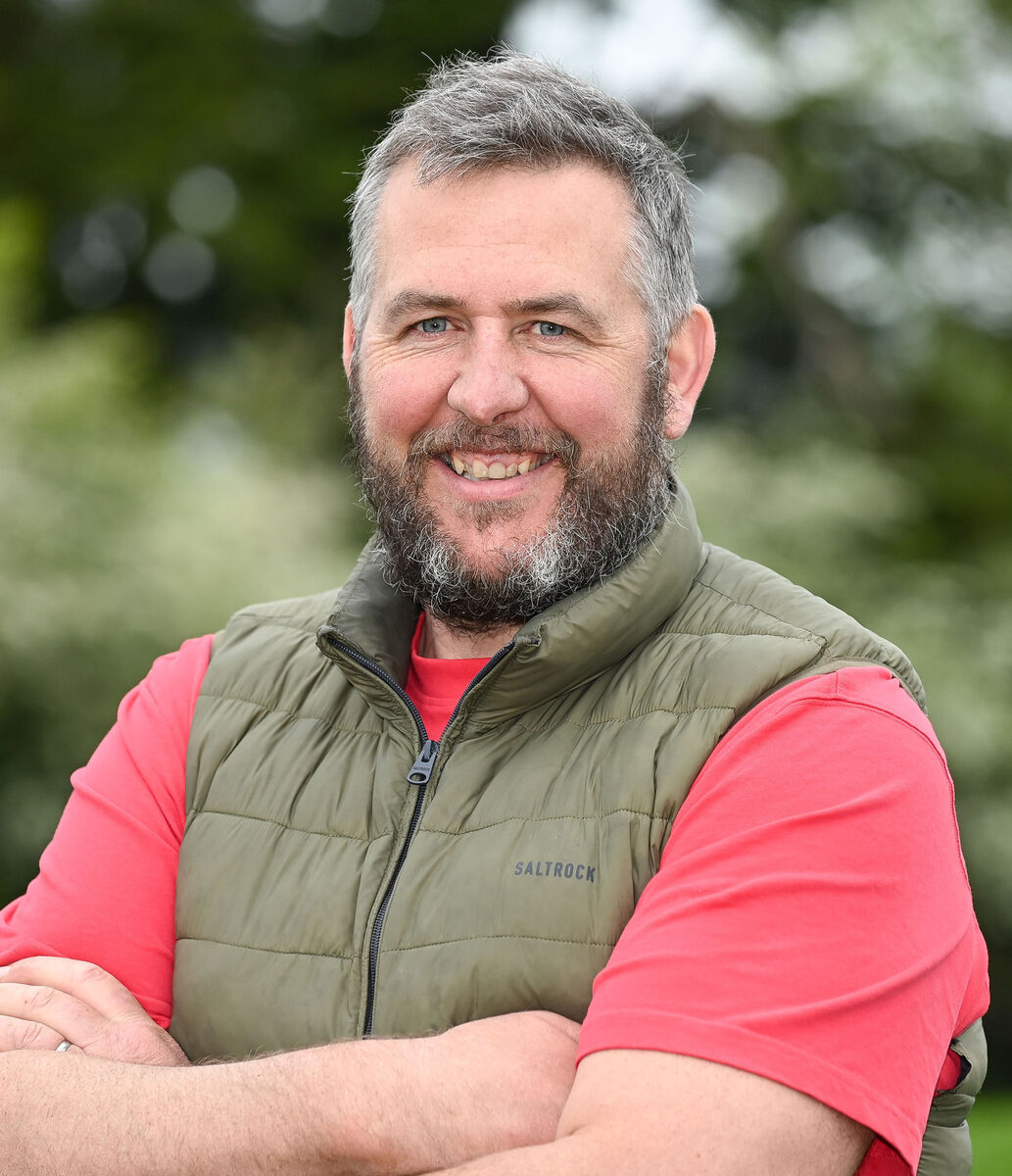
 Peter Twomey of Glenbrook Farm, White's Cross. Picture: David Keane.
Peter Twomey of Glenbrook Farm, White's Cross. Picture: David Keane.

Peter’s long-term vision is to take a couple of cows at a time only when pasture is plentiful, creating the potential for ex-dairy beef to be a seasonal speciality meat, like game.

Back at the dairy farm, I ask Denis if he thinks there’s potential for this project to create a seasonal income for dairy farmers.

“On the back of this, I have kept a few more dry cows in case they need them going forward,” he says. “If it takes off and there’s a demand, I should be quite happy to be the man to fill that demand!”

Aside from milk, farmers have been getting good prices for calves and cull (retired) cows, but, says Denis, “prices from meat factories are starting to drop, so maybe when cull cow prices are poor again, farmers may look at it.

“I’m hoping there’ll be nothing but positive come out of this whole project, but the number one thing is the animal will have to taste good; if this meat will cut the mustard.”

Proof is in the eating

On June 23, the cow took her last journey to Barry’s abattoir.

How did it go?, I asked Peter.

“Ah, we got very attached to her,” he said. “People say, she’s very friendly, it’s gonna be hard to eat her. But I’d rather eat her than a mad one jumping out of the ditches or stressed off her mind. This is my philosophy with all my animals: happy animals equal delicious meat.”

This ex-dairy beef, rich with yellow fat from the high-quality pasture diet, will be firstly available in the Glenbrook Farm shop as burgers, diced beef, roasts, and black pudding.

“I want everyone to feel what I feel when I hand over food to someone. It’s the most unbelievable feeling, and that’s the importance of the shop here,” says Peter.

The steaks will need time to age in the salt chamber before gracing the menu and the plate at The Glass Curtain. When they are ready, it’ll be celebrated loudly and proudly as steak with a story to tell.

More in this section

2026 GAA Hurling All-Ireland Senior Championship Launch TV sport round-up: GAA showdowns for Cork men and women
TV tribute to priest whose Cork speech haunts us 80 years on TV tribute to priest whose Cork speech haunts us 80 years on
Books: Cork author’s debut novel set in dark times after Cromwell Books: Cork author’s debut novel set in dark times after Cromwell

Sponsored Content

Solar panels on residential roof in closeup shot. From powering the country to empowering its people
Say cheese, think Kerrygold: A new range of cheeses guaranteed to put a smile on your face Say cheese, think Kerrygold: A new range of cheeses guaranteed to put a smile on your face
Young woman managing finances at home with phone and piggy bank Government Personal Investment Account must target mainstream savers
Contact Us Cookie Policy Privacy Policy Terms and Conditions

© Examiner Echo Group Limited

Add Echolive.ie to your home screen - easy access to Cork news, views, sport and more