TV tribute to priest whose Cork speech haunts us 80 years on
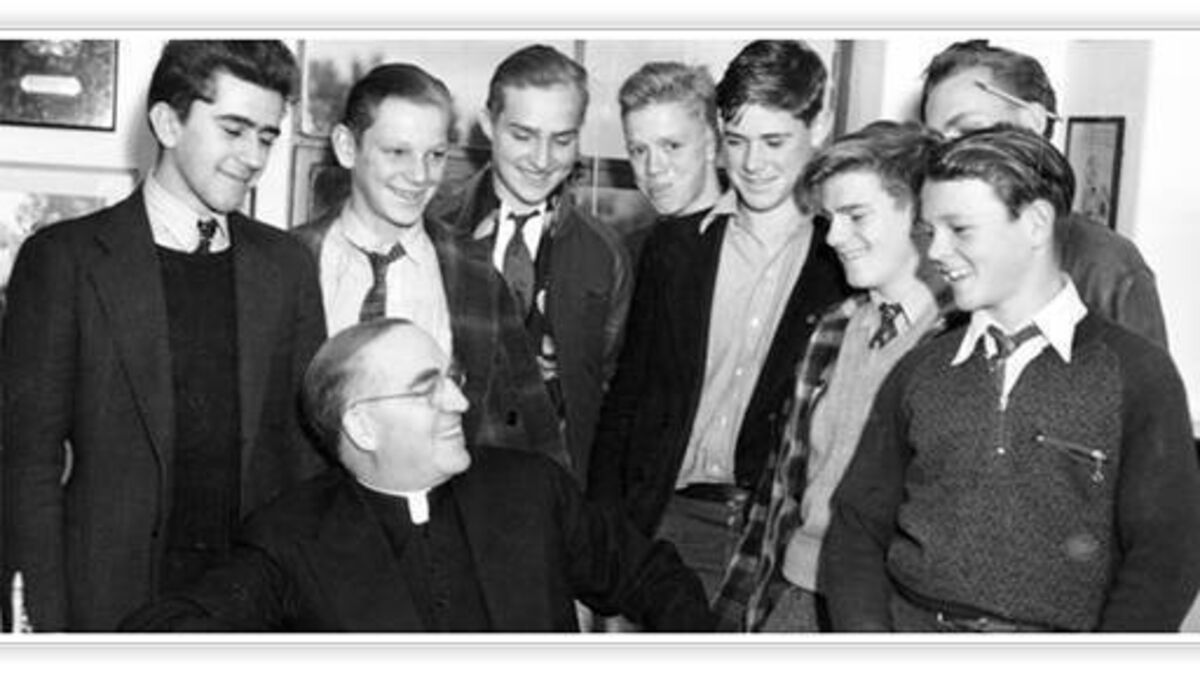
Fr Edward Flanagan in the U.S.
The story we tell ourselves now is that we entrusted our young and vulnerable to the State and the Church, and that the sins and ills happened behind closed doors.
If only we had been warned, we tell ourselves.
Except, when it comes to the abuse that went on in industrial schools, we in Cork were warned all about it.
Eighty years ago next week, an Irish-American priest called Fr Edward Flanagan stood up in the Savoy Cinema in Cork city and spoke of the horrors he had seen in these schools for orphans, and poor, neglected and abandoned children.
His words on Sunday, July 7, 1946, resonate now down the years.
“You are the people who permit your children and the children of your communities to go to these institutions,” he thundered to the Savoy crowd. “You can do something about it by keeping your children away from these institutions.”
Except nothing happened. Fr Flanagan went back to the U.S, the abuse continued, and the industrial schools would remain in place for more than half a century.
Fr Flanagan was a remarkable man, and now an RTÉ documentary next week will pay fitting tribute to this priest who came and saw and warned us of what was happening under our noses - and who was shamefully ignored.
Called , it will air on RTÉ1 on Monday at 9.35pm.
The programme will set out how Fr Flanagan was a hero for his times, and for ours, too, and was filmed on location in Ireland, Germany, Austria, Japan and across the U.S.
A tribute is long overdue; there is even hope that Fr Flanagan will be canonised by the Church he served so well.
So, who was he?
******
One of 11 children, Edward Flanagan was born on July 13, 1886, in the townland of Leabeg in Roscommon - his nearest village was just over the border in Ballymoe, Co. Galway, where a statue of him now stands.
Over time, most of the family emigrated to America. Edward did so in 1904, when he was 18, sailing from Cobh on the S.S. Celtic.
Eight years later, he was ordained a priest and posted to Nebraska. Here, he began his life-long calling to help troubled and lost children and young men. He simply wanted to give them a second chance at life.
When he opened a home for young boys in 1917, the priest pioneered a new approach to their care. He gave them opportunities to do real, productive work. He gave them a chance to shine in musical bands and football teams. Above all, he tried to put love and care before punishment and control.
The homes became known as Boys Towns and expanded cross America - they are still going strong today more than a century later, and now cater for girls too.
During World War II, droves of former Boys Town citizens went off to fight for the USA, and so many of them named Fr Flanagan as their next of kin that he was labelled ‘America’s No. 1 War Dad’.
His legend was sealed when Spencer Tracy portrayed him in the 1938 film, , a role that won him an Oscar. He devoted his entire acceptance speech to Fr Flanagan and said: “If you have seen him through me, then I thank you.”
The star had said during filming: “I’m so anxious to do a good job as Fr Flanagan that it keeps me awake at night.”
His co-star Mickey Rooney, on a trip to Ireland in 2007, said: “ is the film I’m most proud of. In a word, Fr Flanagan was love.”
One assumes had been shown at the Savoy a few years before Fr Flanagan delivered his speech there in 1946 - it explains the sell-out crowd that saw him.
He was there to give his reflections on a tour that had taken in some of Ireland’s industrial schools. After he had castigated the schools, he doubled down on his remarks in a press statement.
“Flogging and other forms of physical punishment wound the dignity which attaches to the self,” he explained. “The result is that the boy comes to look upon society as the enemy. His urge is to fight back, not to reform.
“My prayer is that the Christian people of Ireland will see the conditions (in the institutions) as they are and will take such action as they themselves may choose in attacking this problem.”
Fr Flanagan was particularly upset by what he saw at Artane Industrial School in Dublin, which left him “sick at heart”. The school was later exposed for its systematic abuse and bullying culture in the State inquiry into the homes.
Sadly, the institutions and the people of Ireland failed to heed the warning. Instead, there was uproar over this American priest’s attack on the Irish way of dealing with errant young boys.
Letters appeared in the press castigating Fr Flanagan, although others defended him.
Senior politicians denounced the priest on the floor of the Dáil. “Fr Flanagan is a bad boy,” said one. This was a telling dig, as the priest’s core philosophy was that: “There are no bad boys. There is only bad environment, bad training, bad example, bad thinking.”
Fr Flanagan drew up plans to establish a Boys Town unit in Ireland and was hoping to return here in the summer of 1948. Sadly, he died of a heart attack that year in Germany aged 61 - after U.S President Harry Truman had asked him to investigate its post-war orphanages.
Who knows what might have come of that return to Ireland? Would the State and Church here have listened? Sadly, it was not to be.
The cause for Fr Flanagan’s canonisation opened in 2012 when he was declared a Servant of God.
Documentation for the cause was sent to the Vatican, and earlier this year, he was declared venerable by Pope Leo XIV, a further step towards sainthood.






 App?
App?


