Cork's answer to açaí...the purple superfood being grown on our doorstep
While açai has exploded in popularity in recent years, aronia berries, grown right here in Cork, could prove an even more nutritious alternative, writes KATE RYAN.
Cork's answer to açaí...the purple superfood being grown on our doorstep

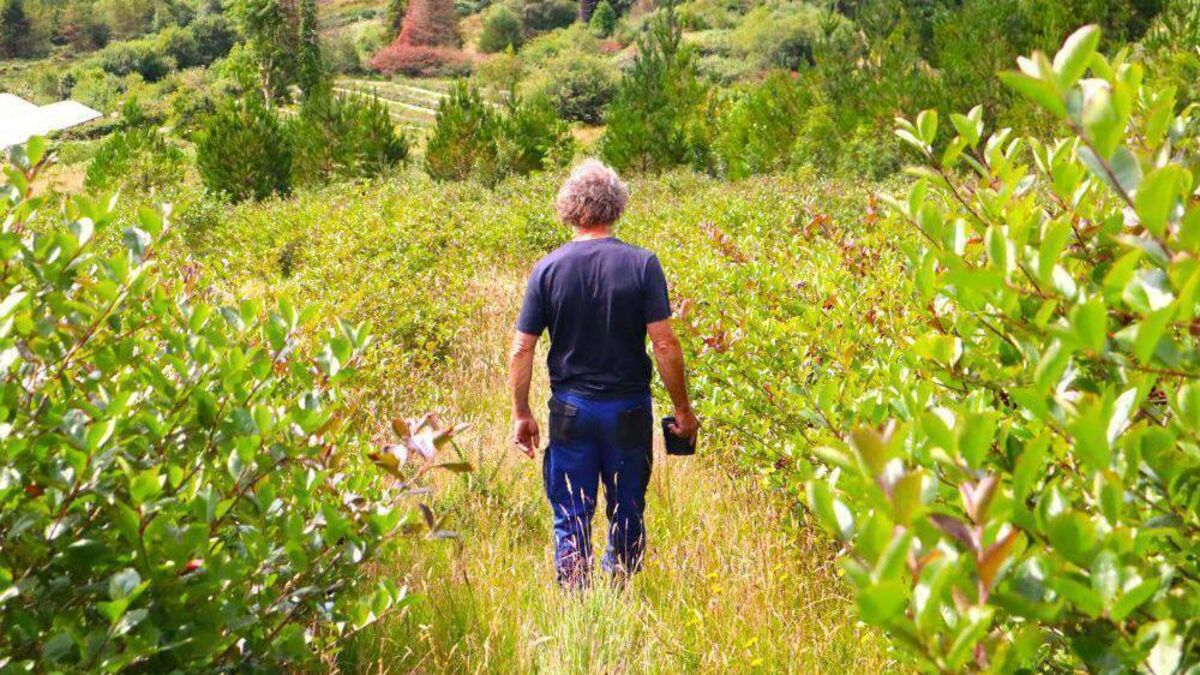
Steve on the aronia farm in West Cork
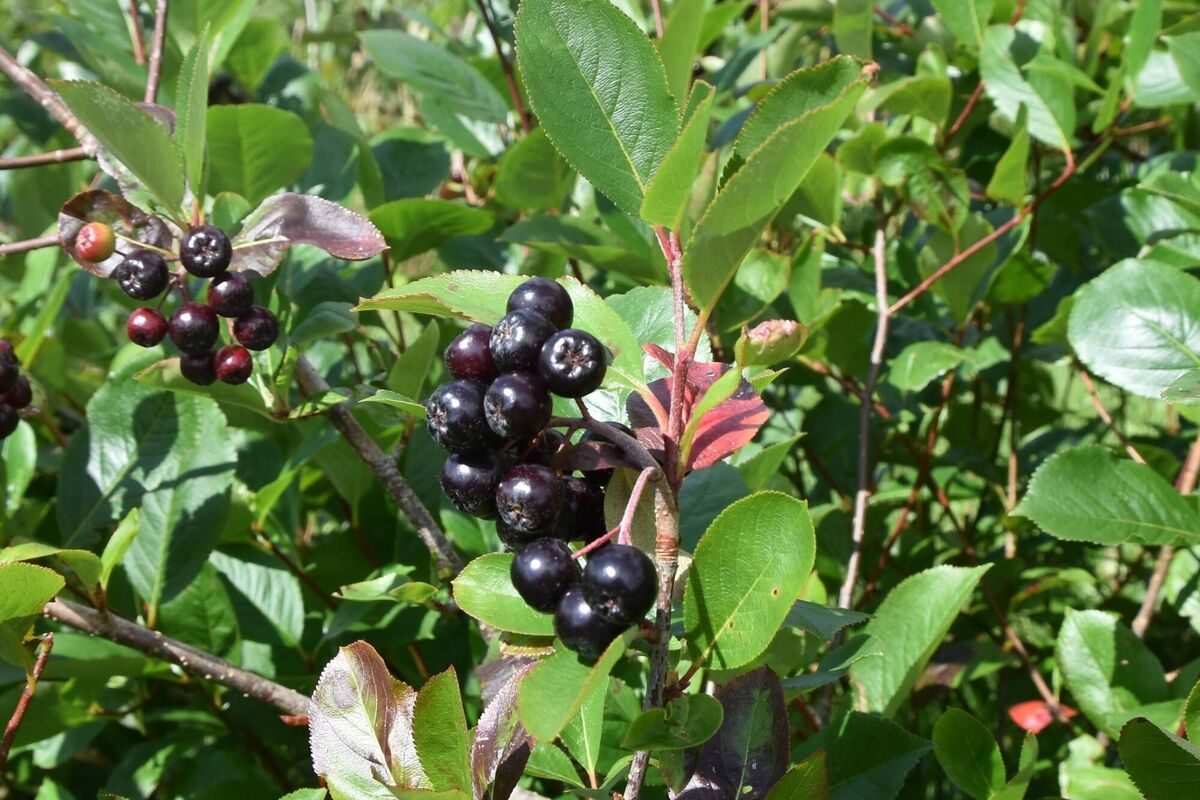
They’re small, round, purple, full of good-for-you polyphenols, and very Instagrammable.

If you think I’m talking about açaí, the national fruit of Brazil and latest superfood craze to hit Irish breakfast and brunch bowls, you’d be mistaken.

I’m talking about a berry you’ve probably never heard of.

One that grows abundantly right here in Cork – the aronia berry.

Before we get into aronia, let’s begin by diving into what açaí is.

I came across açaí on a visit to California 15 years ago in an ocean-front café where smoothie bowls were as new to me as this fruit, which grows in the Brazilian Amazon.

The aronia berry is high in polyphenols. Other berries containing this compound include bilberries.

When the colour purple shows up in foods such as fruits, it’s a sure sign that a natural compound called polyphenol is present. These compounds are why fruits like açaí and blueberries have been labelled as superfoods in recent years.

Polyphenols are plant compounds called phytonutrients made by plants to boost their natural immunity. When we consume foods that have a high level of polyphenols, it sends a chemical signal to switch on our body’s own protective and regenerative responses at a metabolic level.

Açaí is high in these compounds, which is why they first caught on in a health-focused place like California. These fruits also contain resveratrol and, as a Californian friend said to me: “In California, with our vibrant wine culture, anything with polyphenols, resveratrol, or the halo of dark blue foods, is incorporated immediately into our diets.”

These “dark blue foods” include not just açaí, but also the north American blueberry. Closer to home, the Irish native bilberry (a cousin of the blueberry also known as fraughan, hurts, or wild blueberries), blackcurrant, blackberry, cherry and red grape (hence, wine) are also included.

The least known is the aronia berry.

What are they, how are they different from other berries, and why should we pay them attention?

To get to the bottom of these questions, I asked an expert.

Dr Steve Collins is a medical doctor renowned for his pioneering work in the treatment of malnutrition in famine-stricken war zones around the world. In short, he knows a thing or two about what to feed our bodies to recover, regenerate, and be resilient.

He is also an organic farmer of blueberries and aronia on Derry Duff Farm, high in the hilly terrain of the Bantry peninsula, and has developed a range of aronia products called Phyterberry.

While many of us are familiar with blueberries, aronia is a different kettle of berry. Few know what they are, what they taste like, if we should be eating them, and why they are a better choice than açaí for our Instagram-worthy smoothie bowls.

Steve and Claire Collins became owners of Derry Duff Farm two decades ago.

The primary reason aronia is better for us is because they have the richest source of polyphenols and contain more types of them than any other fruit or vegetable.

But what does this mean?

“Aronia has got this great mix of all major classes of polyphenol,” explains Steve. “Coffee has one type (chlorogenic acids), chocolate has another called PAX (or, proanthocyanidins), blackcurrants have a lot of a polyphenol called anthocyanins, but aronia is the only one that has the whole group.”

This is an important differentiator as each type of polyphenol contributes in different ways.

“That’s why it’s a really good berry,” says Steve. “I’m certainly not saying don’t just eat aronia, but in conjunction with eating as much fruit, veg and berries as possible, you won’t go wrong!”

Polyphenols contribute to better health by working on a metabolic level. Most of us might think of this as the measure by which we most effectively burn calories, but it also contributes to how we store and access energy, how effective our immune system is, how well our bodies manage hormone balance, mental function, and cellular repair.

Because aronia has the highest number of polyphenols and a greater mix of all types, they are an easy way to incorporate more polyphenols into our everyday diet. Yet most of us consistently don’t consume enough to support better metabolic health in a meaningful way.

How do we know if we have good metabolic health?

“You feel it in vitality; you don’t get those slumps in energy,” says Steve. “Think of the cycle of craving food and crashing. A lot of the foundation of metabolic health is to do with glucose, metabolism, and insulin because that’s our main fuel.

“Good metabolic health is about keeping the machine running. To use the analogy of a car engine: Mechanics know that they can fix a broken piston, but it’s much better to change the oil. Keep changing the oil in an engine, it runs much better, and pistons won’t break. Western medicine just wants to change the piston, but each time it does without changing the oil, the engine gets weaker and not as strong as it was.”

This may be layman’s terms for the science, but in a world peppered with often confusing advice around food and health, it’s challenging to cut through the noise – and why you’ve heard of açaí but not aronia.

Açaí is naturally very tart and bitter (ever eaten a sloe; like that), so to make it palatable, lots of sugar is added.

“This is the main issue I have with açaí,” says Steve. “Because of all the added sugar, you get a metabolic penalty. Even though açaí directly acts to lower blood sugar after eating carbohydrates, because the berries have been loaded up with sugar, that hugely undermines the effectiveness of the polyphenols.”

Aronia contains sugar - it is a fruit, after all, occurring as fructose and sucrose, but in much lower quantities than other fruits.

“With aronia, it’s much less. Even our new 100% Irish Aronia Juice, which is naturally sweeter than our original juice made from aronia sourced from organic farms in Poland, is still way less than orange, apple, or any other juice.”

There’s more to aronia than its array of polyphenols, which makes this berry truly super. It’s also that it can grow anywhere, even in poor marginal soils, just like Steve found he had when he purchased his farm in the Borlinn Valley nearly two decades ago.

Aronia is a resilient plant that thrives where other plants would fail to even grow. Marginal land with shallow soils, poor nutrition; drought, flood, wind - factors that would send shivers down the spines of most farmers - are no concern to these plants.

As they grow, they send down deep roots that anchor them, allowing them to source moisture and nutrients from way down in the substrate. There is very little that can kill them off and, because they will grow where little else can, it provides a new opportunity for farms to create income from previously unproductive land.

Aronia growing at the West Cork farm. Aronia is a resilient plant that thrives where other plants would fail to even grow.

“When Phyterberry began, we set out not only to highlight the nutritional properties of aronia, but also to create a local supply chain that would enable farmers to grow this resilient and sustainable crop,” says Steve.


To do this, Steve’s team created a range of products to demonstrate consumer demand for aronia-based products to encourage farmers to plant aronia. In turn, Phyterberry committed to buying the annual crop, guaranteeing additional income for farmers.

The results are showing. In 2025, Steve produced the first batch of 100% Irish-grown organic aronia juice.

“It’s slow, but it’s happening. Drive up the Borlinn Valley, you’ll see a little acre of aronia on both sides of the road. We’ve got plantations going in this year in Hook, Co. Wexford; a guy in Lismore, Co Waterford, who produced for us last year, a lady near Killarney, Co Kerry, with four acres in, and a farmer in the UK with a big estate who put in 20,000 plants,” says Steve.

“In Ireland now, we’ve probably got farmers with about 15,000 plants in, if not more. That’s about 12 acres. It’s small, but it’s a definite start, and each year that amount is increasing.”

Whereas the bulk boxed juice made from Polish-grown aronia has a drier tannic flavour best consumed either as a daily gut-shot or diluted with sparkling or still water, the 100% Irish juice has a very pleasing demi-sec taste like pomegranate juice. Its soft tannins and complex fruit flavours mean it can easily be enjoyed as an alcohol-free wine substitute.

“Because the juice has tannins from the anthocyanins, it’s a really good wine replacement,” says Steve, “and it has appeared on the non-alcoholic wine pairing at the two Michelin-starred restaurant in Baltimore, Dede at The Custom House.

“For me,” says Steve, “The 100% Irish aronia juice is the one I drink for pleasure, and the Polish aronia is the one I drink for health!”

Each 330ml bottle of 100% Irish aronia juice equates to three measures of the daily amount of polyphenols. This makes it easy to boost intake of polyphenols which, says Steve, is pretty low.

“There isn’t an official suggested recommended daily intake right now, but scientific literature suggests 2,000mg a day total intake from all food and drink is necessary for good overall health.”

A small study conducted in Cork estimated the average daily adult intake is 530mg a day. A major study conducted in Spain, PREDIMED, looking at health issues associated with poor metabolic health, concluded outcomes were greatly improved with a daily polyphenol intake above 1200mg per day.

“I think when [a recommended daily amount does] happen, it’ll be around 2000mg per day, but really, you’ve got to get your intake over 1200mg to be in that safe zone.”

If we spent all our days eating blueberries, cherries, blackcurrants, blackberries and elderberries (another local fruit high in polyphenols), drinking coffee, wine and eating chocolate, we might hit that goal. It reads like a borderline hedonistic way to live, but expensive, highly caffeinated and fairly boozy.

To counter that, Steve and his team have developed a range of Phyterberry products in addition to the juices that are adaptable to how people live their lives, including an aronia essence which can be diluted or added into porridge or yoghurts in a range of functional powders.

Aronia Focus powder is made from the dried cake left from pressing berries into juice, so it also contains essential fibre to feed the gut. It can be mixed with natural yogurt, topped with seasonal Irish fruits, and scattered over with bee pollen and granola made from Irish grown oats to give you all the taste, look and feel of a pricey açaí bowl, but with everything grown right here in Ireland.

Now, that’s a bowl of goodness anyone can get behind.

More in this section

TV: Cork couple who converted van for travel adventure to feature in Nationwide TV: Cork couple who converted van for travel adventure to feature in Nationwide
TV: Cork festival takes centre stage in new series   TV: Cork festival takes centre stage in new series  
Cork family thanks community for support: ‘So much changed..We’re grateful Matthew is alive’ Cork family thanks community for support: ‘So much changed..We’re grateful Matthew is alive’

Sponsored Content

Gas Networks Ireland, committed to conserving and enhancing biodiversity Gas Networks Ireland, committed to conserving and enhancing biodiversity
 EirGrid, ensuring nature thrives in journey to cleaner energy future EirGrid, ensuring nature thrives in journey to cleaner energy future
The future is flexible for cleaner energy use in business The future is flexible for cleaner energy use in business
Contact Us Cookie Policy Privacy Policy Terms and Conditions

© Examiner Echo Group Limited

Add Echolive.ie to your home screen - easy access to Cork news, views, sport and more