WoW Bites: Meet the Cork chef who has become a professional forager
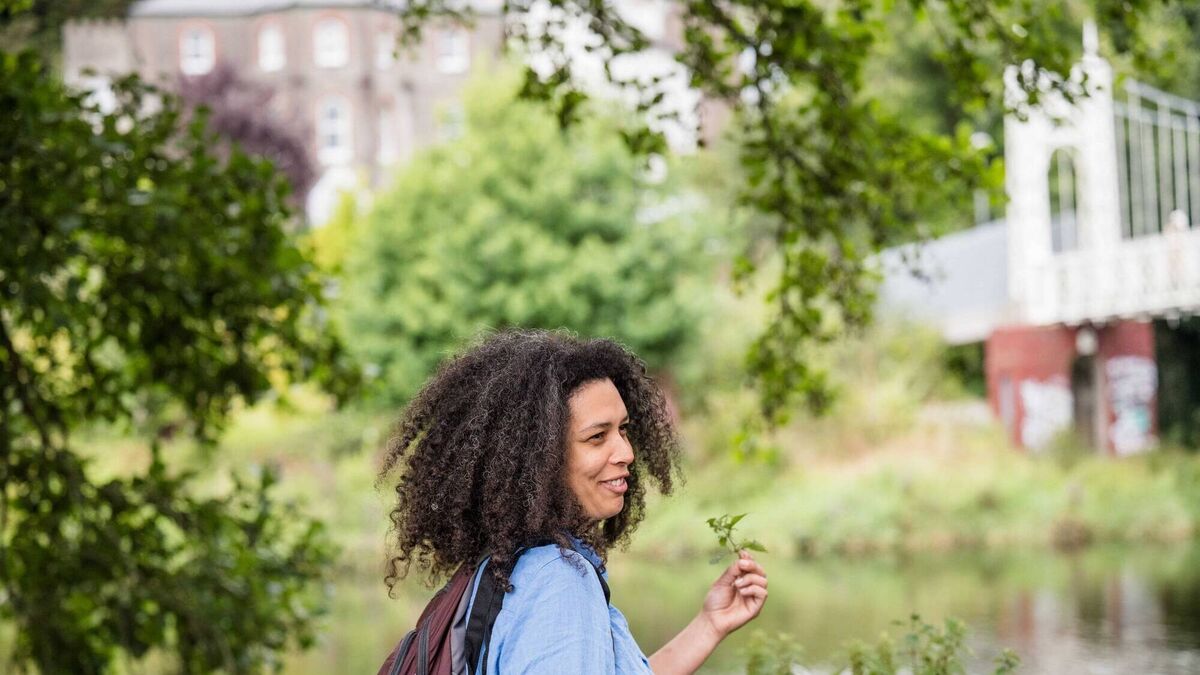
Epi Rogan first came to Ireland in 2005 for a three-month holiday around Europe. Picture: Joleen Cronin
On the U.S Pacific coast, the town of Kodiak, Alaska, is dominated by its fishing industry. The harbour witnesses a busy ebb and flow of boats landing Alaskan salmon destined for the canning factories.
Beyond the harbour is a rugged, mountainous wilderness popular with game hunters; the perfect place for adventure-seeking kids to roam, picking berries to stave off a hungry belly.
This is where Epi Rogan spent her childhood. Although she didn’t grow up to be much of a hunter, her skill for seeking out edible wild things never left her.
Fast forward to 2026, and thousands of miles from her Alaskan home, Epi has carved out a successful career as a professional forager and chef, creating Fiáin Wild Foods in her adopted home of Cork.
“I wasn’t much of a hunter. When I was a kid, my dad sawed the end off a rifle to make it child-sized for me. It had a stronger recoil; at target practice, I put the scope too close to my eye, and it hit me in the face. I never went shooting with him after that because, geez, I wonder what the deer feels like!”
Epi arrived in Ireland in 2005 for a three-month summer holiday around Europe.
“I was 19, going for pints and stuff, feeling like I was really sophisticated. I wasn’t at all, but it sounded cool going back home saying I had spent the summer in Europe - except it was basically all in Cork!”
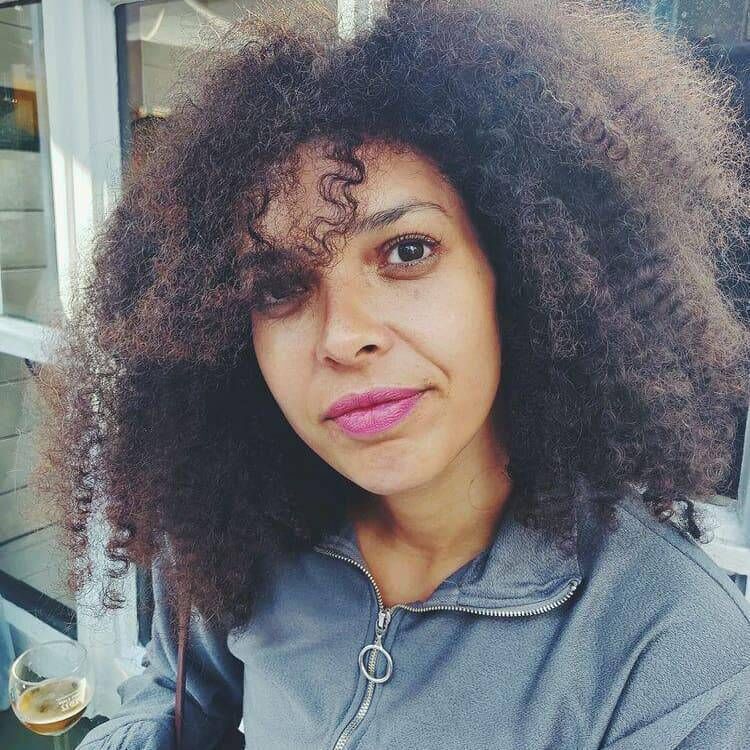
Epi returned to the U.S for a year before deciding she really liked it in Ireland, and she began planning how to get back.
“I went to University in Galway studying philosophy and classical civilisation and realised very quickly I’m not much of a philosopher or a classicist!”
In her late 20s, Epi was feeling the pressure to figure out what would come next. By chance, she entered a competition for a place at Dublin Cookery School’s three-month programme – and won.
Through the school, Epi secured stages at premier Dublin restaurants, Forest Avenue, and one-Michelin-starred Bastible.
“It’s such a buzz working in a kitchen within great chef teams. You get to see how talented and driven everybody is. I think any chef would tell you there’s a lot of excitement and a lot of love and respect for food, and that’s inspiring.”
By 2017, Epi was back in Cork, working in top kitchens across the city and county, each one layering her experience and unlocking another level of curiosity.
In Paradiso, Epi had an insider’s view of the creative collaboration between Denis Cotter and the head chef at the time, Eneko Lopez.
“I really wanted to work in Paradiso,” says Epi. “The food is really playful, fun and colourful. Eneko was head chef when I was there; he was so creative, and I think he was the first chef that Denis Cotter had a collaborative relationship with. That was a cool thing to see and be a part of.”
Being around that creative collaboration with food influenced the way Epi works today in her pop-up events with other Cork chefs, such as Miyazaki’s Padraig Nagle and Da Mirco’s Sergio Gurrea.
“Any kitchen that’s good, you draw on the people around you. One person maybe has a great idea, but somebody will suggest something different. It always makes things better when there’s other people who can see the things you can’t because you’re too close to an idea,” says Epi.
Her love of foraging was forged and sealed in the kitchens of the much-missed Rosscarbery restaurant, Pilgrim’s. There, head chef Mark Jennings not only espoused a hyper-local and hyper-seasonal food ethos, but lived and breathed it.
“Mark really cares about where produce comes from, then takes it up another level because he was growing so much of it and foraging for wild foods. Being so close to a coastal area, he would pick sea purslane, wild mushrooms, wild garlic, and beach rose that he made a beautiful syrup from, served with strawberries.
“Between growing and foraging things, the menu would change every week and day to day in summer. It was probably one of the best food experiences I ever had.”
Epi’s time at Pilgrim’s showed that using foraged ingredients must be more than a dash of “cultural capital”, as she calls it.
Foraging is as much about understanding what you’re picking, how it tastes, how to treat it, how to preserve it, as it is about where it sits on a dish; if it has a function, and where in the dish it should be used.
“Mark was instrumental in that,” say Epi, “but also Brian Murray of The Glass Curtain was very open to it and encouraged me.”
At The Glass Curtain, Epi’s interest was fostered by chef-proprietor Brian Murray and his head chef, Darren Kennedy, who shared her passion for foraging. Neither were afraid to dive in and create new ideas by melding wild and cultivated flavours.
But after ten years of working in kitchens, Epi had burned out.
“I needed a job where it was quiet, less stressful. I wanted a job where I could be outside.”
Epi established Fiáin Wild Foods and became a professional forager.
Her foraging expeditions take her to all kinds of landscapes where the wild things grow – from urban cityscapes to rolling hillsides and rocky coastlines. As the year rolls around, different forages burst through for a precariously short time.
These wild treasures appear abundantly but fleetingly. While much is used fresh, it is also important to know how to preserve these seasonal tastes for enjoyment throughout the year.
“This year I am doing a lot of pop-up events, and that’s really helping me figure out how to use everything I forage for,” says Epi. “I picked a lot of green, unripe figs and had to figure out how to use them. What do you do with figs that will never get sweet? How do you make this thing taste good? Figuring out how means when a chef asks me what to do with an ingredient, I can tell them and know for sure it’s going to be delicious.”
When it comes to urban environments, Epi says that wild food can be surprisingly bountiful.
“Urban things are often runaways,” she says. “Last year, there were lots of green [unripe] figs from fruit trees in abandoned places or something that has seeded itself. They’re always interesting to find.
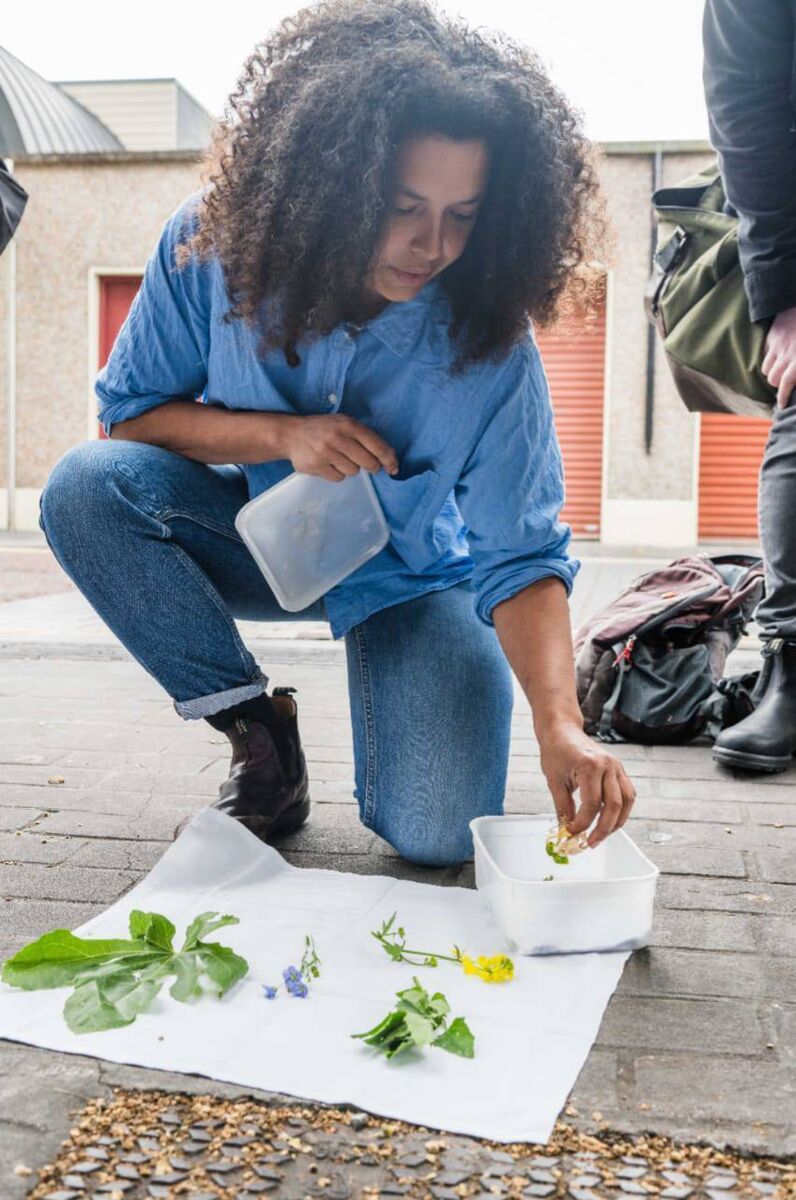
“Sometimes, walking through the city, you might see a runaway tomato plant on the sidewalk.
“I’m really interested in feral plants in cityscapes. Fig leaves, the odd magnolia or cherry blossoms are things I would pick for restaurants. Near the Elysian is a huge fig tree – I’d say every bar man in Cork picks leaves there to make syrup for cocktails,” says Epi.
“Things like crab apples, sour cherries, blackberries and rosehips are hard to get unless you know a Nana! They’re always picking these things; one woman supplies quite a few places in the city - she must have an army of grandchildren picking for her!”
As foraging increases in popularity, with chefs and home cooks alike looking to add wild flavours into their cookery, it’s also a practice that can connect a person to their environment and their sense of place, rural or urban, in a way that few other things can.
“You do get a little dopamine burst,” says Epi.
“People talk a lot about conservation, but it’s difficult to care a lot about it. Every plant is just either a weed or not. Being able to pick out what is edible makes you feel connected. You recognise that a plant has innate value - whether you know what it is or not. Knowing its name means you understand that this plant I was making fun of has more value to me now because I know what it is and it’s not just a weed.”
So how does a professional forager fulfil orders when the very nature of wild food means you might not know how much is going to be available?
“I prepare a weekly list which changes depending on what’s available. We pick to order, and try and move around a lot, too, so we’re not picking everything from one place, so we are foraging ethically,” explains Epi.
“The list changes from week to week as the windows are quite short for most things.
“Right now, it’s mostly coastal plants like sea aster, purslane, beet, rose, sea blight and rock samphire. All those coastal vegetables and herbs are salty, juicy and delicious. You don’t have to work that hard to unlock their flavour.”
When Epi is not out and about seeking tasty morsels from nature’s larder, she is riding high as the queen of Cork’s pop-up scene.
Working collaboratively with fellow chefs Padraig Nagle (Miyazaki), Sergio Gurrea (Da Mirco) and Matt Szpak (Glass Curtain, Cold Cuts), these events are as much about changing up the game for diners as they are about a chef stretching their creative legs away from their usual kitchens.
Epi’s longest-standing collaboration is with Padraig. The duo began by hosting their Low Intervention Sundays at L’Atitude 51.
The events are all about small plates of seasonal wild food cooked simply with an East Asian spin. Dishes are paired with selected natural wines by owner-sommelier, Beverley Mathews.
Keep an eye out on social channels for dates peppered throughout the year for these always anticipated events.
During the summer, Epi and Padraig are gearing up for two events in a pair of stunning West Cork venues.
First up, they head to Glengarrif and the wonderful Esk Mountain nature reserve on Sunday, July 26, for a woodland feast billed as a taste of the mountain.
“Guests will be encouraged to help forage for elements of their meal, things that are very specific to Esk,” says Epi.
“We’ll be serving spring rolls made with wild herbs; sujuk made with deer culled from the mountain, and wild bilberries and strawberries picked on the mountain for dessert. It’s going to be a feast that is a true taste of place.”
On August 8 and 9, at Goleen Harbour Eco Resort, Epi and Padraig will host a Wild Izakaya, a menu of yakitori-style sharing plates and ramen amped with wild flavours for a hyper-seasonal, hyper-local feast.
Later in August, for the Cork on a Fork Food Festival, Epi teams up with Da Mirco’s Sergio for Hedgerow Piatti & Aperitivo, an Italian small plates menu stacked with foraged ingredients – even the cocktails will be wild.
For Epi, these events reflect the place where they pop up. “I guess I’m always asking myself, what is the essence of this place?”
Keep up to date with upcoming pop-up events via Instagram @fiainwild.





 App?
App?


