Heroics and tragedy at 1895 blaze in Cork city
With the impending departure of the Augustinian friars from Cork this summer, PAT POLAND recalls a mid-summer’s night in 1895 when members of the community distinguished themselves in a heroic rescue effort
Heroics and tragedy at 1895 blaze in Cork city

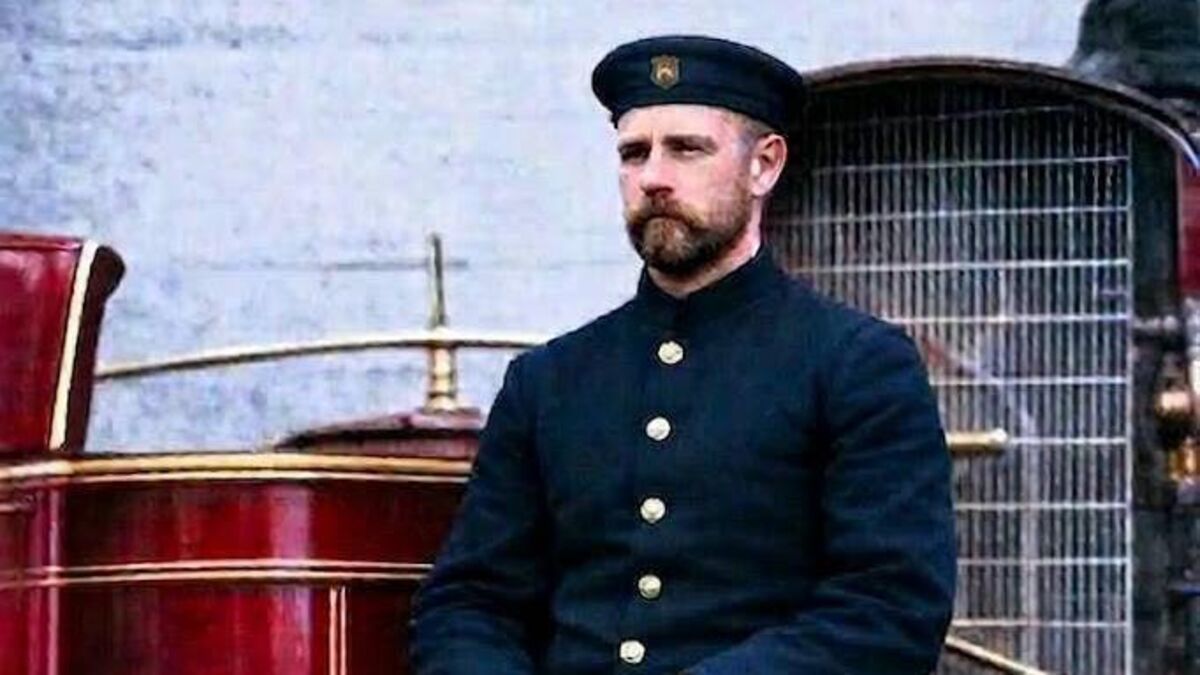
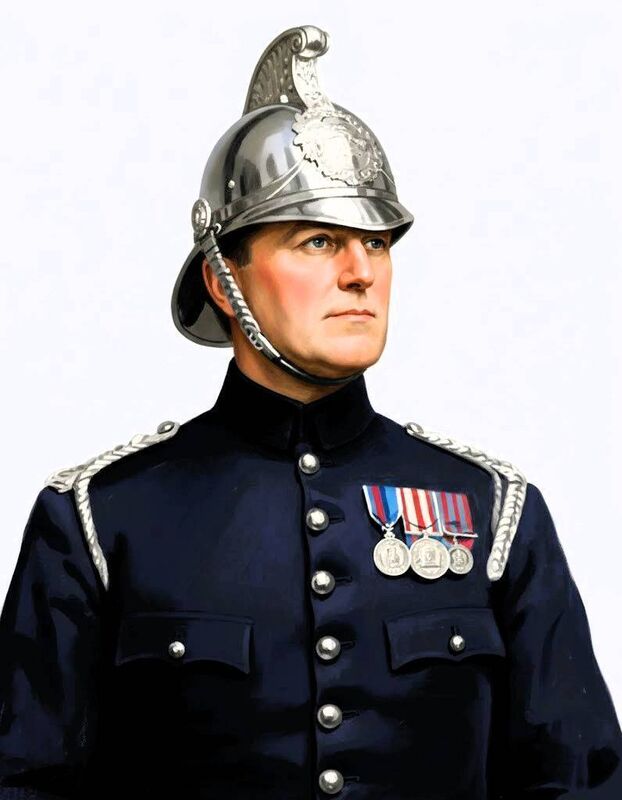
HERO OF THE HOUR: Firefighter James Keating, whom the Cork Examiner described as “having a lifesaving record second-to-none in the Kingdom”. 

Wearily, Father O’Sullivan closed his breviary, somewhat later than usual, his ‘office’ at last finished.
A passage in the Canticle of Simeon troubled him, and he made a mental note to discuss it with his spiritual director.

And on this evening of Saturday, June 22, 1895, he had also reflected at length on the heroic lives of the two 16th-century English Catholic martyrs, Thomas More and John Fisher, whose special day it was.

Fr O’Sullivan stepped to the window of his room in the Augustinian Priory on Great George’s Street - now Washington Street - in Cork city intending to open it more fully on this sluggish, mid-summer’s night.

It was still light, but he saw the lengthening evening shadows were embellished by another, more dazzling glare. And then, a shrill, horror-filled scream ripped through the still air.

For a moment, confused, he thought it was just another street row. Then he noticed the flames lighting up the street and heard the breaking of glass. A young woman was on the street in her night clothes.

“Dear God, help us!” she screamed, “people are dying!”

Fr O’Sullivan felt a moment of panic. He seemed to be the only person in the world able to help.

Never had he seen such a fire! Flames, fed by exploding barrels of paraffin, paint, turpentine, and great quantities of matches, were leaping out of the broken windows and coiling up the front of Lavallin’s Oil and Colour Stores; the roaring, crackling noises growing louder by the second.

Then he remembered his confrere, Fr Selly, who occupied a nearby room. Dressing hurriedly, both men ran across the road to the scene of the fire.

Along with Robert Bullen of Blarney Street, a passer-by, they entered by the side door of the burning premises and raced up the stairs, banging on the doors as they went to alarm the residents.

Two women answered their shouted calls, and as the fire intensified and smoke and hot gases funnelled up the stairs, all quickly made their way out on to the safety of the street.

Hardly had they done so when the dreaded phenomenon known as a ‘flashover’ occurred, incinerating everything in its path.

The gallant rescuers assumed that, receiving no response from some rooms, the residents were either out or had already evacuated the building, but they were wrong.

One woman did not answer because she was profoundly deaf and was now trapped above the raging inferno. Two other women, on hearing the first sounds of alarm, had made their way out through a skylight onto the roof where they gingerly crossed to the next-door building where willing hands pulled them to safety.

******

Meanwhile, over on Sullivan’s Quay, fire chief Captain Alfred Hutson and his men had just arrived back at the fire station, having spent all that evening battling a serious fire at McNamara’s Corn Stores on Copley Street.

Hardly had they drawn up when a breathless runner brought word of the drama unfolding on Great George’s Street. The brigade arrived on the fire ground in less than three minutes and at once got to work.

By now, the ground, first and second floors were heavily involved. Initially, Hutson was informed that all the residents were safely out, but it soon became apparent to him that this was not so.

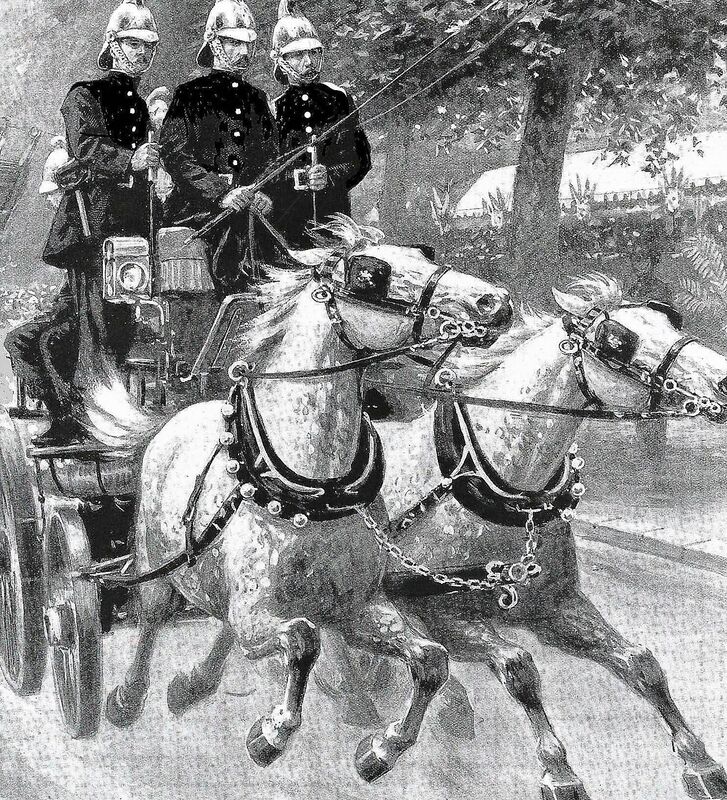
An illustration of Cork Fire Brigade en route to a fire around 1895, the year when the blaze broke out at the Washington Street premises

The wheeled rescue escape was sent for. At that time, the brigade’s horse-drawn appliances were not capable of carrying these heavy rescue ‘escapes’, so a number of them were located at various points around the city. The nearest one to the fire was at the ‘Fireman’s Rest’ shelter, then located opposite the Opera House on Lavitt’s Quay.
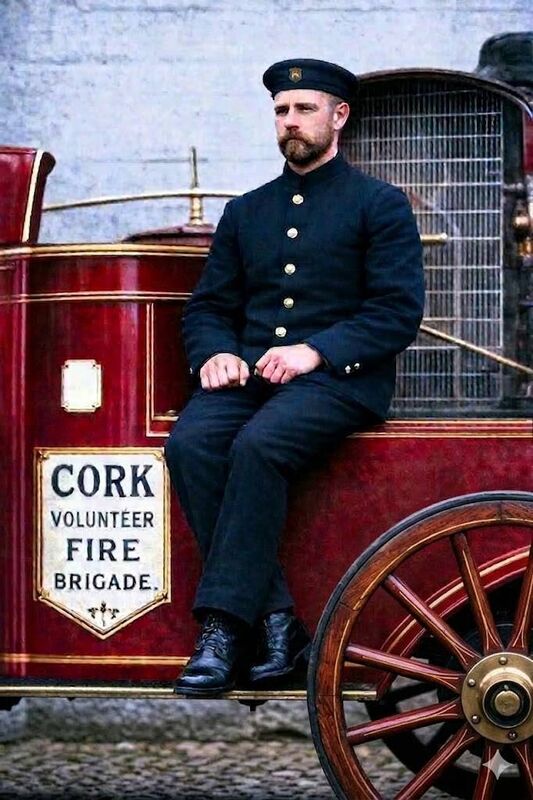
Less than 12 months before, the Rest was positioned on Grand Parade outside Grant’s Department Store but following complaints from the firm’s directors that it was spoiling the view of their newly-installed façade, it was moved to Lavitt’s Quay.

Now, after what seemed like an eternity to those watching - the brigade was first alarmed at 10.05 pm and the escape arrived on site at 10.20pm - the apparatus arrived in the charge of Auxiliary Fireman James Keating.

Keating at once ascended the ladder and gained entry to the burning building from the roof of the adjoining premises. His eyes burned in the pitch-darkness. His first breath caught in his throat as if his windpipe was blocked.

The Cork Examiner narrated how: “Having no light, and with clouds of smoke and steam making the search still more difficult, Fireman Keating groped his way through the rooms.

“After a most desperate search, in which he had to fight the flames, the plucky fireman found Mrs O’Connell lying under a table.

“He succeeded in bringing her safely down the escape, and the immense crowd cheered him loudly.”

The senior police officer at the scene, District Inspector Creaghe, later testified that “he never saw more meritorious conduct. Fireman Keating brought Mrs O’Connell down the escape as gently as it possibly could be done”.

Keating, having deposited his charge into the care of many willing hands, then re-ascended the escape and once again entered the blazing building to continue the search for the remaining occupants, but, unbeknown to him, the house was now empty.

The women who had been trapped above the fire, a Mrs O’Keeffe and a Madame Bridau who resided on the third floor, had, before the escape arrived, got out through an attic window onto the roof and made their way along the parapet to a skylight where they were helped in.

Nobody thought of informing the brigade of this, and Fireman Keating and his colleagues were subjected to further unnecessary gruelling punishment before they could declare the building empty.

Firefighter James Keating pulled a woman from the blaze on Washington Street in 1895 and was hailed a hero

The Cork Examiner reported: “When at last the flames were finally extinguished, the crowd cheered the Brigade.”
Sadly, Mrs O’Connell succumbed to her ordeal in the early hours of the morning at the South Infirmary.

A week later, a deputation led by Fr O’Sullivan and Mr Hart, the Manager of the Queen’s Old Castle department store, met with members of the City Council to urge them to provide adequate rescue, and other firefighting, facilities in the neighbourhood.

The hydrants in the area, they said, were not sufficient and telephonic communications were non-existent.

As a result of their complaints, new hydrants were laid down, Great George’s Street Royal Irish Constabulary (RIC) station was linked to the fire station by telephone, and a new Merryweather ‘Improved Telescopic Escape’, to command a height of 60ft (18.3 metres) was purchased at a cost of £74.

Until 1930, a fire escape was stationed inside the railings of the courthouse on Washington Street.

Postscript

When Cork Fire Brigade acquired its first fire engine - a horse-drawn steam pump - a decade after the 1895 blaze, in 1905, it was made in London.

Cork City Council approached the London Fire Brigade with a view to one of their officers supervising, and signing-off, on the field trials for the new engine (the Council baulked at the £9 cost of sending fire chief Hutson to London ).

The London chief politely declined, pointing out that such commercial undertakings were not part of their remit.

Rear Admiral James de Courcy Hamilton whose ancestor first installed the Augustinians in Cork in the 14th century

The chief - a former naval officer - was one Rear-Admiral James de Courcy Hamilton, whose ancestor, Patrick de Courcy, Baron Kingsale, was instrumental in bringing the first cohort of Augustinians to Cork around the beginning of the 14th century when they established their friary - now popularly known as the ‘Red Abbey’ - in the ‘south suburbs’.

St Augustine’s church and priory on Washington Street will close for good on July 12.

More in this section

The power of music: 'Singing has given my husband his life back' The power of music: 'Singing has given my husband his life back'
My Weekend: My ideal break...seeing an F1 race in Monaco with my brother  My Weekend: My ideal break...seeing an F1 race in Monaco with my brother 
Kerry v Cork - Munster GAA Football Senior Championship Semi-Final TV sport round-up: Cork footballers aim for double in Kingdom

Sponsored Content

Yuno Energy is powering ahead thanks to a relentless focus on customer service Yuno Energy is powering ahead thanks to a relentless focus on customer service
55 years of Cork Simon Soup Run: The light that has never gone out 55 years of Cork Simon Soup Run: The light that has never gone out
How to get involved in Bike Week 2026 How to get involved in Bike Week 2026
Contact Us Cookie Policy Privacy Policy Terms and Conditions

© Examiner Echo Group Limited

Add Echolive.ie to your home screen - easy access to Cork news, views, sport and more