Throwback Thursday: My gran gave birth to 11 babies in 10 years
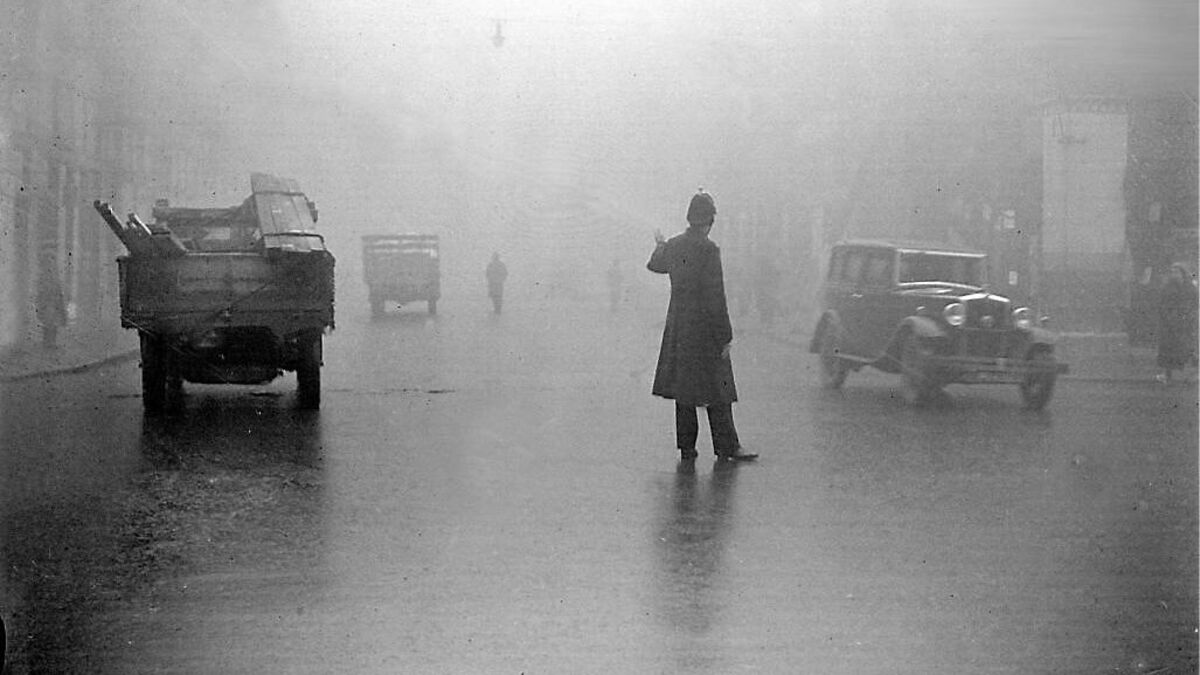
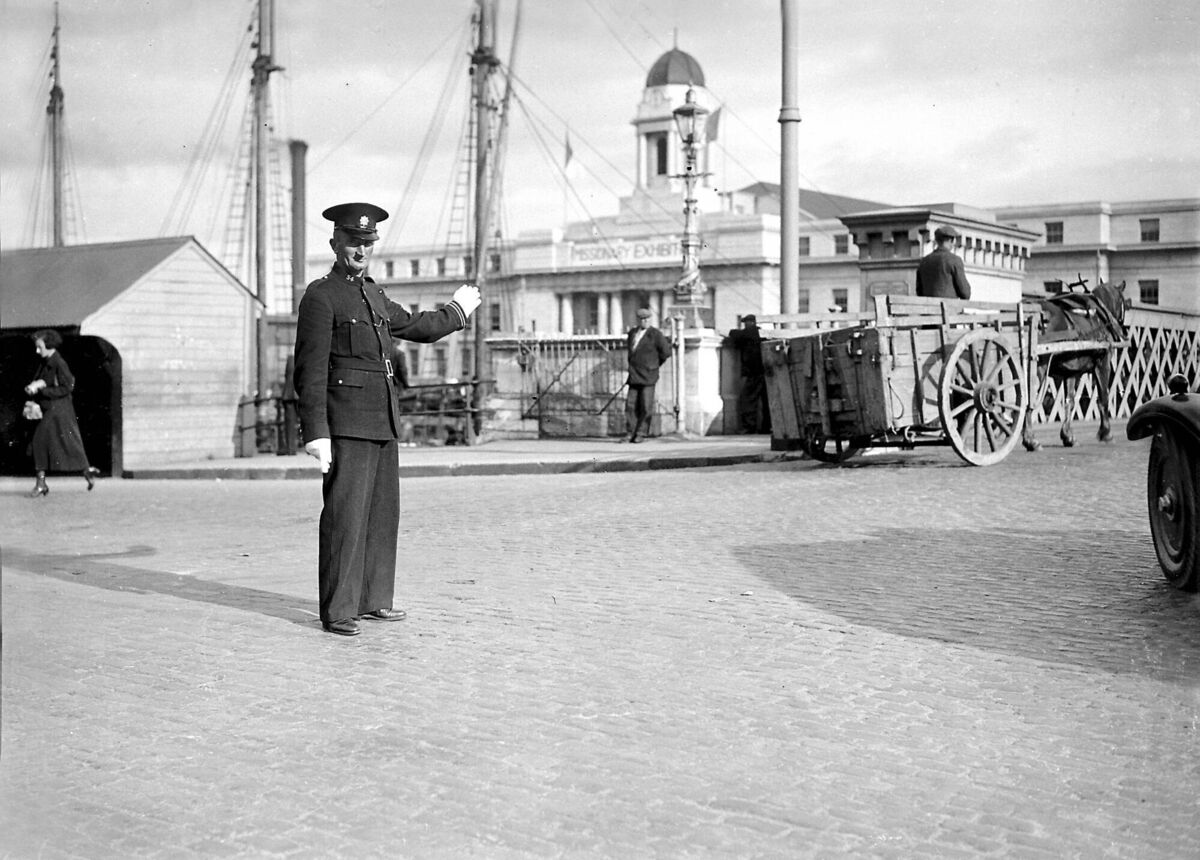
A Garda attempts to direct traffic in heavy fog at Singer’s Corner, Cork city, on January 4, 1934. ‘Fingers’ used to patrol on Patrick Street
William Grogan has written to Throwback Thursday to remind other readers of a famous garda who stood on the top of Patrick Street, directing traffic.
This was back in the days when traffic was light enough to be directable, of course. You’d take your life in your hands doing it these days!
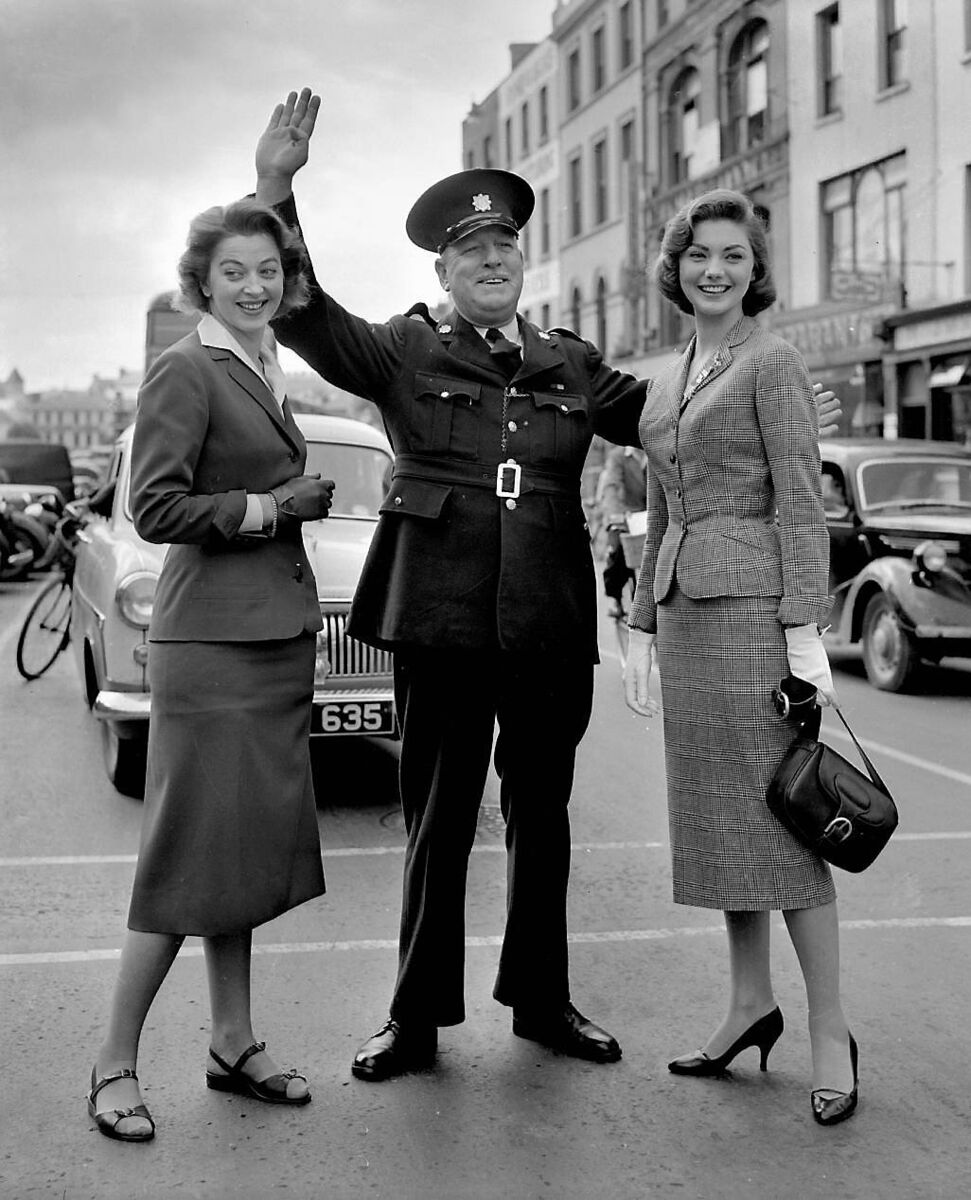
“He was known as Fingers because of the elegant way he directed the traffic – almost like a musical conductor,” recalls William.
“He used to nip into The Swan, order a shot, go for a short walk around the circular bar, and before he left the far door they’d hand him the drink; he’d head out the back and return to his point of duty. Fingers was one of Cork’s most famous characters.”
We remember him, William! Didn’t he wear snowy white gauntlet gloves, the better for his commanding hand movements and beckoning finger to be seen by all the many cyclists as well as cars? You wouldn’t have dreamed of disobeying him! Anybody else remember Fingers?
Now, back in the day, as most of you will remember, cycling was in fact the only way to get anywhere. From the smallest child going to school to the elderly grandfather picking up the groceries, we all lived and travelled by bike.
So it was timely to hear from Kevin Long who is progressing a great project on Cork’s cycling history. To that end, his team has organised a Cycling Cities Photo Exhibition which has just opened at Bishopstown Library in Wilton, and will run to November 27.
The exhibition shows the rich history and culture of cycling in Cork, highlighting it as an everyday mode of transport across our city over the past century.
As part of the exhibition, visitors will be able to view some marvellous historical photos and material capturing Cork’s cycling heritage. And there will be a visitor logbook too for members of the public to share their own personal memories and stories of cycling in and around our beloved city.
Members of the community, adds Kevin, can also reach them directly at info@corkcyclingcampaign.com.
This exhibition, he explains, is part of a broader project in collaboration with the University of Eindhoven, under their international Cycling Cities initiative.
“Our ultimate goal is to publish a book documenting 100 years of everyday cycling history in Cork—the first book of its kind in Ireland.
“We are actively applying for open grant funding to support the book publication and ongoing research.
“If any of your readers have experience in writing funding/grant applications and would be interested in getting involved, we would be delighted to hear from them.
“We can be contacted by email at info@corkcyclingcampaign.com. And you can read more about the project on our website: https://www.cyclingcities.info/your-city-next/cycling-cities-cork-experience/”
So look, we know so many of you will have your own memories of cycling and bikes, from the very first one you were ever given to the last, when you finally decided that cars were a lot easier.
Punctures to be mended, wheels to be changed, saddle bags and baskets to be found, early morning dashes to work, weary homeward returns, and so many wonderful trips out into the countryside or down to the sea.
Get down to that exhibition and record your own memories. As well as telling us about them here, of course.
Meanwhile, reader Rick Davitt has written with a query about an older and simpler form of transport: “I wonder how many of your readers remember making a Steerin-ah in their youth? Very few kids had a bike or a scooter when I was growing up. The answer was to make your own wheels.
“It was a huge feat of engineering for a young one of 10 or 11.”
The body of the Steerin-ah was made of timber with four wheels, either old ones from a dumped pram, or best of all roller bearings, the noise of which was great. The Americans called them soap box cars, originally built with discarded timber from soap crates.
“It was driven by gravity - luckily Cork has steep hills,” observes Rick.
“You steered the machine with a old rope tied to either side of the front axle, and the brakes were your rubber dollies. The walk back to the top of the hill was the killer.
“Now there is a soap box derby every year with far more sophisticated machines than the humble Steerin-ah. But I am sure we got far more fun than they ever will!”
Rick recalls: “My version was a timber chassis 4 ft long, 1½ wide. The back axle was static. The front one was bolted to the frame in the middle, plenty of washers and not too tightly, for steering purposes.
“Before Black and Decker, you bored the holes with a hot poker heated on the gas ring. Steering was with a rope or strong hairy twine. The wheels were roller bearings salvaged from a garage waste bin. Bigger ones at the back for extra speed.
Living on Magazine Road, says Rick, there was no shortage of hills. “Down to Wellington Square, Highfield Avenue, Highfield West. For a bit of comfort you took one of your mother’s cushions to sit on. Happy days.”
This writer’s brother, Tom, used to make his own ‘steerin-ahs’ too.
“Timber was easy enough to find, a few short leftover planks, that sort of thing,” explains Tom.
“The wheels were the important feature. I tried small ball bearing wheels first, but they were a bit slow and noisy. I went down to the Coal Quay and into that great dark cavern of a building there where all the trading went on back in the 1950s, and bought pram wheels from an elderly shawlie who sat enthroned on a great heap of old clothing.
“You could try bargaining on the price, but they were old hands, those shawlies, and you wouldn’t get very far.
“I must have been seven or eight at the time. Probably got the necessary cash from collecting old newspapers and selling them to that waste paper place down there somewhere.”
Tom recalls: “Those pram wheels went really fast, so you had to cut a hole in the main body of the cart and have a stick to push down it to act as a brake.
“The steering was done by putting your feet on the axle at the front and pushing one way or another. You usually had a rope attached to it too, but the feet were the guides, really.
“I used to fly all the way down the wider pavement on Wellington Road, right from St Luke’s. You got up a great speed there as long as there weren’t too many pedestrians in the way. I could get as far as York Street on the flat, after a good fast downhill run.
“No, never had an accident. But loved it. It was my first kind of driving, I suppose.
“In later years I progressed to bikes, motorbikes, and eventually cars, but never forgot the excitement of a wild roller-coaster dash on a steerin-ah.
“You know, I’d nearly make one again now – but with the traffic we have in Cork these days, maybe it wouldn’t be that good an idea!”
Now, here is something to which we want to draw your attention: the different life led by those who emigrated in the harsher years from the experiences of those who stayed in Ireland and grew up here.
Pauline, who was born in London, but came over every summer on the Innisfallen to stay with relatives, has shared her parents’ story with us.
“Both my parents emigrated. My father was born in 1915 in Templeglantine, Abbeyfeale, the youngest of eight surviving children. His mother died a couple of weeks after his birth, having given birth to 11 children between the years of 1905 and 1915!
“She had been the village schoolmistress and had continued teaching during all those years.
“My father’s father had a saddle-making business. After his wife died he devoted himself more or less exclusively to Ireland’s Cause. This left the children to more or less look after themselves.
“One of them opted to go and live with a spinster aunt, but the oldest daughter, my auntie May, at the age of 13, decided that she was going to keep the rest of the family together and she took the responsibility upon her shoulders.
“My father was the only one of the family to emigrate. He went to London and worked in various jobs, but when the war started he joined the Royal Navy.
“I’m not sure when my parents met, whether before or after the war, but he was demobbed in 1946 and they married that December.”
Pauline’s mother was born in 1918 in Monkstown, the only daughter in a large family.
“She had a tough time being the only girl, as the boys were not expected to do anything around the house, and she was expected to do it all,” says Pauline. “Her father was a tenant farmer, and I think my grandmother worked from time to time at the Big House along the road. Their grandmother lived with them and she was the one my mother adored.
“Three of the boys emigrated to England and were more or less never heard of again. One married and lived in Carrigaline. The last boy remained at home and lived there with his mother until she died.
“My mum went to London to train as a nurse around 1936. Soon after the war started she was tempted out of that career by the high wages being paid in the munitions factories. She never returned to nursing, although as a wife and mother she would take the odd part time job.”
Pauline, thank-you for sharing that.
How many other readers have their own stories of parents who took the boat to better their lives? Let’s hear them!
Now, George Harding writes: “Your recent article mentioned the three big stouts available on the market, and my favourite is Murphy’s - sorry about that Mr Beamish! Enclosed is my homage to it, which you might make you chortle, as they used to say in the Beano.
Ode to a Pint of Murphy’s Stout
When the auld doll nags me
And the work it shags me
And the feeling in my belly is full of doubt
In a matter of seconds
The high stool beckons
To an achingly desired pint of Murphy’s Stout.
When my back is aching
From an hour of raking
And my big toe cringes from a pinch of gout
I hightail nightly
Albeit unsprightly
To the high counter and the Murphy’s stout.
With the kids all screaming
And no chance of dreaming
By the log fire that has just gone out
My heart starts throbbing
And the hobnails hobbing
Down the dark road to the pint of stout.
When I’m sometimes thinking
About seldom drinking
And overcoming the present awful drought
Nothing else matters
Including bats and batters
But the foamy head of the black Murphy’s Stout.
Of course, we scolded Mr Harding mightily for preferring Murphy’s to Beamish, and he wrote back with a secret confession:
“I am a bit of a hypocrite, Jo, I have been savouring Beamish for some time now! My brother introduced it to me in Callanan’s pub. In fact, I wrote that poem 30 years ago…”
Well come out, then George. Be brave, be open, be a man and admit you love the Beamish! As any good Corkonian should.
Which reminds us, when, oh when are they going to make something deservedly lovely out of that beautiful old brewery which graced South Main Street and the city’s skyline for so many years? What are they DOING down there?
Tell us your stories! Email jokerrigan1@gmail.com, or leave a message on our Facebook page: www.facebookcom/echolivecork.