Throwback Thursday: A stroll through the shops of my town in 1950s
This week in Throwback Thursday, JO KERRIGAN hears the reminiscences of a reader who recalls the shops of his East Cork home town as a child. 
Throwback Thursday: A stroll through the shops of my town in 1950s

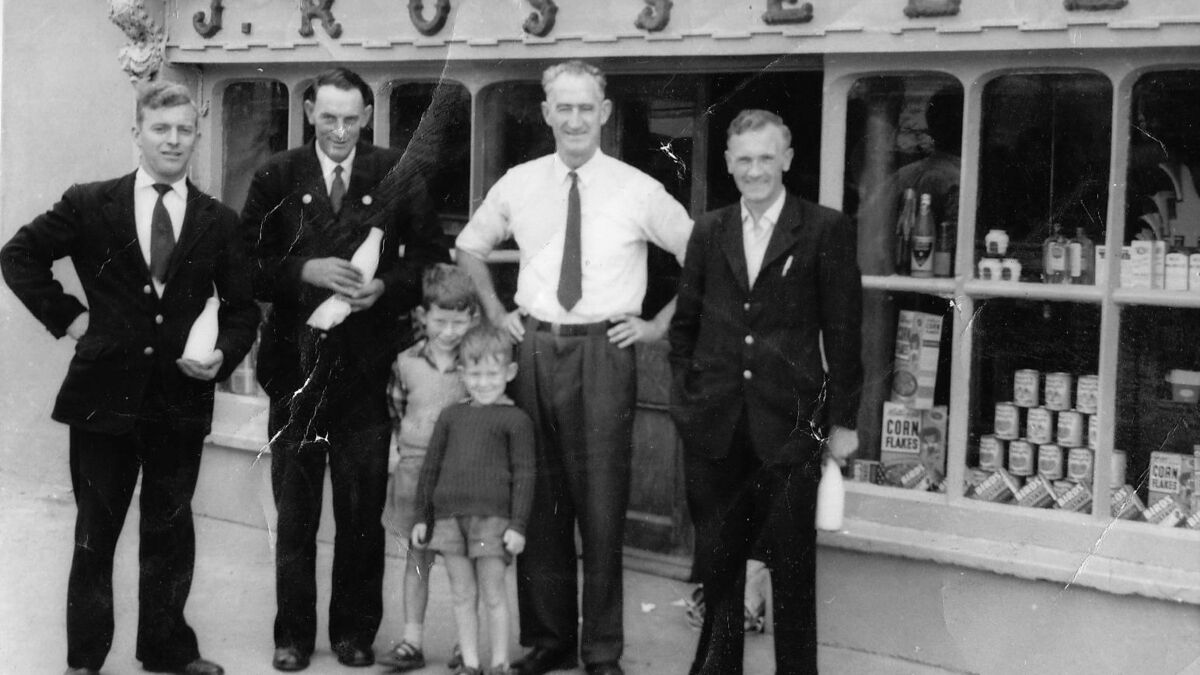
Mick Russell, in white shirt, outside J. Russell, which was the main ship in Whitegate where Micheál Kenefick's sister Joan worked. Picture supplied by Micheál Kenefick

Do we really believe that we live in an age of incredible progress? That our parents and grandparents would not have credited what we are able to do now? That never in the history of mankind could anyone have imagined the developments and inventions that make our lives a perfect Elysium?
Mobile phones, microwaves, Zoom meetings with friends in Australia, AI, even little automatic monsters that mow the lawn for you and then put themselves to bed? What a wonderful life we do lead!

Oh, come on! We know that at least one person emphatically doesn’t subscribe to that belief.

Throwback Thursday reader Mícheál Kenefick has sent us a peroration, a diatribe, a clarion call to set the record straight.

The title of his piece might raise an eyebrow or two, but since it’s what he truly feels, and every word comes straight from the heart, we will leave it as written:

Progress, Me Arse

“With the prolific rise in online shopping and deliveries, including groceries, for a considerable fee, to our door, our grandchildren assume that we have made huge progress and our lives have become much easier,” opines Micheál. “Nothing could be further from the truth.

“I am certain they have no idea that a better service was available 70-plus years ago, when the shop actually came to the door and one could physically choose there and then without the dreaded delivery charge.

“So also did the milk, directly from the cow - no bottles or cartons or plastic to create litter - just a metal measure and a can to be used over and over forever.

“Similarly, the breadman arrived daily with fresh bread from the bakery.”

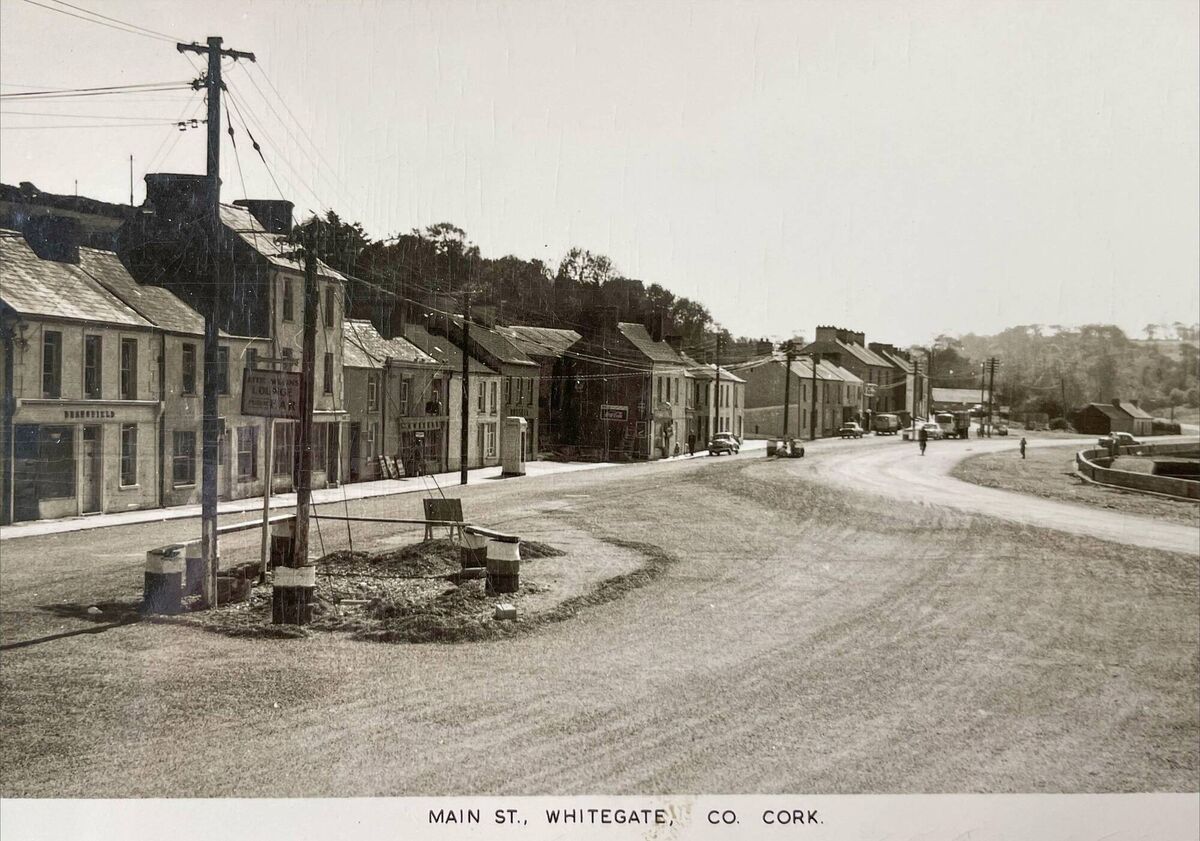
Micheál then gives us a glimpse of what life was like in the small hamlet of Whitegate on the eastern shores of Cork Harbour in the late 1940s and through the ’50s.

A postcard depicting the main street in Whitegate, Co Cork, as it was remembered by Micheál Kenefick

“Starting at the southern end of the village was the chemist’s shop. Pills and potions. Minadex and senna tea. Cod liver oil and malt. Zinc ointment and Zambuc. Everything that was required to keep us healthy was right on our doorstep.
“Next came a grocery and light hardware store. The hardware section was soon to become a separate entity and was in its heyday a real ‘needle to an anchor’ shop. It is almost certain that the last Primus needle bought in Whitegate was sold over this counter. A successful hackney business also operated from this store.

“Uptown is next, and here is a real cornucopia of activities fit to rival Manhattan.

“First, the bakery, delivering steaming-hot fresh bread daily to its own bread shop. This is where I saw my first sliced pan. Pink wrapper for thin and blue wrapper for thick.

“Right next door is the meat shop, selling its own meat, with huge carcasses hanging on massive hooks along the wall, slaughtered in the village in the slaughterhouse, and there would be dishes of drisheen and tripe in the window.

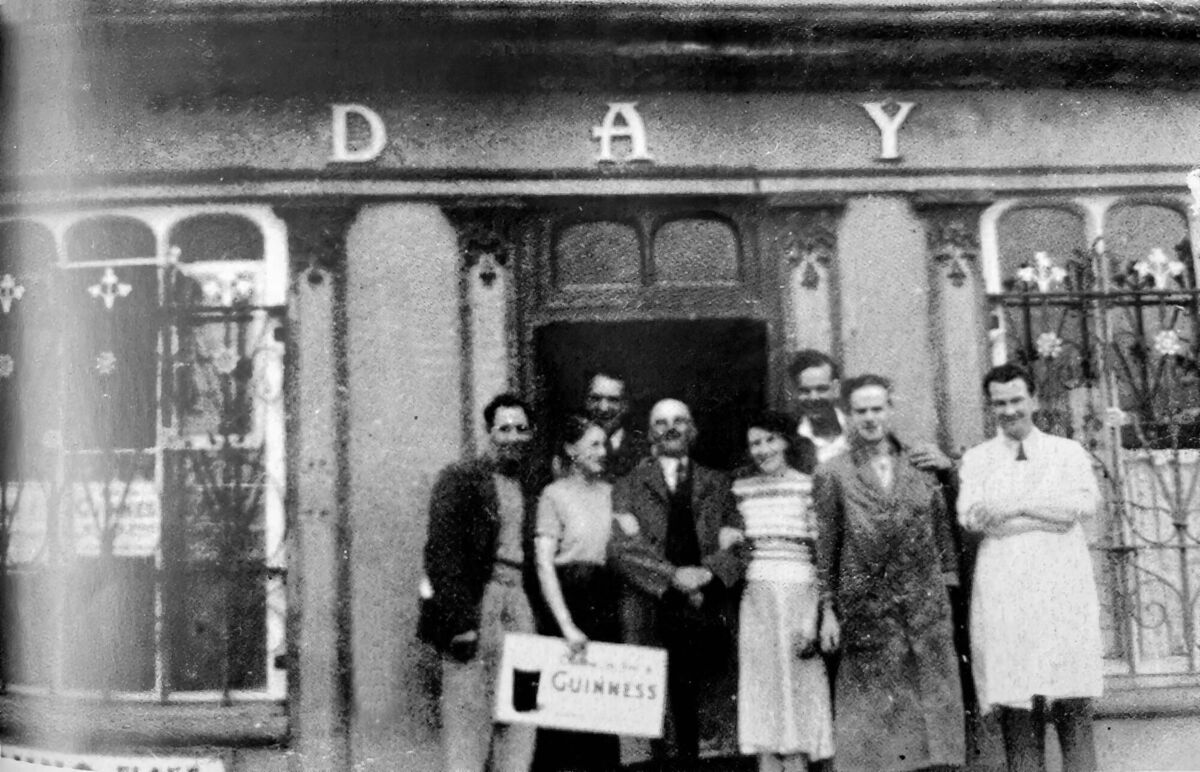
“Also in this stockpile of trade was a wonderful pub with its magical snug where some of the village children got free lemonade on Sunday before official opening time.”

A group of people outside Day’s pub in Whitegate with proprietor William Day centre with moustache. Kevin Day is in the white coat, his son, a butcher, with Day employee Davy Ryan beside him. Picture supplied by Micheál Kenefick

Micheál continues: “Next door again, and it now gets really special, for here is an amazing haberdashery store, a small conference centre, a meeting place, a haven of comfort and warmth where people often just came to talk or maybe have a bottle of Little Norah lemonade and a bun at the counter.
“It was ideal for many a last-minute item as it had late opening for the benefit of its customers. Telecommunication contact with the outside world also took place from a private room in this shop where the first phone in the village was available to the public.

“The outside world in that era was certainly no more than 10 miles away, and was a two-digit phone number.

“It is hard to imagine now, but neighbours without phones could receive incoming calls, as even in the depths of winter the shop owner would walk up or down the street to call a neighbour to the phone, while a customer would ‘mind the shop’.

“It gets even better!” promises Micheál.

“Next up is the bookmaker. The real deal. ‘Turf Accountant’ in large letters on the frosted glass window. A shilling each way on Royal Tan. A shilling win on Nicolaus Silver.

“Just a few doors down we have the dentist who arrived once a week to his rooms (and whether they needed pulling or not, they were whipped out at the first onset of ache.)

“In the same building across the hall was the bank. Once again the real thing. Munster and Leinster Bank, Whitegate Branch, and the brass plaque which adorned the wall in A I B Midleton has since been kindly donated by the bank to Whitegate National School.

“In case anyone had a few shillings to leave in a will, W. St Clair Rice Solicitors, whose main office was in Midleton, also had an office here.”

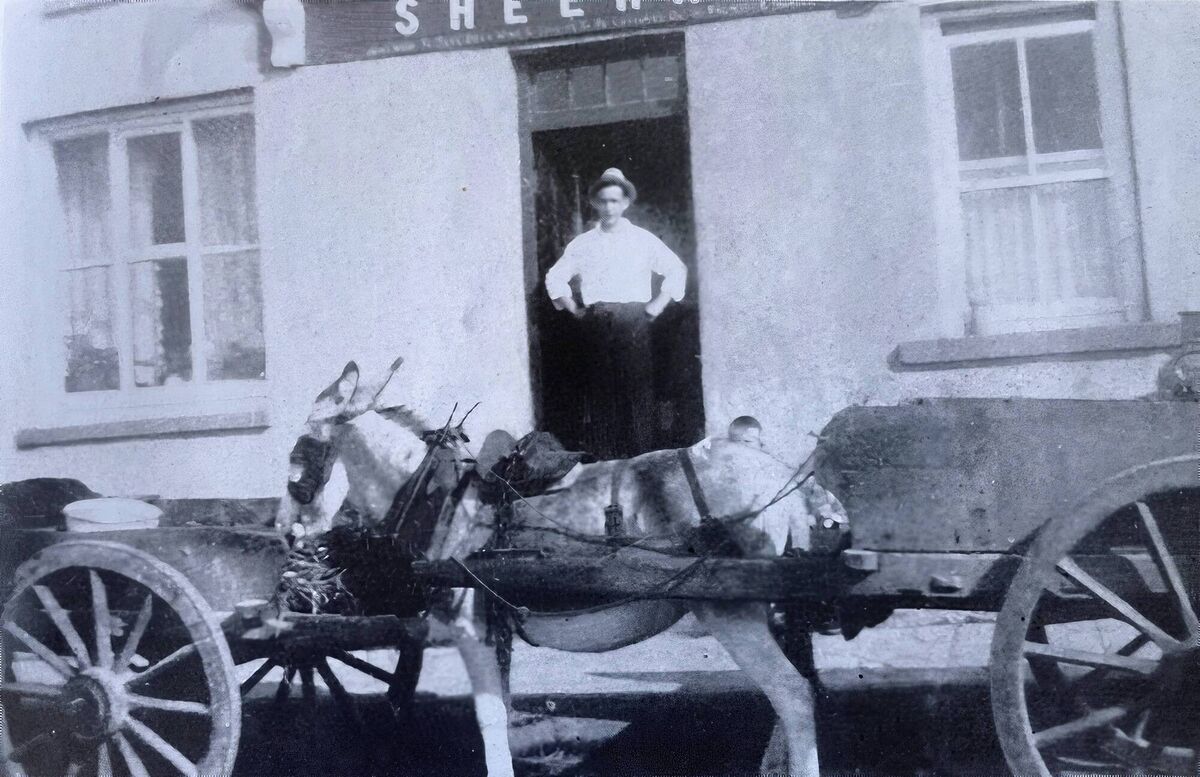
Then, recalls Micheál, there was another pub “with three big steps so be careful coming home, and next door the post office and area telephone exchange. A maze of leads and sockets and a board with what seemed like a million holes.

Sheehan’s pub in Whitegate, which had three steps, recalls Micheál Kenefick, and was beside the post office. This was an era when donkeys and carts were the main mode of transport Picture supplied by Micheál Kenefick

“The postmistress dispensing stamps, pensions, and postal orders and red penny saving stamps for the children’s cards which, when full, could be exchanged for two sixpenny orange stamps to be stuck in the green saving book.
“The telephonist busy plugging in or removing sockets at the very start of the telecommunications explosion.

“The post office was also home to a library for a short period in the late ’50s/early ’60s where we had access to cowboy books by Zane Grey - Riders of the Purple Sage - and The Lone Star Ranger.

“The Mobile Library came once every two weeks to the school and to the village (as, believe it or not, it still comes to this very day. One service at least that has survived.)”

Micheál continues his trip down memory lane.

“Next door again for a major operation - the garage. A hive of all sorts of activity: hackney cars for business, pleasure, sporting occasions and religious services; petrol pumps, car and bicycle tyre sales and repair kits, and general mechanical and puncture repairs. The garage also had a truck for delivery and collection of goods too large for a car.

“The simple black letters on a white board next door read TEAS. How about that - tea and queen cakes, plain tea with brown and white bread and butter and jam or meat. Teas with ham, lettuce and half a tomato - wonderful.

“Now, if you want a hurley made - custom built no less - then just turn up the boreen with four shillings and call every day after school to watch it being made - proud as punch the day you brought it home.

“At the bottom of the boreen was a brand new custom-built general drapery store. Working clothes and Sunday clothes, shoes and boots in a choice of colours - black or brown - and rubber dollies in many sizes but in one shape and colour.

“It is worth noting that this was a first and not very successful venture for what has since become a mega success story in the retail rag trade, with major emporia across Munster, including a superstore in Cork city.

“This era was the very start of rationalisation and second next door was where we collected the milk when it no longer was being delivered door to door. Same tin can but no pony and trap anymore.

“Second next again as we now head downtown is another shop. This was our sweet shop – Rex bars, sherbets and liquorice pipes, conversation lozenges, lucky balls, and if you won the threepenny bit you had to leave it until the remaining sweets were sold. Chocto bars if we had tuppence, and soft ice cream.

“Right next door, another grocery store and another place for the elders to meet and talk as well as to shop.

“Next is the drapery, with the latest fashions and a service to source a dress or costume for the rarest of rare invitations to a wedding.

“Next again, owned by the same family, is the major downtown general store. This place has everything - groceries, fruit and veg, country butter in big slabs patted into pounds or half pounds before your eyes, and stock fish, Finnan haddie and kippers on Fridays, leather to sole our shoes, and cards of protectors which would be nailed on immediately, even on to the rare new shoes, to save the sole from excessive wear, thereby prolonging the life of the shoe or boot.

“We could be heard for miles running up and down the street and could make sparks after dark!

“A side of bacon would be boned and rashers sliced to order on this wonderful hand-powered slicer. Methylated spirits and paraffin oil for the Primus, rubber boots, handles for shovels and an array of bits and pieces were also stocked.”

Micheál adds: “A habit for the laying out of the dead could also be purchased here with the soul of discretion assured, in case word would get out that someone’s time was almost up.

“A van with himself and one of the shop assistants would make a weekly delivery out the country (which at its furthest point was only three miles away).

“But as children our real love for the place was because it was also the newsagents and it was here we got our comics every week— Dandy and Beano before graduating to Bunty and Judy for the girls, which the boys also read, and Hotspur and Victor for the boys.

“This was our introduction to reading and we would wait, not so patiently, outside the shop for the bus to deliver the comics every Thursday.

“Another wait while they were ‘made up’ and then there they were - Desperate Dan, Korky and Dennis the Menace, the Four Marys, and Roy of the Rovers banging in the winner from 40 yards in injury time.

“Not to be out-done by its main rival with the office up the village, Bank of Ireland had an office here in the front room of the private residence and met weekly with its customers. Mo Léir.”

Mícheál, you have recaptured so beautifully a simpler yet so much more enriching community-based life, with everything you could want or need within a few minutes walk.

And so much daily contact, the daily meeting and greeting and chatting, aunts, uncles, relatives, friends, the postman or the milkman checking to see all was well, the familiarity of a world where you knew your place within it, and everybody knew you.

Yes, perhaps above everything else, we have lost that sense of community, of belonging. Today we rarely even know our next door neighbours!

Anybody else remember how things were where you lived in younger days? What shops you frequented? What comics you read? Your favourite toffee bar? Or did you prefer sherbet?

Share it with the rest of us. Email jokerrigan1@gmail.com or post to our Facebook page: www.facebook.com/echolive.cork.

More in this section

Throwback Thursday: Remembering Cork’s caterers on railways Throwback Thursday: Remembering Cork’s caterers on railways
Is Jim Young Cork’s best ever sportsman? Is Jim Young Cork’s best ever sportsman?
Throwback Thursday: Memories of Kent station ...and the man who missed seeing the Beatles Throwback Thursday: Memories of Kent station ...and the man who missed seeing the Beatles

Sponsored Content

Gas Networks Ireland, committed to conserving and enhancing biodiversity Gas Networks Ireland, committed to conserving and enhancing biodiversity
 EirGrid, ensuring nature thrives in journey to cleaner energy future EirGrid, ensuring nature thrives in journey to cleaner energy future
The future is flexible for cleaner energy use in business The future is flexible for cleaner energy use in business
Contact Us Cookie Policy Privacy Policy Terms and Conditions

© Examiner Echo Group Limited

Add Echolive.ie to your home screen - easy access to Cork news, views, sport and more