Throwback Thursday: Pies and pints...Life of a Cork barman in ’70s
This week on Throwback Thursday, JO KERRIGAN hears a barman’s account of life behind a Cork city bar, plus an eyewitness to a ship’s evacuation in 1947. 
Throwback Thursday: Pies and pints...Life of a Cork barman in ’70s

Pints of beer in pub bar counter /Heineken BAM Ireland plans for a conference centre and regeneration plan for former Beamish and Crawford site.

Remember all the memories of Moore’s Hotel that poured in some weeks back? Well, now we have had some more marvellous recollections of Cork of the past, this time from Der Calnan.
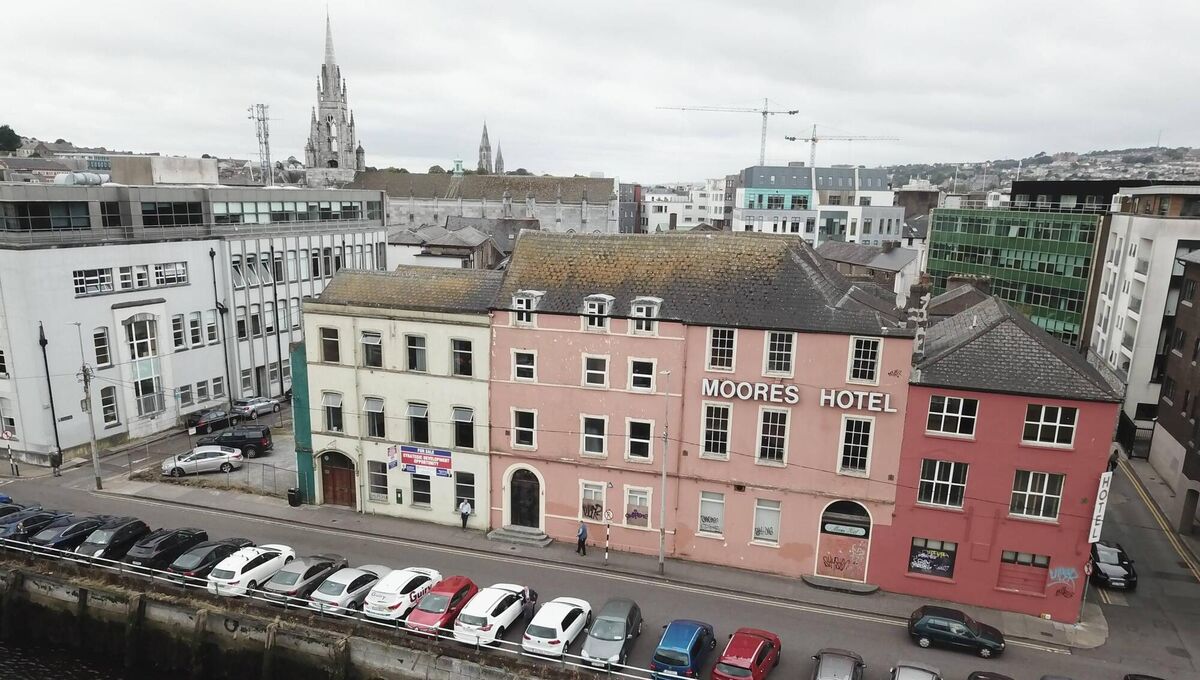
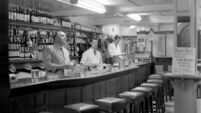
“I always enjoy reading Throwback Thursday, and it got me thinking of when I worked as a young fellow and part-time barman in the Island Rooms at Moore’s Hotel in the late 1970s. Probably one of the best jobs I ever had!” said Der.

“There was a big, long bar counter, with no fewer than eight barmen (real barmen, who could remember orders), and a team of glass boys. Each barman had his own cash register, as we worked on commission, which was unheard of, and I’ve never seen it happen anywhere since. You had a basic wage which was topped up by commission, based on your take, which kept you on your toes.

“It was Cork’s biggest and best cabaret venue which was open and full every Wednesday, Saturday, and Sunday night. Yes, and Sunday nights! How times have changed! The Showbands era had come to an end, so there was no shortage of quality acts and musicians around to entertain the big crowds,” recalled Der.

“Local bands The Arrivals, Barry And The Tree Tops, and a few more had all come from the showbands and knew their stuff. You would then have the half-time guest artist, usually some well known star introduced by Noel Magnier who always looked the part in his black tuxedo.

“You would check out the big Echo entertainment page to see who was playing, and the large Island Room ad with its trademark palm tree sticking out would say, ‘Tonight, All The Way From Dublin, Sunny Knowles, Red Hurley, Tony Kenny or Mr Pussy ‘Alan Ambsy’, or someone like that and you would think, ‘Jesus he must be good, he’s coming all the way down from Dublin!’”

The former Moore's Hotel on Morrison's Island in Cork. 

You’re raising an interesting historical point there, Der. Once the showband era had, sadly, faded out, there were so many experienced and top-class performers out of a job! The fortunate few went west, to America and the glitzy arenas of Las Vegas or Los Angeles, but the others had to find some other way of getting their living.
In an odd way, it’s reminiscent of how circuses blossomed and grew after the Battle of Waterloo and the end of the Napoleonic threat. Suddenly, all these cavalrymen and their horses were not needed any more. What did they do? Put their experience and determination to good use, and started first riding performances, and then whole circuses.

Or, to take another example, closer to home, the close of World War I put many experienced lorry drivers out of work, and that saw the beginning of general public bus services, at a time when very few people had cars.

But back to Der Calnan’s memories...

“On Sunday nights, guests would get a steak & kidney pie after the guest artist had finished, included in the price of your admission ticket. As food was being served, that meant an extra hour of the bar. It used to be 10pm Sunday closing back in those days, so everybody was delighted to be there until 11pm, and maybe a little bit more on occasions… Say nothing!

“In fairness, the pies were a bit hit and miss, and by the time we got our share, you might get a bit of steak and the fellow next to you got the gristle, but after a long day out it was like fine dining!

“The Island Room was well marshalled by Pat & Tony who blended in perfectly in their tweed jackets and shirt and ties. No bomber jackets or tough guy image, and I never remember trouble. Union Quay Garda Station was right across the river from us and I don’t think we ever needed their services.

“The talent (and I don’t mean the band in this case!) was always top class. All of us young barmen must have fallen in love many times, at least in our imaginations,” says Der.

“Moores was also well known for quality food, and in the times of dinner dances had their fair share of those as well, although never on the cabaret nights. Mrs Hayes would send us around to the long tables while people were eating, to try and sell bottles of wine. What a waste of time that was. Wine wasn’t the thing then, and if you did buy a bottle, sure you’d have to offer it around and that wasn’t going to happen!

“You also had to do a very discreet head count while people were eating. You’d be terrified coming back to her that your number might be different to hers and you’d be made do it again.”

Der continues: “Dinner dances usually came with extensions, so you earned a bit more those nights. Mr and Mrs Hayes were decent people, they always reserved a night for a staff Christmas party which included all the hotel and bar staff and the regular bands who played during the year, including dinner and bar.

“On a sad note, on one of those late nights, my brother came to get me as my father had died suddenly at home. No mobile phones then. But overall great teenage memories.”

What vivid recollections, Der! Thank you so much for sharing them. You bring back those happy times so vividly.

Now a story from Joe Terry that couldn’t be more different. As a child in 1947, he was witness to a daring sea rescue off the east Cork coast.

“One of my earliest memories dates back to the stormy night of February 1, 1947, when my father was playing cards with neighbours at O’Connell’s farmhouse beside Ballybrannigan Strand, in the parish of Aghada, County Cork.

“Johnnie O’Connell, my godfather, who had been out earlier that evening, arrived with urgent news. He had encountered a rescue crew from either Ballycotton or Guileen who were seeking directions to a cargo ship in distress, floundering in heavy seas off Ballyshane, an adjoining townland. The following (below-freezing) morning, our father drove my elder brother and me - aged four years and four months - in his recently purchased Baby Ford car to Ballyshane.

There, we watched as the crew of the SS Irish Plane was rescued using a breeches buoy: a canvas seat shaped like a pair of breeches, suspended from a strong hawser rope stretched between the ship and the clifftop overlooking the rocky foreshore.”

Joe explains: “All 33 crew members were hauled by a whip line rope to safety across the churning sea-filled chasm between ship and shore without serious injury, with the sole exception of the captain, the last man to leave the vessel, who broke a leg and was subsequently treated in the Mercy Hospital, Cork.”

Gosh, what an experience for a four-year-old, Joe! No wonder you remember every moment of it! And thank you for sharing it with us.

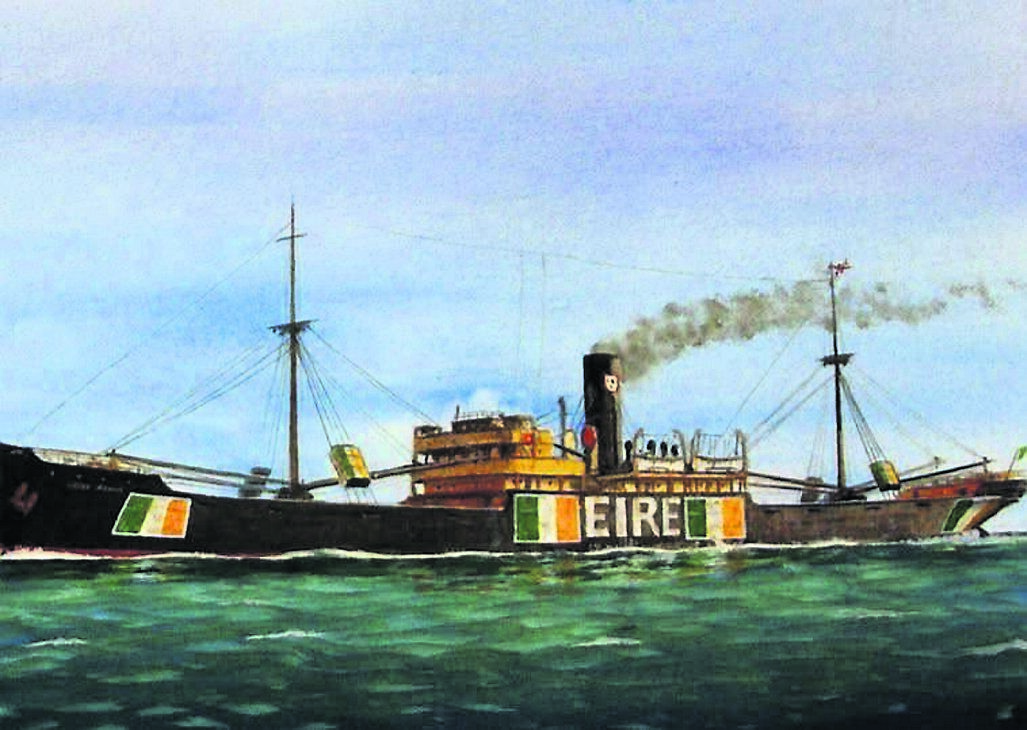
The Irish Plane in wartime, an image taken from the Irish Shipping Facebook page. Its crew were rescued when it was in distress off Cork in 1947

There have been many wrecks off the south-west coast over the years, though thankfully fewer in recent years. This writer remembers being taken down to several in her childhood, since my father was always fascinated by the sight of an abandoned boat lying across sea-washed rocks, and would lift us on board to scramble around and explore. Probably would be arrested for doing that now, but times were easier then…
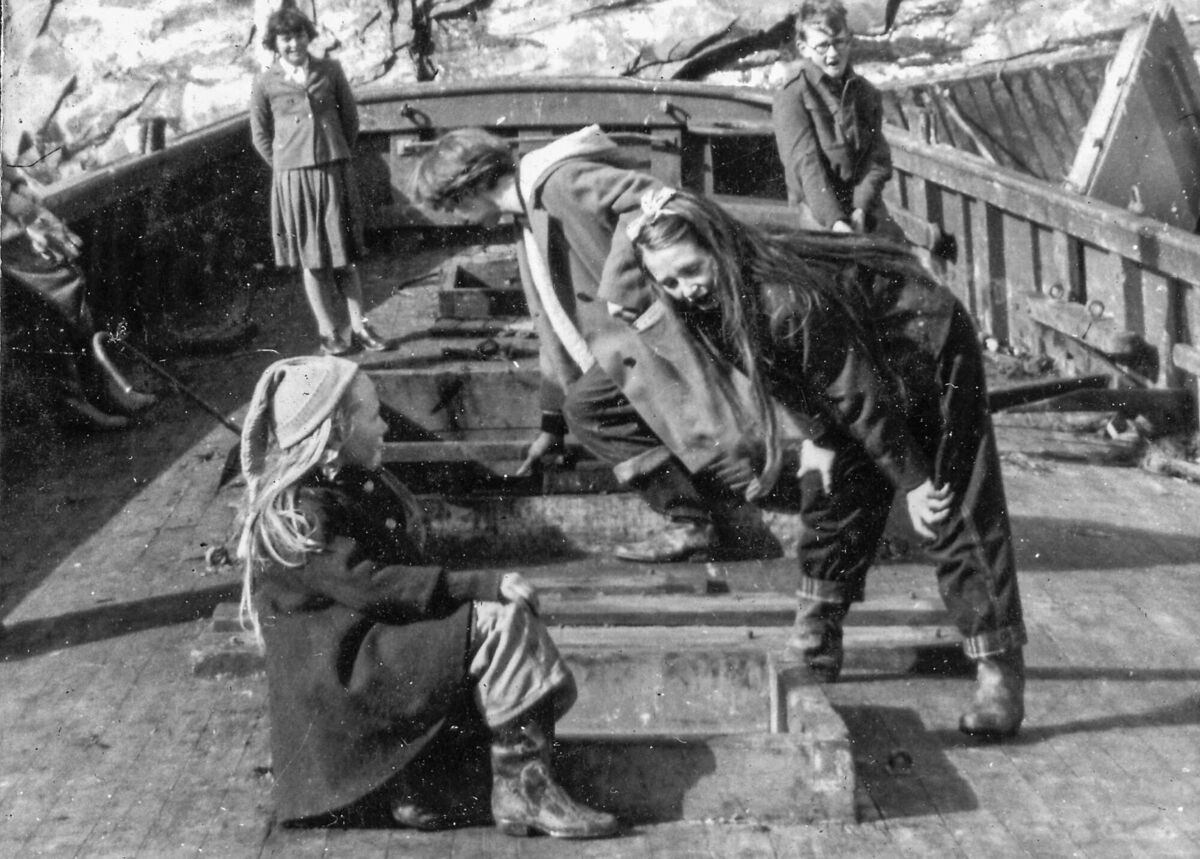
Jo Kerrigan with her family on a ship-wrecked boat - her father was fascinated by them and would explore them with his children. BELOW: An image following a fire on Patrick Street in May, 1917

Brian Cleare posted a great picture of that same Irish Plane on the Irish Shipping Ltd 1941-1984 Facebook page.
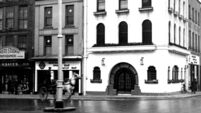
Meanwhile, after the great information provided by Frank Roche on that legendary Patrick Street bookshop, Masseys (now occupied by Dubray Books), he went on searching, and found some wonderful detail on our main thoroughfare in years gone by, particularly a dangerous fire which damaged both that shop and the surrounding businesses in 1917. In all, Nos 80 to 85 Patrick Street were affected.

“Nos 80 and 81 were the premises of Harrington’s, trading as the Cork Chemical & Drug Company,” explains Frank. “No 82 was tobacconist Denis Buckley; 83 was Francis Brennan, a jeweller; then came Masseys, and lastly Hipps clothing store at 85.

“Harrington’s had storehouses behind all those shops, holding large quantities of oil and paint; there was a back entrance on Carey’s Lane. The fire started in one of the stores.

“The fire brigade came quickly and were very effective – the blaze didn’t last long but it was intense. Nos 80, 81 and 82 were destroyed after the roofs collapsed.

“On either side of Masseys, the Brennan and Hipps shops mainly suffered water damage, but the bookshop had rear windows which were shattered by the blaze and much of the stock was lost. ‘Mr Massey’ – probably Samuel at that stage – estimated the loss at £6,000.”

“At the time of the fire, Masseys apparently didn’t confine themselves to book sales. They were also inviting trade in ‘old coloured prints, china, silver, Sheffield Plate, Cork and Waterford glass etc’.”

Well, what a joy to see that wonderful old image from De Paper of 1917! Doesn’t it give you a great image of that side of Pana?

And yes indeed, you can see that the Pavilion has not yet been built. That great cinema only opened its doors on March 10, 1921 (with a screening of D. W. Griffith’s epic The Greatest Question) very shortly after the Burning of Cork by British forces the previous December. (It’ll take more than that to crush our Corkonian spirit, lads!)

Masseys were also into lending books, it seems, and that reminds us of the multiplicity of such helpful establishments around our city in former times. Does anybody remember the tiny little one on the corner of Patrick Street and Grand Parade where you could borrow a battered romance or adventure for 2d or 3d?

The City Library at the other end of the Grand Parade was of course free, once you had signed up, but they were strict back then, and you had to behave.

I remember being fascinated by the way the librarians, godlike people, riffled through the little boxes of tickets to find your personal one, and thinking I would like that job when I grew up.

Now, we have been noticing over the years that Throwback Thursday has been running that the female of the species doesn’t send in its memories as often as the men do. Why is that? Surely the female memory is, if anything, more retentive?

What you played with as a child, the street games, the party games, the long winter evening games... And growing up, watching older sisters and cousins, yearning for fashionable hairdos, make-up, being allowed out at night.

Were you allowed out to dances, and if so, at what age?

Come on, share your memories! Email jokerrigan1@gmail.com or leave a message on our Facebook page: www.facebook.com/echolivecork.

Read More

'Sunlight bounced off his robes like an apparition': The day Cork pupils met the Pope on school tour
Throwback Thursday: 'My brakes failed when I tried to stop for the garda, and we ended up in the ditch'
The pubs of Cork city in the 1960s: Taking a stroll down memory lane

More in this section

Throwback Thursday: Golden memories of a popular Cork band Throwback Thursday: Golden memories of a popular Cork band
Throwback Thursday: Musical memories of Togher’s buzzing bar Throwback Thursday: Musical memories of Togher’s buzzing bar
Amazing WWII heroics of Cork Navy man Tom Ryan Amazing WWII heroics of Cork Navy man Tom Ryan

Sponsored Content

Turning risk into reward: Top business risks in 2026 Turning risk into reward: Top business risks in 2026
Top tips to protect Ireland's plant health Top tips to protect Ireland's plant health
River Boyne in County Meath, Ireland. Water matters: protecting Ireland’s most precious resource
Contact Us Cookie Policy Privacy Policy Terms and Conditions

© Examiner Echo Group Limited

Add Echolive.ie to your home screen - easy access to Cork news, views, sport and more