John Arnold: ‘We can only imagine joy in Cork family when Dublin won’
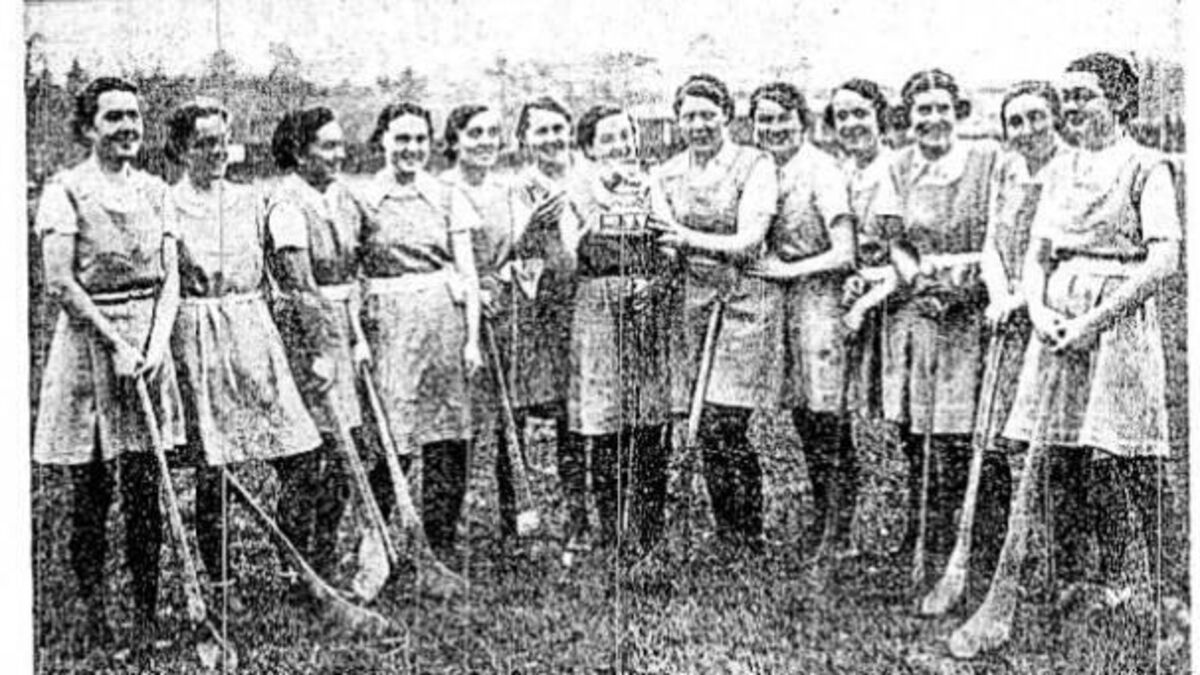
The Dublin team, featuring Cork's Meg Barry, that won the All-Ireland Camogie Final in 1938
It was in Bartlemy Church, this very week in the year 1904, that Patsy Barry and Ellen Arnold got married. At the time, he was teaching in the old National School in Monanig, which was built in ‘Black ‘47’, when the Famine was at its awful height. Initially, the newly married couple lived in the Dower House belonging to Standish Barry of Leamlara House in the next parish of Lisgoold. The Dower House had been built for Standish’s mother and sister, but they never actually lived in it. The Barrys were there for maybe a year. Then, when the ‘new’ Bartlemy School was built at Hightown, the Barry family lived for a while in Mellifontstown, Bartlemy. All the while, a new Teacher’s Residence was being built in close proximity to the school. When completed, the Barry family moved in.
It was in this house on January 10, 1916 that Margaret Barry was born. The Barrys had 14 in the family, with Patrick dying shortly after his birth, and Peggy passing away at 13 months in 1909. The next son born was also named Paddy. Margaret Barry often used the Irish version of her name, Mairead, but from an early age was known by the ‘pet name’ of Meg. A bright, bubbly and outgoing child, she attended the school ‘next door’ where her father taught. Patsy and Ellen Barry bought a farm at Mondaniel, just outside Rathcormac. From here, Meg attended the Loreto Convent School in Fermoy as a day pupil. She loved sport and played camogie with the St Ita’s team, then based in her home parish. Tragedy struck the family in 1930 when Dan, who had become a teacher like his father, died at the age of 24 from TB. In 1928, he had been elected as the first Club Chairman when the Bride Rovers GAA Club was formed.
Study and exams were no problem to Meg. She passed the Entrance Exam for the Civil Service; her brothers Billy and Paddy were in similar positions in Dublin. On joining the Civil Service, Meg went to Dublin, staying initially in digs with her brothers in Terenure. Domiciled in Dublin, Meg naturally looked to stay involved with her favourite sport, and she joined the Civil Service club.
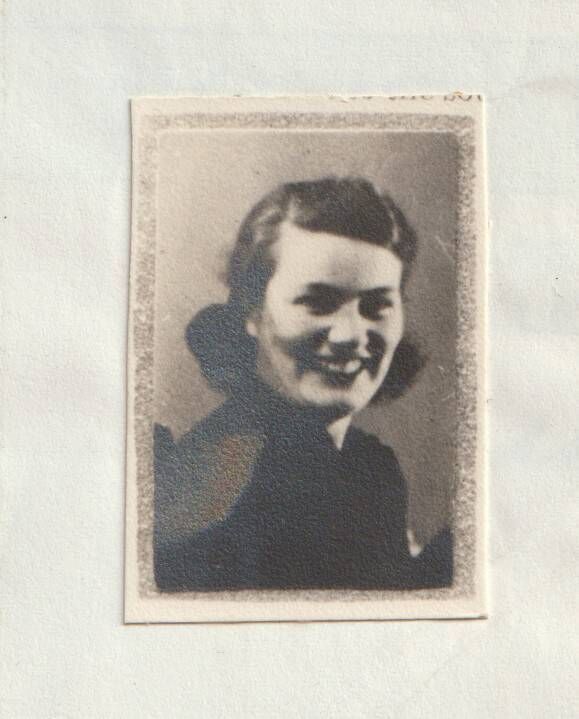
In July of that year, the International Celtic Congress was held in the Isle of Man. Delegates, politicians and sportspeople from Ireland, Scotland, Wales and the Isle of Man gathered annually to promote Celtic culture and industry. A camogie challenge game involving Dublin was held in Douglas, the Manx Island’s capital. The name ‘M. Barry, Civil Service’ was on the Dublin team sheet as a defender. Camogie back then- and for many years after- was a twelve-a-side game, and in many games as many goals as points were scored! Meg impressed and kept her place on the Dublin team for the championship later in the summer. Just a handful of teams contested the Championship. In the Munster Final played at Dunlop’s Sports Centre in Douglas, Cork defeated Waterford by 6- 3 to nil. It was late autumn before Dublin and Cork contested the Final. Sunday, October 30 was the date, with Cork having home advantage, the venue being the Cork Athletic Grounds. The Saturday before the game, an Examiner scribe wrote ‘Cork will probably win, but they will have their work cut out for them’. The Irish Press had a ‘Dublin Who’s Who’ feature. Of M. (Meg) Barry, Civil Service, they wrote, ‘Finds her place for the first time. Has a fine stroke and makes effective clearances’. After a lot of rain, the pitch was heavy. The scores were level at Cork 2-3 Dublin 3-0 late in the game, but the reigning champions struck two late goals to win by 5-0 to 2-3; ‘Cork cailíní miss too many chances’ was the Examiner summation. Meg Barry had won her All-Ireland senior medal, and the name ‘M. Barry’ was the first name on the Dublin team in several newspaper reports. We can only imagine the joy in the Barry family and the parish of Rathcormac.
Read More
A major rift which developed in the Camogie Association over the ban on hockey players meant that Meg and her Dublin teammates were banned from the 1939 championship. The following year, while Europe was at war, Meg Barry got very ill. Initially, it seemed like a flu or heavy cold brought on by a severe wetting she got while training or playing. Unfortunately, it proved to be more serious -TB, the scourge of the country. She was out of work while sick in Dublin. Then she came back to Rathcormac and eventually was admitted to Heatherside Sanatorium near Doneraile. It was built in 1909 and added to in the 1930s. Her health improved temporarily, and in August 1941 she was back home in Mondaniel. This proved to be just a reprieve, and before long she was a patient in Mount Desert just outside Cork City. In hospital, and to help fill the long days and nights, Meg took to writing; her father Patsy was a prolific author. One early poem she penned deals with a thermometer! and ends with: ‘ For a TB patient with coughing and wheezing, certain things are sought after Meg adored her parents and wrote a poignant tribute, which includes: ‘
It was during Meg’s hospitalisation that her brother John succumbed to TB in December 1943. Five years on from the great Camogie win, Meg wrote a long poem recalling the game. These are the last three verses
Meg Barry, camogie champion and poet, died on February 8, 1949, just a few weeks after her 32nd birthday. Thankfully, her brother Billy kept her notebooks and preserved many of her poems.
For some reason, Meg’s name does not appear on the ‘official’ list of the Dublin winning team of 1938 – I am trying to correct this omission.






 App?
App?


