Áilín Quinlan: Letter was chilling reminder of how covid is still affecting people’s lives
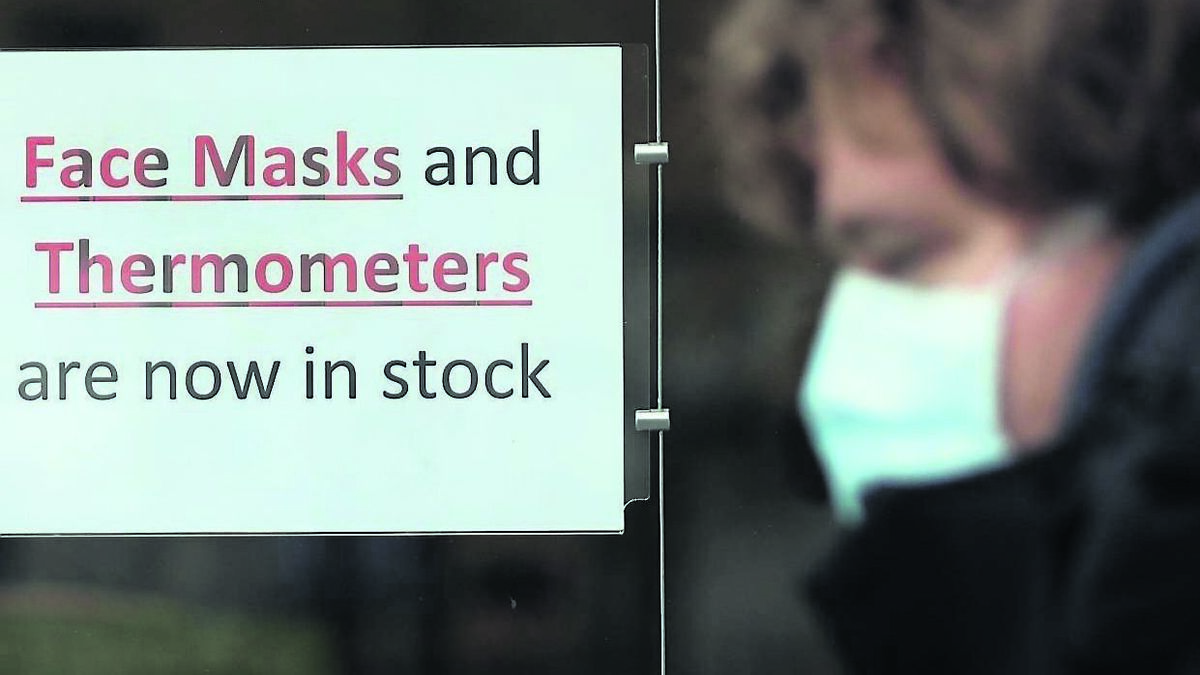
The letter to the newspaper agony aunt brought a rush of gratitude.
What the letter-writer described could have happened to me, or you, or any of the hundreds of thousands of people who fell foul of the virus which killed nearly 10,000 people in this country.
Two shocking things about the letter.
First, it was published very recently, just a few weeks ago and some six years on from the start of the pandemic.
Secondly it showed - and very graphically - that while most people have moved on from the terrors of the covid pandemic, there are still others living lives that have been dreadfully scarred by the trauma of those years.
The letter depicted how the writer’s partner still lived in such fear of the virus, and insisted upon such extreme precautions, that their world had shrunk to the point where his life had become unbearable.
Since covid, he said, avoidance had become a by-word of their relationship.
They had cancelled their wedding because it would have had to take place indoors.
They haven’t eaten in a restaurant in years.
And, although they inhabit the same house, they have separate bedrooms, bathrooms, and living areas
This man has to have the latest covid vaccines. He has to wear a protective mask at work or any time he is indoors.
And not just any old mask, either.
They are certainly effective, but my God, are they incredibly, horribly, uncomfortable to wear. Imagine having to wear one of these things all day, every day, at work. Having to speak to bemused colleagues through the mask, do the shopping through the mask, call into the petrol station to pay for fuel, in the mask.
Imagine still having to navigate daily life wearing one of these things in an environment where nobody else is wearing one. Imagine the discomfort, the sense of isolation, the embarrassment and, yes, the sheer loneliness of going masked in an unmasked world.
The man revealed that if he decided, for any reason, not to wear the N95 mask in any social situation, he was required to isolate from his partner for seven days – and to test negative on two occasions before they could share space again.
Not surprisingly, all of this has affected his friendships. It has impacted on his freedom to spend time with family, for example at Christmas.
He has even turned down a job promotion because getting it would have meant that he couldn’t keep going around in a mask.
Yet there was no mention of any specific covid-related or other health issues in the letter.
I got the impression, though he wasn’t explicit about it, that this man desperately needed out. Out of the relationship, out of that house, out of a life that was slowly choking him.
The agony aunt may have felt so too, as she advised that if he felt he needed to exit the relationship, he should do so with caution.
Is this what extreme and long-term phobia, fear and isolation can do to you, and eventually to the loved ones who have stuck with you through thick and thin?
And where, I might ask, is the help?
When I had long covid, I was highly phobic about crowded indoor settings like restaurants, pubs, trains, buses, and planes.
I hated the mask - and it was only one of the pale-blue paper masks - but I wore it when I had to be indoors with more than a few people.
It was embarrassing and isolating, but it wasn’t anything like the extreme, long-lived phobia that the letter-writer seemed to be reporting in his partner six years on from the start of the pandemic .
The letter also reminded me of something else entirely. It’s nothing so noticeable as this poor woman’s covid phobia (if that is what it is). All the same, the memory of what I saw that day stays with me.
It happened as I walked through a quiet, upmarket housing estate in a Cork city suburb.
At the time, I was visiting a friend who lived close to this housing estate, but roadworks near her house meant that I had to park much farther away from her than usual.
As I strolled through the estate towards my friend’s home, I noticed a house standing on its own, a bit apart, at the end of a long street of semi-detached and terraced houses.
Their benignly neglected family gardens were full of bicycles and footballs and one-armed dolls. The garden fences were waist-height and some of the houses didn’t even have a gate.
As I passed the detached residence at the bottom of this somewhat raggedy, but apparently happily lived-in street, I realised that I couldn’t actually see the solitary house itself because of the unusually high walls surrounding it
There were trees inside the wall and, as I passed by, I saw a noticeably high, wide, solid, and very firmly closed gate.
It all looked very expensive, but there was a palpable sense of isolation and silence and an empty, almost hostile atmosphere around the place.
I mentioned it to my friend.
She knew the house, of course.
The owner was reclusive, she explained. Neighbours had not set eyes on her for years.
Nobody ever seemed to go in, and nobody ever seemed to come out.
So there you are. It set me to thinking about how there are so many ways to close ourselves off.
And still the world keeps turning.





 App?
App?


