Cork Views: Our quest to entice more people to Cork
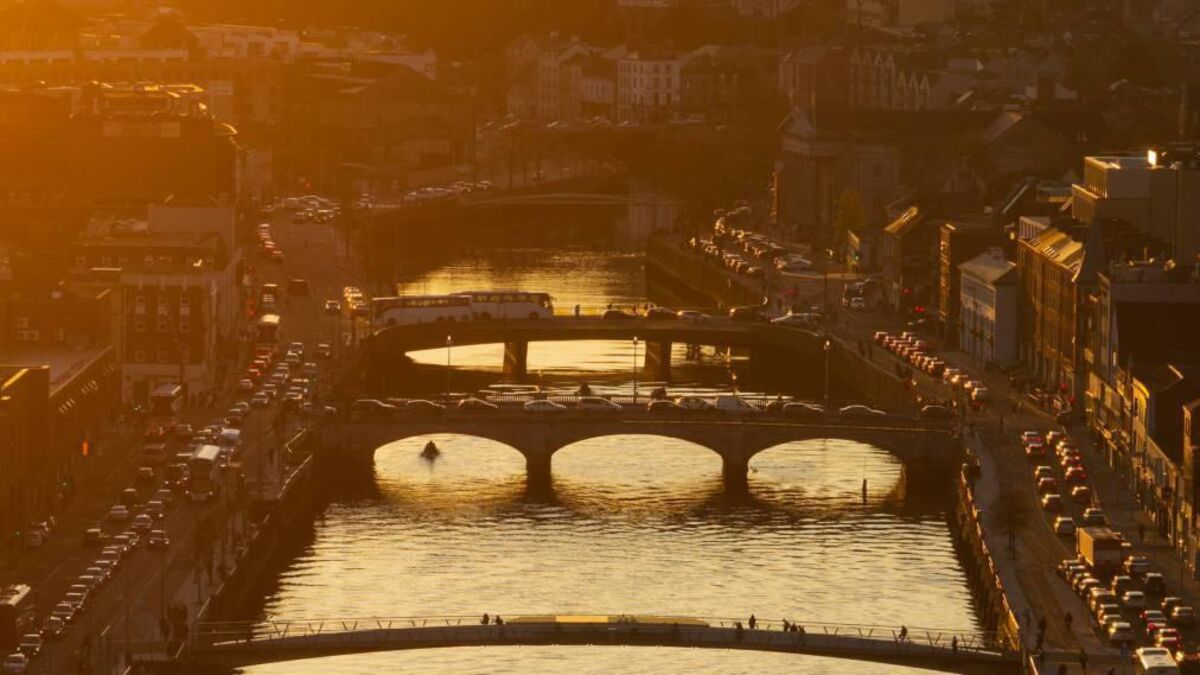
BEAUTIFUL CITY: The tourism sector is well-established in Cork, supporting roughly 22,500 jobs
As Cork accelerates its ambitions as a visitor and business events destination, its leaders are drawing on global knowledge exchange, industry intelligence, and best practices to strengthen their strategy.
A Destination Professionals Day, hosted by Destinations International last week, explored how Cork’s evolving approach aligns with the advocacy, tools, and frameworks shaping tomorrow’s destination organisations.
A moment made for destination professionals
Destination Professionals Day (DPD) is a global spotlight on the people and destination marketing organisations (DMOs) who tie together community, culture and commerce.
It was a timely event, with the travel and tourism sector rebounding with renewed purpose, and destinations that combine evidence-based strategy with collaborative leadership are poised to gain the most.
In Cork, that approach is already in motion. The region is blending data-led growth ambitions with international experience, sustainability, and a more strategic focus on business events as a stabilising, knowledge-driven economic pillar.
Cork’s trajectory and clear goals
Visit Cork, operating under the Pure Cork brand, has set out a clear growth path: aiming for an 8-10% increase in visitors in 2026 while strengthening long-term competitiveness through international promotion, sustainability actions, improved accessibility, and a larger share of business events.
The tourism sector is already a well-established foundation in Cork, supporting roughly 22,500 jobs, or one in ten roles across the region; showing that measured, high-quality growth matters. This has been bolstered through partnerships with boards and businesses such as Cork City Council, Cork County Council, and Fáilte Ireland to grow its profile as a premier leisure and business destination.
The expansion strategy is based on careful market selection. Efforts in Germany are growing, with Visit Cork twinned with Tourism Ireland’s German Market Office for the remainder of 2026, aided by a greater number of Frankfurt-Cork flights.
In addition, Cork continues its relationship-building and promotion in Canada, a key priority for this year. At the same time, core markets like the U.S, UK, Spain, France, and the Netherlands continue to remain key to expanding global relations.
The goal is simple: diversify where visitors come from, build resilience, and match our investment and messaging to the audiences most likely to visit.
Business tourism continues to play a major role in delivering year-round economic impact for Cork, and Ireland as a whole. Through the Cork Convention Bureau Ambassador Programme, the region has attracted more than 9,200 conference delegates, generating an estimated €17.4 million for the local economy and supporting hotels, venues, restaurants, transport providers and suppliers across Cork city and county.
Alongside business events, Visit Cork’s marketing continues to build on the region’s core strengths of food and gastronomy, outdoor adventure and the night-time economy, with initiatives such as the ‘Pure Local’ campaign during Christmas, which encouraged travellers to both stay local and eat local.
The approach reflects a wider shift in traveller behaviour, with audiences increasingly seeking meaningful, memorable experiences rather than traditional itineraries.
The value of global knowledge exchange
International insight and peer learning are increasingly shaping Cork’s approach to destination management. We believe that the greatest value lies not in affiliation alone, but in how global frameworks are interpreted and applied with local relevance and nuance.
This is where Destinations International’s (DI) work is particularly resonant. The world’s largest network of destination organisations, DI combines advocacy, education, research and practical tools that support responsible, community-aligned growth. Initiatives such as the Advocacy & Action Roadmap, the Tourism for All accessibility programme and the widely adopted Tourism Lexicons help destinations build internal capability, adopt a common language and embed resident-centred planning into both strategy and delivery.
DI also serves as a convener of global expertise, ensuring challenges faced in one region can inform solutions in another, giving destinations like Cork access to a constantly evolving pool of international best practice.
The importance of Destination Professionals Day
Destination Professionals Day holds deeper significance than a symbolic celebration. Created by DI and observed annually on February 19, it marks the anniversary of the founding of the world’s first destination organisation, established in Detroit in 1896 to proactively attract conventions and economic activity to the city. This is widely recognised as the birth of the modern DMO, which has since grown into a global network of over 10,000 organisations spanning DMOs, convention bureaux, tourism boards, sports commissions and film offices.
The purpose of DPD is to build awareness and appreciation for the role these organisations play in shaping our very own thriving communities, strengthening local economies, and stewarding the visitor experience.
It highlights the often-unseen and underappreciated labour behind destination success market research, policy advocacy, experience design, resident engagement, and cross-sector collaboration, all of which directly influence tourism performance and community wellbeing. DI emphasises that the day is also forward-looking: it aims to attract future generations into destination leadership by showcasing the sector’s diverse career pathways and growing strategic importance.
Cork’s current trajectory is a case in point: it shows how a destination can be ambitious and careful, drawing on global lessons and applying them locally, with the community at the forefront.
Looking ahead
Visit Cork will continue to build on its strengths while protecting what makes the region distinctive. With clearer international priorities, stronger sustainability commitments and a steady business events pipeline, the focus is now on long-term resilience rather than rapid growth. As global destination organisations share ideas more openly at events such as DPD and major trade platforms such as World Travel Market in London, Cork is better placed to evolve in ways that support visitors and the communities who live here.





 App?
App?


