Cork Views: Stop the squabbles - let’s have an active travel plan
Cork deserves better than anger and myths in the transport debate, says PETER HORGAN, Labour councillor for the Cork City South East Ward, who says active travel is the way to go
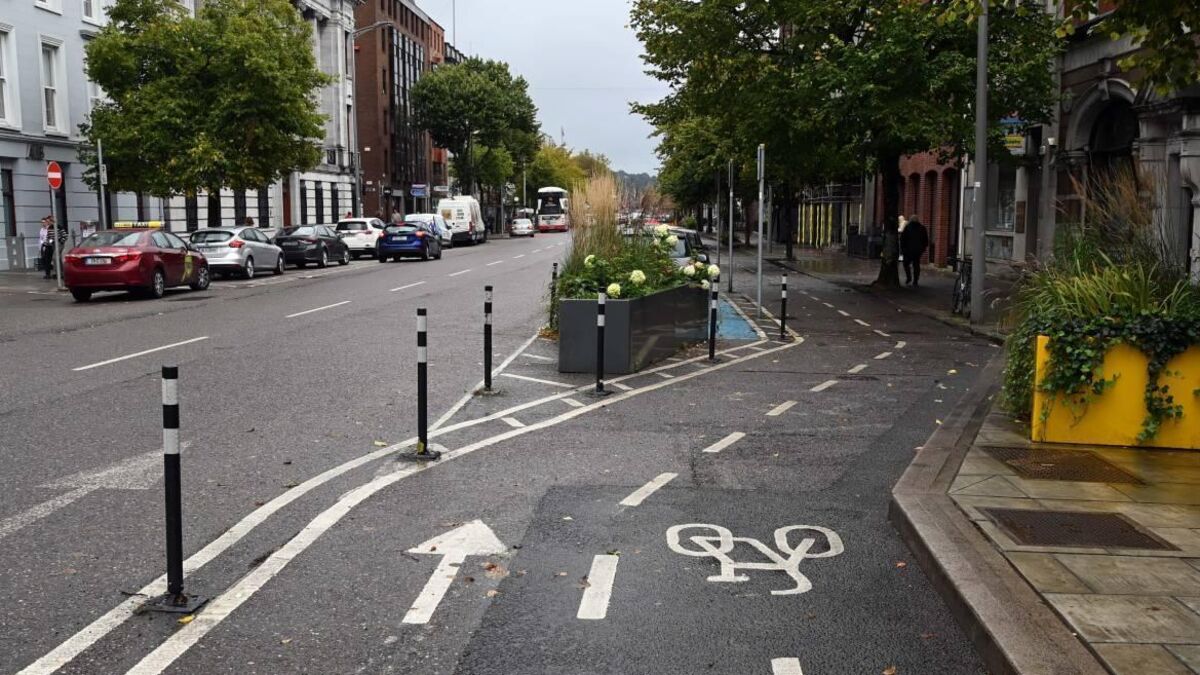
We need to get away from the ‘empty cycle lane’ discourse, says Peter Horgan
As a city, Cork has never been short of strong opinions. That’s what makes Cork, well, Cork.
What is worrying now though is how quickly our public debate, whether online or offline, on all topics, but particularly around transport and cycling, has hardened into anger, impatience, and over-simplification.
Build another lane. Take away the empty cycle lanes...
When complex decisions are reduced to slogans, we all lose — and nowhere is this clearer than in the discussion about active travel in Cork city.
Let’s be clear on transport in Cork. There is no one silver bullet, but rather there’s a multitude of mini silver bullets needed to take down the beast that is over-congestion and unsafe roads.
Cycling infrastructure has become a focal point for frustration. Congestion, roadworks, cost pressures, and the continuing inadequate public transport all feed into a sense that the city is under strain.
Too often, that frustration is channelled into a single claim: that cycle lanes are ‘empty’ and therefore represent wasted space.
It is an easy line to repeat, but it is not supported by the evidence available to us.
The Cork Metropolitan Area Walking and Cycling Index shows that active travel is already a routine part of life for many people in this city.
More than half of adults walk or wheel regularly, and almost one in five cycle at least once a week.
These figures translate into thousands of daily trips — many of them short, practical journeys that would otherwise add to congestion on already constrained streets.
The same report makes another point that is often overlooked in public debate: the majority of people (69%) in Cork support physically separated cycle lanes, even where this means reallocating existing road space.
This support is not ideological. It reflects lived experience - people feel safer using protected infrastructure, and when people feel safer, more of them choose to cycle. It protects the cyclists. It protects the motorist.
In reality, cycle counts in Cork show predictable patterns: usage rises sharply during the morning and evening commute and drops outside those periods. That is exactly how we expect a commuter network to behave. It is not evidence of failure; it is evidence of normal use.
There is also a double standard worth addressing. A general traffic lane carrying one car is not described as empty, but a cycle lane carrying a steady flow of individual cyclists is dismissed because it does not resemble a traffic queue.
Cycling is space-efficient by design. A single protected lane also helps in reducing emissions, noise, and health costs.
The benefits are not theoretical. Active travel in Cork already removes tens of thousands of car trips from the road network every day. That means less congestion for drivers, improved air quality in neighbourhoods, and measurable public health gains.
The Walking and Cycling Index estimates that these benefits amount to hundreds of millions of euro annually when economic, health, and environmental impacts are taken into account.
Despite this, the tone of the debate continues to deteriorate. Online commentary has become increasingly hostile.
Cyclists, drivers, and pedestrians are framed as opposing camps, rather than as the same people making different choices on different days.
As an elected representative, I do not believe this serves Cork well.
We do have real challenges. Some cycling routes are incomplete or poorly connected. Junction design needs improvement. Consultation must be meaningful and timely.
These are valid concerns and should be addressed directly. But they are arguments for better delivery, not for abandoning active travel altogether.
Cork is a compact city with finite road space and a growing population. We cannot meet future demand by doing more of the same.
Active travel is not a luxury or a lifestyle preference; it is a practical, evidence-based part of a balanced transport system.
If we allow anger and misinformation to dominate this conversation, we risk making decisions based on optics rather than outcomes.
The ‘empty cycle lane’ narrative may be convenient, but it distracts from the reality that safer walking and cycling benefit everyone - including those who will always need to drive.
Cork deserves a transport debate that is calmer, better informed, and rooted in facts rather than frustration.
The data is available. The benefits are clear. What is required now is the civic maturity to engage with both honestly.








 App?
App?


